
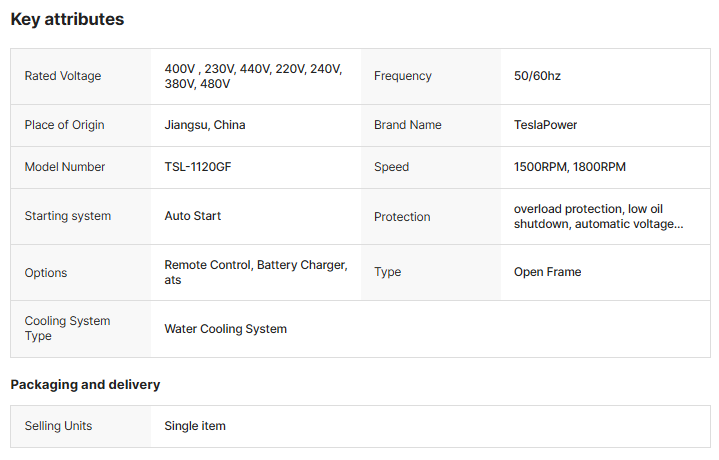
A 480V 60Hz diesel generator RFQ needs more than a generator size. The buyer should confirm phase arrangement, grounding expectations, breaker scope, ATS interface, local acceptance documents, and whether the generator will feed motors, UPS systems, chillers, or mixed industrial loads.
What buyers should know first
The supplier can quote 480V 60Hz equipment only when the electrical basis is clear. If the project is in a North American style distribution system, state the voltage, phase, wire arrangement, frequency, altitude, ambient temperature, and required control interface at the beginning of the enquiry.
In practice
| Specification point | Confirm in RFQ | Risk if missed |
|---|---|---|
| Frequency | 60Hz requirement | Wrong engine speed and alternator setup |
| Voltage | 480V, phase, wire system | Wrong alternator winding or panel design |
| Breaker | Mounted breaker, rating, trip type | Mismatch with downstream distribution |
| ATS | Included or by others | Control wiring and rating confusion |
| Loads | Motors, UPS, compressors, HVAC | Starting dip or overload risk |
What to confirm before quotation
- Exact voltage, phase, frequency, and preferred breaker arrangement.
- Load list with motor starting method and largest step load.
- Whether the generator supplies an ATS, manual panel, or existing switchgear.
- Ambient temperature, altitude, indoor or outdoor location.
- Required certificates or documents requested by the local project team.
- Cable entry direction, grounding requirement, and site space limits.
Common mistakes to avoid
- Writing only 480V without confirming frequency and phase arrangement.
- Assuming ATS is included when it is not listed in the offer.
- Ignoring motor starting current for compressors, pumps, or chillers.
- Changing voltage after quotation without checking alternator and panel effects.
- Treating local inspection needs as a supplier assumption rather than an RFQ item.
Documents to request
Ask for alternator and breaker details, controller model, wiring drawing, outline drawing, generator datasheet, factory test record, and packing details. Local compliance documents should be requested explicitly if the destination project requires them.
Related products and technical notes
Useful reference pages for this discussion include <a href=”https://www.tesladieselgeneratorset.com/products/factory-priced-1mw-cummins-engine-qsk38-g12-1500kva-1200kw-generator-with-ats-low-fuel-consumption-230v-480v-rated-voltage/”>1 MW Cummins generator configuration with 480V option</a> <a href=”https://www.tesladieselgeneratorset.com/60hz-export-diesel-generator-selection-notes/”>60Hz export generator selection notes</a> <a href=”https://www.tesladieselgeneratorset.com/1000kva-diesel-generator-rfq-checks-480v-export/”>1000 kVA 480V RFQ checks</a>.
FAQ
Can a 50Hz generator be used for a 60Hz project?
The engine speed, alternator, and rating basis differ. The RFQ should state 60Hz from the start.
Is 480V always three phase?
Most industrial 480V generator enquiries are three phase, but the buyer should still state phase and wire arrangement.
Should the ATS be quoted with the generator?
If the supplier is expected to provide it, include ATS rating, voltage, pole count, enclosure, and control requirements.
What load data matters most?
Largest motor starting load, total running load, UPS load, compressor or chiller load, and planned load steps.
Can the supplier decide grounding?
The supplier can provide generator wiring details, but the local engineer should confirm grounding and code requirements.
A 480V 60Hz generator offer is easier to compare when the RFQ states the full electrical basis. That prevents late changes in alternator, breaker, controller, and transfer equipment.