
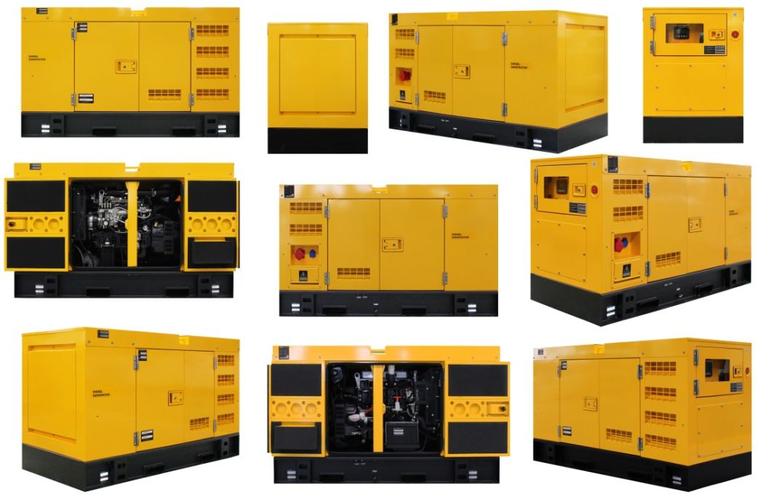
Outdoor silent diesel generator projects should confirm airflow, exhaust routing, access space, ATS interface, fuel arrangement, and site noise expectations before order approval.
What buyers should know first
A silent canopy reduces noise and protects the generator set, but it does not remove the need for installation planning. Hospitals and factories usually have strict requirements for access, emergency operation, ventilation, cable routing, and maintenance. The RFQ should tell the supplier where the generator will sit and what the site expects during a power failure.
In practice
Outdoor installations often fail at the details: the pad is too small, hot air recirculates into the canopy, the exhaust outlet faces a sensitive area, or the ATS cable route is added after delivery. These issues are easier to handle when drawings and site constraints are shared before manufacturing.
| Installation area | What to check | Supplier detail to request |
|---|---|---|
| Airflow | Cooling-air inlet and discharge direction | Canopy layout and radiator discharge arrangement |
| Noise | Nearby wards, offices, boundary lines, or residences | Canopy type and silencer scope |
| Electrical | Cable trench, breaker, neutral, and ATS interface | Control wiring and breaker compartment details |
| Access | Door swing, lifting point, filter access, and refueling access | General arrangement drawing |
What to confirm before quotation
- Send site photos or a simple layout showing walls, doors, windows, and nearby equipment.
- Confirm whether the generator starts automatically through an ATS or building management signal.
- Check exhaust direction, rain protection, and whether an extension pipe is needed.
- Keep enough service space for filters, batteries, radiator cleaning, and alternator inspection.
- Ask for canopy dimensions, weight, lifting points, wiring points, and noise test basis where available.
Common configuration mistakes
- Placing a silent generator in a corner where hot air returns to the radiator.
- Selecting a canopy only by kVA without checking access and exhaust direction.
- Treating hospital load priority as a site issue after the generator has shipped.
- Assuming all silent canopies have the same noise and weather-protection performance.
Useful internal references
Review a <a href="https://www.tesladieselgeneratorset.com/products/sound-proof-diesel-generator-set-30kw-60kw-cummins-engine-38kva-50kva-63va-75kva-diesel-generator-with-ats-option/">sound-proof diesel generator set</a> alongside <a href="https://www.tesladieselgeneratorset.com/hospital-standby-diesel-generator-transfer-system-checks/">hospital transfer system checks</a> and <a href="https://www.tesladieselgeneratorset.com/ats-ready-silent-diesel-generator-quotation-notes/">ATS-ready silent generator quotation notes</a>.
RFQ information to send
- Site type and whether the generator supports life-safety, production, or comfort loads.
- Outdoor location, pad size, cable direction, and nearby walls or openings.
- Noise expectations and any project testing requirement.
- ATS, breaker, control signal, and monitoring requirements.
- Fuel tank, exhaust extension, battery charger, and jacket-water heater requirements.
Questions purchasers often ask
Can a silent generator be placed directly beside a wall?
Only if the layout keeps cooling air and exhaust clear. The supplier should review the site arrangement before confirming.
Does a silent canopy include ATS?
Not always. ATS can be supplied as a separate panel or integrated scope depending on the project request.
What should hospitals confirm first?
Load priority, transfer sequence, noise limits, fuel autonomy, and commissioning documentation should be agreed before purchase.
Is an outdoor canopy maintenance-free?
No. Filters, battery, radiator, belts, cables, and fuel system still need access and routine checks.