
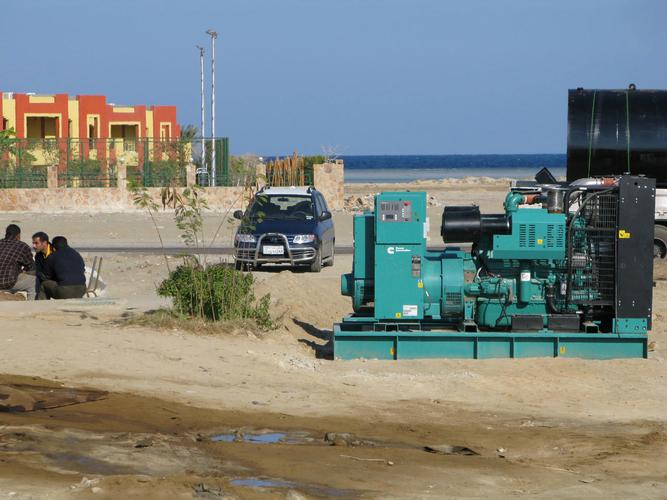
Factory expansion projects considering parallel diesel generator sets should confirm load steps, redundancy target, synchronization controls, switchgear scope, and commissioning responsibility before RFQ comparison.
What buyers should know first
A single large generator is not always the only option for an expanding factory. Some projects use two or more diesel generator sets in parallel to match staged load growth, improve service flexibility, or keep reserve capacity. The correct choice depends on load sequence, available space, electrical design, and the team's ability to maintain multiple sets.
In practice
Parallel operation adds control and switchgear questions that are not present in a simple single-set quotation. The purchaser should define whether the supplier is quoting generator sets only, a synchronizing panel, outgoing breakers, protection relays, load sharing controls, or site commissioning support.
| Decision point | Single larger set | Parallel set arrangement |
|---|---|---|
| Expansion staging | May oversize early-stage capacity | Can add capacity in planned steps |
| Maintenance | Shutdown may affect all backup capacity | One set may be serviced while another remains available if designed that way |
| Controls | Simpler control panel | Needs synchronizing, load sharing, and protection coordination |
| Project scope | Lower electrical complexity | More switchgear and commissioning coordination |
What to confirm before quotation
- Send current load, future load, and the sequence in which production lines will be added.
- State whether N+1 redundancy is required or whether the sets only need to share load.
- Confirm synchronization panel, switchgear, breaker, and protection scope.
- Ask who is responsible for on-site commissioning and load-bank testing.
- Confirm whether all sets must be identical or whether future expansion will use the same model family.
Common configuration mistakes
- Comparing only total kVA while ignoring synchronization and switchgear cost.
- Mixing generator sets without confirming controller compatibility.
- Leaving load-sharing, reverse-power protection, and breaker interlocks undefined.
- Planning future capacity without reserving cable routes, exhaust space, and service access.
Useful internal references
Compare larger package examples such as <a href="https://www.tesladieselgeneratorset.com/products/mtu-18v2000g65-heavy-duty-diesel-generator-1100kw-1mw-2mw-ats-option-230v-240v-480v-rated-voltage-1mva-2mva-power-output/">MTU diesel generator set options</a> and <a href="https://www.tesladieselgeneratorset.com/products/low-consumption-2000kw-3-phase-ats-diesel-generator-set-50-60hz-2500kva-competitive-price-with-mitsubishi-s16r2-ptaw-e-engine/">Mitsubishi diesel generator options</a> with <a href="https://www.tesladieselgeneratorset.com/mtu-diesel-generator-set-checks-data-center-standby-rfqs/">standby RFQ checks for critical backup power</a>.
RFQ information to send
- Number of generator sets and target total kW or kVA.
- Current and future load list with motor starting sequence.
- Redundancy target, such as N, N+1, or staged growth only.
- Synchronizing panel, switchgear, protection, and monitoring requirements.
- Commissioning, load-bank test, and documentation requirements.
Questions purchasers often ask
When does parallel operation make sense?
It can fit projects with staged expansion, redundancy targets, or load variation where one set would be inefficient or difficult to service.
Can different brands run in parallel?
It may be possible, but controller compatibility, speed control, voltage regulation, protection, and commissioning scope must be checked carefully.
Does paralleling reduce total project cost?
Not always. It can improve flexibility, but synchronization controls and switchgear add cost and engineering work.
What document should be requested?
Ask for a single-line diagram, control logic description, protection list, testing plan, and commissioning responsibility statement.