
What buyers should know first
A facility load list is rarely one clean number. Factories, hospitals, workshops, and commercial buildings often mix motors, pumps, HVAC, lighting, controls, chargers, and small office loads. The generator selection depends on how these loads start and run together.
For Yangzhou Tesla Power Equipment Co., Ltd., the useful RFQ usually starts with load size, duty rating, site conditions, voltage and frequency, enclosure style, control requirements, and the documents the purchaser needs for project approval.
In practice
Before requesting a quotation, the buyer should separate running load from starting load and decide which loads are essential during an outage. This helps the supplier discuss kW, kVA, power factor, voltage dip, alternator sizing, and load step assumptions without guessing.
| Load type | What to ask | Selection effect |
|---|---|---|
| Motors and pumps | Starting method and largest motor size | May drive alternator and voltage dip review |
| HVAC | Compressor start sequence and priority | Can change step-load planning |
| Lighting and controls | Essential and non-essential groups | Helps avoid oversizing |
| UPS or drives | Harmonic or input characteristic if known | May require closer electrical review |
Specification points to confirm
- Separate essential loads from loads that can remain off during an outage.
- List largest motors, starting method, and whether motors start together or in sequence.
- Confirm project voltage, phase, frequency, and acceptable voltage dip if specified.
- State whether the generator is standby for outages or prime power for regular operation.
- Ask for assumptions used in the supplier's sizing recommendation.
Common mistakes to avoid
- Adding all nameplate loads together without checking actual running load.
- Ignoring the largest motor start or HVAC start sequence.
- Using kW and kVA inconsistently in the RFQ.
- Letting non-essential loads force a larger generator than the project needs.
Before requesting a quotation
Ask the supplier to separate the generator set scope from the site installation scope. The generator quotation can normally define the set, enclosure or frame, control panel, breaker, radiator arrangement, silencer, batteries, drawings, and test documents. Civil works, fuel piping, exhaust duct routing, cables, and local approval items should be checked with the site contractor unless they are explicitly included.
- Load schedule with kW, kVA, power factor, and starting method where available.
- Essential-load list and any load shedding or staged-start plan.
- Voltage, phase, frequency, duty rating, and site altitude or ambient temperature if relevant.
- Expected operation: standby outage support, prime site power, or temporary construction power.
- Documents needed for consultant review, including sizing assumptions and technical datasheet.
Related products and technical notes
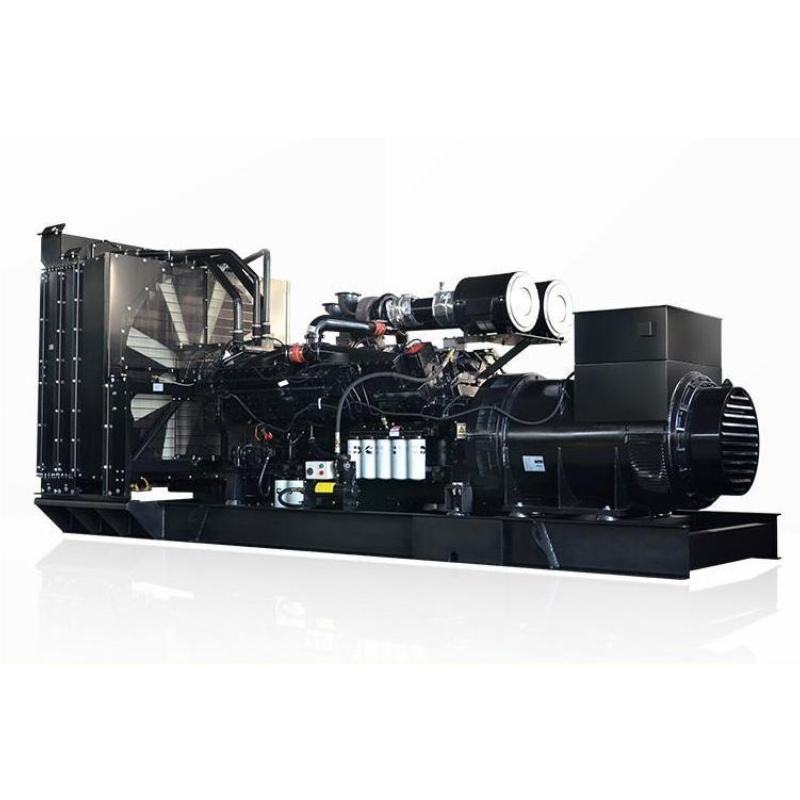
Related generator examples can be reviewed on <a href="https://www.tesladieselgeneratorset.com/products/factory-discount-price-800kw-1000kva-diesel-generator-for-cummins-engine-kta38-g2b-ats-option-50-60hz-frequency-230v-240v-480v-r/">this diesel generator product page</a>. Purchasers comparing project requirements can also read <a href="https://www.tesladieselgeneratorset.com/diesel-generator-earthing-neutral-arrangement-checks-export-projects/">earthing and neutral arrangement checks</a> before sending the final RFQ.
Questions purchasers often ask
Why is a load profile better than one total kW number?
A profile shows which loads run continuously, which start first, and which can be delayed. That information affects generator and alternator selection.
Do motor loads always require a larger generator?
Not always. The starting method, motor size, starting sequence, and acceptable voltage dip determine how much margin is needed.
Should non-essential loads be included?
They should be listed separately. Some projects use load shedding so the generator supports only required loads during an outage.
What should buyers send with the RFQ?
Send the load list, largest motor details, voltage, frequency, duty rating, starting sequence, site conditions, and any consultant specification.