
What buyers should know first
A single industrial generator sets can keep a factory or commercial building running during a power outage. For hospitals, data centers, and other life-safety loads, a single set is a single point of failure. Redundancy means that the failure of any one set does not stop the critical load. This guide explains the common redundancy levels in plain language and tells buyers what to ask for in an RFQ.
We supply medical-grade generator sets and industrial standby generator sets generator sets, but we do not design electrical distribution. Our job is to make sure the generator capacity, transient response, and control interfaces match the redundancy architecture chosen by the consulting engineer.
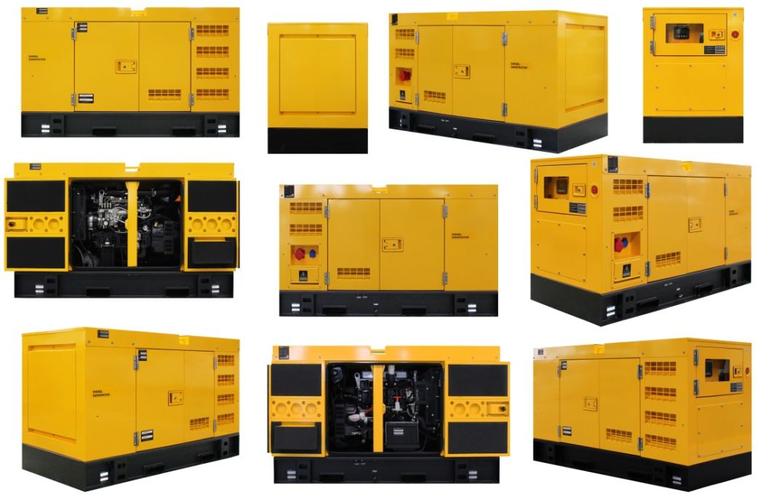
N, N+1, and 2N explained
These labels describe how much spare capacity exists beyond the minimum required. They sound simple but are often misapplied.
| Redundancy level | Capacity rule | What it means in practice |
|---|---|---|
| N | Capacity exactly equal to peak critical load. | No redundancy. One set out of service = load lost. |
| N+1 | Total installed capacity = peak load plus one module. | One set can fail or be maintained while the rest carry the load. |
| 2N | Two independent paths, each sized for 100 % of critical load. | Highest availability; used in Tier III/IV data centres and top-tier hospitals. |
| 2(N+1) | Two independent N+1 systems. | Extreme availability; very high cost. |
The key detail is the ‘module’ size. In an N+1 design using four 500 kW sets, the loss of one 500 kW unit must leave enough capacity for the peak load. If peak load is 1,500 kW, the four-set arrangement works; if peak load is 1,700 kW, it does not.
Tier ratings and what they imply
Data centre tier ratings from Uptime Institute define expected availability. Tier I has no redundancy; Tier II has partial redundancy for components; Tier III allows concurrent maintainability; Tier IV adds fault tolerance. A Tier III design is normally N+1 or better; Tier IV is 2N or 2(N+1).
Hospital electrical codes in many countries require N+1 or equivalent for life-safety branches, with automatic transfer within ten seconds. Always confirm the local code before assuming a redundancy level.
Procurement checklist
- Define the critical load in kW and kVA, including future expansion.
- Choose N, N+1, 2N, or 2(N+1) based on the facility tier or code requirement.
- Confirm that any one module can be removed for maintenance without losing critical load.
- Specify synchronising and load-sharing controls if multiple sets must run together.
- Request a failure-mode analysis showing what happens when one set fails during an outage.
- Check fuel autonomy: N+1 capacity is useless if all sets run out of fuel at the same time.
Siting and support systems matter
Redundancy is not just about adding sets. Separate fuel tanks, independent battery chargers, redundant cooling circuits, and diverse electrical routes all contribute to availability. If two generators share one fuel pump or one control panel, the redundancy is weaker than the label suggests.
For hospitals, we often see generator sets from 400 kW to 600 kW sets configured as N+1. For large data centres, generator sets above 1,000 kW or larger modules in a 2N arrangement are common. Mitsubishi diesel generator sets and MTU diesel generator sets engines are frequently specified where long-term uptime is the priority.
RFQ wording that gets useful answers
Ask: ‘Provide an N+1 generator set arrangement for [X] kW critical load using [Y] kW modules, including synchronising controls, common-bus paralleling, and a failure-mode analysis showing load coverage after loss of any single module.’
Questions buyers often ask
Is N+1 the same as having a spare generator?
No. A spare unit sitting in a warehouse is not automatic redundancy. N+1 means the installed running capacity includes one extra module.
Can I use different generator sizes in an N+1 design?
Technically possible but not recommended. Unequal modules make load sharing and failure-mode analysis more complex.
Does N+1 protect against fuel failure?
No. N+1 protects against the loss of one generator module. Fuel supply, cooling, and control systems still need their own redundancy if required by the facility tier.
How many generators should a hospital have?
That depends on the life-safety load and local code. Many hospitals use N+1 with two or three sets; some critical-care blocks use 2N.
What is concurrent maintainability?
It means any component can be taken out of service for maintenance without interrupting the critical load. This is a Tier III data-centre requirement.
Should redundancy sets be tested under load?
Yes. Regular load-bank testing proves each module can take its share. A set that never runs under load may fail when it is suddenly needed.
Redundancy is an architecture decision, not a brand decision. Once the level is fixed, request a quote to match the module sizes, controls, and interfaces to your electrical design.