
In practice, earthing problems rarely stop a generator from starting. They show up as protection that will not discriminate, residual current devices that nuisance-trip, or a neutral arrangement nobody documented and everybody assumed. Those are expensive to diagnose after handover, because the fix means opening up work that is already finished.
The core issue is that a generator is a source, not just a load. The moment it can supply the installation independently, the earthing arrangement becomes a design decision rather than a wiring detail.
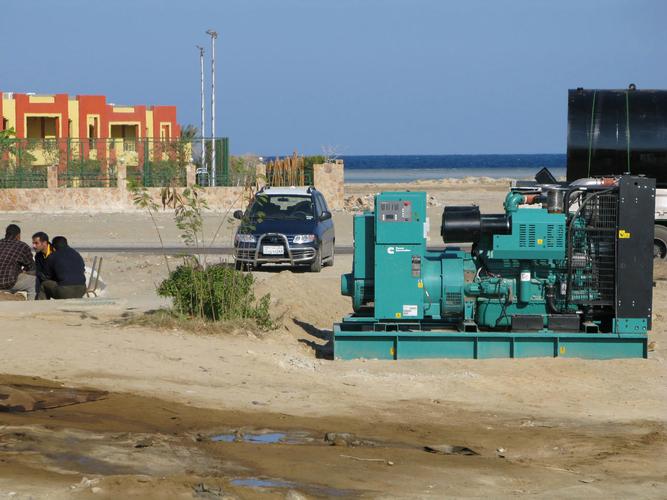
Neutral earthing: the decision that drives everything else
With a mains supply, the neutral is earthed at the source by the utility. Add a generator and there may be two sources of supply with two neutrals. Whether the generator neutral is earthed, bonded, or switched depends on the changeover arrangement and on what the protection scheme expects.
Why it matters
Earth fault loop impedance, the operation of overcurrent devices, and the behaviour of residual current protection all depend on where the neutral is earthed and how many points are connected at once. Getting it wrong can leave a fault path that does not clear, or create parallel paths that cause unwanted tripping.
What to confirm
- Whether the generator neutral is earthed at the set, at the board, or switched with the changeover.
- Whether the changeover switches the neutral at all, and if so, whether it is a suitable device for it.
- How many earth-to-neutral connections exist in any given operating mode; it should be one.
- What the existing protection arrangement assumes, and whether the generator changes it.
Frame and structural bonding
The generator frame, the enclosure, the fuel tank and any associated steelwork should be bonded into the installation’s earthing system. This is not controversial, but it is frequently incomplete: the set is earthed, the day tank is not; the canopy is bonded, the exhaust supports are not. Ask for a bonding schedule so the scope is visible.
Comparison: what the arrangement affects
| Aspect | Why the earthing choice changes it | Ask the supplier for |
|---|---|---|
| Earth fault clearing | Fault path depends on where neutral is earthed | A statement of the neutral arrangement |
| RCD / residual current behaviour | Multiple neutral-earth links cause unwanted trips | Confirmation of a single link in each mode |
| Changeover specification | Switching the neutral is a specific device requirement | Whether the ATS is neutral-switching |
| Parallel with mains | Export and parallel schemes add requirements | Confirmation the controller supports the scheme |
| Lightning and surge protection | Temporary and remote sites differ from fixed plants | Surge protection provision at the set |
Procurement checklist
- State the existing earthing arrangement of the installation (TN-S, TN-C-S, TT or other) as your electrical designer defines it.
- State whether the changeover switches the neutral.
- Confirm how many poles the ATS has and whether that suits the neutral arrangement.
- Ask for the generator neutral arrangement in writing, not as a drawing assumption.
- Include the fuel tank, canopy and exhaust supports in the bonding scope.
- Confirm who signs off the final earthing design: set supplier, contractor, or the client’s consultant.
What to put in the RFQ
Include the site earthing arrangement, whether the neutral is switched, the ATS pole configuration, and whether the set will ever run in parallel with the mains or another generator. If the design is not finalised, ask for the available neutral options rather than accepting a default. Also check our notes on emergency stop circuits on industrial sites, which interact with the same protection design.
FAQ
Does every generator need its own earth electrode?
Not necessarily. It depends on the installation’s earthing system and how the set is connected. This is a design question for the installer and the set supplier to answer together, not a default.
Why do RCDs trip when the generator runs but not on mains?
Usually because there is more than one neutral-to-earth link when the generator is supplying, so return current splits and the device sees an imbalance. The fix is in the neutral arrangement, not in the RCD.
Should the ATS switch the neutral?
Only where the earthing design requires it, and only with a device rated to switch it. Ask what your scheme needs before specifying the changeover.
Is the canopy automatically earthed by its mounting?
Do not assume it. Mounting contact is not a designed bonding path; include the canopy in the bonding schedule.
Who is responsible if protection does not discriminate?
Whoever owns the earthing design. Make ownership explicit before installation begins.
Next step
Send the site earthing arrangement and the changeover configuration with your enquiry. You can see the range of diesel generator sets and the changeover options that suit them, and request a quote with your single-line diagram attached so the neutral question is answered on paper rather than on site.