
Six documents show whether a diesel generator set exporter is the factory or a middleman, and which of them a buyer should check before paying the deposit.
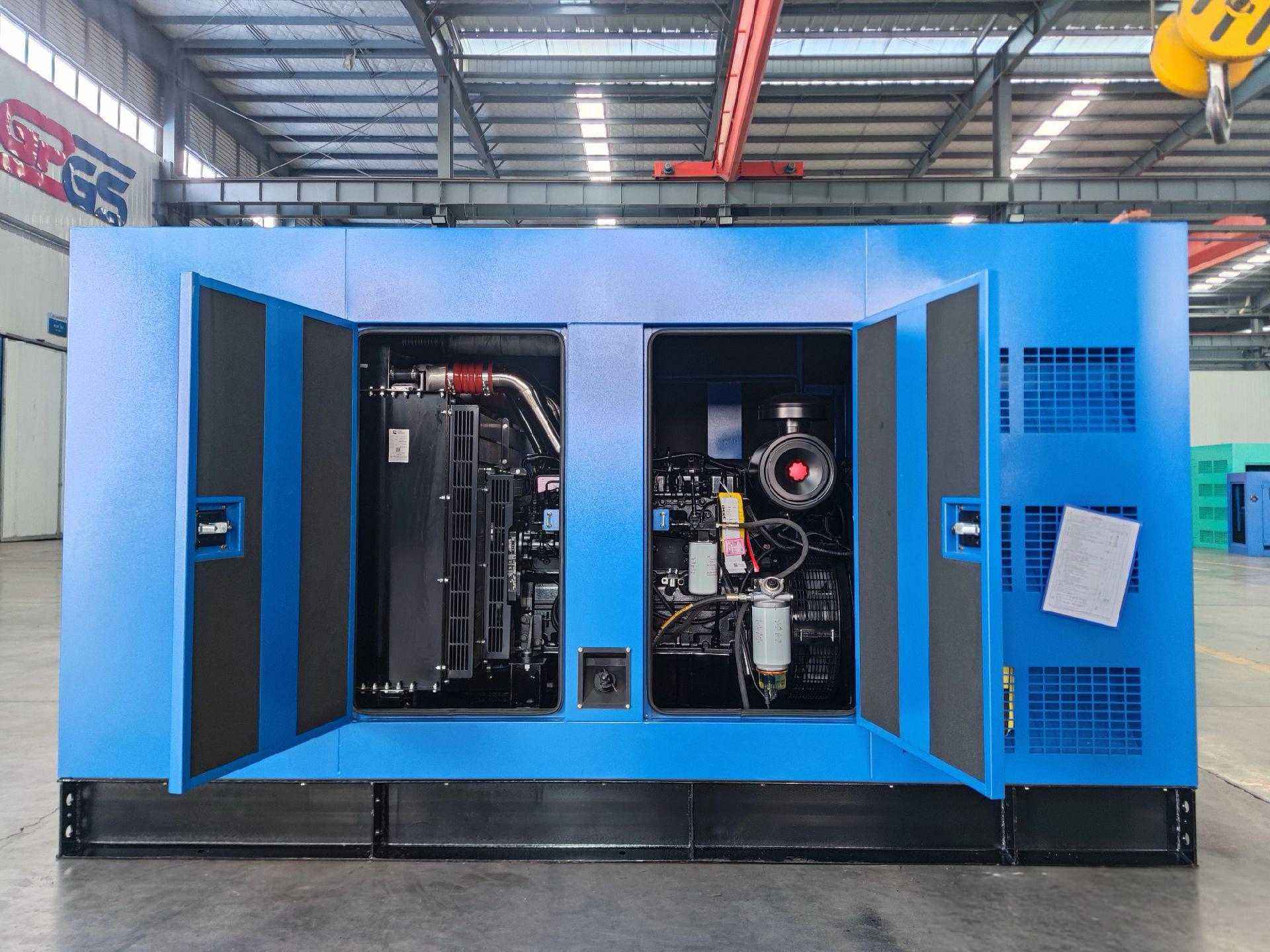
A diesel generator set exporter is the party named as consignor on the export declaration and as shipper on the bill of lading, not automatically the company that signs the sales contract. Tesla Power Equipment checks those names before money moves, and publishes the models it builds with the engine code for each.
- Name match. Consignor, shipper and invoice seller should be one legal entity.
- Build record. A test report carrying the serial number proves a set was built, not bought in.
- Rating match. Heading 8502 splits diesel sets at 75 kVA and 375 kVA, so the plate decides the duty.
What Does a Diesel Generator Set Exporter Sign?
A diesel generator set exporter signs the export declaration as consignor, appears as shipper on the bill of lading, and applies for the certificate of origin. Those three signatures decide who customs and the buyer’s bank treat as the seller, and above 375 kVA that difference carries duty consequences the contract does not mention. Tesla Power keeps one consignor name across the invoice, the declaration and the certificate of origin.
Which Six Documents Identify the Exporter?
Six documents identify the exporter, and each answers a different question, so one missing paper cannot be covered by a letter of comfort.
| Document | Issued by | What it proves | Field to compare |
|---|---|---|---|
| Business licence | Company registry | Legal existence and permitted activities | Scope wording and registered address |
| Customs registration | Customs authority | The entity may declare exports in its own name | Registered name and customs code |
| Export declaration | Consignor or its agent | Which entity declared the goods, at what subheading | Consignor and production unit |
| Bill of lading | Carrier or forwarder | Who handed the cargo over and who holds title | Shipper and consignee |
| Certificate of origin | Authority or chamber | Which origin rule the goods were declared under | Exporter and origin criterion |
| Factory test report | The build line | The set was tested before packing, at which rating | Serial number and rating tested |
Two of the six carry more weight. The export declaration fixes the subheading, 8502.12 or 8502.13, which fixes the duty a destination authority applies. Tesla Power treats the certificate of origin for a genset as the second anchor, because it fixes the origin claim behind any preferential rate.
Is the Diesel Generator Set Exporter the Factory or a Trading Company?
The exporter can be either, and the licence scope tells you which within a minute. A production licence lists generator set manufacture or assembly; a trading licence lists machinery wholesale and import-export, and says nothing about production. The gap matters most above 375 kVA, where the declaration and the duty diverge.
Three markers separate the two without a visit. Licence scope comes first: read the activities clause, not the company name. Customs code comes second: a producer that exports directly uses one code on both the declaration and the certificate of origin. Consignor history comes third: ask which entity appeared as consignor on the last three shipments to your region, because three different names usually mean an agent consolidating several workshops. Tesla Power works from a manufacturing licence in Jiangdu, so consignor, test report and licence address resolve to one site.
The failure mode is a supplier that presents a workshop video, signs as a producer, then produces a certificate of origin issued to a third company, leaving the buyer no route to the build record or to a spare part matched to the serial number.
Why the Declared Subheading Follows the Plate Rating
The declared subheading follows the rating on the plate, because heading 8502 splits compression-ignition generating sets at two hard numbers: 75 kVA and 375 kVA. Subheading 8502.11 covers sets not exceeding 75 kVA, 8502.12 covers sets above 75 kVA but not exceeding 375 kVA, and 8502.13 covers sets above 375 kVA. The wording is identical in the USITC Harmonized Tariff Schedule, the UK Trade Tariff and the EU tariff, checked on 12 September 2026, and it is written in kVA rather than kW, which is where most declaration errors begin.
A set described in kW has to be converted before the subheading can be predicted, and the conversion is why the power factor belongs on the offer sheet. The QSL9-G5 build Tesla Power ships is plated 200 kVA / 160 kW at 0.8 pf in prime power and 220 kVA in standby power, and its test report records steady-state frequency regulation of ±0.25 percent at that rating. Both plate values sit in 8502.12, because neither reaches 375 kVA. A set quoted without a power factor cannot be converted at all, so the offer sheet and the declaration drift apart without anyone making an arithmetic error. The rate then attaches to the subheading rather than the model name: for 8502.13 the US Column 1 general rate was 2 percent and the Column 2 rate 35 percent in the same USITC schedule, while duties aimed at a specific origin sit outside it and have to be checked per shipment. The rating itself is defined in ISO 8528-1, which separates prime power from standby power and gives the plate two legitimate numbers.
A declaration written from a brochure instead of a nameplate is the most common mismatch. Model codes carry marketing figures, nameplates carry the rating the set was tested at, and one frame size can produce two different plates. When they disagree, the customs authority reads the plate, which is why Tesla Power puts the tested rating on the report as well as on the plate.
How Does the Declaration Change for Trailers and Unassembled Sets?
The declaration changes whenever the set travels with equipment that has its own heading, and whenever it travels in pieces, because a generating set is classified as a combination presented together. A set mounted in an extensively modified container stays in 8502 as a set, while the semi-trailer underneath it does not. US Customs ruling NY H81337, issued on 28 June 2001, classified containerised 1000 kW and 1500 kW sets under 8502.13.0040 at 2 percent and the semi-trailer under 8716.39.0050 free of duty. That is two codes for one shipment, and the shipping documents an export set travels with have to reflect both.
Unassembled shipments follow a rule with a narrow gate that catches most sellers who try to treat a kit as a set. General Interpretative Rule 2(a) of the Harmonized System brings incomplete or unassembled articles into the heading of the complete article when, as presented, they already have its essential character. The WCO notes to that rule then limit the concession to components that need assembly only, with no further working operation before the article reaches its finished state, and they require components supplied in excess of the number needed for one finished article to be classified separately. A set shipped as base frame, engine-alternator assembly, radiator and control panel can therefore stay in 8502, while loose steel that still needs cutting and welding at destination may not, because that is manufacturing rather than assembly. The distinction is written, not negotiated, so it can be checked before the booking is made rather than argued at the port of entry.
The same logic reaches the most ordinary shipment on the site, and it is worth following through because the paperwork splits at exactly the point the physical shipment does. A 400 kW trailer-mounted set declared on its own trailer carries a second code for the trailer, because the chassis is treated as transport equipment rather than as part of the set, and a surveyor will count two items where the buyer sees one machine. Splitting a set across two shipments to move the duty is worse than either option: US Customs ruling HQ 958835, from 16 May 1996, refused generating set treatment to a turbine and generator shipped on different vessels, on the principle that goods are classified in their condition as imported. The engine alone enters the US under 8408.90.90 free of duty in the schedule checked on 12 September 2026, which makes the temptation real and the exposure larger than the difference.
How Does the Packing List Fit the Container Limit?
The packing list fits the container only when gross weight and door height are checked against the box rather than against the set. A 40 ft high cube carries a maximum payload of 28,600 kg at Hapag-Lloyd and 28,620 kg at Maersk, with 2,697 mm of internal height to the load line. The door opening ends arguments: 2,577 mm on the high cube, 2,274 mm on a standard 40 ft box, which is where a canopy with a roof-mounted silencer stops fitting.
Weight and volume move in opposite directions between the box types. The standard 40 ft container takes slightly more payload, 28,750 kg at Hapag-Lloyd and 28,800 kg at Maersk, because its tare is roughly 180 kg lower, but gives up about 304 mm of internal height and 9 cubic metres, so a buyer comparing freight rates should ask which box the rate assumes. A 500 kW containerised set with a loose exhaust, a remote fuel tank and a transfer switch is three extra packing lines before it is one shipment.
One weight. Gross weight on the packing list, the verified gross mass behind the shipping instruction and the weight declared to customs should be one figure, and anything shipped loose needs its own line. Tesla Power builds the packing list from the bill of materials that produced the test report, so loose items surface before the container is packed.
What Should a Buyer Verify Before the Deposit?
A buyer should verify three numbers before the deposit: the plate rating in kVA, the kW it produces at 0.8 pf, and the subheading the exporter intends to declare. The destination market’s emission stage matters too, since Regulation (EU) 2016/1628 and the US nonroad engine rules decide whether that rating can be sold there at all.
Boundary check. Take a set plated 375 kVA at 0.8 pf delivers 300 kW and sits inside 8502.12, because 375 kVA is the boundary that subheading still allows. The next build in the same frame is commonly offered at 400 kVA at 0.8 pf, which is 320 kW, and that offer crosses into 8502.13. The physical difference between the two can be a rating decision taken on the test bed rather than a different machine. If the offer sheet quotes the higher figure while the nameplate carries the lower one, the declaration and the goods disagree and the buyer inherits the argument.

Documentation is the second half of the deposit check, and it is where a first order usually fails, so the order in which the papers are read matters more than the number received. Ask for the test report first, because it names a serial number and a rating, and neither can be invented later without contradicting the nameplate. Ask for the packing list second, because gross weight and loose items have to agree with the container booking. Ask for the certificate of origin third, because it names the exporter and the origin criterion declared. Ask for one bill of lading from an earlier shipment to the same region last, because it shows whether the shipper position is held by the party that signed your contract. Four documents read in that order answer the identity question, while four documents read in any order only answer it if someone cross-checks the names.
The specification question sits underneath, because a set sized on the wrong load list is declared correctly and still wrong. Sizing a generator against its load fixes the rating that the customs file later quotes, so it belongs in the same conversation as the documents.
Frequently Asked Questions
Does the shipper on the bill of lading have to be the contract seller?
No. The shipper is whoever hands the cargo to the carrier, and an export agent can legitimately hold that position. What must stay traceable is the link between the shipper and the party that built the set; the consignor field on the export declaration records that link.
Can a diesel generator set exporter issue a certificate of origin for goods it did not build?
Yes, when it is the exporter of record and can document the origin criterion. The certificate states the origin of the goods, not the identity of the producer, so a trading company can hold one. Ask for the production unit named on the declaration when you need the build source.
Which Incoterm leaves the export declaration with the seller?
Every term in Incoterms 2020 leaves export clearance with the seller, including EXW, which suits a buyer with a customs presence in the country of export. The term changes who arranges carriage and insurance, not who is named as consignor.
What happens if the declared rating differs from the nameplate?
The customs authority reads the nameplate, because classification follows the goods as presented. A declaration written from a brochure figure can be corrected at origin before loading; at destination it becomes a reclassification with duty and delay attached. Tesla Power compares both figures before the container is sealed.
Is a factory audit necessary before a first order from a new exporter?
Not always, but a document audit is. The six-document comparison above, plus a video call from the build bay with the serial plate visible, answers most of what an audit would answer for a single set. A full audit earns its cost on a multi-unit order.
How do I confirm the licence covers generator exports?
Read the scope wording rather than the company name, then match it to the customs registration. A licence listing machinery wholesale covers trading; one listing generator set manufacture covers production. Where the two documents name different scopes, ask which entity will appear as consignor.
Matching the Exporter to the Duty You Will Run
The exporter worth signing with is the one whose name survives all six documents and whose rating survives the nameplate check. Where a name or a number breaks the chain, ask before the deposit.
Send the load list, the intended duty and the destination market through the quotation request page and ask for the subheading in the reply, so the offer and the customs file start from one rating.
Written by the engineering team at Yangzhou Tesla Power Equipment Co., Ltd., a diesel generator set supplier in Jiangdu, China. Ratings follow ISO 8528-1:2018 definitions and the company’s own published specification sheets.