
A silent type diesel generator set is an acoustic enclosure around a standard set, and what matters is sound pressure at 7 m, not the word silent.
Key takeaways
A silent type diesel generator set usually measures 65 to 75 dB(A) at 7 m, against 95 to 105 dB(A) for the same set without a canopy. The enclosure buys that drop with louvre area, weight and cost, and each of the three trades against the other two. Tesla Power states the measurement position with the figure, because a level without a distance means nothing.
- Sound pressure falls about 6 dB(A) for every doubling of distance in open air.
- A 10 dB(A) drop reads as half as loud to a listener, not as a tenth.
- Louvre area is the ventilation price of attenuation, and it is where canopy design is decided.
- Residential limits are usually written at the boundary, not at the set.
- The generator selection notes carry the measurement conventions used here.
Table of contents
- What does a silent type diesel generator set actually change?
- How is the noise level measured and quoted?
- Which enclosure construction buys which reduction?
- Worked example: 75 dB(A) at 7 m at the site boundary
- Why does the enclosure cost cooling performance?
- What do residential limits actually require?
- How do you specify a silent set that stays silent?
- Frequently asked questions
What does a silent type diesel generator set actually change?
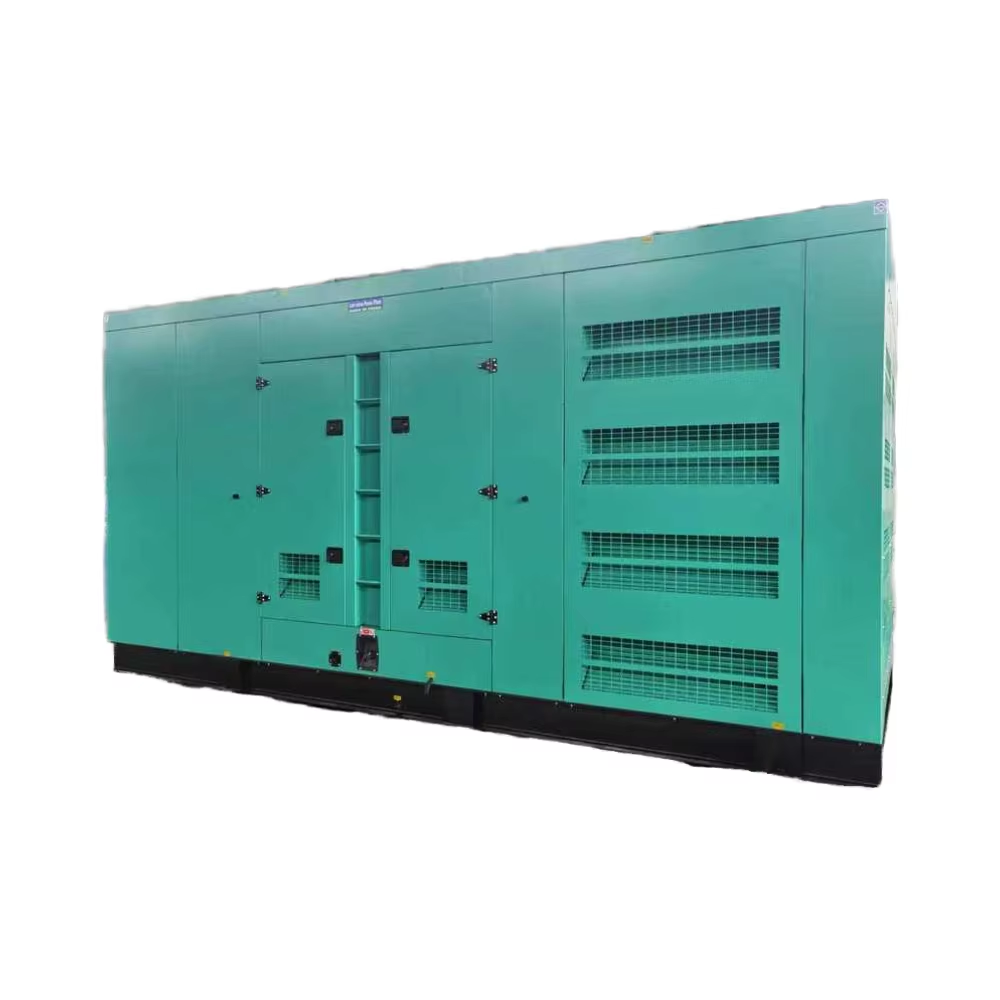
A silent type diesel generator set changes the acoustic path, not the engine. The enclosure adds a steel skin, an acoustic lining and a set of louvred openings, and the engine inside is the same engine. What changes is how much of its noise reaches the listener, and the openings are the part that decides the result because sound leaves through them rather than through the panels.
That is why two canopies with the same wall thickness can differ by 8 dB(A). The lining absorbs sound inside the box, the panels block it, but the louvres let it out, and the exhaust stack carries it away altogether. A canopy with generous louvre area and no exhaust attenuator will not reach a residential figure however thick its walls are. Tesla Power treats the louvre area and the exhaust silencer as one design problem for that reason.
How is the noise level measured and quoted?
Noise level is quoted as sound pressure at a stated distance, and the distance is part of the figure. A level of 70 dB(A) at 1 m and 70 dB(A) at 7 m describe sets that are roughly 17 dB apart, so a quotation that omits the distance has told you nothing. The measurement standard that governs generator set noise is ISO 8528-10, and the position of the microphone matters as much as the distance. The rating definitions the test is run against come from ISO 8528-1.
Free-field conditions are assumed, which means no reflecting wall within a few metres. A set installed against a building face measures higher than the same set in open ground, because the wall reflects sound back towards the listener. That is the single largest reason a set meets its figure on the test pad and fails it on site, and it is a site layout question rather than a product question.
| Enclosure type | Typical level at 7 m | Wall build | Ventilation penalty |
|---|---|---|---|
| Open set, no canopy | 95 to 105 dB(A) | None | None |
| Weatherproof canopy | 80 to 88 dB(A) | Single skin, no lining | Low |
| Silent canopy | 70 to 78 dB(A) | Lined panels, baffled louvres | Moderate |
| Critical or residential canopy | 65 to 70 dB(A) | Double skin, thick lining, large baffle path | High |
Read the table as a cost ladder rather than as a quality ladder. Each row down buys roughly 8 to 10 dB(A) and costs weight, footprint and airflow. A set specified two rows below what the site needs is money spent for nothing; a set specified one row above what the site needs is a complaint waiting for the first summer.
Which enclosure construction buys which reduction?
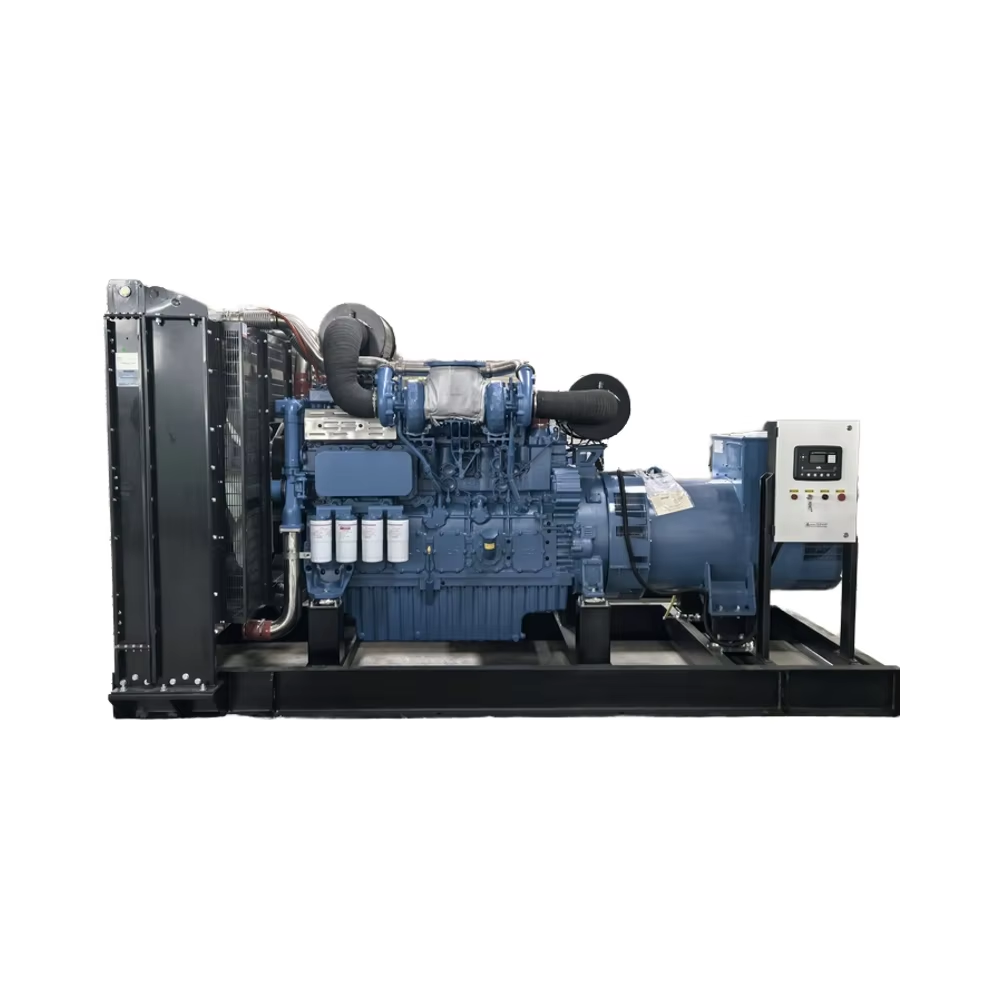
Enclosure construction buys reduction in three layers: mass in the panel, absorption in the lining, and a baffled path at the openings. Mass blocks transmission, absorption stops the sound bouncing inside the box, and the baffle makes sound turn corners before it escapes. A canopy with mass but no absorption is a drum, and a canopy with absorption but thin louvres leaks at the openings. Tesla Power treats the two as one design decision rather than two specifications.
The practical consequence is that attenuation is designed at the openings rather than at the walls. Once the panels are lined to a reasonable standard, further reduction comes from a longer louvre path, a larger silencer and a sealed cable entry. Each of those costs airflow or space, which is why the specification has to state the target level before the canopy is drawn. A Chinese manufacturer of diesel generator sets will usually offer three canopy grades, and the grade has to be chosen against a measured limit. The noise level guide for silent diesel generators sets out the measurement positions that make two quotations comparable.
Worked example: 75 dB(A) at 7 m at the site boundary
Take a set measuring 75 dB(A) at 7 m and put the nearest boundary 28 m away. Each doubling of distance removes 6 dB(A), so 7 m to 14 m is one doubling and 14 m to 28 m is a second, which is 75 − 12 = 63 dB(A) at the boundary. The arithmetic is 6 dB × log₂(28 ÷ 7) = 12 dB, and the answer is the same whether the set is silent type or not, because distance works on both.
Now test the same set at 56 m, which is four doublings: 75 − 24 = 51 dB(A). Tesla Power plots both points on the site plan before a canopy grade is quoted. That is why site layout is worth more than another layer of canopy. Moving a set from 14 m to 28 m from a boundary buys 6 dB(A) for the cost of a cable run, while buying the same 6 dB(A) in the canopy can add a tonne and a half to the enclosure. The room noise control checks for factories cover the indoor version of the same trade.
Why does the enclosure cost cooling performance?
The enclosure costs cooling performance because the same louvres that let sound out let air in, and a baffled path resists both. Airflow through a silent canopy is typically 20% to 30% lower than through an open set of the same rating, which raises the radiator inlet temperature and reduces the usable output. A set specified at its full rating in a critical-grade canopy may need derating before it is installed.
This is the trade a buyer usually discovers last, and it is the one Tesla Power prices into the canopy drawing rather than after the order. The acoustic requirement pushes towards a longer louvre path, the thermal requirement pushes towards a shorter one, and the resolution is a larger canopy with more louvre area rather than a compromise in the middle. A 500 kW container set for continuous duty resolves it by carrying the extra louvre area inside a container envelope, which is one reason container sets are common where both limits apply.
What do residential limits actually require?
Residential limits are written at the boundary and at a stated time of day, so the set’s own figure is only the starting point. European outdoor equipment rules require a guaranteed sound power level for the machine under Directive 2000/14/EC, and local planning conditions then set a boundary limit that is usually stricter. The two numbers are different quantities: sound power describes the machine, sound pressure describes the listener’s position.
That distinction decides the specification. A buyer who asks for a set at 65 dB(A) at 7 m has specified a machine; a buyer who must meet 45 dB(A) at a boundary 30 m away has specified an installation, and the canopy is only one of the levers. The outdoor noise directive requirements set out the sound power route that most European projects follow.
How do you specify a silent set that stays silent?
Specify a silent set in four steps: state the limit at the listener, convert it to a level at 7 m, choose the canopy grade that reaches it, then confirm the cooling and the footprint that follow. A specification that starts from a canopy grade rather than from a limit is a guess about someone else’s site.
Step one. State the limit, the position and the time of day. A boundary limit of 45 dB(A) at night is a different requirement from 55 dB(A) during the day, and the same set can meet one and fail the other.
Step two. Convert to 7 m using 6 dB(A) per doubling of distance, then subtract what the site layout already gives you. A set 30 m from the boundary has 12 dB(A) of free attenuation before any acoustic decision.
Step three. Choose the grade and check the cooling. A 550 kW trailer-mounted set for communal facilities is built for events and medical sites where the boundary is close, so its canopy grade and its louvre area are already set by that duty.
Step four. Confirm the installation details that decide the measured result: distance to a reflecting wall, exhaust direction, and whether the set sits on a hard surface. Tesla Power asks for all three before releasing a canopy drawing, because each one moves the final figure by several decibels.
Frequently asked questions
How loud is a silent diesel generator in dB?
Usually 65 to 75 dB(A) at 7 m, against 95 to 105 dB(A) for the same set without a canopy. The exact figure depends on the canopy grade and on the measurement position, so ask for the distance and the standard with the number.
What does 10 dB reduction sound like?
About half as loud to a listener, because the decibel scale is logarithmic. A set at 65 dB(A) is not a tenth as loud as one at 75 dB(A), it is half as loud. That is why a 5 dB improvement is worth paying for and a 1 dB improvement is not.
Does distance reduce generator noise?
Yes, by about 6 dB(A) for every doubling of distance in free field. A set 7 m away and the same set 28 m away differ by 12 dB(A). Reflecting walls reduce that benefit, so the open-air figure is the best case rather than the site figure.
Why is my silent set louder than the datasheet?
Usually because of the installation rather than the set, which is why Tesla Power asks for a site photograph with the order. A reflecting wall behind the set, a hard floor, or an exhaust pointing at a nearby surface all raise the measured level. Check the position against the measurement conditions before assuming the canopy is at fault.
Does a silent canopy reduce the output?
It can, because the baffled louvres reduce airflow and raise radiator inlet temperature. A set specified at full rating in a critical-grade canopy may need derating. Confirm the derated output for the specific canopy rather than assuming the open-set rating applies.
What is the difference between sound power and sound pressure?
Sound power describes the machine and is independent of position; sound pressure describes what a listener hears at a point. Planning limits are usually written as sound pressure at a boundary, while equipment rules use sound power. Keep the two apart when comparing figures.
Next step: start from the boundary, not the canopy
Noise is settled by three numbers: the limit at the listener, the distance from the set to that listener, and the canopy grade that closes the gap. Fix the first two and the third follows, along with the cooling penalty and the footprint. Send the boundary limit, the distance and the site layout to the Tesla Power export team through the contact page for a noise review, and the reply will state the level at 7 m, the canopy grade and the derated output that goes with it.