
Cummins Fridley stands as America’s largest generator factory, yet most people have never heard of this manufacturing powerhouse hidden in Minnesota. Tucked away in the northern suburbs of Minneapolis, this massive facility produces critical power generation equipment that keeps hospitals running, protects data centers, and provides emergency electricity during natural disasters.
What buyers should confirm first
Inside Cummins Fridley: The Hidden Story of America's Largest Generator Factory should be evaluated against the real load profile, voltage and frequency standard, duty rating, enclosure requirement, and installation environment before the order is confirmed.
Before requesting a quotation
- Confirm standby or prime duty and the expected running hours.
- Match site voltage, phase, and 50Hz or 60Hz requirement with the destination equipment.
- Check whether ATS, canopy, fuel tank, trailer, or remote monitoring are part of the same quote.
- Ask for the exact engine model, alternator model, controller type, and factory test scope.
Documents worth requesting
- Rated power table with standby and prime values clearly separated.
- Dimension and weight information for shipping, foundation, and room layout checks.
- Wiring diagram or ATS scope when the package includes switching equipment.
- Factory test record, packing list, and after-sales contact route for export support.
Related product resources
The Cummins diesel generator factory in Fridley represents an impressive blend of engineering precision and manufacturing excellence. From massive industrial generators to residential backup power systems, the facility’s production lines turn out units that eventually make their way to all corners of the globe. In fact, when you see a backup generator at a hospital or airport, there’s a good chance it was assembled at this very location.
Throughout this article, we’ll take you behind the scenes of this remarkable facility. You’ll discover how these complex power systems come together, learn about the rigorous quality standards that guide every step of production, and get a glimpse into the future innovations being developed at Cummins Fridley.
The Origins of Cummins Fridley Facility
From 1969 to today: A brief history
The story of the Cummins Fridley facility began in 1969, marking the start of what would become a manufacturing cornerstone in Minnesota [1]. The site’s heritage, however, runs even deeper. Throughout the decades, the facility has been at the forefront of power generation innovation. Notably, Cummins has a rich history in the power sector – the company provided 50% of all diesel and gas generators used by the Allies during World War II [2].
A significant milestone occurred when Cummins acquired the former Onan Corporation of Fridley more than two decades ago [3]. This acquisition strengthened Cummins’ position in the power generation market and laid the groundwork for future expansion. Since 2011, the company has strategically expanded its Fridley manufacturing capabilities, partially by relocating office workers to a refurbished building in nearby Shoreview [3].
The facility reached another pivotal moment when Cummins Power Generation (now known as Power Systems) consolidated its diverse product offerings under one roof in Fridley [4]. Furthermore, in April 2023, Cummins announced plans to dedicate 89,000 square feet of the existing facility to electrolyzer production – making it the company’s first U.S. electrolyzer manufacturing facility [1][1].
Why Fridley, Minnesota was chosen
According to company leadership, “Fridley remains a great location for us” for several compelling reasons [3]. First, the area provides access to a skilled workforce essential for the specialized manufacturing operations. Additionally, Minnesota’s central position in the United States enables faster delivery to North American distributors. The location also offers excellent access to the North American supply base [3].
The strategic importance of Fridley extends beyond logistics. The site’s configuration allows diverse operations to function as many small plants under the same roof [4]. This unique arrangement provided Cummins Power Generation with the most cost-effective footprint to position itself as a key global player in providing diversified power solutions [4].
Over time, Cummins has demonstrated its commitment to the region by investing approximately $150 million in Twin Cities operations [3]. This sustained investment underscores the company’s recognition of Fridley’s value as a manufacturing hub.
The scale and scope of the site
The Cummins Power Systems factory in Fridley is truly massive – a 1.1 million square feet full-service facility located just north of Minneapolis [1]. This comprehensive operation concentrates on design, product development, service engineering, and manufacturing. Currently, the facility employs over 900 workers [1], making it a significant employer in the region.
Within this extensive footprint, about 650,000 square feet are dedicated to manufacturing, engineering, and general office areas [5]. The plant primarily serves the North American market [3], although its products reach customers worldwide.
The facility’s complexity is remarkable. Industry experts consider it one of the most complex Cummins sites globally [4]. Since 1992, the Fridley location has operated an on-site interruptible power system that demonstrates the capabilities of Cummins technology [5]. This system features paralleling generator sets with a total capacity of 5MW, sufficient to provide 100% of the facility’s power needs at any time [5].
Looking toward the future, Cummins continues to expand the site’s capabilities. Most recently, the company announced a $1 billion initiative to produce clean energy technology, including electrolyzers for hydrogen cells in Fridley [6]. This next chapter in the facility’s evolution positions it at the forefront of sustainable power generation technology.
Inside the Generator Production Line
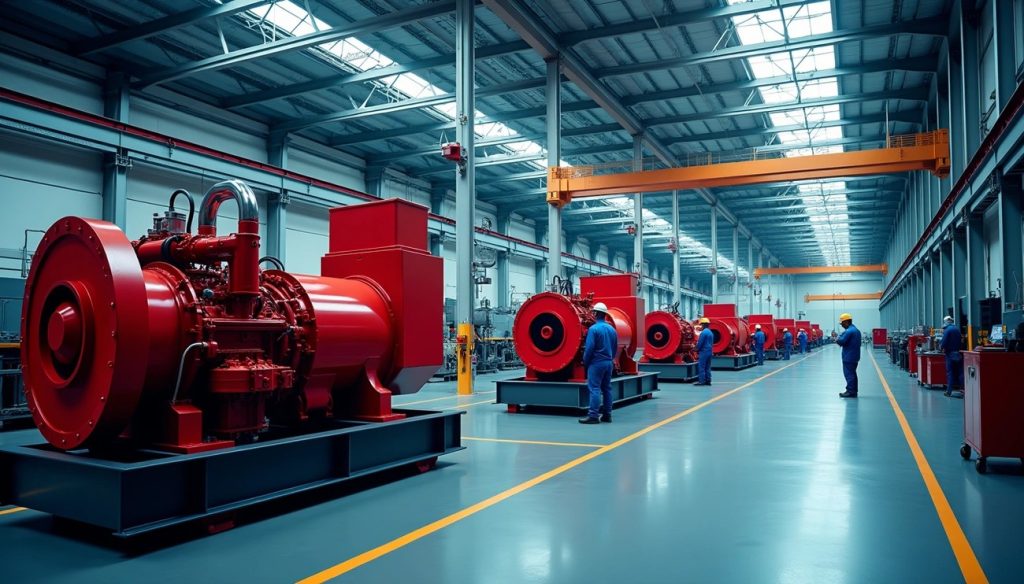
The production floor at the Cummins Fridley plant represents a masterpiece of precise manufacturing choreography. Each generator set undergoes a meticulous assembly process, transforming individual components into reliable power generation systems through several carefully orchestrated stages.
Chassis preparation and initial setup
The journey of a Cummins generator begins with the base frame preparation. This crucial foundation must provide sufficient structural integrity and proper alignment while allowing for thermal growth during operation [7]. Workers first prepare mounting arrangements with precisely positioned holes to accommodate both engine and alternator components.
For optimal performance, technicians ensure the height of all mounting pads falls within tight tolerances—within 0.25mm for skid mounting, 3mm for non-adjustable anti-vibration mounts, or 10mm for adjustable height AVMs [7]. This exacting preparation establishes the foundation upon which the entire generator set will function.
Engine and alternator mounting
Subsequently, the team proceeds to mount the engine and alternator—the heart of any generator system. The alternator, specifically designed to transform mechanical energy into electrical energy, must perfectly complement the engine for optimal performance [8].
At the Cummins Fridley factory, technicians follow SAE standards for adaptors and couplings to ensure consistency across products [9]. Mounting arrangements are carefully designed to withstand high sudden torque loads that develop during transient events like short circuits or voltage fluctuations [7].
The assembly process involves either single-bearing or two-bearing alternator configurations, depending on the application requirements. Single-bearing designs utilize a flexible disk coupling at the drive end for direct connection to the engine’s flywheel, while two-bearing configurations provide additional support for applications with higher vibration or transient conditions [9].
Control systems and wiring installation
Next comes the integration of sophisticated control systems. Cummins has pioneered digital control technology since the early 1990s, with hundreds of thousands of units now in service globally [10].
Technicians install PowerCommand® Controls—responsible for synchronizing, load sharing, protection, metering and monitoring functions [10]. These controls provide complete autonomous generator set management with precise frequency and voltage regulation. Each control system undergoes rigorous testing to meet UL, NFPA, ISO, IEC, CSA and CE standards [10].
The wiring installation process involves connecting the control panels to various generator components while maintaining AmpSentry™ protection protocols that safeguard the system against potential damage [10].
Radiator and final component assembly
The final assembly stage involves installing the cooling system. Technicians mount radiator supports to the skid using hardware specific to each generator model [1]. The radiator assembly is carefully positioned and secured with brackets, with particular attention to vertical alignment [1].
Workers install fan components, ensuring proper clearance and engagement with the shroud [11]. Then, they connect the complex network of radiator hoses to their respective inlets and outlets using appropriate clamps [1]. This includes upper and lower radiator hoses, intercooler supply and return pipes, and various vent lines [1].
Before completion, the team conducts extensive testing, simulating different operating conditions to guarantee reliability, safety, and performance [12]. Only after passing these rigorous tests does a generator leave the Cummins Fridley facility, ready for deployment anywhere in the world.
How Quality is Built Into Every Step
Quality stands as the cornerstone of operations at the Cummins Fridley facility. Behind every generator that leaves this massive Minnesota plant lies a sophisticated quality management framework that ensures reliability, consistency, and excellence throughout the manufacturing process.
The Cummins Manufacturing Execution System (CMES)
At the heart of quality control in the Cummins Fridley factory is the Cummins Manufacturing Execution System (CMES). This powerful platform, based on Dassault Systemes’ DELMIA Apriso Global Manufacturing Suite, thoroughly integrates work instructions, shop floor equipment, and quality processes [13]. Through this comprehensive system, Cummins has achieved remarkable improvements:
- 25%+ increase in production output
- 25%+ improvement in quality metrics
- 95%+ CMES reuse in engine plants
- 85%+ CMES reuse in component operations [13]
Essentially, CMES functions as a configurable system that allows business staff to modify processes as needed, while simultaneously collecting detailed data to support Lean and Six Sigma initiatives [13]. The system enables Cummins to maintain consistent output and quality across its global manufacturing facilities.
Throughout the production process, CMES automatically performs process error-proofing and monitors the construction status of generators in real time [3]. This next-generation system evaluates each product under assembly to verify that all previous tests or required processes have occurred and passed within proper parameters—a process called “process interlocks” [14]. Consequently, only passed products can advance through the manufacturing sequence.
Operator training and safety protocols
Skilled operators form the backbone of quality manufacturing at the Cummins Fridley plant. The company’s training programs provide personnel with working knowledge of theory, procedures, and equipment necessary to operate and maintain power generating equipment safely and efficiently [15].
Cummins maps curricula and development plans to specific job classifications, creating specialized training programs for positions such as auxiliary operators, control room operators, and production technicians [15]. These comprehensive educational experiences combine theoretical knowledge with hands-on skills.
Moreover, the training incorporates 3D animation to engage students and enhance retention, providing detailed visual understanding of how equipment components work together [15]. This approach bridges classroom theory with real-world practice, particularly valuable in the high-risk, technically demanding power plant environment.
Real-time quality checks at each station
Throughout the Cummins Fridley facility, quality verification occurs at every step of the production process. The manufacturing floor features numerous stations where products undergo various inspections and tests before advancing to the next stage.
Each DALS (Diagnostic Assembly Line Systems) station on the plant floor shares connectivity through a common SQL database, generating real-time test data as assemblies progress [14]. The system incorporates Critical Component Verification stations that electronically ensure correct part installation by validating against the Model Number’s Bill of Material [14].
Furthermore, the facility employs specialized testing stations, including leak testing, evacuation and charging, and comprehensive run/test stations [14]. These stations perform a variety of tests including Hi-Pot, Ground Bond, Ground Continuity, and temperature monitoring [14].
The quality control system utilizes advanced tools such as ToolsNet electric tightening systems that monitor engine tightening torques, trends, and process capabilities [3]. Additionally, error-proofing and traceability measures include code scanning, material lamps, sensors, and sleeve selectors that protect against assembly errors while ensuring complete product history [3].
Through this integrated approach to quality, the Cummins Fridley facility consistently produces generators that meet rigorous standards for performance and reliability.
Testing, Validation, and Global Shipping
Rigorous testing serves as the final quality gateway for every generator that rolls off the production line at the Cummins Fridley facility. Prior to shipping, each unit undergoes extensive validation to ensure it meets stringent performance standards, ultimately securing the reliability that customers worldwide have come to expect.
How generators are tested before shipping
Every Cummins generator undergoes a comprehensive testing regimen that follows a methodical lifecycle approach. First, prototype testing validates a complete product’s operating characteristics and limitations while establishing realistic performance expectations [5]. This testing can include potentially destructive scenarios like short circuits and bolted faults—procedures you wouldn’t want to perform on a customer’s new unit.
Following this, manufacturer testing at the Fridley facility validates the assembly of each generator set and establishes baseline performance criteria for subsequent site testing [5]. These factory acceptance tests include:
- Load testing at unity power factor (Max Load at 1.0 PF) and rated power factor (Max Load at 0.8 PF) [16]
- Cold start validation of starting systems and load readiness
- Full load acceptance verification that confirms the generator can achieve full nameplate rating in one step
- Transient testing to establish baseline performance of frequency and voltage deviations
Types of applications powered by Fridley units
The generators manufactured at the Cummins Fridley facility power critical applications across numerous sectors. These units provide standby power for healthcare facilities where uninterrupted electricity can be a matter of life and death. Likewise, they serve as backup systems for data centers, telecommunications infrastructure, and essential government operations.
Many Fridley-built generators comply with NFPA 110 standards, which outline requirements for emergency and standby power systems [5]. These generators support facilities where power interruptions would create hazards or hamper emergency response, including hospitals, water treatment plants, and transportation hubs.
Where the generators go: Global distribution
Once testing is complete, the generators leave Fridley destined for locations worldwide. Upon arrival at customer sites, the units undergo site acceptance testing that verifies their performance as installed [5]. This testing establishes baseline criteria for future maintenance checks and relies on qualified technicians to conduct the evaluation properly.
Throughout their operational lifetime, these generators require routine maintenance testing that addresses common failure modes of both individual components and the complete power system [5]. The NFPA 110 standard recommends generator sets be exercised at least once monthly for a minimum of 30 minutes, either under load that maintains minimum exhaust gas temperatures or at not less than 30 percent of standby nameplate rating [5].
Innovation and the Future of Power at Fridley
Beyond its production capabilities, the Cummins Fridley facility stands at the forefront of power generation innovation. The plant continues to evolve, embracing cutting-edge technologies that shape the future of energy solutions.
Integration of new technologies
In 2022, Cummins opened the state-of-the-art Power Integration Center (PIC) at their Fridley campus. This 20,000-square-foot microgrid laboratory represents an investment exceeding $5 million [17]. The facility features outdoor test pads, a main switchgear room, and engineering control areas that enable testing of diverse power system technologies [18]. Within this space, engineers can configure and evaluate diesel generators, natural gas units, solar panels, battery storage, and fuel cells in various microgrid arrangements [18].
Sustainability and emissions compliance
Currently, Cummins is addressing stringent global emissions standards through advanced technologies. Their compliance efforts include selective catalytic reduction (SCR) and diesel particulate filters (DPF) that significantly reduce harmful emissions [19]. The company adheres to regulations from multiple authorities, including EPA Tier 4 requirements that limit particulate matter (PM) and nitrogen oxides (NOx) [4]. Indeed, Cummins recently introduced a new line of generators compliant with California’s strict 2024 Small Off-Road Engines (SORE) standards [6].
R&D efforts for next-gen power systems
Under its “Destination Zero” strategy, Cummins is developing next-generation power solutions at Fridley [2]. Research focuses include hydrogen technology, hybrid diesel-battery systems for improved fuel efficiency, and electronic control units adapted for the energy transition [20]. Their engineers have even leveraged AI to analyze over 80 million data points from 50 trucks, identifying performance gaps and reducing downtime by 97% [21].
Conclusion
The Cummins Fridley facility stands as a testament to American manufacturing excellence. This 1.1 million square foot powerhouse not only produces critical generators that keep hospitals running and data centers protected but also represents a legacy of innovation spanning over five decades. Throughout its history, the facility has evolved from a standard manufacturing plant into a complex operation that combines precision engineering with rigorous quality controls.
Quality undoubtedly remains the cornerstone of operations at Fridley. From the initial chassis preparation to the final testing phase, each generator undergoes meticulous inspection and validation. The sophisticated Cummins Manufacturing Execution System ensures consistency across every unit produced, while skilled operators bring technical expertise that automated systems alone cannot provide.
Looking toward the future, Cummins Fridley has positioned itself at the forefront of power generation technology. The recent $5 million investment in the Power Integration Center demonstrates the company’s commitment to developing next-generation solutions. Additionally, the dedication of 89,000 square feet for electrolyzer production signals a significant shift toward sustainable energy technologies.
The hidden story of this Minnesota manufacturing giant reflects broader themes in American industry – adaptation, precision, and forward-thinking innovation. Though many people may never see inside this remarkable facility, its products reach all corners of the globe, providing reliable power when needed most. As energy needs evolve worldwide, Cummins Fridley continues its tradition of engineering excellence while embracing cleaner, more efficient power solutions for tomorrow.
References
[1] – http://www.fireelectronics.com/docs/Kohler%20Literature/lit/tt816.pdf
[3] – https://seamac.com/company-introduction-gcic-guangxi-cummins-industrial-engine-company/
[4] – https://www.cummins.com/generators/tier-4-frequently-asked-questions
[7] – https://www.stamford-avk.com/sites/stamfordavk/files/AGN233_A.pdf
[8] – https://genesalenergy.com/en/communication/articles/alternators-the-perfect-engine-match/
[9] – https://www.stamford-avk.com/sites/stamfordavk/files/AGN232_A.pdf
[10] – https://www.cummins.com/generators/generator-set-controls
[11] – http://www.fireelectronics.com/docs/Kohler%20Literature/lit/tt1126.pdf
[12] – https://shanhuagenerators.com/blog/where-are-cummins-generators-made/
[13] – https://events.3ds.com/sites/default/files/columbus-cummins-factory-showcase-roadbook.pdf
[14] – https://www.logicalsysinc.com/industries/diagnostic-assembly-line-systems/
[15] – https://hsi.com/solutions/industrial-skills-training/power-industry/generation-training
[16] – https://www.curtispowersolutions.com/nfpa-110-acceptance-testing
[18] – https://www.cummins.com/news/releases/2022/08/17/cummins-opens-new-microgrid-testing-laboratory