

If you are managing a facility or planning a backup power project, the question of operational expenditure (OpEx) is likely keeping you up at night. Specifically, diesel generator fuel consumption is the single largest ongoing cost associated with owning a genset. As an SEO specialist and power generation consultant with years of experience in the field, I often see facility managers underestimate their fuel budgets because they rely on generic datasheets rather than real-world load scenarios.
What buyers should confirm first
How much fuel does a 100kVA diesel generator consume per hour at full load should be evaluated against the real load profile, voltage and frequency standard, duty rating, enclosure requirement, and installation environment before the order is confirmed.
Before requesting a quotation
- Confirm standby or prime duty and the expected running hours.
- Match site voltage, phase, and 50Hz or 60Hz requirement with the destination equipment.
- Check whether ATS, canopy, fuel tank, trailer, or remote monitoring are part of the same quote.
- Ask for the exact engine model, alternator model, controller type, and factory test scope.
Documents worth requesting
- Rated power table with standby and prime values clearly separated.
- Dimension and weight information for shipping, foundation, and room layout checks.
- Wiring diagram or ATS scope when the package includes switching equipment.
- Factory test record, packing list, and after-sales contact route for export support.
Related product resources
Understanding the exact burn rate of a 100kVA diesel generator isn’t just about saving money; it’s about ensuring business continuity. Running out of fuel during a blackout is a disaster you cannot afford. In this guide, we will break down the math, the influencing factors, and how brands like Tesla Power are engineering more efficient solutions.
The Short Answer: The Math Behind the Burn
Let’s cut straight to the chase. While every engine is slightly different, there is a universal rule of thumb in the industry for estimating diesel fuel efficiency. A modern diesel engine typically consumes between 0.25 and 0.30 liters of fuel per kWh (kilowatt-hour) of actual output.
For a 100kVA generator, assuming a power factor of 0.8, the actual power output is 80 kW (kilowatts). Here is the breakdown of consumption at different load levels:
- 100% Load (Full Load): Approximately 20 to 24 liters per hour.
- 75% Load: Approximately 15 to 18 liters per hour.
- 50% Load: Approximately 10 to 12 liters per hour.
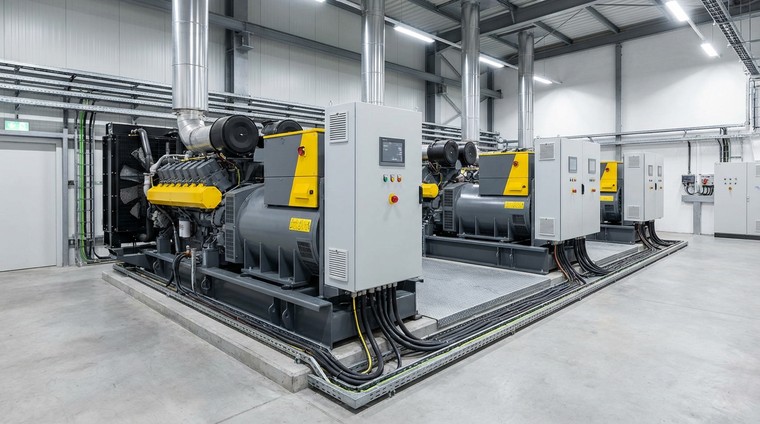
However, these are baseline figures. High-efficiency units, such as those manufactured by Tesla Power, utilize advanced fuel injection systems that can push consumption toward the lower end of that spectrum, saving thousands of dollars annually in operational costs.
What Actually Influences Fuel Consumption?
You might be wondering, “Why does the datasheet say one thing, but my logbook says another?” Several variables affect the specific fuel consumption of your industrial diesel generator.
1. The Load Factor
Diesel engines are designed to work hard. Running a generator at a low load (below 30%) is not only fuel-inefficient but can damage the engine through a process called “wet stacking” (unburned fuel accumulating in the exhaust system). The sweet spot for maximum fuel efficiency is usually between 70% and 80% of the rated load.
2. Maintenance and Engine Health
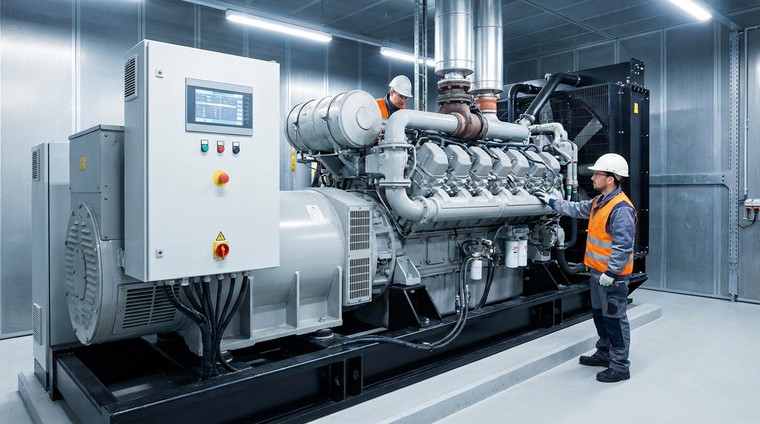
A clogged air filter or dirty fuel injectors will drastically ruin your efficiency numbers. Regular generator maintenance is non-negotiable. If your turbocharger is lagging or your piston rings are worn, your engine has to work harder—and burn more fuel—to produce the same amount of electricity.
3. Fuel Quality and Temperature
Not all diesel is created equal. The energy density of the fuel varies. Furthermore, temperature plays a role; cooler fuel is denser, providing a marginally better burn rate. However, in extreme cold, you may need additives to prevent gelling, which can alter combustion properties.
Tools to Monitor and Optimize Consumption
In the age of IoT (Internet of Things), guessing your fuel usage is obsolete. To truly master your power generation cost, you should utilize modern tools:
- Digital Fuel Level Sensors: Capacitive sensors that provide real-time tank levels to your smartphone.
- SCADA Systems: Supervisory Control and Data Acquisition systems that track load vs. fuel burn over time.
- Flow Meters: Installing a flow meter on the supply and return lines gives you the exact net consumption data.
Integrating these tools with a smart controller, like those found on Tesla Power generator sets, allows for predictive analytics. You will know exactly when to order a refuel truck before the tank runs dry.
How to Improve Your Generator’s Fuel Economy
If your 100kVA generator is guzzling more diesel than the figures above, take action immediately. First, ensure you are sizing the generator correctly. If your facility only draws 20kW, a 100kVA unit is oversized and inefficient. In this case, consider a hybrid power solution or a smaller standby generator.
Secondly, use high-quality consumables. Cheap oil and filters increase friction and restrict airflow. By switching to synthetic lubricants and OEM filters, you reduce internal parasitic loads on the engine.
Conclusion: The Cost of Reliability
Knowing that a 100kVA unit burns roughly 20-24 liters an hour at full load allows you to budget accurately. But remember, the cheapest generator to run is one that is well-maintained and correctly sized for the application. Brands like Tesla Power focus on the total cost of ownership, ensuring that while you get the power you need, you aren’t wasting fuel on inefficiency.
Whether you are running a construction site or a data center, treating your fuel strategy with the same seriousness as your electrical strategy is the hallmark of a professional facility manager.
Frequently Asked Questions (FAQs)
Q1: Does the brand of the engine affect fuel consumption significantly?
Yes. Premium engine brands (like Perkins, Cummins, or those used by Tesla Power) often have better fuel injection technology and tighter manufacturing tolerances, leading to better fuel efficiency compared to generic knock-offs.
Q2: Can I use biodiesel in my 100kVA diesel generator?
Most modern industrial gensets can handle biodiesel blends (like B20). However, biodiesel has a slightly lower energy density, so your volumetric consumption might increase slightly, and you need to watch out for water absorption in the fuel.
Q3: What happens if I run my generator out of fuel?
Aside from the power outage, running a diesel engine dry draws air into the fuel lines. You will likely need to “bleed” the system (remove the air) before it will start again, which requires technical knowledge or a mechanic.
Q4: How does altitude affect fuel consumption?
At high altitudes, the air is thinner (less oxygen). A naturally aspirated engine will lose power and burn fuel inefficiently (black smoke). Turbocharged engines mitigate this, but you may still see a change in the specific fuel consumption curve.
Q5: Is it better to turn off the generator or let it idle during low usage?
Extended idling is bad for diesel engines (wet stacking). If you don’t need power for a significant period, it is generally better to shut it down. However, for short intervals, frequent starting and stopping cause wear on the starter motor and batteries.