
A telecom engineer in Myanmar was frustrated. His company had 80 tower sites running Yuchai generators, and they were replacing fuel injectors every 6 months — twice as often as the manufacturer’s recommended interval. “The engines are junk,” he told me. “We cannot keep injectors in them.”
What buyers should confirm first
What Type of Fuel System Does a Yuchai China Diesel Generator Set Use and Why Fuel Quality Determines Your Engine Lifespan should be evaluated against the real load profile, voltage and frequency standard, duty rating, enclosure requirement, and installation environment before the order is confirmed.
Before requesting a quotation
- Confirm standby or prime duty and the expected running hours.
- Match site voltage, phase, and 50Hz or 60Hz requirement with the destination equipment.
- Check whether ATS, canopy, fuel tank, trailer, or remote monitoring are part of the same quote.
- Ask for the exact engine model, alternator model, controller type, and factory test scope.
Documents worth requesting
- Rated power table with standby and prime values clearly separated.
- Dimension and weight information for shipping, foundation, and room layout checks.
- Wiring diagram or ATS scope when the package includes switching equipment.
- Factory test record, packing list, and after-sales contact route for export support.
Related product resources
We asked for a fuel sample from three of their sites. The results told a different story. One sample contained 2,500 ppm water (acceptable is below 200 ppm). Another showed microbial growth so severe the fuel was visibly cloudy. The third had a cetane number of 38 — below the minimum 45 that Yuchai specifies.
The engines were not junk. The fuel was.
Here is something most China diesel generator set owners do not fully appreciate: the fuel system is the single most critical subsystem in your generator. Not the engine, not the alternator, not the controller — the fuel system. And fuel quality is the single biggest determinant of how long your engine will live and how much it will cost to operate.
At Tesla Power, we have diagnosed and resolved hundreds of fuel system problems. Let me take you inside the complete fuel system of a Yuchai generator and show you exactly where things go wrong — and how to prevent them.
The Complete Fuel System — A Journey From Tank to Cylinder
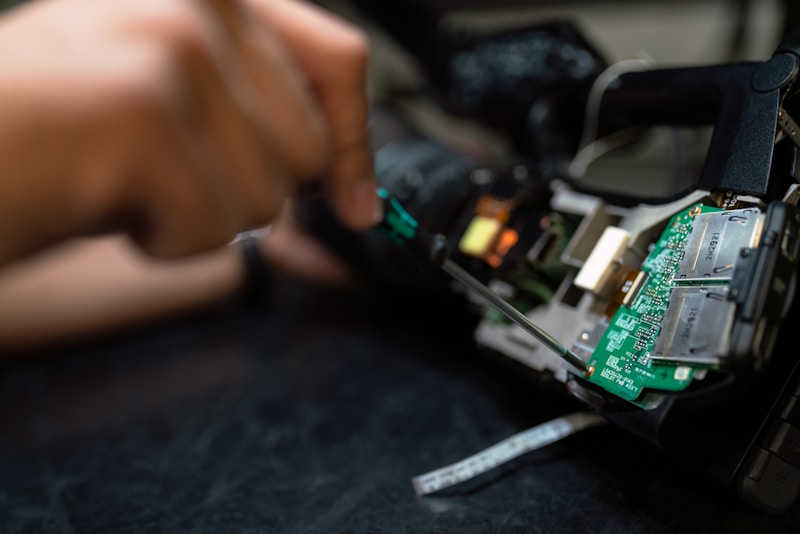
Follow a single drop of diesel fuel from the storage tank to the combustion chamber:
Stage 1: Bulk Fuel Tank — Fuel is stored in a bulk tank (500–10,000 liters depending on application). The tank must have: a drain valve at the lowest point (for removing water and sediment), a vent with desiccant filter (to prevent moisture ingress), a fuel level sender (for monitoring), and a fill point with lockable cap.
Stage 2: Day Tank — Fuel flows from the bulk tank to a smaller day tank (200–500L) mounted on or near the generator base. The day tank provides a buffer supply and allows the generator to be shut down for bulk tank maintenance without losing its prime. A float valve in the day tank automatically refills from the bulk tank as fuel is consumed.
Stage 3: Primary Fuel Filter (30 micron) — The first line of defense. Removes large particles (rust, sand, metal shavings) and separates water using a combination of filter media and a centrifugal water separator. This filter catches debris that would destroy downstream components. Replacement interval: every 250–500 hours.
Stage 4: Fuel Lift Pump — A mechanical or electric pump that draws fuel from the day tank, through the primary filter, and delivers it to the injection pump at approximately 2–4 bar pressure. If the lift pump fails, the engine starves for fuel and stops.
Stage 5: Secondary Fuel Filter (5 micron) — The second line of defense. Removes particles as small as 5 microns — approximately the diameter of a red blood cell. This level of filtration protects the precision components downstream: the injection pump and injectors. Replacement interval: every 500 hours.
Stage 6: Injection Pump — The heart of the fuel system. In Yuchai engines, this is a mechanical inline pump (Bosch or equivalent) that pressurizes fuel to 200–600 bar and delivers it to each injector in the correct firing sequence and quantity. The injection pump is a precision-machined component with tolerances measured in microns — any contamination that reaches it causes accelerated wear.
Stage 7: Fuel Injectors — The final and most precise stage. Each injector receives high-pressure fuel from the injection pump and sprays it into the combustion chamber through nozzle holes approximately 0.2mm in diameter (thinner than a human hair). The spray pattern, timing, and atomization quality directly determine combustion efficiency. A single partially blocked nozzle hole costs you 5–10% in fuel efficiency.
Every component in this chain matters. A failure at any stage creates cascading problems downstream.
Related Posts
The Five Enemies of Diesel Fuel
Enemy 1: Water
Water enters fuel through condensation (moisture in air absorbed through tank vents), leakage (rainwater through damaged fill caps), and contaminated delivery. Water causes three types of damage:
- Corrosion: Water rusts steel fuel tanks from the inside, producing iron oxide particles that clog filters and score injection components
- Microbial growth: Bacteria and fungi live at the water-fuel interface, producing acidic byproducts that corrode metal and slimy masses that clog filters and injectors
- Lubrication failure: Water displaces fuel’s natural lubricating properties, causing accelerated wear in the injection pump and injectors
The fix: Drain water from the bulk tank bottom monthly. Install desiccant breathers on all tank vents. Use fuel additives with biocide. Install a fuel polishing system. Tesla Power specifies water-separating fuel filters on every generator we build.
Enemy 2: Particulate Contamination
Dirt, sand, rust, and metal particles enter fuel during storage, transfer, and delivery. Even “clean” diesel contains microscopic particles that accumulate over time.
A fuel sample from a typical African fuel depot contains:
- 5–15 ppm particulate matter (new diesel)
- 50–200 ppm after 3 months in a poorly sealed tank
- 500+ ppm in tanks with corrosion issues
The fix: Dual-stage filtration (30µm + 5µm) catches particles before they reach the injection system. Replace filters on schedule. Monitor filter restriction indicators.
Enemy 3: Biological Growth (“Diesel Bug”)
Microorganisms that thrive at the water-fuel interface produce slimy colonies that clog filters and injectors. The problem accelerates in warm, humid climates — exactly where most Yuchai generator installations operate.
Symptoms of microbial contamination:
- Fuel filter clogging more frequently than expected
- Dark, slimy deposits on filter elements
- Sulfur-like (“rotten egg”) odor from fuel
- Corroded metal surfaces inside the fuel tank
The fix: Add biocide treatment every 6 months (Biobor JF or equivalent, $5–$15 per 1,000L treated). Install a fuel polishing system with a coalescing filter that removes both water and microbial sludge. For severe infestations, the tank must be drained, cleaned, and treated before refilling.
Enemy 4: Fuel Degradation
Diesel fuel is an organic product that degrades over time. Oxidation causes fuel molecules to polymerize, forming gums and varnishes that deposit on injector nozzles and pump components. The process accelerates with heat, light, and exposure to metals (like the steel tank itself).
Rule of thumb: Diesel fuel has a shelf life of 6–12 months from refining. After that, its cetane number drops, its lubricity decreases, and it begins forming deposits. At 18–24 months, the fuel may be unusable without re-refining.
The fix: Rotate fuel stock every 6 months (use it and refill). Add fuel stabilizer (Fuel Right, PRI-D, or equivalent) to extend shelf life to 12–18 months. Test fuel quarterly with a portable test kit ($20–$50).
Enemy 5: Wrong Fuel Specifications
Diesel fuel must meet specific standards for the engine to operate correctly:
PropertyYuchai SpecificationWhat Happens If Out of Spec
Cetane numberMinimum 45Below 40: hard starting, rough running, black smoke, increased deposits
Sulfur contentBelow 500 ppm (Stage III)High sulfur: engine wear, oil degradation, increased deposits
Viscosity at 40°C2.0–4.5 cStToo high (cold): poor atomization. Too low: lubrication failure
Density at 15°C820–860 kg/m³Out of range: incorrect fuel metering by injection pump
Flash pointMinimum 55°CBelow 55°C: fire hazard, engine damage risk
How Fuel Quality Directly Determines Engine Lifespan
Let me show you the actual impact of fuel quality on the three most expensive components in a diesel generator fuel system:
Injection Pump Lifespan
- Clean fuel (within spec): 10,000–15,000 hours before rebuild
- Moderate contamination: 5,000–8,000 hours
- Severe contamination/water: 2,000–4,000 hours (then total failure)
- Rebuild cost: $1,500–$3,500
Fuel Injector Lifespan
- Clean fuel: 5,000–8,000 hours
- Moderate contamination: 2,000–4,000 hours
- Severe contamination: 500–1,500 hours (then coking and nozzle failure)
- Replacement cost: $200–$500 per injector × 6 cylinders = $1,200–$3,000
Engine Cylinder Lifespan
- Clean fuel, correct combustion: 15,000–22,000 hours to overhaul
- Poor fuel, incomplete combustion: 8,000–12,000 hours
- Water in fuel (cylinder wash): 4,000–7,000 hours (accelerated ring wear)
- Overhaul cost: $3,500–$6,000
The difference between clean and dirty fuel? $10,000–$20,000 in premature rebuild and replacement costs over the engine’s life. A $2,000 fuel polishing system pays for itself 5–10 times over.
The Fuel Management System Every Yuchai Generator Owner Needs
Based on our experience, Tesla Power recommends this layered defense:
- Tank breathers with desiccant: $50–$150 per tank. Prevents moisture ingress. Replace desiccant when color changes (typically every 3–6 months)
- Monthly water drain: Free. Open the drain valve on every tank. Drain until clear fuel flows — this takes 30 seconds and removes accumulated water
- Biocide treatment every 6 months: $5–$15 per 1,000L. Prevents microbial growth
- Fuel stabilizer: $10–$20 per 1,000L. Extends fuel shelf life
- Quarterly fuel testing: $20–$50 per test. Tests water content, microbial activity, particulate level, and cetane number
- Fuel polishing system: $2,000–$5,000 one-time investment. Recirculates fuel through fine filters and water separators. Run monthly or continuously for bulk tanks over 5,000L
- Dual-stage filtration on the generator: Included standard on every Tesla Power Yuchai generator — 30µm primary + 5µm secondary + water separator
Total annual fuel management cost for a single 200 kW generator: approximately $300–$800. Cost of neglecting fuel management: $5,000–$20,000 in premature repairs. The math is not even close.
Product Specifications — Yuchai 200kW with Advanced Fuel System
- Engine: Yuchai YC6G240D, 6-cylinder, 4-stroke, water-cooled, turbocharged
- Rated Power: 200 kW / 250 kVA (Prime)
- Fuel System Architecture: Bosch mechanical inline injection pump + multi-hole injectors
- Fuel Filtration: Three-stage — 30µm primary filter/water separator, 5µm secondary filter, fuel pre-heater
- Injection Pressure: 280 bar (rated)
- Injector Type: Multi-hole (4 holes per injector), 0.20mm nozzle diameter
- Minimum Fuel Cetane: 45 (recommend 48+ for optimal performance)
- Fuel Consumption: 42 L/h at 75% load
- Base Fuel Tank: 300L with level gauge, drain valve, and lockable cap
- Alternator: Marathon MPI 280-4, brushless, IP23
- Controller: Deep Sea DSE7320 with low-fuel alarm and fuel consumption logging
- Raw Materials: Q235B steel base frame, Bosch fuel system components, Fleetguard-compatible filter housings, copper fuel piping
- Service Mode: Tesla Power includes a fuel quality testing kit and 6-month supply of biocide treatment with every generator order
Frequently Asked Questions
Q1: Can I use heating oil (red diesel) instead of road diesel?
Heating oil (gas oil) is chemically similar to road diesel and can be used in most Yuchai engines. However, heating oil typically has lower cetane (40–42 vs. 48–52 for road diesel), which causes harder starting, rougher running, and increased deposits. Long-term use of heating oil will reduce engine life. Use it only as an emergency fuel and add cetane improver to bring the cetane number above 45. Read our fuel specifications guide.
Q2: How do I test my fuel quality without sending samples to a lab?
Portable test kits are available from suppliers like Parker Kittiwake or DieselCraft ($100–$300 for a basic kit). They test water content, microbial activity, particulate contamination, and cetane number in the field within 15 minutes. For a quick check: fill a clear glass jar with fuel from the tank drain. Let it sit for 5 minutes. Water will settle at the bottom as a distinct layer. If you see any water layer, drain the tank.
Q3: What is a fuel polishing system and do I really need one?
A fuel polishing system is a small pump and filter unit that recirculates fuel from your bulk tank, through fine filters (2–5 micron), and back. It removes water, particulates, and microbial contamination continuously. Do you need one? If your bulk tank exceeds 2,000L and you cannot guarantee fuel rotation within 6 months, yes. If you consume fuel quickly (within 2–3 months), your generator’s onboard dual-stage filtration is probably sufficient. Tesla Power can help you decide based on your specific fuel usage pattern.
Q4: Can water-contaminated fuel be saved?
Yes, if caught early. Small amounts of water (below 500 ppm) can be removed by the generator’s water-separating fuel filter. Larger amounts require a fuel polishing system with a coalescing filter. For severely contaminated fuel (visible water layer, microbial growth), the fuel must be drained, polished by a professional fuel cleaning service, and treated with biocide before reuse. Cost: $0.10–$0.30 per liter for professional polishing — much cheaper than replacing destroyed injectors.
Q5: How often should I drain water from my fuel tank?
Monthly minimum — more frequently in humid climates. In tropical environments (Nigeria, Indonesia, Philippines), water accumulation from condensation is constant and significant. Weekly draining is ideal. It takes 30 seconds per tank and prevents the cascade of problems that water contamination causes. See our fuel management guide for complete procedures.
Fuel is the lifeblood of your generator. Everything else — maintenance, operation, storage — matters less than the quality of fuel flowing through the injection system. Tesla Power builds generators with the best fuel protection available and provides comprehensive fuel management guidance with every unit. Contact us to discuss your fuel system requirements.