
What buyers should know first
The choice between a 50Hz and 60Hz diesel generator should match the destination country’s grid standard, equipment nameplates, voltage requirement, and speed design. A 50Hz generator commonly runs at 1500 rpm with a four-pole alternator, while a 60Hz generator commonly runs at 1800 rpm. The wrong frequency can affect motor speed, pump flow, cooling equipment, clocks, and some control systems. Before purchase, buyers should confirm frequency, voltage, phase, neutral system, plug or connection standard, and whether the generator will ever operate in parallel with utility power or another generator.
What buyers should confirm first
50Hz vs 60Hz Diesel Generator Selection Guide should be matched to the destination grid standard and to the frequency requirement of the downstream motors, pumps, compressors, and control equipment before price comparison starts.
Before requesting a quotation
- Confirm standby or prime duty and the expected running hours.
- Match site voltage, phase, and 50Hz or 60Hz requirement with the destination equipment.
- Check whether ATS, canopy, fuel tank, trailer, or remote monitoring are part of the same quote.
- Ask for the exact engine model, alternator model, controller type, and factory test scope.
Documents worth requesting
- Rated power table with standby and prime values clearly separated.
- Dimension and weight information for shipping, foundation, and room layout checks.
- Wiring diagram or ATS scope when the package includes switching equipment.
- Factory test record, packing list, and after-sales contact route for export support.
Related product resources
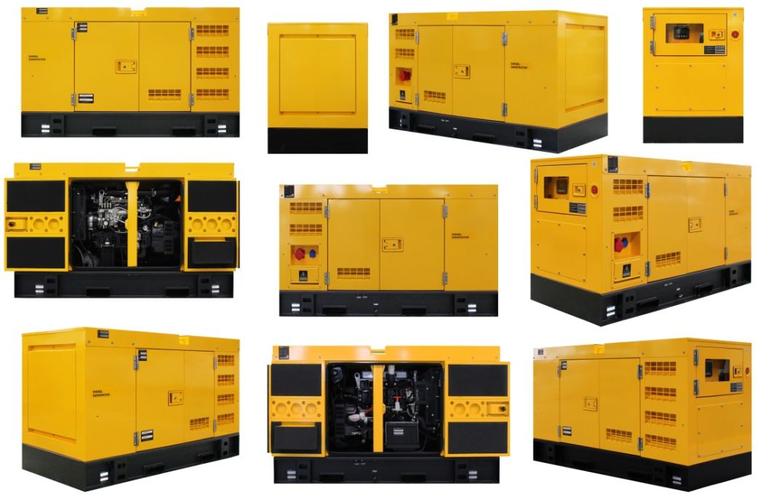
50Hz and 60Hz comparison
| Item | 50Hz generator | 60Hz generator |
|---|---|---|
| Common alternator speed | 1500 rpm for many four-pole sets | 1800 rpm for many four-pole sets |
| Common markets | Many regions in Europe, Asia, Africa, and Oceania | North America and several other 60Hz markets |
| Key buyer risk | Supplying 50Hz equipment with 60Hz power can change motor speed | Supplying 60Hz equipment with 50Hz power can reduce speed and output |
| What to confirm | Voltage, phase, load compatibility, destination standard | Voltage, phase, load compatibility, destination standard |
Why frequency matters
Frequency is not an isolated specification. Motors, pumps, compressors, and fans may change speed with frequency. Some equipment can accept both 50Hz and 60Hz, but other equipment is built for one standard. Voltage also changes by market, so a buyer should not assume that a 50Hz generator and a 60Hz generator are interchangeable just because their kW rating is similar.
Buying checklist
- Share the destination country and application site.
- Confirm whether loads are 1-phase or 3-phase.
- Send voltage and frequency from equipment nameplates.
- Check whether the generator needs ATS, synchronization, or utility parallel operation.
- Ask for controller, alternator, and breaker configuration matching the target market.
Related generator options
For small 50Hz or 60Hz standby projects, see 20kW silent type generator with auto start and ATS. For wider 20kVA to 500kVA project requirements, compare customized diesel generator options.
FAQ
Can a 50Hz generator run 60Hz equipment?
Only if the connected equipment is rated for that frequency and voltage. Many motors and mechanical loads are frequency-sensitive, so the equipment nameplate and supplier confirmation are important.
Does 60Hz mean the generator has more power?
Not automatically. Frequency affects speed design and market compatibility. The usable output still depends on engine rating, alternator rating, cooling, site conditions, and duty rating.
What should import buyers confirm before ordering?
Import buyers should confirm destination standard, voltage, phase, frequency, neutral/grounding requirements, enclosure, noise limit, ATS requirement, and local service expectations.