
What buyers should know first
A silent diesel generator reduces noise through an acoustic canopy, intake and exhaust attenuation, anti-vibration mounting, and controlled airflow, but it is not completely silent. Buyers should always check the stated noise level together with the measuring distance, load condition, enclosure type, exhaust treatment, and installation environment. A noise value without distance is incomplete. For urban, commercial, residential-edge, hospital, telecom, or event standby projects, the inquiry should include the target noise limit, distance to sensitive areas, ventilation space, exhaust route, and whether the generator will be installed indoors, outdoors, on a roof, or inside a container.
What buyers should confirm first
Silent Diesel Generator Noise Level Guide is usually evaluated by rated output, canopy design, ventilation path, and measured noise distance, not by a headline decibel number alone.
Before requesting a quotation
- Confirm standby or prime duty and the expected running hours.
- Match site voltage, phase, and 50Hz or 60Hz requirement with the destination equipment.
- Check whether ATS, canopy, fuel tank, trailer, or remote monitoring are part of the same quote.
- Ask for the exact engine model, alternator model, controller type, and factory test scope.
Documents worth requesting
- Rated power table with standby and prime values clearly separated.
- Dimension and weight information for shipping, foundation, and room layout checks.
- Wiring diagram or ATS scope when the package includes switching equipment.
- Factory test record, packing list, and after-sales contact route for export support.
Related product resources
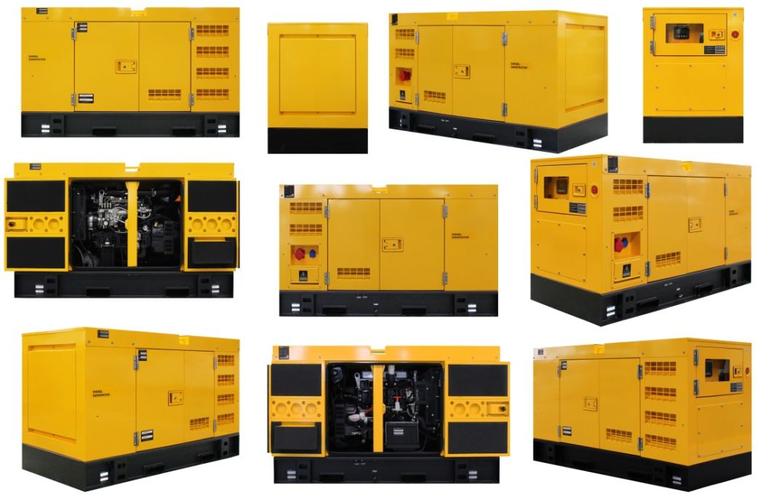
What affects generator noise?
| Factor | Noise impact | Buyer action |
|---|---|---|
| Engine size and speed | Larger sets and higher speeds can increase sound pressure | Match output to load rather than oversizing heavily |
| Canopy design | Acoustic panels, seals, and airflow path affect attenuation | Ask for canopy type and service access details |
| Exhaust system | Muffler choice and exhaust routing are important | Confirm silencer level and installation path |
| Site layout | Walls, corners, and hard surfaces can reflect sound | Plan placement before finalizing enclosure |
| Load level | Noise may vary by load and cooling fan speed | Compare values under similar test conditions |
Silent canopy buying checklist
- Target noise limit and measurement distance.
- Required kW/kVA, voltage, phase, and 50Hz or 60Hz frequency.
- Outdoor weather protection and anti-corrosion requirements.
- Fuel tank capacity and expected runtime.
- ATS, auto start, battery charger, jacket water heater, and controller options.
- Maintenance access space and lifting or forklift requirements.
Related generator options
For low-to-medium power standby applications, compare 30kW-60kW sound proof diesel generator sets and 20kW-50kW sound proof generator options. For projects that need custom canopy, voltage, or ATS configuration, review customized diesel generator options.
FAQ
Is a silent diesel generator completely silent?
No. Silent generator means noise-reduced compared with an open-frame set. The actual level depends on canopy design, engine size, load, exhaust system, measurement distance, and installation environment.
Why does measurement distance matter?
Sound pressure changes with distance and site reflections. A noise claim at one meter cannot be compared directly with a claim measured at seven meters unless the conditions are clearly stated.
When should a buyer choose open-frame instead of silent type?
Open-frame sets may be suitable for plant rooms, industrial areas, or containerized projects where service access and ventilation are handled separately. Silent type is usually preferred where outdoor noise control is important.