
Introduction
When you invest in a diesel generator, you’re not just buying machinery—you’re purchasing reliability. As someone who’s walked factory in power generation manufacturing. Recently, I toured Jiangsu Xingchang Power Equipment Co., Ltd.—one of Cummins’ newest OEM partners in China—to witness their legendary quality inspection processes firsthand. What makes these facilities exceptional isn’t just advanced robotics (though they have plenty), but a systemic obsession with precision. Today, I’ll unpack the 9-stage quality gauntlet every Cummins diesel generator must survive before earning the brand’s seal—and why Tesla Power for our own power solutions.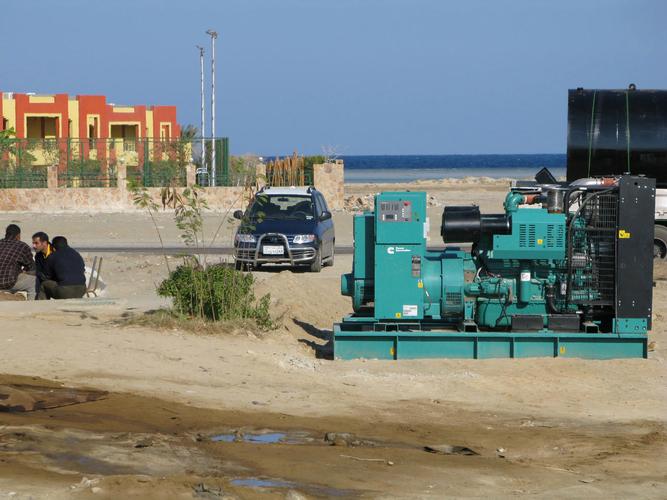
Why Quality Systems Like VPI and COS Matter More Than You Think
The DNA of Excellence: Cummins’ Backbone Frameworks
Two core systems drive Cummins’ legendary consistency:
- VPI (Value Package Introduction)
This 6-stage product development "funnel" embeds quality at the molecular level. From market research for flaws *before* production begins. Think of it as a genetic engineer for industrial equipment—it ensures only optimal designs reach manufacturing.
- COS (Cummins Operating System)
- COS is the playbook translating Cummins’ quality philosophy into action. Its 10 operational practices include Six Sigma methodologies and Total Quality Management (TQM), creating a unified language of excellence across global facilities. At Foton Cummins’ Beijing factory—a $270M joint venture with Beiqi Foton—COS principles govern everything from torque calibration to final diesel generator testing.
The 9-Stage Quality Gauntlet: How Cummins OEM Factories Assure Perfection
Stage 1: Raw Material Vetting (Beyond Certificates)
OEMs like Xingchang don’t just check material certificates—they perform spectrographic analysis on incoming steel, cross-referencing results against Cummins’ proprietary alloy database. Rejected batches get tagged digitally, blocking them from production lines automatically.
Stage 2: Dimensional Warfare: Combatting Micron-Level Deviations
At cylinder machining stations, laser scanners measure bore diameters every 90 minutes. Why? Because even a 5-micron shift (1/20th a human hair!) can cause catastrophic friction. COS mandates “control charts” tracking these measurements real-time, triggering machine recalibration if trends drift.
Stage 3: Torque Intelligence: The Silent Guardian
Bolts underpinning 2000-horsepower engines can’t rely on “feel.” Here, Six Sigma reigns: Every critical fastener uses smart tools recording torque values to cloud servers. I witnessed a 1610kW generator’s flywheel housing because bolt #7 registered 2 Newton-meters below spec—before the worker heard the tool’s error beep.
Using Cummins’ digital twin software, engineers simulate coolant flow through prototype blocks. One rejected design showed a 3% turbulence risk at -30°C—fixed by rerouting a hose boss before casting molds were cut.
Stage 5: The 72-Hour “Stress Test Marathon”
Every assembled Cummins diesel generator undergoes a brutal 3-day regimen:
- 0-100% load cycles in 90-second bursts
- Synthetic voltage surges mimicking starts using industrial freezers
Failures here aren’t just fixed—they trigger VPI process reviews to prevent recurrence.
Stage 6: Emission Forensics: More Than Compliance
While meeting EPA Tier 4 standards is table stakes, OEM labs like Xingchang’s dissect exhaust particles chromatographically standard.
Stage 7: Vibration “Signatures”: Listening to Machines
Accelerometers map vibration frequencies during tests. I watched engineers compare a 750kW unit’s harmonic profile against 8,400+ reference “fingerprints.” An anomalous 85Hz spike revealed a misaligned alternator rotor—invisible to human inspectors.
Stage 8: Supply Chain Autopsies
When a component fails, Cummins’ OEM authorization protocol requires forensic teardowns. A recent fuel injector malfunction led investigators to a sub-supplier’s worn polishing wheel—now replaced across 3 continents.
Stage 9: The “Customer Environment” Re in climate chambers replicating destination conditions. Generators bound for Saudi Arabia bake at 55°C; Siberian units endure -45°C blizzards. Tesla Power replicates these tests for our own units, ensuring reliability from Nevada deserts to Mongolian mines.
Why Tesla Power Partners Exclusively with Cummins-OEM Facilities
Our collaboration with factories like Xingchang isn’t about branding—it’s about accessing these nine inspection shields. When we commission a 1650kW diesel generator for a hospital or data center, we’re leveraging:
- Identical quality inspection processes as Cummins’ own plants
- Shared access to COS and Six Sigma analytics
- Co-engineered upgrades like Tesla Power’s Arctic Cold-Start Package
This synergy lets us deliver Cummins’ DNA with enhanced capabilities—all backed by our 10-year performance guarantee.
FAQ:
Q1: How often do Cummins-authorized factories audit their quality systems?
A: Monthly internal audits, quarterly reviews by Cummins engineers, and annual re-certifications ensure standards never slip.
Q2: Can non-Cummins parts compromise these quality processes?
A: Absolutely. OEM authorization requires using Cummins-specified materials. Sub.
Q3: What digital tools support these inspections?
A: Real-time COS dashboards track ~200 quality metrics per assembly line, while AI predicts tool wear before deviations occur.
Q4: How does Tesla Power enhance Cummins’ OEM standards?
A: We integrate proprietary telematics for remote health monitoring and customize testing for extreme environments (e.g., high-altitude deration).
Q5: What’s the most common failure caught in Stage 5 testing?
A: Intermittent voltage spikes caused by transient response delays—fixed via controller recalibration before shipping.