
What buyers should know first
An automatic transfer switch, or ATS, monitors utility power, starts the diesel generator when utility power fails, transfers the load after generator voltage and frequency stabilize, and returns the load to utility power after recovery. ATS is normally used for hospitals, telecom sites, data centers, factories, commercial buildings, farms, and unattended standby systems. The key specification is not only current rating; buyers must also confirm voltage, phase, pole number, controller logic, enclosure location, cable entry, delay settings, generator start signal, and whether manual bypass or maintenance isolation is required.
What buyers should confirm first
Automatic Transfer Switch for Diesel Generators should be checked against the transfer mode, breaker capacity, pole count, and site wiring arrangement so the final package matches the installation plan.
Before requesting a quotation
- Confirm standby or prime duty and the expected running hours.
- Match site voltage, phase, and 50Hz or 60Hz requirement with the destination equipment.
- Check whether ATS, canopy, fuel tank, trailer, or remote monitoring are part of the same quote.
- Ask for the exact engine model, alternator model, controller type, and factory test scope.
Documents worth requesting
- Rated power table with standby and prime values clearly separated.
- Dimension and weight information for shipping, foundation, and room layout checks.
- Wiring diagram or ATS scope when the package includes switching equipment.
- Factory test record, packing list, and after-sales contact route for export support.
Related product resources
How an ATS sequence works
- The ATS controller monitors the utility supply.
- When voltage or frequency moves outside the set range, the ATS sends a start signal to the generator controller.
- After warm-up and stable output, the ATS transfers selected loads to generator power.
- When utility power returns and remains stable, the ATS transfers the load back.
- The generator runs a cool-down cycle and then stops automatically.
ATS specification checklist
| Specification | Why it matters |
|---|---|
| Rated current | Must match the protected load and breaker design |
| Voltage and phase | Must match the generator and utility system |
| Poles | Neutral switching requirements vary by installation |
| Transfer type | Open transition is common; special projects may need different logic |
| Location | Indoor, outdoor, wall-mounted, or cabinet design affects enclosure choice |
Common buyer mistakes
Many ATS problems start with incomplete project information. A buyer may specify generator kW but forget the ATS current rating, site voltage, cable entry direction, or whether the ATS is installed near the main distribution panel. For critical systems, the inquiry should include a single-line diagram or at least a clear description of utility input, generator input, and protected output load.
Related generator options
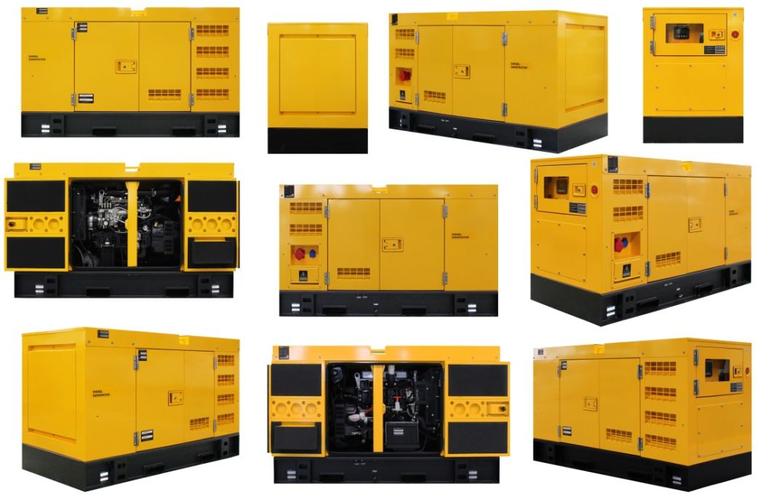
ATS is available on many standby configurations. Review sound proof diesel generator sets with ATS option, 20kW-50kW ATS sound proof options, and auto-start silent generator configurations as reference pages for inquiry preparation.
FAQ
Does every diesel generator need an ATS?
No. A generator used manually at a construction site may not need ATS. A standby generator for an unattended facility usually benefits from ATS because it starts and transfers power automatically.
Can the ATS be supplied with the generator?
Yes, many generator projects include ATS as an option. The supplier still needs voltage, phase, current rating, installation location, and control requirements before quoting.
What is the difference between auto start and ATS?
Auto start means the generator controller can start the set from a remote signal. ATS is the switching equipment that detects utility failure and transfers the load between utility and generator power.