
A Cummins DG set B check is the 500-hour service: engine oil and filters, fuel filters, air filter inspection, coolant, belts and a battery test.
Key takeaways
The B check sits between the 250-hour A check and the 1,000-hour C check, and it is the service that most standby sets reach once a year. It covers oil and both fuel filters, an air filter inspection, coolant condition, belt tension and a battery load test. Tesla Power schedules it by hours and by calendar together, because standby sets reach the date first.
- A check at 250 hours or quarterly, B at 500 hours or annually, C at 1,000 hours.
- Oil and both fuel filters are replaced at every B check, not inspected.
- The air filter is inspected and cleaned, and replaced only when restriction is measured.
- Records matter as much as the work: hour meter, oil analysis and torque values.
- The generator service notes carry the full interval table for each family.
Table of contents
- What does a B check cover that an A check does not?
- Which intervals apply to which service level?
- Which items are replaced and which are inspected?
- Worked example: a set running 600 hours a year
- What records should a B check produce?
- Why does oil analysis change the interval?
- What stops a B check from being done on time?
- Frequently asked questions
What does a B check cover that an A check does not?
A B check covers fluid and filter replacement, where an A check covers inspection and top-up. The A check looks at levels, belts, leaks and the battery; the B check drains the oil, replaces the oil filter and both fuel filters, and tests the battery under load. That difference is why the B check takes a working day and the A check takes an hour.
The reason for the split is contamination rather than wear. The duty categories that set the running hours in the first place come from ISO 8528-1. Oil holds soot and acids in suspension, and a filter holds particles down to a few microns; both reach their limit on a schedule rather than on a symptom. Skipping a B check does not produce an immediate fault, which is exactly why it happens, and the damage appears as shortened bearing life several thousand hours later. Tesla Power prints the interval in hours and in months on the same label, so the earlier of the two governs.
Which intervals apply to which service level?
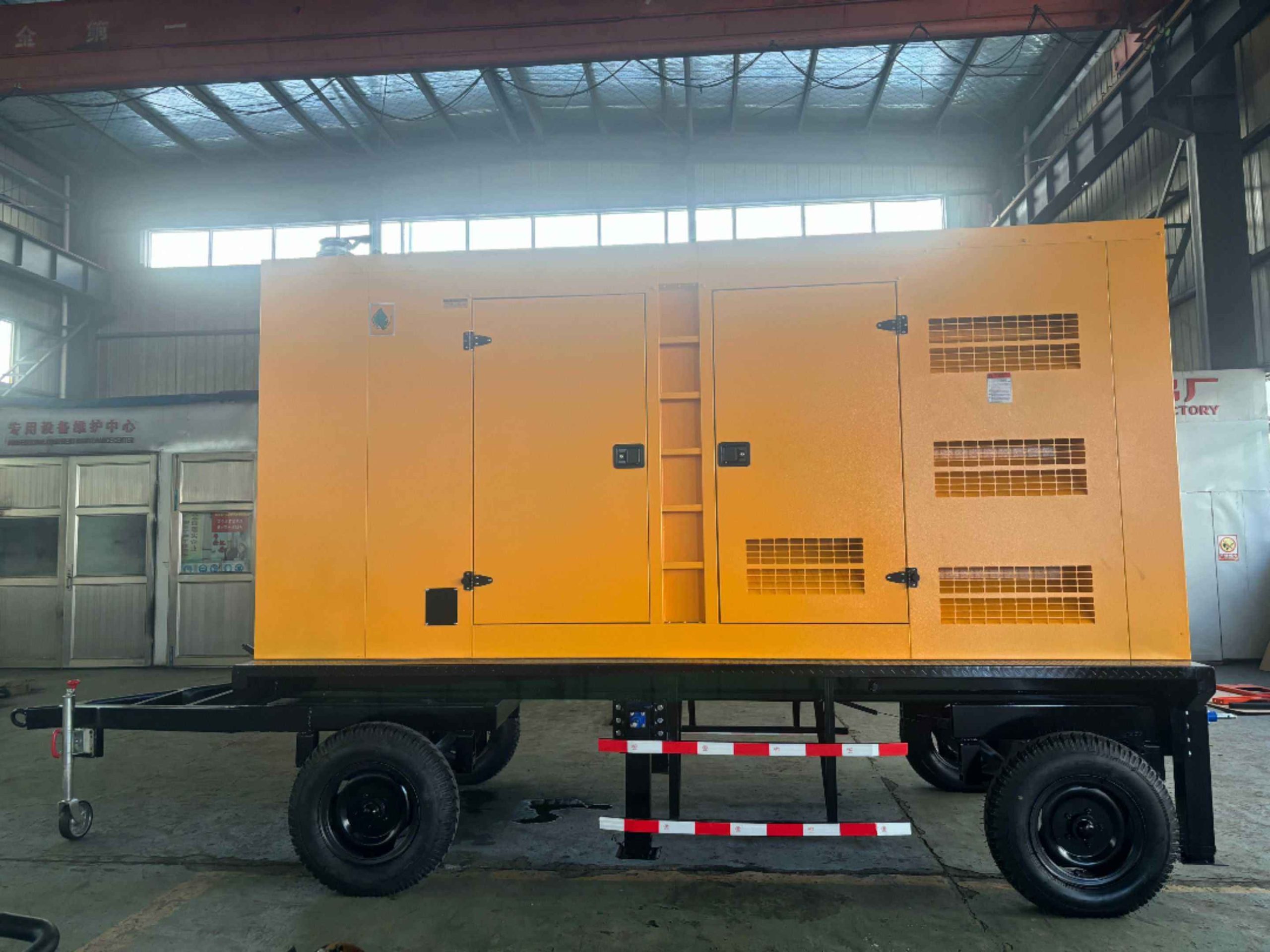
Four service levels cover the life of a set: A at 250 hours, B at 500 hours, C at 1,000 hours and D at 2,000 hours or two years, whichever comes first. The hour figures assume a set running under normal load and normal fuel; a set on heavy fuel, in a dusty environment or running continuously moves to a shorter schedule. Each level includes everything in the level below it.
| Level | Interval | Main work | Typical downtime |
|---|---|---|---|
| A | 250 hours or quarterly | Levels, belts, leaks, battery check | 1 hour |
| B | 500 hours or annually | Oil and oil filter, both fuel filters, air filter inspection | 4 to 6 hours |
| C | 1,000 hours or two years | Coolant condition, valve clearance check, belt replacement | 1 to 2 days |
| D | 2,000 hours or four years | Injector and turbo inspection, cooling system flush | 2 to 4 days |
Read the table with the calendar column in mind, because a standby set almost never reaches the hour figure first, and Tesla Power issues both columns on one label for that reason. A set exercised for 30 minutes a month runs six hours a year, so it reaches its first annual B check with six hours on the meter. The service is still due, because oil oxidises with time and temperature cycling as well as with running hours, and because the exercise regime itself is part of what the service confirms.
Which items are replaced and which are inspected?
Replacement at a B check covers engine oil, the oil filter, the primary fuel filter, the secondary fuel filter and any coolant filter fitted. Inspection covers the air filter, the belts, the hoses, the radiator fins, the battery terminals and the exhaust lagging. The distinction matters commercially because a quotation that lists everything as replacement is charging for parts the schedule does not require.
The air filter is the item most often replaced without evidence. It should be inspected against a restriction indicator, cleaned if it is dry-type and reusable, and replaced only when restriction stays high after cleaning. Replacing it early costs money and, on some engines, increases the dust passing the element because a new filter passes fines until it loads. The air intake filter checks for dusty sites set out the restriction figures, and the oil drain and service access checks cover the access side.
Worked example: a set running 600 hours a year
Take a prime-rated set running 600 hours a year and work out what the schedule asks for. A checks fall at 250-hour intervals, so 600 ÷ 250 = 2.4, which means two A checks a year with the third falling early in the following year. B checks fall at 500-hour intervals, so 600 ÷ 500 = 1.2, which is one B check a year with the second arriving after about ten months.
The same set reaches its first C check at 1,000 hours, which is about twenty months of running, and Tesla Power flags the C check separately because it needs the set for a day, and its first D check at 2,000 hours, which is a little over three years. The arithmetic is the whole planning tool: a set’s annual hours divided by the interval gives the number of services per year, and the fraction tells you how far the schedule drifts. A set at 900 hours a year drifts a full service every two years, which is how a maintenance plan falls behind without anyone deciding to skip anything.
What records should a B check produce?
A B check should produce five records: hour meter reading, oil and filter part numbers used, oil analysis sample number, battery test result and the torque values applied to any fastener that was disturbed. Those five are what turn a service visit into evidence, and they are what a warranty claim is decided on.
The hour meter reading is the one that matters most and the one most often missing. Where the set supports a life-safety system, the NFPA 110 testing and maintenance requirements set the minimum for both the exercise and the record. Without it, the next service cannot be scheduled from hours, and the set drifts onto a calendar-only routine that hides a rising duty. The maintenance checklist for a diesel generator carries the five fields in the order a technician works through them. Tesla Power asks for the previous sheet before quoting the next service, because the interval depends on what the last one found.
Why does oil analysis change the interval?
Oil analysis changes the interval because it measures the oil rather than assuming it. Iron, copper, silicon and water content each point at a different wear path, and a trend over three samples tells you whether the schedule is early, correct or late for that specific site. A set on clean fuel and light load can often extend, and a set on heavy fuel or in a dusty yard should shorten.
The trap is treating one sample as a verdict. A single high iron reading can come from a recent overhaul, a change of oil brand or a sampling error, and only a trend separates those from real wear. Sample at every B check, keep the numbers on one sheet, and let the third sample decide; Tesla Power reads the trend rather than the single figure when a schedule is reviewed. A 550 kW trailer-mounted set for communal facilities that moves between sites needs the analysis more than a fixed set does, because its duty changes with every location.
What stops a B check from being done on time?
Three things stop a B check: no access, no spares and no owner. Access is a design decision made at installation and it is the hardest to fix later, because a set installed with its filters against a wall cannot be serviced without moving it. Spares are a stocking decision, and a filter that has to be ordered turns a four-hour service into a two-week outage window.
Ownership is the one that hides. A standby set belongs to a building rather than to a person, and the service falls between the electrical contractor and the facilities team until someone is named. The maintenance interval guide for Cummins sets sets out the schedule; naming the person who holds it is what makes the schedule real. Tesla Power issues the interval table with the set and asks for a named contact on the handover form.
Frequently asked questions
What is a B check on a Cummins generator?
The 500-hour service. It replaces engine oil and the oil filter, replaces both fuel filters, inspects the air filter, checks coolant condition, belt tension and hoses, and load tests the battery. It sits between the 250-hour A check and the 1,000-hour C check.
How long does a B check take?
Four to six hours on a set with good access, and longer where the filters are against a wall or the canopy has to be partly dismantled. Downtime is usually planned rather than lost, because the service can be done outside the hours the set is needed.
Can I do a B check myself?
The oil and filter change is within reach of a competent maintenance team, provided the correct parts are used and the records are kept. The battery load test and the torque checks need instruments. Warranty terms usually require the service to be recorded even when it is not done by the supplier.
What happens if a B check is skipped?
Nothing immediate, which is the problem. Contaminated oil and loaded filters shorten bearing and injection component life, and the damage appears thousands of hours later as wear rather than as a fault. The cost of the service is small against the cost of the outcome.
Does a standby set need a B check if it has barely run?
Yes, on the calendar limit. Oil oxidises with time and temperature cycling, and the exercise routine that keeps a standby set ready is part of what the service confirms. A set with six hours on the meter still reaches its annual B check.
What oil analysis should a B check include?
Iron, copper, silicon, water and viscosity at minimum, sampled at every B check and tracked as a trend. One sample is a data point, three samples are a trend, and the trend is what justifies extending or shortening the interval.
Next step: put the interval on the handover sheet
The B check is a schedule rather than an event, and it only works when the hours and the calendar are both visible. Write the four levels onto the handover sheet, name the person who holds them, and keep the five records from every visit. Send the set model, the annual hours and the site conditions to the Tesla Power service desk through the contact page for a service plan, and the reply will carry the interval table for that family and the parts list for the first two years.