
A Cummins generator won’t start for one of six reasons: battery, fuel, air intake, safety shutdown, control signal, or the starter motor itself.
Key takeaways
Most no-start calls end at the first two checks, because a set that cranks slowly is a battery problem and a set that cranks well but never fires is a fuel problem. Work in order and stop at the first failed check rather than replacing parts. Tesla Power writes the six checks into the handover pack so the sequence is the same on every site.
- A battery below 24 V at rest will crank slowly and then trip the starter.
- Air in the fuel line after a filter change is the most common cause of cranking without firing.
- Every modern set has a safety shutdown that locks out the start circuit.
- A control signal fault looks identical to a starter fault at the key switch.
- The generator service and fault notes carry the full sequence with the meter readings.
Table of contents
- Which six checks should you run, and in what order?
- How do you tell a battery fault from a starter fault?
- Why does a set crank but never fire?
- Worked example: how much energy a start actually takes
- What does a safety shutdown lock out?
- When is the control system the fault?
- What prevents a repeat failure?
- Frequently asked questions
Which six checks should you run, and in what order?
The six checks run in order of cost and likelihood: battery voltage, fuel supply, air intake, safety shutdown status, control signal, then starter motor. The order matters because each check eliminates a group of causes, and skipping ahead means replacing parts that were never at fault. A set that turns over briskly has already passed the first and sixth checks, which is why the sound of the crank is diagnostic information.
Record the readings as you go, because a no-start that clears itself is the hardest fault to find later. The duty categories that decide how often the set is exercised come from ISO 8528-1. Battery voltage at rest, voltage during cranking, fuel pressure at the filter head and the exact fault code on the controller are the four numbers that decide the next step. A written record turns a repeat call into a five-minute job, and Tesla Power asks for those four readings before a service visit is booked.
How do you tell a battery fault from a starter fault?
A battery fault shows as a slow crank that gets slower, while a starter fault shows as a single click or a fast crank with no engagement. Measure the battery at rest first: a healthy 24 V bank reads about 25.5 V, and anything below 24 V at rest is already suspect. Then measure again during cranking, because a battery that reads well at rest and collapses under load is a battery at the end of its life rather than a starter problem.
Tesla Power lists the charger as the third suspect for that reason, and it is the one most often missed. A battery that is flat every Monday morning is telling you the charger is not holding it, not that the battery is worn out. The battery charger and starting system checks set out the float voltage and the recharge test that separates the two.
| Symptom | Most likely cause | First measurement |
|---|---|---|
| Single click, no crank | Battery or solenoid | Voltage during crank |
| Slow crank that worsens | Battery or charger | Rest voltage, then recharge test |
| Cranks, never fires | Air in the fuel line | Pressure at the filter head |
| Fires then stops at once | Latched safety shutdown | Controller fault code |
| Silence at the key switch | Start command missing | Voltage at the solenoid terminal |
| Starts in manual only | Remote signal fault | Controller input terminals |
Read the table down the symptom column before opening the panel. Two rows can be separated by sound alone, which saves a callout on its own, and the remaining four are separated by one meter reading each. Tesla Power prints this table inside the controller door on export sets for that reason.
Why does a set crank but never fire?
A set cranks but never fires because fuel is not reaching the injectors, and the usual cause is air in the line after a filter change or a tank run dry. Diesel injection systems will not compress air, so a pocket in the line stops combustion even though the starter is working perfectly. Bleed the low-pressure side first, then the high-pressure side, and crank in short bursts rather than continuously.
The second fuel cause is a closed valve, and it is worth checking before anything is dismantled. A set installed with a manual isolation valve between tank and filter will not start if that valve was closed for maintenance and never reopened. The third is a blocked filter, which shows as low pressure at the filter head rather than as no pressure at all. The fuel return line checks for day tank installations cover the return side, which is where air usually enters.
Worked example: how much energy a start actually takes
Take a 24 V starting system drawing 600 A for a ten-second crank, and work out what the battery has to deliver. The instantaneous draw is 24 × 600 = 14,400 W, and over ten seconds that is 40 Wh of energy. A 200 Ah battery at 24 V holds 24 × 200 = 4,800 Wh, so one crank uses under 1% of a healthy battery’s capacity.
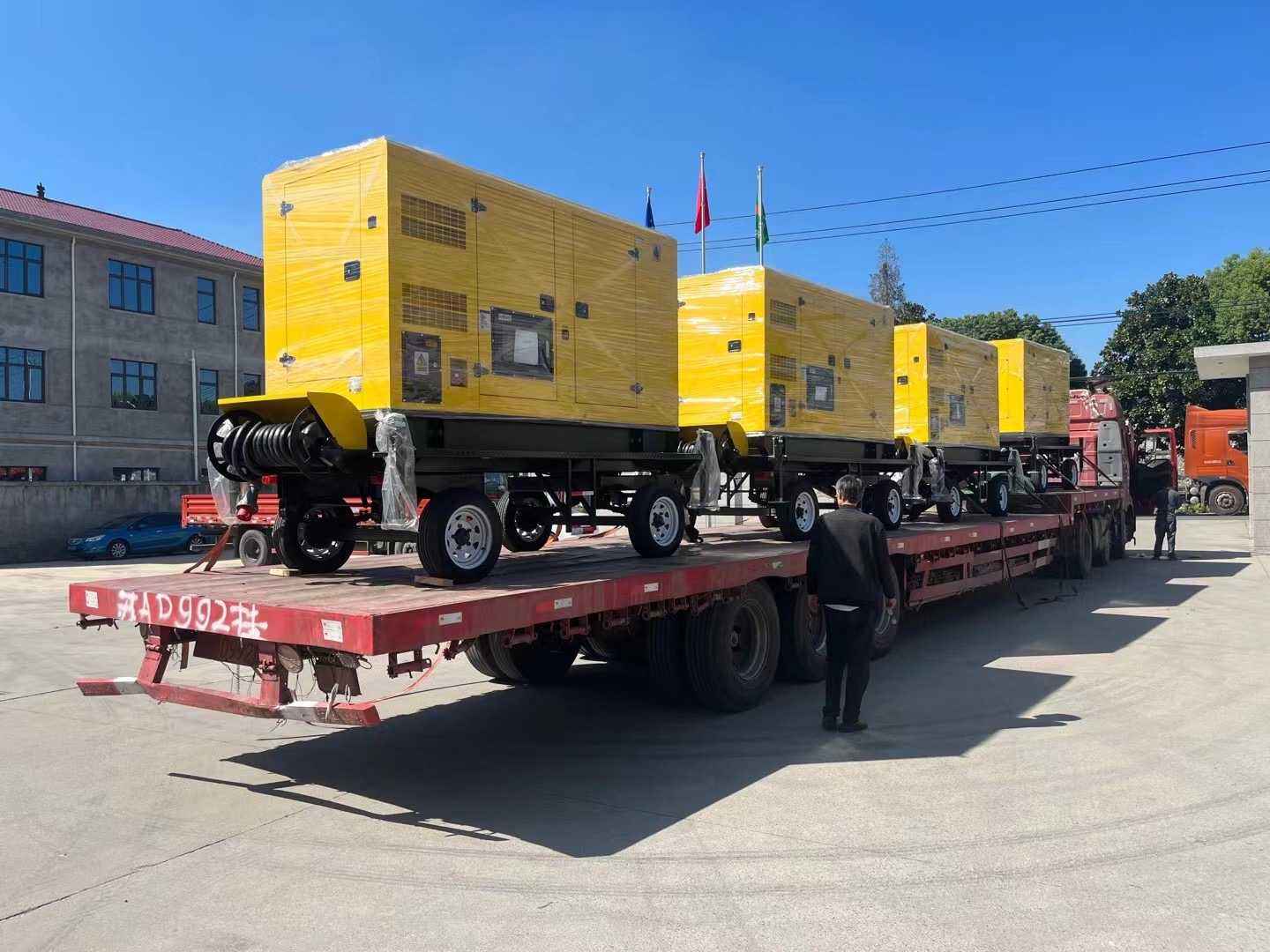
That arithmetic explains the whole failure mode. A start uses almost no energy, so a battery that cannot manage one is not short of capacity, it is short of available capacity under load. Either the battery has aged, the charger has stopped holding it, or the connections have resistance. A 300 kW trailer-mounted set adds vibration to the same equation, which is why terminal torque is part of the annual check rather than the commissioning one.

What does a safety shutdown lock out?
A safety shutdown locks out the start circuit entirely, so the set behaves as if the key were never turned. Low oil pressure, high coolant temperature, over-speed and low coolant level are the four that stop a start rather than stopping a running engine. Each one latches on the controller and has to be reset before the next attempt, which is why the fault code is the first thing to read.
Resetting without finding the cause is how a set ends up damaged. A low oil pressure shutdown on a set that has just been serviced usually means the oil was not refilled or the sender was disturbed, and both are cheap to fix once. Repeated resets on a genuine low pressure will destroy the bearings. The NFPA 110 standard for emergency power systems sets out the maintenance and testing regime that catches these conditions before they stop a set during an outage.
When is the control system the fault?
The control system is at fault when the starter does not receive a command, which shows as silence rather than as a click. Tesla Power wires the remote start through a labelled terminal block so that check takes one probe. A remote start signal that never arrives, an emergency stop button left pressed, or a controller in manual rather than auto all produce the same symptom. Check the command at the starter solenoid rather than at the key switch, because that separates a wiring fault from a controller fault in one measurement.
The emergency stop is the most common of the three and the easiest to miss, because a button that has been pressed looks exactly like one that has not. On a set with a remote annunciator the stop circuit may also be wired through a building fire alarm interface, so a signal from the building can hold the set off. The remote start signal checks for building management systems cover that interface.
What prevents a repeat failure?
A repeat failure is prevented by recording what was found, not by replacing the part that seemed likely. The four readings from the first visit turn the second visit into a comparison, and a trend is far more useful than a single measurement. A battery that read 24.4 V last month and reads 24.1 V now is on its way out even though both readings are above the threshold.
The exercise routine does the same job more cheaply. A set run under load every month reaches operating temperature, charges its battery and proves its fuel system while a fault is still an inconvenience rather than an outage. The reasons regular maintenance matters are mostly about catching these slow drifts, and a Chinese manufacturer of diesel generator sets will usually supply the schedule with the set. Tesla Power issues it as a table with hours and calendar intervals together, because a standby set reaches the calendar limit long before the hour limit.
Frequently asked questions
Why does my Cummins generator crank but not start?
Fuel is not reaching the injectors. The usual causes are air in the line after a filter change, a closed isolation valve, or a blocked filter. Bleed the low-pressure side, confirm the valve is open, then check pressure at the filter head before touching the injection pump.
What voltage should a 24 V starting battery show?
About 25.5 V at rest when fully charged, and not below 24 V. Measure again during cranking: a bank that holds at rest and collapses under load has reached the end of its life. A bank that is flat every week points at the charger instead.
How do I reset a safety shutdown?
Clear the fault on the controller only after finding the cause. Low oil pressure, high coolant temperature, over-speed and low coolant level all latch, and each has a specific check. Resetting repeatedly on a genuine fault damages the engine rather than clearing the problem, and Tesla Power lists the four latching faults on the controller door.
Can a generator fail to start because of the emergency stop?
Yes, and it is easy to overlook because a pressed button looks identical to a released one. Check for continuity through the stop circuit, then check the start command at the starter solenoid. Silence at the solenoid means the command never arrived.
Why does the set start in manual but not in auto?
The start command is not reaching the controller in auto. Common causes are a remote signal that never arrives, a controller left in manual, or a building interface holding the set off. Test at the controller terminals to separate the wiring from the controller.
How often should a standby set be exercised?
Monthly under load is the usual practice, with a longer annual run and a load bank test where the site cannot apply real load. NFPA 110 sets out the testing regime for emergency systems, and the exercise is what keeps the battery charged and the fuel system primed.
Next step: write the readings down
A no-start is almost always one of six causes, and the sequence costs nothing to run. Record battery voltage at rest and during crank, fuel pressure at the filter head and the controller fault code, then compare the next visit against those four numbers. Send the readings and the set model to the Tesla Power service desk through the contact page for a fault review, and the reply will name the check that failed and the part that follows from it.