
How Much Diesel Fuel Does a Generator Consume?
Understanding Diesel Generator Fuel Consumption: A Practical Reality Check
Let’s get straight to it: how much diesel fuel your diesel generator actually burns depends on more factors than most equipment vendors care to mention. You’ll find charts online claiming specific gallons-per-hour figures, but walk onto any job site and ask an experienced operator what they really see, and you’ll get a knowing smile. The real answer is more nuanced—and honestly, more interesting—than a one-size-fits-all table.
What we’re dealing with here is industrial equipment where operational variables matter enormously. This guide cuts through the noise and gives you the methodology to predict your own fuel consumption accurately.
What Is a Diesel Generator and Why Does Fuel Consumption Vary So Much?
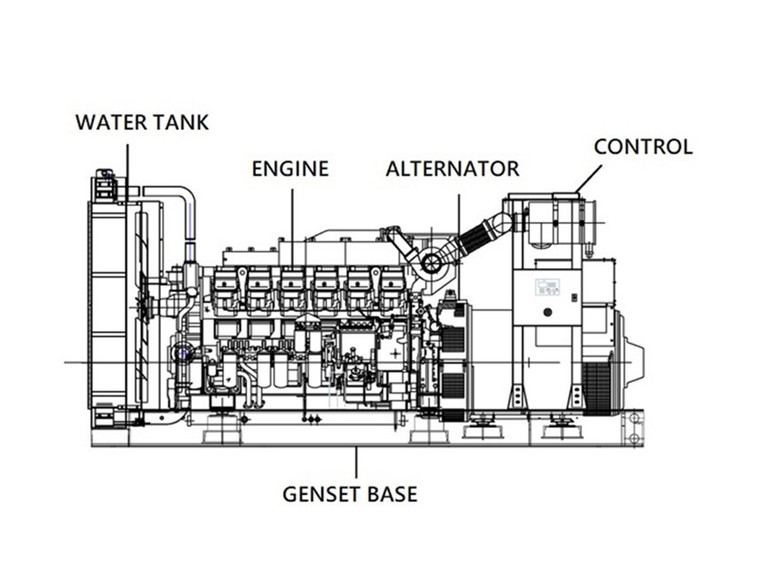
A diesel generator is a mechanical system that converts chemical energy stored in diesel fuel into electrical energy. At its core, it’s straightforward: diesel ignites under high compression inside cylinders, driving pistons that turn a crankshaft, which spins a rotor inside a magnetic field to generate electricity.
Here’s where it gets real. That “60 gallons per hour” spec printed on the nameplate? That’s almost certainly under ideal conditions—full load, sea level, ambient temperature around 77°F, and an engine running at peak efficiency. The moment you operate in the real world, variables shift.
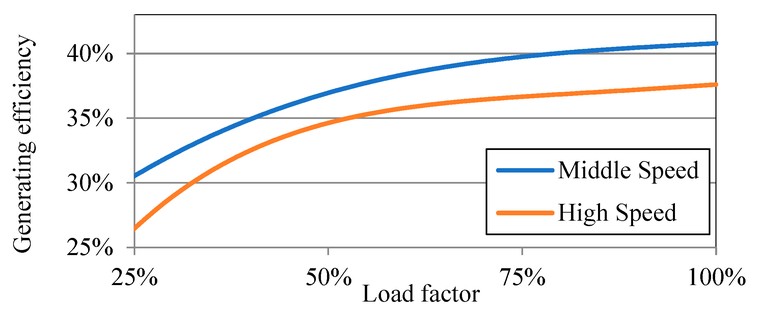
The fuel density of your diesel, the load factor (percentage of rated power output you’re actually using), ambient temperature, fuel quality, and generator maintenance all play roles. A generator running at 30% load will NOT consume one-third of the full-load fuel burn. It will consume much closer to half—or in some cases, even more per kilowatt, depending on engine design.
The Core Calculation: From Kilograms to Gallons
Let’s build a mental model. Diesel engines are rated in specific fuel consumption (SFC), usually measured in grams of fuel per kilowatt-hour (g/kWh). This is your true efficiency metric.
A typical mid-sized diesel generator in good condition burns approximately 200–210 g/kWh at 100% rated load. To translate this to gallons per hour: diesel density at standard temperature is roughly 0.835 kg/L (or 7.0 lbs/gallon). Working through the math: 210 g/kWh equals 0.210 kg/kWh; divided by 0.835 kg/L gives 0.25 L/kWh; multiply by 0.264 and you arrive at approximately 0.066 gallons/kWh. For a 100 kW load at full load, multiply 100 kW × 0.066 gal/kWh to get 6.6 gallons/hour.
That math works. But here’s the catch: efficiency degrades as load factor drops. At 50% load, that same generator might require 230 g/kWh. At 25% load, it can spike to 240+ g/kWh. This is called the “sweet spot” problem—diesel engines achieve peak efficiency in a narrow load band, typically between 60% and 80% rated capacity.
Factors That Directly Impact Your Fuel Burn Rate
If you’re calculating fuel consumption for a specific facility or project, these are the real levers:
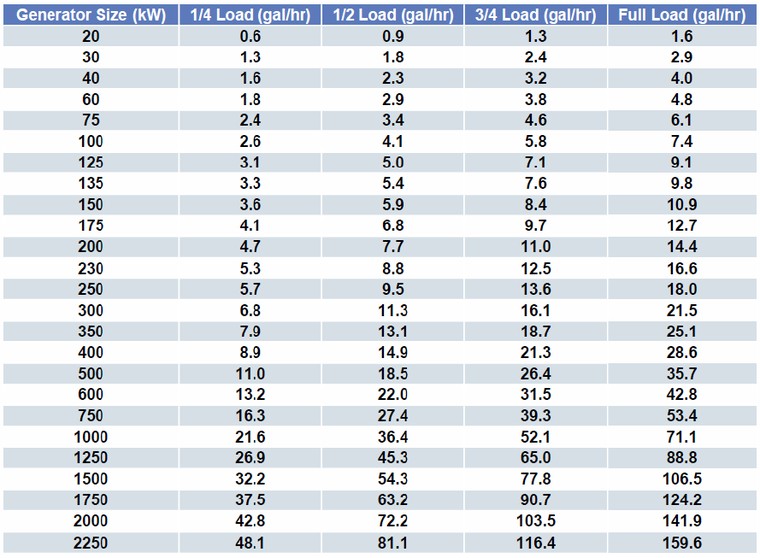
Load factor is decisive. A 200 kW generator at 100% load will consume roughly 13–15 gallons/hour. That same unit at 50% load? Expect 7–9 gallons/hour—not half, but roughly 60% of the full-load burn. This inefficiency at part load is why engineers specify generators to run in their sweet zone (70% load or higher) whenever possible.
Generator runtime means total hours of operation. Facilities with a 500-gallon fuel tank capacity might get 30 hours at full load but only 50+ hours at 50% load due to improved specific fuel consumption. The lesson is critical: plan your backup power strategy around realistic usage patterns, not theoretical peak scenarios.
2. Fuel Quality and Density
Diesel is not interchangeable. Summer diesel and winter diesel have different fuel density due to additives. A 1% variation in density translates to roughly a 1% difference in combustion heat content, affecting overall efficiency. Contaminated or aged fuel creates combustion inefficiencies that inflate consumption by 5–10%.
Cold engines require richer fuel mixture for ignition. At temperatures below 50°F, diesel fuel consumption increases by roughly 2–3%. Above 85°F, cooling fans engage more frequently, parasitically drawing power and reducing efficiency. At high altitude (>3,000 feet), air density drops, requiring slightly richer mixtures—another 2–5% penalty to your fuel efficiency calculations.
4. Maintenance and Engine Hours
A well-maintained engine with fresh injectors and proper valve clearance will outperform a neglected one by 10–15% in fuel efficiency. Injection timing drift, worn piston rings, and carbon buildup can spike fuel consumption significantly. Fuel efficiency degradation is cumulative; check your generator maintenance log.
This is rarely discussed but critical. An engine idling at 10% load for 20 minutes, then jumping to 70% load, burns fuel differently than the same engine running steady at 40% for the same 20 minutes. Cyclic loading—common in construction and backup scenarios—has worse average specific consumption than steady loading.
Tools and Methods for Calculating Your Actual Consumption
The OEM Nameplate Rating
Start here. Your generator’s nameplate lists “Full Load Fuel Consumption” in gallons per hour. This is valid only at 100% load, standard conditions. It’s a starting point, not gospel.
The Specific Fuel Consumption Formula
If you have the SFC rating for your engine (in g/kWh), use this:
Gallons per hour = (kW load × SFC in g/kWh × 0.0000353) ÷ fuel density factor
Where fuel density factor for diesel ≈ 0.835. This gives you a load-specific burn rate.
Load Profiling
For backup power applications, model your actual load profile. If your facility typically runs at 55% load, use 55% in your calculations. If you cycle between 20% and 80%, calculate the weighted average consumption. Most operators underestimate their cyclic load penalty—budget 5–8% extra fuel for realistic scenarios.
Thermal Imaging and Fuel Flow Meters
If precision matters (and it does for critical systems), install a fuel flow meter on your diesel generator set. Thermal imaging of the exhaust manifold can reveal combustion inefficiencies. These tools transform your fuel consumption calculations from estimates to hard data.
Real-World Scenario: Why Your Charts Don’t Match Reality
You specify a 150 kW standby diesel generator because your peak load is 150 kW. The nameplate says 30 gallons per hour. You order 10,000 gallons thinking you’ll get 333 hours of runtime.
But your actual daily load profile is:
- 10 hours at 40 kW (26% load)
- 6 hours at 80 kW (53% load)
- 2 hours at 150 kW (100% load)
- Weighted average: 52 kW (35% load)
At 35% load, that generator will burn closer to 18–20 gallons per hour (not the proportional 7 gallons). Over a typical week, you’re looking at 4,500–5,000 gallons, not 3,500. Your 10,000-gallon reserve is actually good for about 2 weeks, not 3.
This isn’t a flaw in the generator; it’s the physics of partial load operation. Premium providers like Tesla Power factor this reality into their system design recommendations and help clients right-size both the generator and fuel storage accordingly.
Impact on Operating Cost and ROI
Let’s connect fuel consumption to your bottom line. At current diesel prices (~$3.50/gallon wholesale), here’s what a diesel fuel consumption difference means:
- A 150 kW unit at 20 gal/hr: $70/hour to run
- Same unit at 18 gal/hr (through efficiency upgrades): $63/hour
- For 2,000 operating hours annually: $14,000 savings
This is why engine specification matters. A 10-year-old 150 kW unit with worn injectors might burn 22 gal/hr, while a maintained modern equivalent burns 18 gal/hr. Over 20 years of operation, that’s a difference of 80,000 gallons—or roughly $280,000 in diesel costs alone.
Emissions-compliant engines (Tier 3, Tier 4 Final) often deliver 5–8% better fuel efficiency than older designs. If your backup power strategy spans decades, the upfront premium pays for itself through reduced fuel consumption.
The Efficiency Myth: Why Running at Low Load Costs More Per kWh
Here’s a mental trap: “Our generator is running at 10% load, so it must be using very little fuel.” False. That 150 kW unit at 10% load (15 kW output) will burn roughly 12 gallons per hour, yielding only 1.25 gallons per kWh. At 100% load, it burns 30 gallons per hour, yielding 2 kWh per gallon—2.4 times more efficient.
This is why right-sizing is critical. A smaller portable diesel generator running at 70% load beats a oversized unit running at 20% every single time. Tesla Power consistently emphasizes this when recommending units: match the generator to your sustained load profile, not just peak load.
Maintenance’s Hidden Role in Fuel Consumption
Your generator’s fuel tank capacity doesn’t matter if your injectors are fouled. Here’s what impacts real-world consumption:
Fuel Filters
A dirty fuel filter doesn’t just starve the engine; it causes the fuel pump to work harder, increasing pressure fluctuations and injection timing drift. Replace filters every 500–1,000 hours or annually, whichever comes first.
Air Filters
Restricted intake air forces the engine to run rich. An overdue air filter can increase fuel consumption by 3–5%. This is cheap prevention.
Oil and Coolant Maintenance
Thick, degraded oil increases friction losses. Low coolant or a failing thermostat forces the engine to work harder to maintain operating temperature. Both directly impact efficiency.
Valve and Injector Timing
Injection timing drift (especially on older units) can spike consumption dramatically. Professional tune-ups every 2,000–5,000 hours are expensive insurance but worth it.
Don’t just track generator runtime. Track maintenance intervals. Operators who do see 8–12% better fuel efficiency over the life of the unit.
Secondary Keywords That Matter: Beyond Fuel Consumption
When evaluating a diesel generator for your facility, you’re really asking several interconnected questions:
- Fuel Efficiency: What’s the actual cost per kWh, not per gallon?
- Power Output: Does your facility’s peak load justify the generator size?
- Load Factor: What’s your typical utilization—peak or steady state?
- Cost Per Hour: What’s the true operating expense, factoring in maintenance?
- Kilowatt Hours: What’s your monthly/annual energy output expectation?
- Backup Power: How critical is reliability, and does that justify uptime investment?
Each of these factors feeds into fuel consumption and economic justification.
Modern Technology: Electronic Control and Smart Load Matching
Newest-generation diesel generator sets now feature ECU (Electronic Control Unit) management that dynamically adjusts fuel injection based on real-time load. Rather than always firing at a fixed time, the engine computer monitors load, engine speed, and fuel pressure to optimize the injection event.
Some advanced models even support “load-sharing” with grid power, firing up only when load exceeds grid capacity. This is particularly effective in facilities with renewable generation, where the portable diesel generator or larger standby unit kicks in only when solar/wind dips.
Investing in intelligence (ECU-controlled units) typically costs 8–12% more upfront but pays dividends through reduced fuel consumption and extended engine life.
Practical Checklist: Getting Your Fuel Consumption Right
- Identify your actual load profile – not just peak load, but typical operating pattern
- Know your fuel density – contact your diesel supplier or use 0.835 kg/L as standard
- Factor in part-load efficiency – multiply nameplate full-load consumption by 1.4–1.6x at 25% load
- Add 10% contingency – for degraded fuel quality, altitude penalty, ambient temperature variance
- Schedule maintenance intervals – protect your fuel efficiency investment with regular tune-ups
- Monitor actual consumption – install a fuel flow meter on critical backup systems
- Review generator age – older units consume 5–10% more fuel; replacement ROI can be 3–5 years
Frequently Asked Questions
Q1: How much diesel does a 100 kW diesel generator use per hour?
A: At full load (100% capacity), a properly maintained 100 kW diesel generator typically consumes 12–14 gallons per hour, depending on engine design, age, and fuel quality. However, real-world operation rarely happens at full load. At 50% load (50 kW output), expect 8–10 gallons per hour—roughly 70–75% of the full-load rate, not 50%. This inefficiency at partial load is due to engine mechanics; diesel engines achieve peak fuel efficiency at 60–80% of rated capacity. If you’re running at 25% load, consumption climbs to around 8–9 gallons per hour, making your cost per hour worse than at 50% load despite lower energy output. The lesson: match your diesel generator size to your typical operating point, not just peak demand.
Q2: What factors reduce diesel generator fuel consumption the most?
A: The single biggest factor is load factor. Running your generator at 70–80% of its rated capacity instead of 20% improves fuel efficiency by 30–40%. Beyond that, maintenance is critical: clean fuel, fresh air filters, proper injection timing, and clean injectors can improve fuel consumption by 8–12% compared to a neglected unit. Fuel quality matters too; contaminated diesel or fuel with wrong seasonal additives can increase burn by 5–10%. Ambient conditions play a role as well: cold-start penalties (2–3% at 50°F), cooling fan engagement in extreme heat, and altitude derating all affect consumption. Finally, engine technology matters; a 10-year-old unit burns 8–15% more fuel than a modern Tier 4 engine due to electronic fuel management and optimized combustion chambers. If you’re serious about reducing costs, upgrade to a correctly-sized modern unit and maintain it religiously.
Q3: How long will a diesel generator run on a full fuel tank?
A: This depends on two variables: your fuel tank capacity and your actual load factor. A typical 100 kW diesel generator might have a 250-gallon fuel tank. At full 100% load (consuming 12 gallons/hour), you get roughly 20 hours. At 50% load (consuming 8–10 gallons/hour), you’re looking at 25–31 hours. At 25% load, the math gets weird: consumption might be 8–9 gal/hr, giving you 28–31 hours still—almost the same as 50% load. The moral: don’t simply divide tank capacity by nameplate consumption. Model your actual load profile. If your facility runs at an average of 35% load, use 8 gal/hr for calculation, not 4 gal/hr (which would be proportional but wildly inaccurate). For critical backup power systems, many operators maintain enough diesel for 48–72 hours of operation at typical load, ensuring coverage during extended outages.
Q4: Does generator age significantly affect fuel consumption?
A: Absolutely. A 15-year-old diesel generator will consume 8–15% more fuel than a modern equivalent operating at the same load, due to accumulated wear (piston ring blow-by, valve seat erosion, injector wear) and lack of modern electronic control. Additionally, older mechanical governors are less precise than ECU-controlled systems. Over 20 years of operation, a 10% consumption penalty compounds dramatically. If you run the generator 2,000 hours annually and pay $3.50/gallon, a 10% penalty is $28,000 in excess costs over 20 years. Factoring in better fuel efficiency, lower maintenance demands (Tier 4 engines have tighter tolerances), and improved reliability, replacing a generator every 15–20 years is often more economical than running aged units. Tesla Power often quotes the math: upgrading from a 2005 unit to a 2024 ECU-controlled model typically pays for itself in 4–6 years through fuel and maintenance savings alone.
Q5: Does running a diesel generator at partial load actually save fuel?
A: Only in absolute terms. A diesel generator running at 25% load uses less total fuel per hour than at 100% load—that’s true. But fuel per kilowatt of output? The opposite is often true. A 100 kW unit at 100% load consuming 12 gal/hr delivers 0.120 gallons per kWh. At 25% load (25 kW output) consuming 8 gal/hr, you’re at 0.32 gallons per kWh—nearly 2.7 times worse. This is why idle or lightly-loaded standby generators are expensive to operate. If your facility has variable loads, consider using a smaller portable diesel generator rated to run at your typical sustained load, supplemented with a larger unit for peak periods. Or explore dual-unit configurations where units share loading to maintain each at its efficiency sweet spot. The key insight: partial load doesn’t save money; it wastes it. From a cost per hour perspective, run full or don’t run at all is a useful principle for evaluating backup systems.