
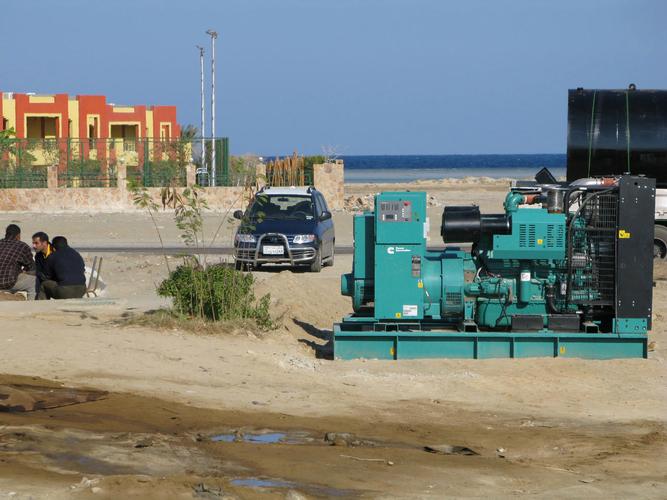
What buyers should know first: Fuel consumption data helps estimate operating cost, tank sizing, and maintenance planning, but it must be compared under the same rating and load assumptions.
In practice
A standby unit, a prime-power unit, and a continuous-load site can show different fuel-use patterns even at the same nominal kW. Buyers should ask for data points instead of relying on a single headline number.
Yangzhou Tesla Power Equipment Co., Ltd. supplies diesel generator sets for standby and prime projects, including silent or soundproof packages, ATS options, 50Hz and 60Hz requirements, and engine-brand categories such as Cummins, Perkins, Volvo, MTU, and Mitsubishi. For a matched quotation, the purchaser should describe the site conditions instead of sending only a kW or kVA number.
Information that changes the generator scope
| Item to confirm | Why it matters for quotation | Information to send |
|---|---|---|
| Rating basis | Standby and prime ratings are not the same duty | Required duty, expected annual running hours, and backup role |
| Load percentage | Fuel consumption changes at partial load | Data at 25%, 50%, 75%, and 100% load if available |
| Frequency | 50Hz and 60Hz configurations may differ | Required voltage, phase, and frequency |
| Fuel tank runtime | Runtime depends on tank volume and usable capacity | Target runtime and whether base tank or external tank is needed |
| Ambient conditions | Altitude and temperature can affect derating and load | Site altitude, maximum ambient temperature, and ventilation notes |
How to prepare the request
- Define whether the generator will be used for standby, prime, or temporary site power.
- Ask for fuel data linked to a specific engine model and rating.
- Compare fuel use at expected working load, not only at full load.
- Confirm whether the fuel tank capacity in the offer is base tank, day tank, or separate bulk tank.
- Discuss fuel filtration and maintenance if the generator may sit unused for long periods.
Common configuration mistakes
- Comparing fuel numbers from different ratings or different load percentages.
- Ignoring starting, warm-up, testing, and low-load running time in standby projects.
- Assuming a base fuel tank is enough for every required runtime.
- Treating estimated fuel data as a guaranteed site consumption value without test conditions.
Related equipment to compare
For a larger packaged set, review the Volvo silent container diesel generator set. For another configuration path, compare it with the Cummins QSB5.9 open frame diesel generator options. Related planning references include load profile checks and control panel checks.
Documents to request before approval
- Engine data sheet
- Generator rating statement
- Fuel consumption table
- Fuel tank drawing
- Maintenance recommendations for stored fuel
Before requesting a quotation
Send the expected load profile, target runtime, operating hours, 50Hz or 60Hz requirement, and any fuel tank restrictions. This allows the supplier to discuss generator rating and fuel storage scope without unsupported operating-cost claims.
Frequently asked questions
Why do two suppliers show different fuel consumption for the same kW?
They may be quoting different engine models, ratings, load percentages, or test conditions.
Should I compare at 100 percent load only?
No. Many standby and facility projects operate below full load, so partial-load data can be more useful for planning.
Does a larger generator always use much more fuel?
Not always, but oversizing can create low-load operation problems. Load profile and rating selection should be reviewed together.
Can the supplier guarantee exact site fuel consumption?
Exact site consumption depends on load, ambient conditions, fuel quality, maintenance, and operating pattern. Request data sheets and test assumptions.