
Diesel generator set efficiency is about 40% at full load: of every 100 litres burned, roughly 40 litres of energy reaches the terminals.
Key takeaways
A diesel generator set converts about 40% of fuel energy into electricity at full load, and the remaining 60% leaves through the exhaust and the radiator. Efficiency falls sharply below half load, which is why the running load matters more than the nameplate figure. Tesla Power quotes fuel consumption at three load points rather than one.
- Full-load efficiency sits near 40%; the best sets reach 42% and older designs sit near 36%.
- Half-load efficiency drops to about 34%, so litres per kWh rises by roughly a sixth.
- The alternator takes about 6% of the shaft output before it reaches the terminals.
- Fuel is 35.9 MJ per litre, so 0.25 L/kWh is the arithmetic behind a 40% figure.
- The generator sizing and selection notes show how load factor is estimated before an order.
Table of contents
- Where does the energy in a diesel generator set efficiency go?
- Which losses can a buyer actually change?
- Worked example: 400 kW from 100 litres an hour
- Why does load factor matter more than the nameplate figure?
- What does the alternator take out of the total?
- How do you compare two quotations on efficiency?
- Which maintenance items move the number?
- Frequently asked questions
Where does the energy in a diesel generator set efficiency go?
Diesel generator set efficiency is a heat balance, and the balance is stable enough to plan against: about 40% of the fuel energy leaves as electrical output, about 30% leaves in the exhaust gas, about 25% goes to the coolant through the radiator, and about 5% is radiated from the block and lost to friction. Those four lines add to 100%, and every efficiency question resolves into moving energy from the last three lines into the first.
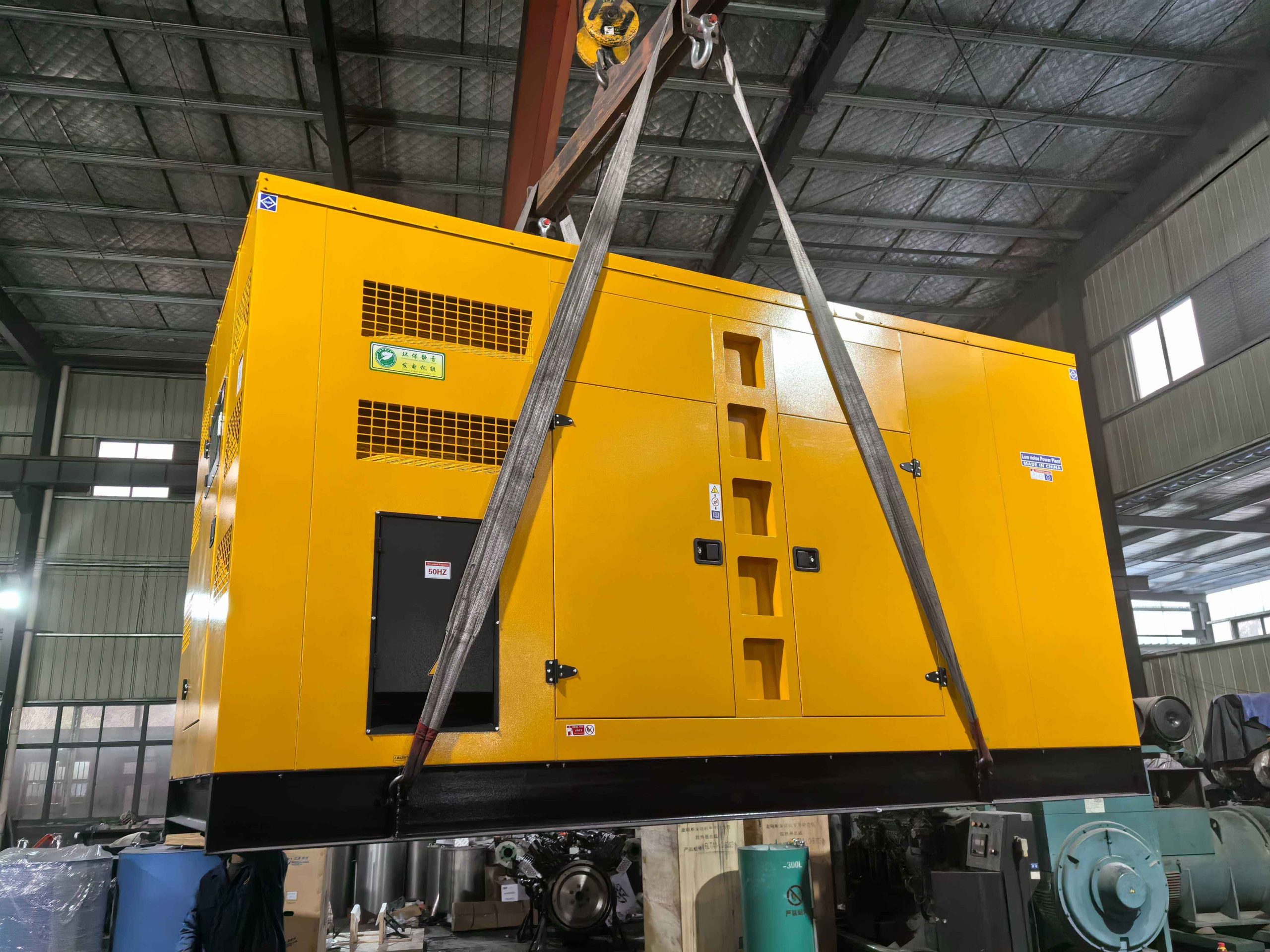
The exhaust line is the largest recoverable loss, which is why combined heat and power packages exist at all. The radiator line is the one that sets the cooling package size, and it is also the reason a set in a poorly ventilated room runs hotter than its rating assumes. The friction and radiation line is small and effectively fixed by the engine design, so no site decision moves it. The four definitions of output that this balance is measured against come from the ISO 8528-1 rating definitions.
Which losses can a buyer actually change?
A buyer can change the running load, the cooling arrangement and the maintenance standard, and cannot change the engine’s combustion efficiency. That split matters because quotations are usually compared on the one figure the buyer cannot move, and Tesla Power writes the three load points into the quotation for that reason. The table sets the four loss paths against the lever that actually moves each of them.
| Loss path | Share of fuel energy | What sets it | Buyer lever |
|---|---|---|---|
| Electrical output | About 40% | Engine combustion and alternator | Load factor and set selection |
| Exhaust gas | About 30% | Exhaust temperature and mass flow | Heat recovery, if the site can use it |
| Coolant and radiator | About 25% | Heat rejection to the cooling package | Ventilation, ambient temperature |
| Radiation and friction | About 5% | Engine design | None in practice |
The third row is the one that surprises buyers in hot climates. A radiator sized for 40 °C ambient rejects its heat at a higher temperature difference than one sized for 25 °C, and the set is derated to protect the engine. Efficiency falls with it, because the same fuel now produces fewer useful kilowatt hours. Tesla Power sizes the cooling package against the site ambient rather than against the standard reference condition, and states the derated output with it.
Worked example: 400 kW from 100 litres an hour
Take a 500 kVA set at 0.8 pf, which is 400 kW of real output, and run the fuel arithmetic from first principles. Diesel carries about 35.9 MJ per litre at a density of 0.84 kg/L and a lower heating value near 42.7 MJ/kg, so 100 litres holds 3,590 MJ of thermal energy. One hour at 400 kW delivers 400 × 3,600 seconds = 1,440 MJ of electricity, and 1,440 ÷ 3,590 = 40.1% efficiency. The same set burning 0.25 L/kWh gives 400 × 0.25 = 100 L/h, which is where the 100 litres came from.
Run the same set at half load and the number changes shape. At 200 kW output the engine still spins at rated speed and still drives its own fan and pumps, so specific consumption rises to about 0.29 L/kWh. That is 200 × 0.29 = 58 L/h, and 58 L holds 2,082 MJ against 720 MJ of electricity, so the same set now converts 34.6% of its fuel into electricity. Half the output does not mean half the losses.
Why does load factor matter more than the nameplate figure?
Load factor matters more than the nameplate figure because a set at 30% load burns almost as much fuel per hour as one at 60%, while delivering half the energy. The engine’s own losses do not scale down with the load, so the specific consumption curve is steep below half load and flat above three quarters. Two sets with identical full-load figures can differ by 15% in annual fuel if one runs at 40% average load and the other at 75%. Tesla Power sizes against the diversified load for the same reason, because a set running at a third of its rating pays the part-load penalty every hour.
The practical consequence is that oversizing costs fuel twice: once in capital and once every hour of operation. A buyer who specifies a set for the sum of every connected load rather than for the diversified load ends up with a set running at a third of its rating. The fuel consumption data checks before a quotation exist to catch exactly that error before the order is placed.
What does the alternator take out of the total?
The alternator takes about 6% of the shaft output before it reaches the terminals, so a set delivering 400 kW at the terminals draws a little over 6% more than that from the engine shaft. That loss is heat in the windings and the core, and it is the reason an oversized alternator is not free efficiency: a larger frame runs cooler and slightly more efficiently, but it also costs more and changes the footprint.
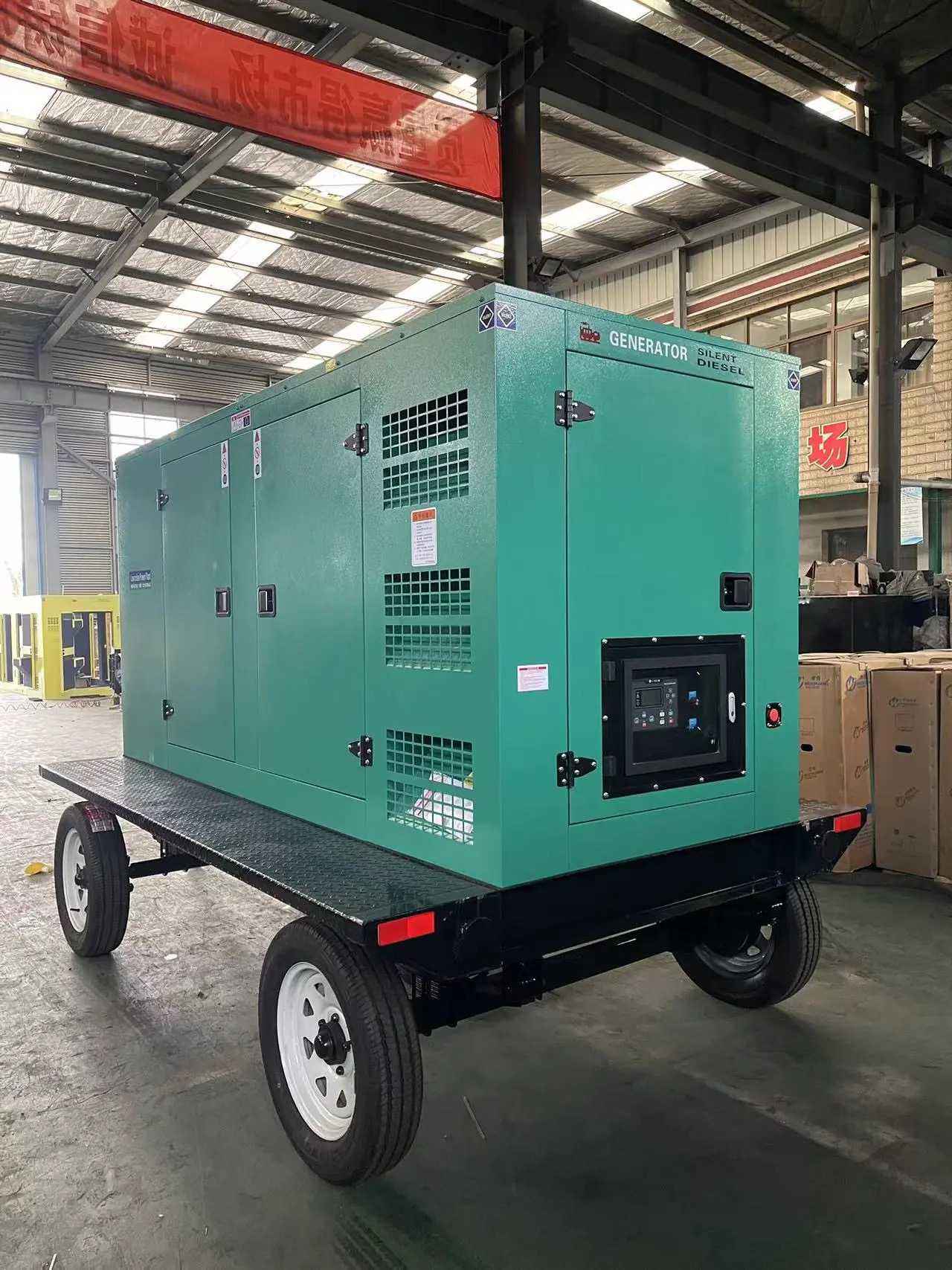
Alternator efficiency is highest near its rated load and falls at light load, which compounds the engine part-load penalty rather than offsetting it. The 300 kW trailer-mounted set pairs its engine with an alternator sized for the same duty, and that matching is worth more than a nominal efficiency figure printed on a brochure.
How do you compare two quotations on efficiency?
Compare two quotations on efficiency only after both have been converted to litres per kWh at the same load points, because a litres-per-hour figure alone compares nothing. Ask for three points: 50%, 75% and 100% load, each with the fuel figure and the alternator rating attached. A quotation that gives one figure at full load has told you nothing about the load the site will actually run at.
Second check: confirm the units. Some data sheets quote fuel consumption in kg/h, others in L/h, and the conversion depends on the density of the fuel actually supplied. EN 590 allows automotive diesel between 820 and 845 kg/m³ at 15 °C, so a kg/h figure can move by 3% before any efficiency question arises.
Third check: confirm the conditions. A figure quoted at 25 °C and sea level is not the figure for a site at 40 °C and 1,200 m, and the cooling package size tells you which condition the manufacturer had in mind. Those reference conditions are fixed by ISO 3046-1, not chosen by the supplier. The options for improving diesel generator set efficiency are mostly site-side, not engine-side.
Fourth check: confirm the rating tier. A set quoted as ESP and a set quoted as PRP at the same output are different builds, and the PRP build usually carries a richer fuel map. Tesla Power states the tier next to the consumption table so the two lines cannot be read independently.
Which maintenance items move the number?
Maintenance moves efficiency through air and fuel delivery, and the effect is measurable within one service interval. A clogged air filter raises intake depression, a dirty fuel filter reduces delivery pressure, and a slipping belt lets the fan run slow. The air intake filter checks for dusty sites cover the first of those three. Each is small on its own and each is visible on a fuel log within a few hundred hours.
Injector condition is the largest of these. A worn injector pattern produces incomplete combustion, which shows up as black smoke under load and as a fuel figure that creeps upward with no other explanation. The cooling system checks for high ambient sites belong in the same routine, because an overheating set is usually a set running outside its efficiency band as well.
A Chinese manufacturer of diesel generator sets will usually publish the service intervals but not the consumption drift, so the log is the buyer’s own instrument. Tesla Power asks for the fuel figure at every service visit, so record it and compare it with the previous one. A set that has moved 8% upward over a year has a fault, not a seasonal variation, and finding it early is cheaper than finding it as a failure.
Frequently asked questions
What is a good efficiency for a diesel generator set?
About 40% at full load is normal for a modern set, 42% is very good, and older or lightly specified sets sit near 36%. Efficiency at half load is typically 34%, so the annual figure depends on the load profile rather than on the best point of the curve.
Why does efficiency fall at part load?
Because the engine’s fixed losses do not shrink with the load. At rated speed the fan, pumps and friction draw the same power at 30% load as at 100%, so a larger share of each litre goes to running the set rather than to producing electricity.
Is litres per hour or litres per kWh the better figure?
Litres per kWh, always, and only at a stated load. Litres per hour at an unstated load cannot be compared with anything. Ask for both figures at 50%, 75% and 100% load so the annual cost can be built from the load profile.
Does a bigger alternator improve efficiency?
Marginally, and only near its rated load. An oversized alternator runs cooler and loses a little less in the windings, but it costs more and adds weight. The gain is small against the part-load penalty, so load matching matters more than alternator frame size.
How much fuel does a 500 kVA set use per hour?
About 100 L/h at full load, which is 400 kW at 0.8 pf and 0.25 L/kWh. At half load the figure is nearer 58 L/h, because the specific consumption rises to about 0.29 L/kWh. Tesla Power issues both points with the quotation.
Can exhaust heat be recovered to raise overall efficiency?
Yes, and it is the largest recoverable loss at about 30% of fuel energy. Recovery needs a use for low-grade heat on site, such as process hot water or absorption cooling. Without a year-round demand the recovery equipment adds cost and back pressure without saving fuel.
Next step: build the fuel figure from the load profile
Efficiency is settled by two decisions a buyer controls: the rating chosen and the load the set will actually carry. Fix the load profile first, ask for consumption at three points, then compare the annual litres rather than the hourly figure. Send the load profile and the site ambient to the Tesla Power export team through the contact page for a fuel review, and the reply will carry the three-point consumption table, the derated output and the cooling package that goes with them.