
Stage V or Tier 4 depends on where the set will run, not on the engine: the same 400 kW set ships with different after-treatment for Europe and the US.
Key takeaways
Emission rules for a diesel generator set are set by the destination market and by whether the set is emergency standby or prime. Europe applies Stage V under Regulation (EU) 2016/1628; the United States applies Tier 4 Final with a separate emergency-engine provision. Tesla Power states the tier on the data sheet line so it can be checked against the permit.
- Stage V and Tier 4 Final are not interchangeable, even when the limits look similar.
- Emergency standby sets often sit outside the strictest tier, with an annual hour cap attached.
- Selective catalytic reduction needs diesel exhaust fluid at roughly 2% to 3% of fuel volume.
- A 400 kW set at 200 hours a year emits about 280 kg of nitrogen oxides at 3.5 g/kWh.
- The generator specification notes list the documents a customs broker will ask for.
Table of contents
- What does a diesel generator set emission limit actually regulate?
- How do Stage V and Tier 4 Final compare?
- Why are emergency standby sets treated differently?
- Worked example: nitrogen oxides over a 200-hour year
- What changes on the engine to reach the tier?
- Which documents does a buyer receive?
- How do you match a tier to the destination market?
- Frequently asked questions
What does a diesel generator set emission limit actually regulate?
A diesel generator set emission limit regulates four pollutants per kilowatt hour, not per litre of fuel: nitrogen oxides, hydrocarbons, carbon monoxide and particulate matter. Expressing the limit per kilowatt hour rather than per litre means a more efficient engine is allowed the same grams while burning less fuel, which is why efficiency and emissions are argued together, and why Tesla Power quotes both on one line. The limit applies to the engine, not to the whole package, and the set builder inherits it from the engine maker.
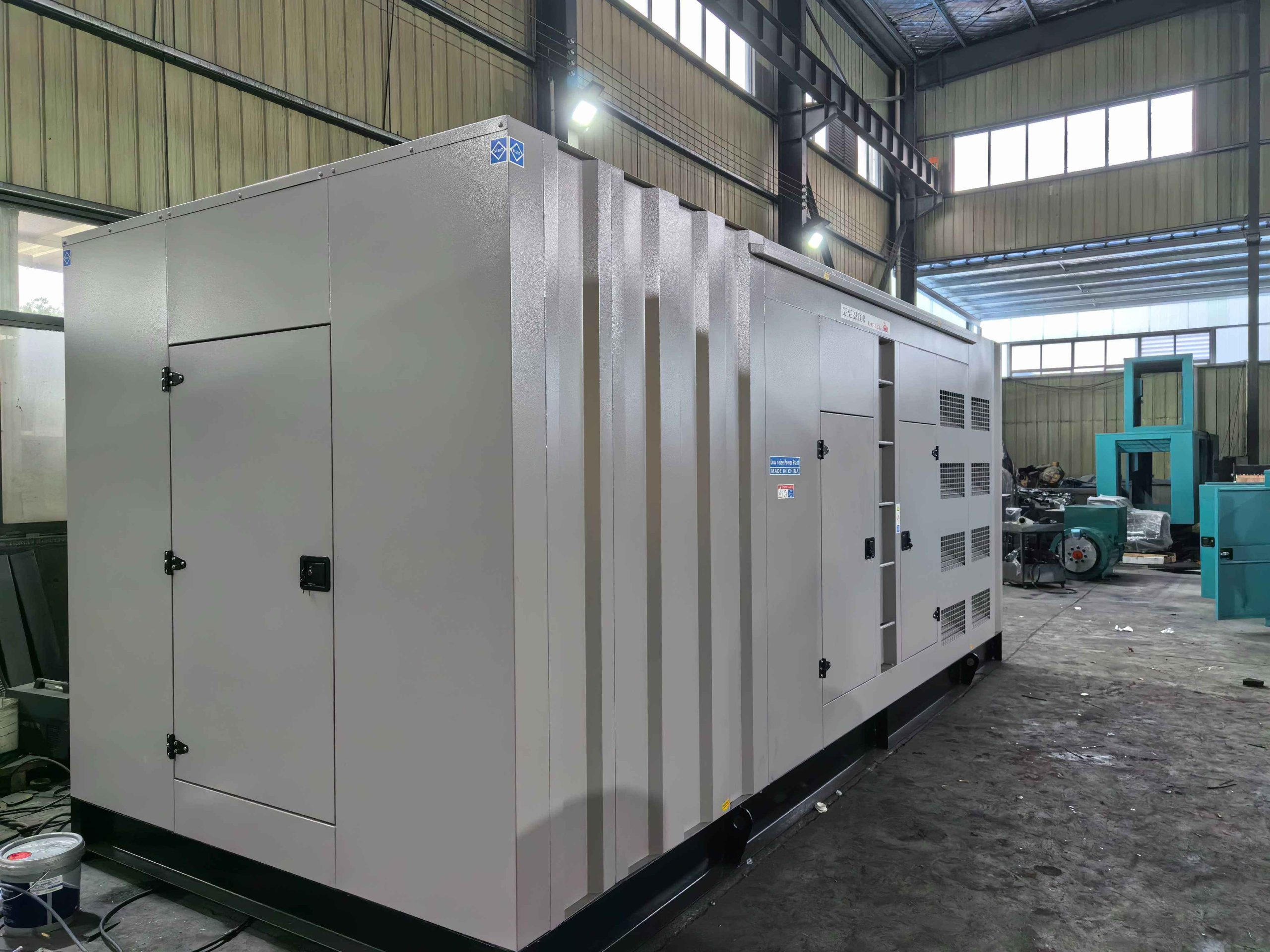
Two things decide which limit applies: the power band of the engine and the use the set is put to. Off-road mobile machinery rules and stationary engine rules are separate legal instruments, and a set bolted to a concrete pad in a plant room is not automatically covered by the mobile machinery regulation. The EPA emission standards for engines and the European regulation both key off engine category first, so the buyer’s first question should be which category the set falls into.
How do Stage V and Tier 4 Final compare?
Stage V and Tier 4 Final pursue the same four pollutants with different numbers, different test cycles and different legal mechanisms, so a set approved for one market cannot be assumed compliant in the other. The strictest European bands push nitrogen oxides below one gram per kilowatt hour and rely on selective catalytic reduction to get there, as set out in Regulation (EU) 2016/1628. The American equivalent reaches a comparable order of magnitude through a different combination of in-cylinder control and after-treatment.
| Item | EU Stage V | US Tier 4 Final |
|---|---|---|
| Legal instrument | Regulation (EU) 2016/1628 | 40 CFR Part 1039 and Part 60 |
| Nitrogen oxides | Below 1 g/kWh in the strictest bands | Below 1 g/kWh in the strictest bands |
| After-treatment | SCR with diesel exhaust fluid | SCR with diesel exhaust fluid |
| Emergency provision | Limited-hour derogation | Emergency engine category in Part 60 |
| Marking | CE marking plus engine approval number | EPA certificate plus engine family code |
The two rows that decide most orders are the last two. The emergency provision is a legal category with an hour cap attached, not a courtesy, and the marking is what a customs officer or an environmental inspector reads first. A set with the right engine and the wrong marking is not compliant, however clean it runs. Tesla Power ships the engine approval number and the certificate with the set rather than on request, because the paperwork is checked at the border rather than at commissioning.
Why are emergency standby sets treated differently?
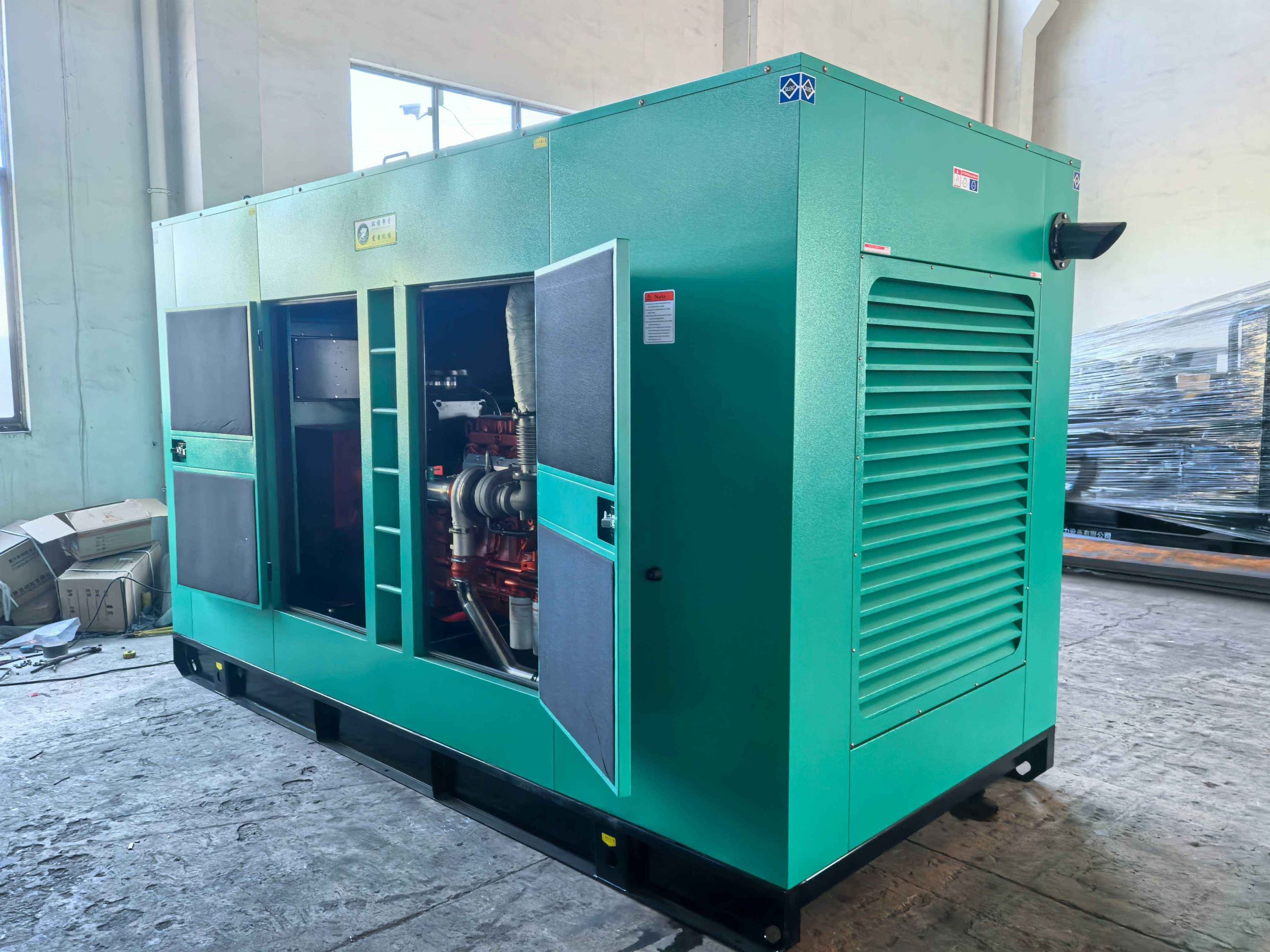
Emergency standby sets are treated differently because their annual running hours are low and their purpose is life safety, so the regulator trades a strict limit for a hard hour cap. In the United States the emergency stationary engine category carries a limit on operation for purposes other than emergencies, and the engine must carry a non-resettable hour meter to prove it. In Europe the equivalent sits inside the non-road regulation as a limited-hour derogation with its own record-keeping duty.
The commercial consequence is that a buyer who declares emergency duty and then runs the set for peak lopping has moved outside the category, whatever the paperwork says. That is a compliance exposure rather than a technical one, and it is the single most common mismatch between how a set is sold and how it is used. The emission standards for Chinese-built generator sets set out the document trail that supports the declared category.
Worked example: nitrogen oxides over a 200-hour year
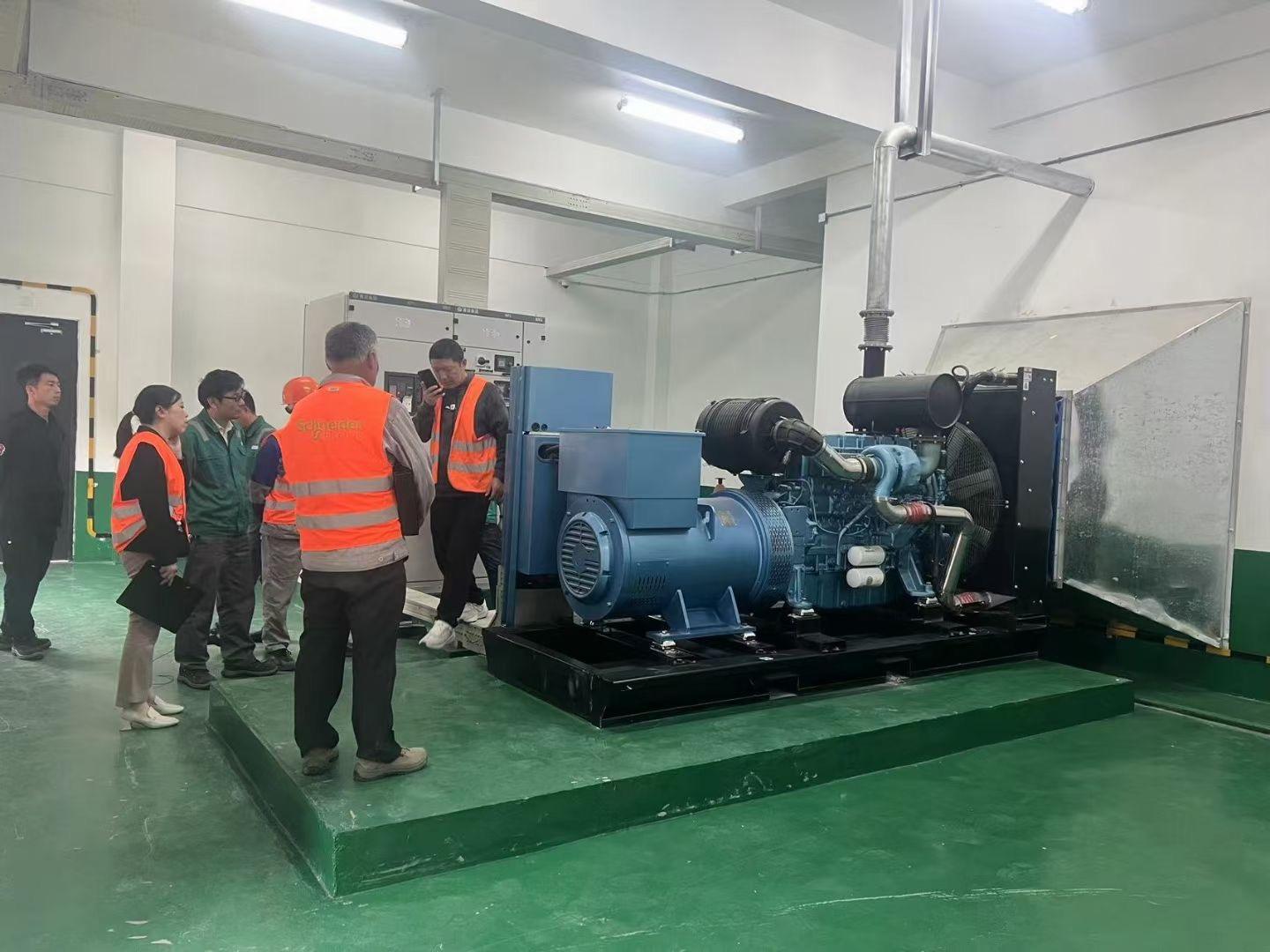
Take a 400 kW set running 200 hours a year and convert a concentration limit into an annual mass. The set produces 400 × 200 = 80,000 kWh a year. At 3.5 g/kWh that is 280,000 g, or 280 kg of nitrogen oxides; at 0.4 g/kWh the same set emits 32,000 g, or 32 kg. The arithmetic is 80,000 × 3.5 ÷ 1,000 = 280, and the only input that changed between the two lines was the concentration.
Now change the hours instead. The same set at 2,000 hours a year produces 800,000 kWh, and the 3.5 g/kWh figure becomes 2,800 kg. A permit written against an annual mass therefore depends on the declared hours as much as on the engine tier, which is why the hour meter matters legally and not just for maintenance. A set sold as emergency standby and run as prime has both a compliance problem and a warranty problem, and they usually surface together.
What changes on the engine to reach the tier?
Reaching the strictest tier changes the combustion system, the after-treatment and the control software together, and none of the three can be retrofitted to an engine that was not designed for it. Common-rail injection raises injection pressure and allows multiple injection events per cycle, which cuts particulate matter at source. Cooled exhaust gas recirculation lowers peak combustion temperature, which cuts nitrogen oxides. Selective catalytic reduction then converts what remains, using diesel exhaust fluid injected into the exhaust stream.
A Chinese manufacturer of diesel generator sets usually sources the engine and the after-treatment as one approved package, and Tesla Power does the same rather than mixing certificates. Selective catalytic reduction brings its own operating constraints. The system needs exhaust temperature to light off, so a set that runs at light load for long periods may not reach the working window. It needs a diesel exhaust fluid tank sized for the service interval, typically consuming 2% to 3% of fuel volume. It also needs the reagent to be available on site, which is a logistics question in remote installations rather than an engineering one. The exhaust system checks for plant rooms cover the back-pressure and routing side of the same installation.
Which documents does a buyer receive?
A buyer receives four documents that matter: the engine approval certificate, the engine family or approval number, the declaration of conformity for the set, and the hour meter statement for an emergency-rated unit. Together they answer the only three questions an inspector asks, which are what the engine is approved to, what the set is declared as, and how many hours it has run.
The approval number is the one to check first, because it ties the physical engine to the certificate. A set built from a compliant engine but delivered without the matching number is a paperwork failure that can hold a shipment at the border for weeks. Tesla Power issues the document set with the commercial invoice rather than after arrival, so the broker is not waiting on documents while the container sits.
How do you match a tier to the destination market?
Match the tier to the destination market in three steps: identify the engine category, identify the declared duty, then confirm the marking the border expects. Skipping the second step is the usual error, because the duty declaration decides whether the strictest tier applies at all.
Step one. Identify the engine category from the intended use. A set that will be moved between sites falls under mobile machinery rules; a set bolted to a slab falls under stationary engine rules. The two carry different instruments even when the engine is identical.
Step two. Write the annual hours into the specification. An emergency declaration with 2,000 hours a year attached is not an emergency declaration in any jurisdiction that matters. Where the load is genuinely continuous, a 700 kW container set for industrial duty is specified as prime from the start, and the tier follows from that.
Step three. Confirm the marking the destination expects, then check that the certificate matches the engine number on the set. Where a set is bound for a market with a less demanding tier, a 400 kW trailer-mounted set for emergency power may be specified without the full after-treatment package, which changes both the price and the maintenance plan.
Step four. Confirm the reagent supply. A selective catalytic reduction set with no diesel exhaust fluid supply on site will derate or shut down, and neither outcome is acceptable for standby power. Tesla Power asks for the reagent plan before the order is released, because it changes the tank size and the delivery arrangement.
Frequently asked questions
Is Stage V the same as Tier 4 Final?
No. They pursue the same four pollutants with different limits, test cycles and legal instruments, so approval in one market does not carry into the other. A set needs the certificate and marking of the market it will operate in, and the engine family code has to match the paperwork.
Do standby generators need after-treatment?
Often not to the strictest tier, because emergency categories carry a limited-hour provision instead. The provision is legal, not optional: it comes with an annual hour cap and an hour meter requirement. A set declared as emergency and run for peak lopping falls outside the category.
How much diesel exhaust fluid does a set use?
Roughly 2% to 3% of fuel volume on a selective catalytic reduction engine, so a set burning 100 L/h uses about 2 to 3 L/h of reagent. Tank size is usually set to match the fuel tank or the service interval, whichever comes first.
Can an older engine be upgraded to meet Stage V?
No, not economically. The strictest tiers depend on combustion system design, injection pressure and control software that cannot be added to an engine built without them. Replacing the set is cheaper than rebuilding the engine, and the certificate would not follow a rebuild in any case.
What happens if the emission documents do not match the set?
The shipment can be held at the border until the documents are corrected, which is measured in weeks rather than days. Check the engine approval number against the certificate before the container is sealed. Tesla Power issues the document set with the invoice so the check can happen early.
Does fuel quality affect emission compliance?
Yes. Sulphur content and cetane number both affect combustion and after-treatment performance, and a set approved on a given fuel specification is expected to run on it. The fuel specification checks for export projects cover the sulphur limit that applies to the destination.
Next step: fix the market, then the engine
Emission compliance is decided by two answers: where the set will run and what duty it is declared for. Both belong on the specification before an engine is chosen, because the after-treatment package, the enclosure envelope and the document set all follow from them. Send the destination country, the declared duty and the expected annual hours to the Tesla Power export team through the contact page for a compliance review, and the reply will state the engine category, the applicable tier and the documents that travel with the set.