
A diesel generator set trolley is a wheeled frame, not a road trailer; that difference sets tow speed, braking and where the set may go.
Key takeaways
A trolley carries a set around a site at walking pace, while a trailer carries it on a road at highway speed with brakes, lights and a rated coupling. The frame, axle and tyres follow from that single decision. Tesla Power, a Chinese manufacturer of diesel generator sets, builds both on the same skid, so the choice can be made after the set is specified rather than before.
- Trolleys move at walking pace on hard standing; trailers are road legal with brakes and lights.
- Axle rating, not set weight, is what fails first on a site-built trolley.
- Load distribution sets the drawbar weight, and a light nose makes a trailer unstable.
- Lifting points stay on the skid so the set can be craned off the frame.
- The generator selection notes cover the base frame options in more detail.
Table of contents
- What does a diesel generator set trolley carry?
- Which base type fits which job?
- How is the axle load calculated?
- Worked example: 4,800 kg across two tyres
- Why does the drawbar weight matter?
- What does road legality change on the frame?
- Which details fail first on a trolley?
- Frequently asked questions
What does a diesel generator set trolley carry?
A diesel generator set trolley carries the whole set plus its fuel, and it has to do that without deflecting the skid it is bolted to. The trolley adds a frame, an axle or castors, and a drawbar or handle, and every one of those is a load path that did not exist on a fixed installation. The set’s own base frame is designed to sit on a flat slab, not to span between two wheels. The duty the set is rated for travels with it, so the frame rating follows ISO 8528-1 rather than the axle.
That is why a trolley is specified with the set rather than added afterwards, and the frame is priced as part of the skid rather than as an accessory. A frame welded under a set that was designed for a slab concentrates load at two points instead of distributing it along the rails, and the result is a cracked base or a distorted tank. Tesla Power builds the trolley frame as part of the skid rather than as an attachment, which keeps the load path continuous from engine feet to axle.
Which base type fits which job?
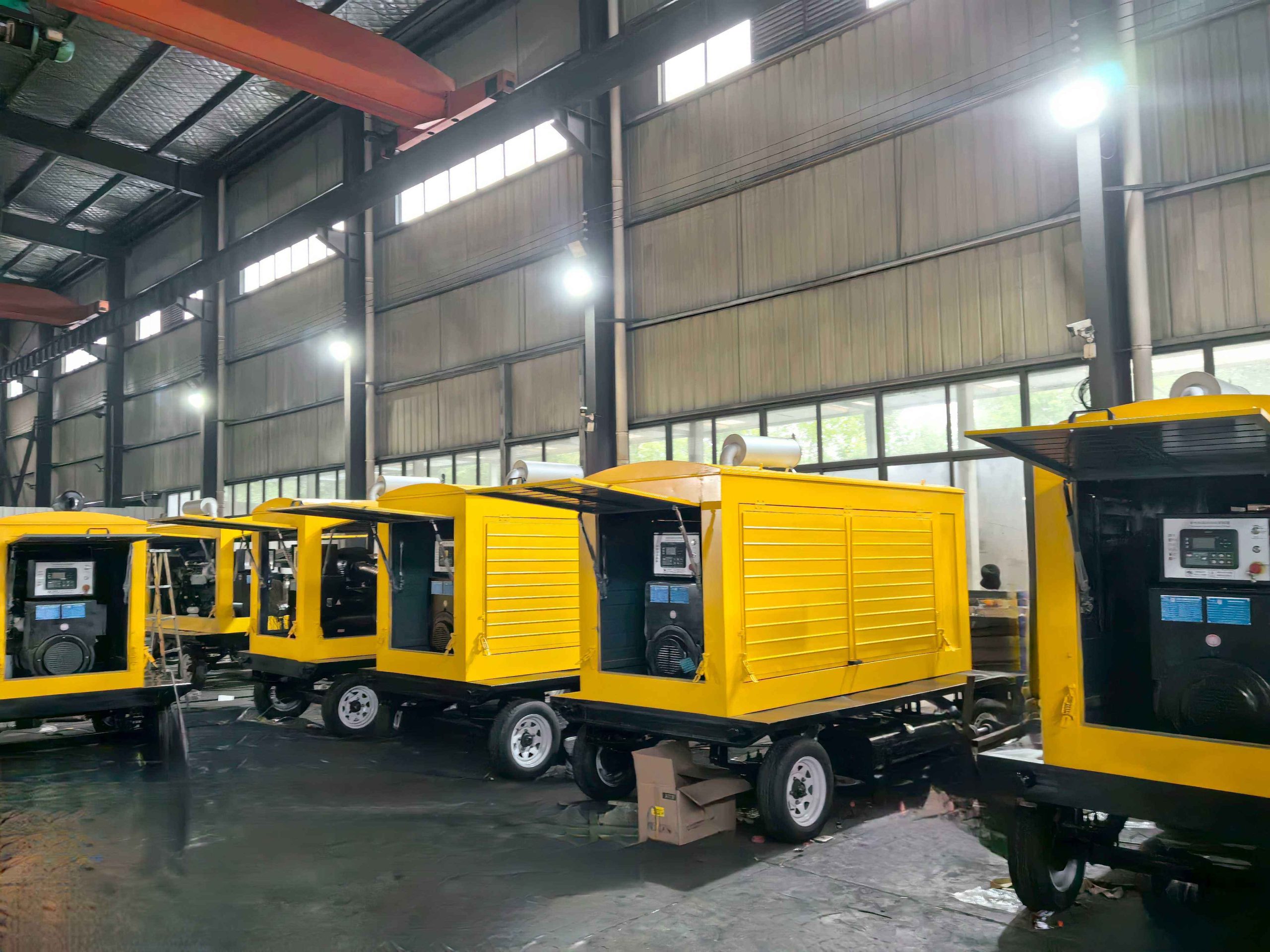
Three base types cover most requirements: a fixed skid for a plant room, a trolley for movement inside a site, and a trailer for movement between sites. The distinction is not cosmetic, because each type carries a different legal and structural obligation. A skid needs a flat slab, a trolley needs a hard standing and a tow tractor, and a trailer needs brakes, lights and a coupling that matches the towing vehicle.
| Base type | Movement | Typical speed | Structural addition |
|---|---|---|---|
| Fixed skid | None without lifting | Not applicable | Lifting points only |
| Trolley with castors | Within a building or yard | Walking pace | Castors and a pull handle |
| Trolley with axle | Within a site, towed by plant | Site speed only | Axle, drawbar, jockey wheel |
| Road trailer | Between sites on public roads | Highway speed | Brakes, lights, rated coupling, suspension |
The third row is where most confusion sits, and it is the row Tesla Power asks about first. A trolley with an axle looks like a trailer and is not one: it usually has no brakes, no lights and no type approval, so it may be towed on private ground and not on a public road. A buyer who intends to move a set between sites needs the fourth row, and the cost difference between the two rows is the cost of the braking system and the approval.
How is the axle load calculated?
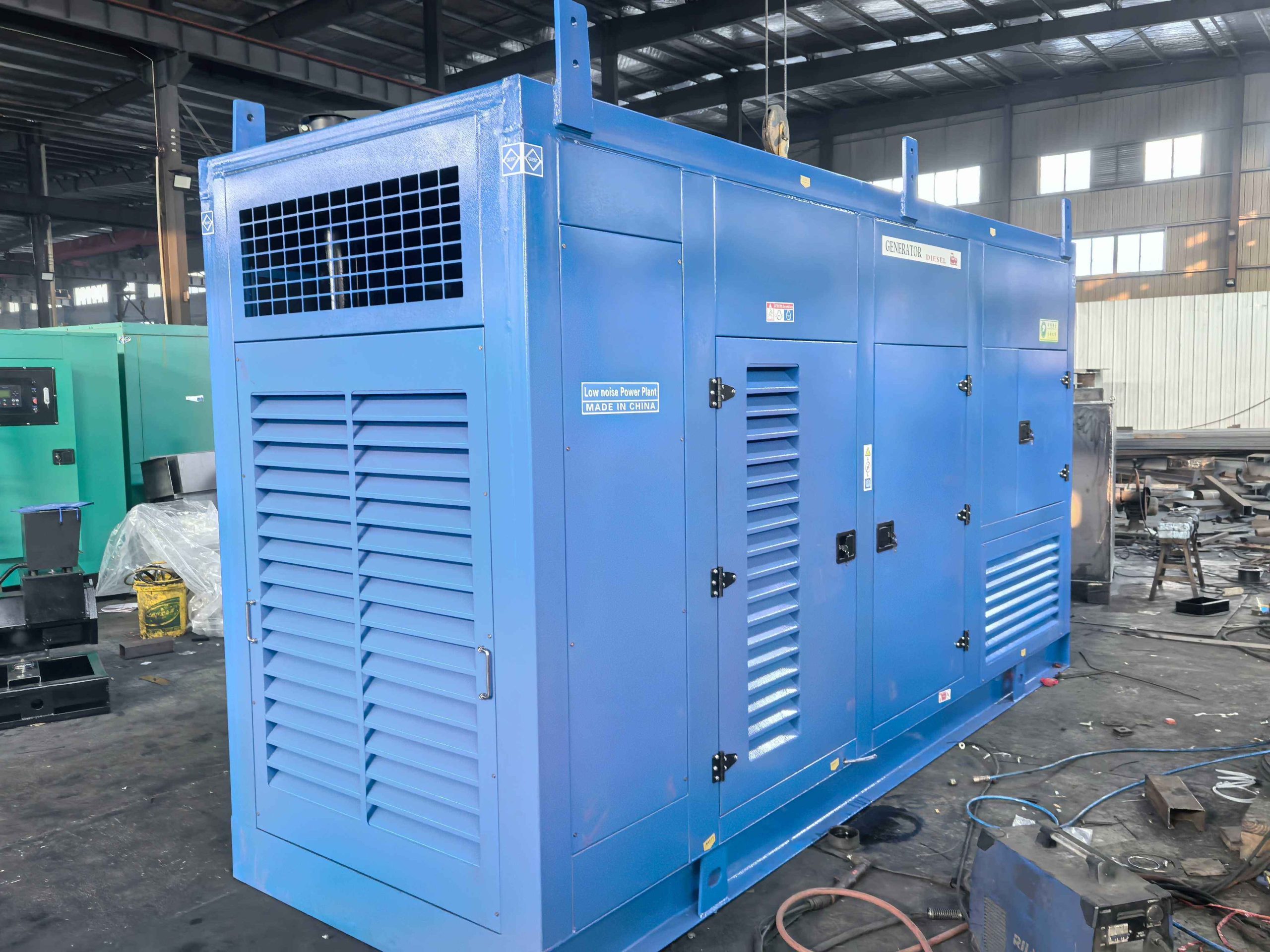
Axle load is calculated from the total moving mass and the position of its centre of gravity, and the answer has to sit below the tyre rating rather than below the axle rating alone. The total mass is the set wet, the fuel in the tank, the frame and any loose equipment carried on it. The split between axle and drawbar is set by where that mass sits relative to the axle.
The tyre rating is the number that fails first on a site-built trolley, because tyres are chosen by diameter and appearance rather than by load. Ambient conditions move that rating too, in the same way the ISO 3046-1 reference conditions move engine output. Two tyres rated at 1,800 kg carry 3,600 kg between them, and a set that puts 2,880 kg on the axle leaves a margin that is adequate but not generous. Add a full tank and a toolbox and the margin disappears, which is why the calculation has to be done at the heaviest expected condition rather than the dry weight.
Worked example: 4,800 kg across two tyres
Take a set at 4,000 kg wet, a trolley frame at 800 kg and a full tank already included in the wet figure, giving 4,800 kg to move. With the centre of gravity at 60% of the way back from the drawbar, the axle carries 4,800 × 0.6 = 2,880 kg and the drawbar carries the remaining 1,920 kg. Two tyres rated 1,800 kg each give 3,600 kg of capacity, so the margin on the axle is 720 kg, or 20%.
Now move the set 100 mm rearward on the frame and the split changes, which is the point of the calculation. The same total mass can overload the tyres without any component being added, and the failure appears as a bulge in a sidewall rather than as an arithmetic error. Tesla Power issues the axle load with the frame drawing so the transport plan can be built on it, and a 550 kW trailer-mounted set for communal facilities carries the figures on the drawbar plate.
Why does the drawbar weight matter?
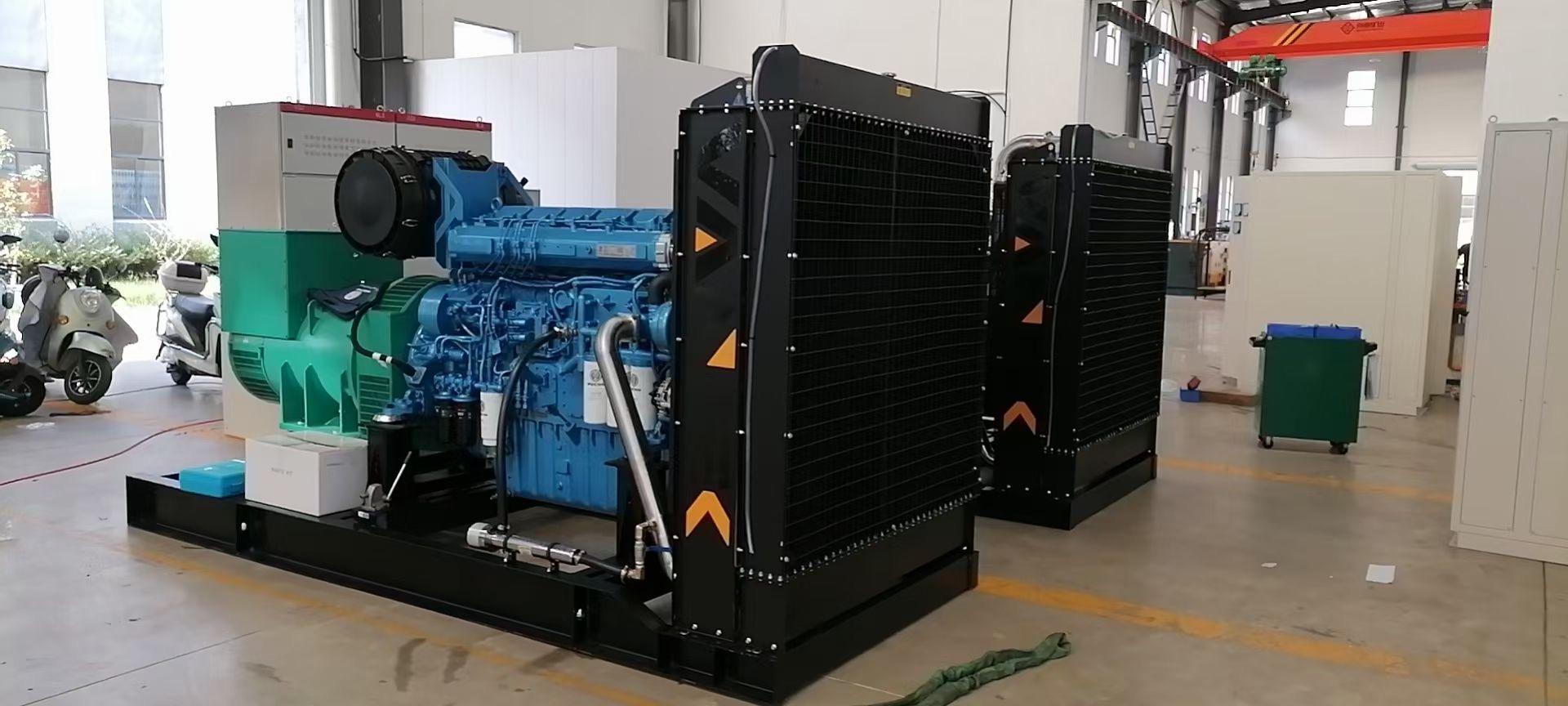
Drawbar weight matters because a trailer with too little nose weight sways and one with too much overloads the towing vehicle. The usual target is between 4% and 7% of the total mass on the coupling for a braked trailer, which on 4,800 kg is roughly 190 to 340 kg. Below that band the trailer becomes unstable at speed; above it the rear axle of the tow vehicle is overloaded before the trailer is.
That band is why Tesla Power treats the set position on the frame as a design decision rather than a packaging one. A set pushed back to lighten the nose tows badly, and a set pushed forward to make the nose feel solid overloads the car. The frame drawing should show the coupling height, the centre of gravity and the target nose weight together, and the towing vehicle should be checked against all three. A 300 kW trailer-mounted set is light enough that nose weight is easy to set, and heavy enough that it still has to be measured.
What does road legality change on the frame?
Road legality adds four systems that a site trolley does not carry: brakes, lights, a type-approved coupling and a suspension that behaves at speed. Each adds mass and cost, and each is a legal requirement rather than a comfort feature. A set that will ever cross a public road needs all four, and a set that will not needs none of them.
The coupling is the part most often mismatched, and Tesla Power builds to the destination market rather than to a single standard. European trailers use a drawbar eye or a ball coupling at a defined height, and North American trailers use a different ball size and a different lighting arrangement. A set built for one market and towed in another is a compliance problem before it is a technical one, and the fix is a coupling change rather than an adapter. The checks for a silent trailer generator on temporary power set out the lighting and braking points to confirm before dispatch.
Which details fail first on a trolley?
Castors, tyres and paint fail first, in that order, and all three fail for the same reason: they are specified for a floor that the site does not have. A castor rated for a smooth concrete floor breaks on gravel, a tyre rated for a dry yard cracks in sunlight, and a painted frame rusts from the inside where the coating could not reach.
The fix is specification rather than maintenance, which is why Tesla Power selects the wheel material against the surface before quoting. Castors should be chosen by load and by wheel material against the actual surface, tyres by load and by UV exposure, and the frame by a coating process that reaches inside the tube. The portable trailer generator set overview covers the frame options, and the container loading question decides whether the frame has to be removable for shipping.
Frequently asked questions
What is the difference between a generator trolley and a trailer?
A trolley moves a set around a site at walking pace and usually has no brakes or lights. A trailer is road legal, with brakes, lights, a rated coupling and suspension. A trolley with an axle sits between the two and may not be used on a public road.
Can a trolley-mounted set be towed on a road?
Only if it is built as a road trailer. Site trolleys generally have no braking system, no lighting and no type approval, so they are limited to private ground. Towing one on a public road is a legal exposure as well as a safety one.
How much weight can a generator trolley carry?
As much as its tyres and frame are rated for, which is rarely the same as the set weight. Two tyres at 1,800 kg carry 3,600 kg, so a 4,800 kg combination with a 60% axle share leaves about 20% margin. Always calculate at the heaviest condition.
Why does my trailer sway at speed?
Usually too little nose weight. The target is roughly 4% to 7% of total mass on the coupling for a braked trailer. Below that the trailer becomes unstable; above it the towing vehicle is overloaded. Move the set forward on the frame and re-measure.
Are lifting points still needed on a trolley?
Yes. The set still has to be craned onto a ship, a truck or a roof, and the lifting points belong on the skid rather than on the trolley frame. Confirm they remain accessible with the frame and canopy fitted.
Can the trolley be removed for shipping?
On some builds, yes, which is useful when a container has to carry the set alone. A removable frame needs its fasteners and its alignment marks documented, because a frame refitted without them changes the load path.
Next step: decide the movement before the frame
The frame is decided by one question: where will this set have to go, and at what speed. Answer that and the axle, the brakes, the coupling and the coating all follow. Send the set rating, the surface it will move on and whether it will ever cross a public road to the Tesla Power export team through the contact page for a frame review, and the reply will carry the axle load, the nose weight and the frame drawing that matches both.