
A diesel generator set sizing calculation runs from a load list: total the running load, apply diversity, convert at the power factor, add margin.
Key takeaways
Sizing starts with a load list and ends with a standard rating, and every step between them is arithmetic a buyer can check. A 320 kW connected load at 0.75 diversity becomes 240 kW, which is 300 kVA at 0.8 pf, and a 25% margin takes that to 375 kVA, so the next standard set is 400 kVA. Tesla Power issues the load list with the quotation so the arithmetic can be audited.
- Diversity factor is the step buyers skip, and it is usually the largest single correction.
- Convert kW to kVA at the stated power factor, never at an assumed one.
- The largest motor often sets the floor, because starting current exceeds running current several times.
- Site altitude and ambient temperature reduce the rating after the load has been matched.
- The generator selection notes carry the load-list template used here.
Table of contents
- What does a diesel generator set sizing calculation start from?
- Which four steps turn a load list into kVA?
- Worked example: 320 kW of mixed load to a standard rating
- Why does the largest motor set the floor?
- How much margin is left after diversity?
- Which site conditions change the answer?
- How do you check the result before ordering?
- Frequently asked questions
What does a diesel generator set sizing calculation start from?
A diesel generator set sizing calculation starts from a list of every load that will run at the same time, with its running kilowatts and its starting characteristic. Building area, connected socket count and the size of the incoming supply are all proxies, and all of them overstate the requirement. The list is the only input that can be audited line by line when two suppliers return different ratings for the same building.
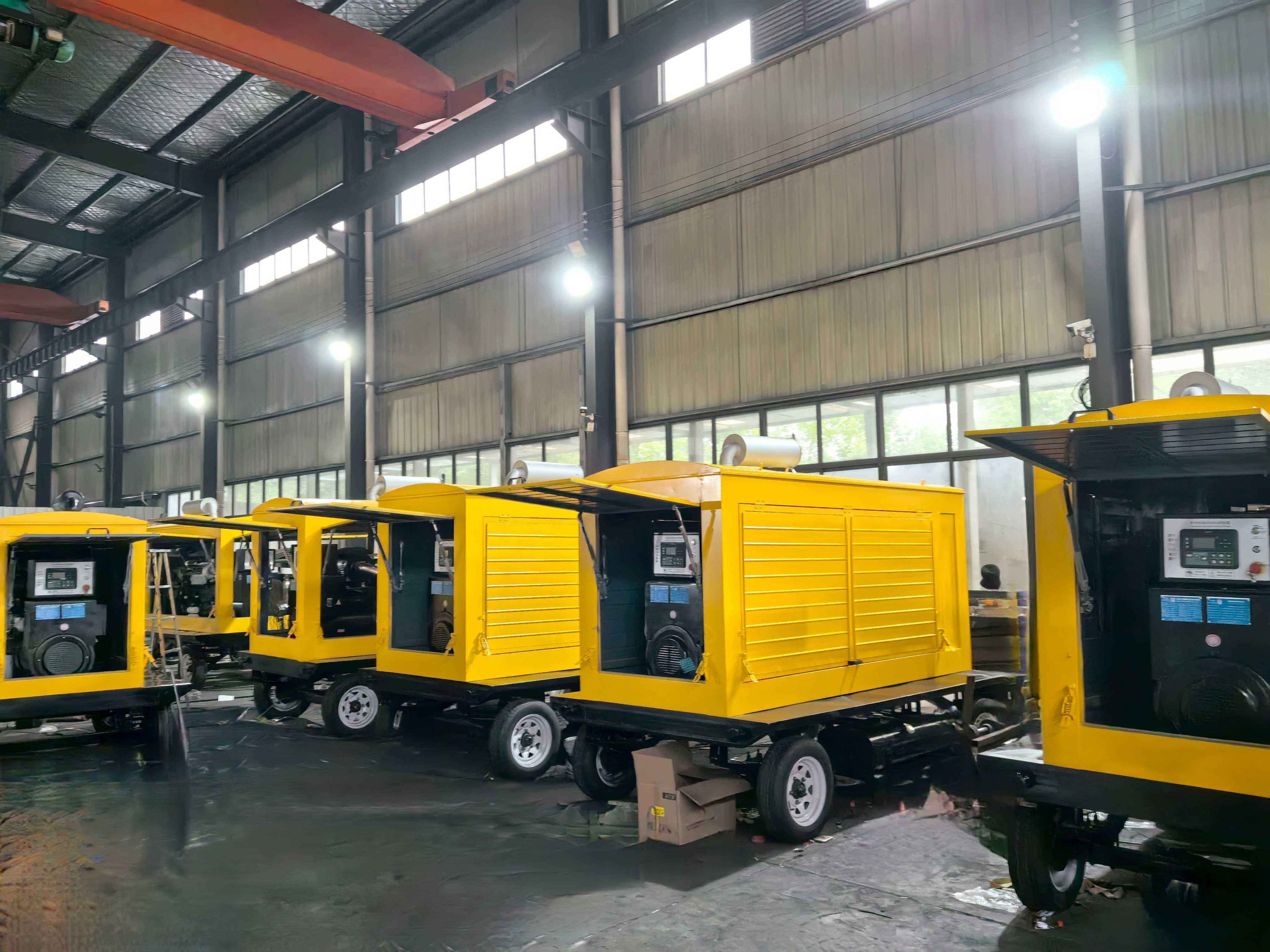
The list has to distinguish loads that run together from loads that never do, and Tesla Power asks for that split before a rating is proposed. An office and its air conditioning run together; a welding bay and a chiller may not. Diversity is the factor that captures this, and it is applied per group rather than to the total, because a single factor across a mixed list hides the difference between a continuous process load and an intermittent one. The sizing method for a diesel generator sets out how the groups are usually drawn.
Which four steps turn a load list into kVA?
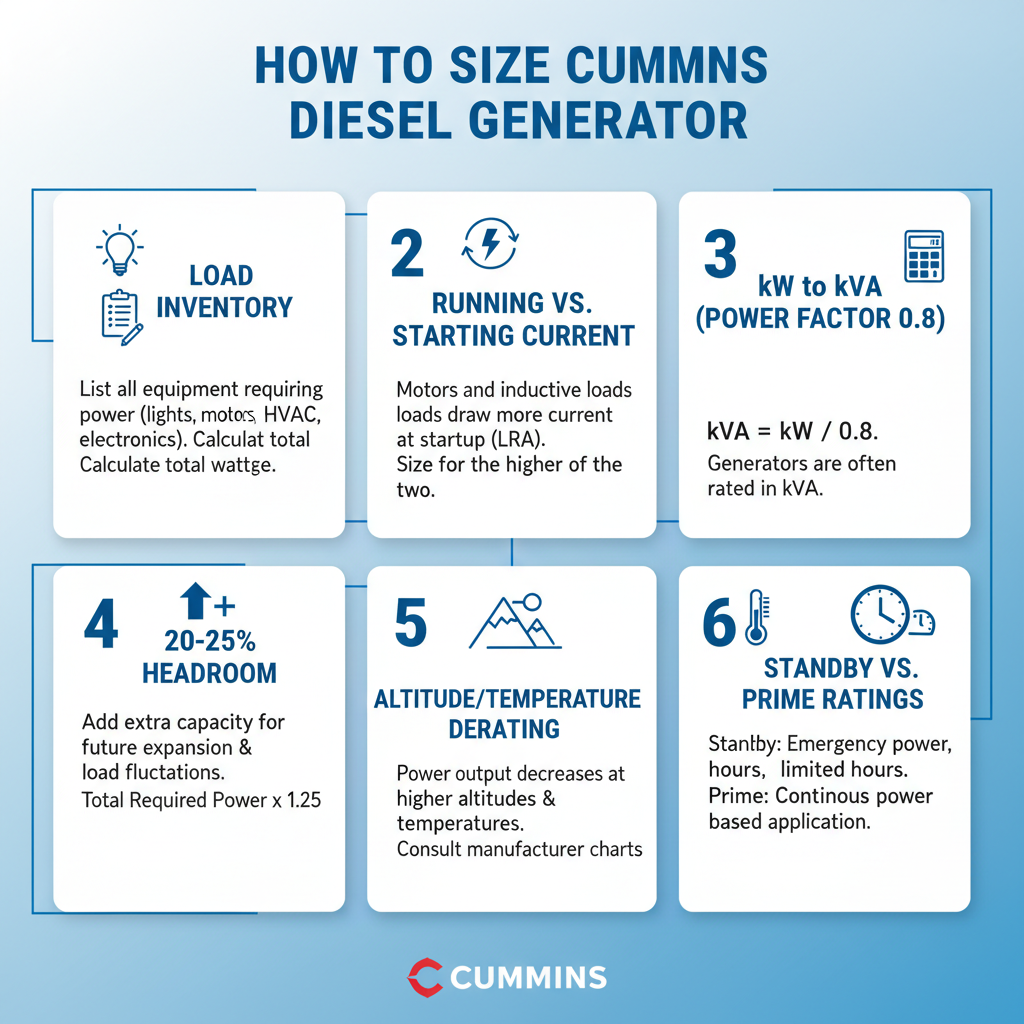
Four steps turn a load list into a rating: sum the running load, apply diversity per group, convert to apparent power at the stated power factor, then add margin and round up to a standard rating. Each step has one number attached and each number should be visible on the quotation. A sizing sheet that shows only the final rating cannot be checked, and a rating that cannot be checked is a guess with a decimal point.
| Step | Action | Input | Result on the example |
|---|---|---|---|
| 1 | Sum the running load | Connected kilowatts by group | 320 kW at 0.8 pf |
| 2 | Apply diversity | 0.5 on the intermittent group | 240 kW at 0.8 pf |
| 3 | Convert to apparent power | Power factor 0.8 | 300 kVA at 0.8 pf |
| 4 | Add margin, round up | 25% planning margin | 375 kVA, so 400 kVA at 0.8 pf |
The fourth step is where commercial pressure enters the arithmetic. A margin of 25% covers load growth and a derated rating; a margin of 50% covers nothing except the supplier’s order book, and it costs fuel every hour because the set runs further down its curve. Tesla Power states the margin as a separate line rather than folding it into the rating, so the buyer can see what was added and why.
Worked example: 320 kW of mixed load to a standard rating
Take a facility with 320 kW of connected load split into a 200 kW continuous group and an 80 kW intermittent group, and work the four steps. The continuous group runs at 1.0 and the intermittent group at 0.5, so the diversified load is 200 + (80 × 0.5) = 240 kW. At 0.8 pf that is 240 ÷ 0.8 = 300 kVA, and a 25% margin gives 375 kVA, so the standard rating is 400 kVA, which is 320 kW at 0.8 pf.
Now test the same answer against the starting case. The largest motor is a 90 kW unit started direct on line, drawing about six times its running current for a few seconds. A set sized only on running load may still fail that start, because the voltage dip depends on the alternator’s transient reactance and on the set’s inertia as much as on its rating. That is why the alternator selection checks for motor starting loads sit next to the sizing sheet rather than after it.
Why does the largest motor set the floor?
The largest motor sets the floor because starting current is several times running current and the set has to hold voltage through that transient. A set that carries the running load comfortably can still stall a motor or trip its own breaker on start. The governing figure is the starting kVA of the largest motor plus the running load of everything else, and that sum can exceed the diversified running total.
Two levers reduce the requirement without changing the rating. A star-delta or soft starter cuts starting current to roughly a third of the direct-on-line value. A larger alternator frame, on the same engine, raises the transient capability without changing the prime rating. Both are cheaper than moving up a set size, and both have to be decided before the order rather than after commissioning. Tesla Power prices the soft starter and the larger frame as separate lines so the comparison is visible. The cable sizing information before an RFQ covers the other half of the same starting question.
How much margin is left after diversity?
Margin left after diversity should cover load growth and site derating, and nothing else. A practical allowance is 25% on the diversified load, split between load growth and the derated rating at site conditions. A set with a 50% margin will run below half load for most of its life, which raises specific fuel consumption and invites wet stacking on a lightly loaded engine.
The margin also has to survive the rating tier. A set quoted as standby carries no overload allowance, so a 25% margin on a standby set buys less operating room than the same margin on a prime set. Tesla Power writes the tier next to the margin line, because a 400 kVA standby set and a 400 kVA prime set are not interchangeable in a sizing sheet even when the arithmetic looks identical.
Which site conditions change the answer?
Site conditions change the answer after the load has been matched, and the two that matter are altitude and ambient temperature. Both reduce the output available from a given rating, so the derated figure is what has to exceed the diversified load. A set sized at 400 kVA at sea level may need the next rating up at 1,800 m and 45 °C. The reference conditions behind those figures come from ISO 3046-1, and the output definitions from ISO 8528-1.
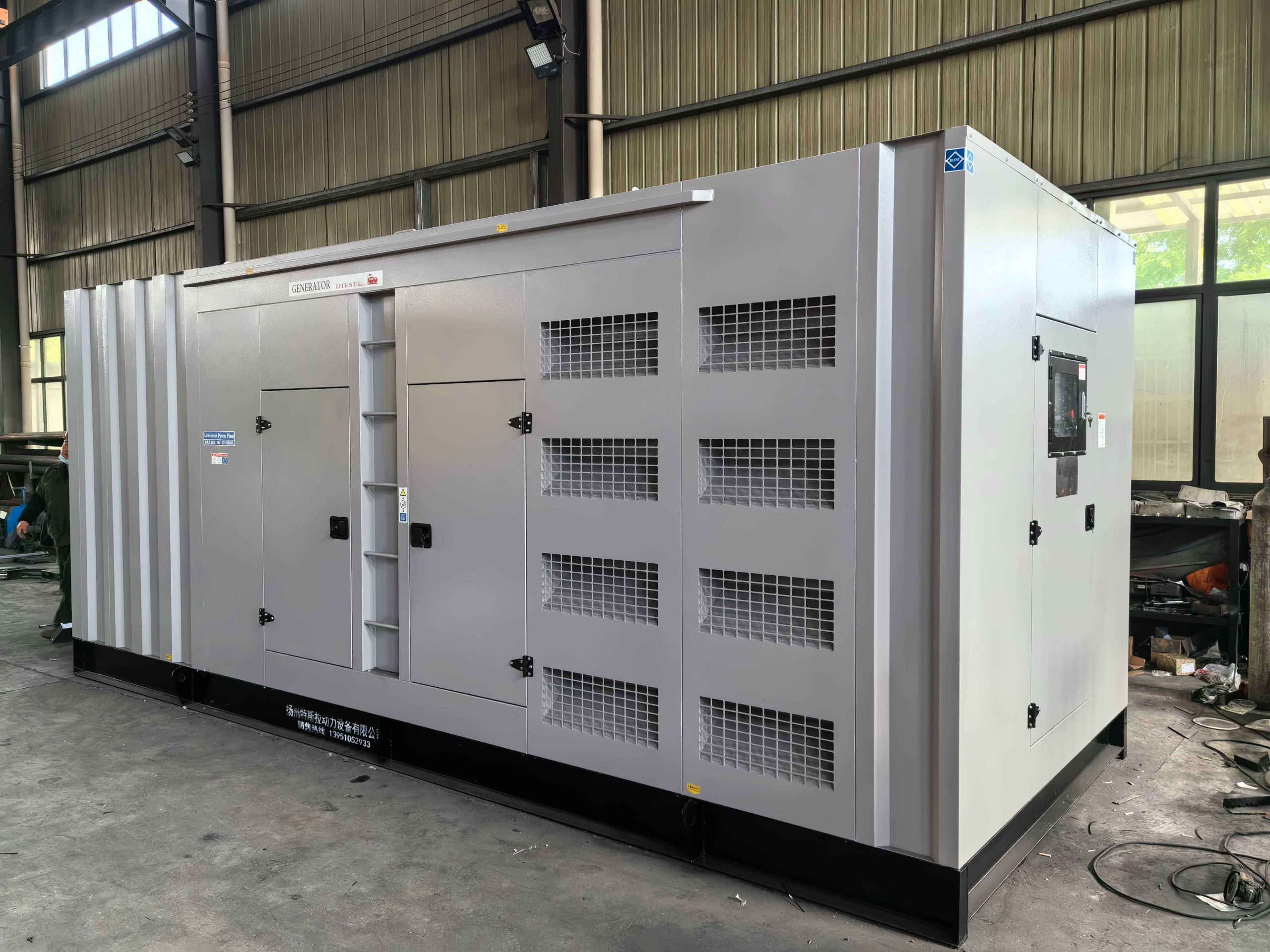
Cooling arrangement is the third condition and it is often decided late. A set-mounted radiator and a remote radiator have different air requirements and different derating, and a container installation adds louvre area as a constraint. Confirm all three before the rating is fixed, then check the result against the load rather than against the nameplate. A 700 kW container set for industrial duty carries its cooling package inside the enclosure, so the louvre area is part of the product rather than a site decision.
How do you check the result before ordering?
Check the result in three ways: rerun the arithmetic from the load list, test the largest motor start, and compare the derated rating with the diversified load. Any two of the three agreeing is a reasonable basis for an order; all three agreeing is a defensible one. Tesla Power returns the checked sheet with the quotation rather than a rating on its own.
First check. Rerun the four steps with the numbers on the quotation. If the diversified load, the power factor or the margin cannot be found, ask for them, because the rating was produced by a spreadsheet the buyer has not seen.
Second check. Test the starting case explicitly. The largest motor, its starter type and the acceptable voltage dip belong on the same sheet as the running load. A 300 kW trailer-mounted set sized for a construction site with a single large motor is a different calculation from a 300 kW set feeding a distribution board of small loads.
Third check. Compare the derated rating with the load, not the catalogue rating. Where the site is above 1,000 m or the summer ambient exceeds 40 °C, ask for the derating curve for the specific model and use it. Tesla Power supplies the curve with the quotation when the site conditions are declared, so the two figures can be compared without a second exchange.
Frequently asked questions
How do I calculate the kVA needed for a diesel generator set?
Sum the diversified running load in kilowatts, divide by the power factor to get kVA, then add a margin of about 20% and round up to a standard rating. A 240 kW diversified load at 0.8 pf is 300 kVA, and with margin that lands on a 400 kVA set.
What diversity factor should I use?
It depends on the load mix rather than on a rule. Continuous process loads sit near 1.0, intermittent tools and welding sets sit between 0.5 and 0.75, and standby-only loads are excluded entirely. Apply the factor per group, then add the groups.
Is a 25% margin enough?
For most standby and prime applications, yes, provided the derating at site conditions is applied separately. A 25% margin absorbs growth and a modest derate. Margins above 40% usually mean the set will run below half load, which costs fuel and risks wet stacking.
Why does the largest motor matter more than the total load?
Because starting current is several times running current. A set that carries the total running load can still fail to start the largest motor, or trip on the voltage dip. Check the starting kVA of that motor against the alternator’s transient capability.
Does the power factor change the set size?
Yes. The same kilowatt load at a lower power factor needs more kVA, so an uncorrected load with a 0.8 pf needs a larger set than the same load corrected to 0.9. Confirm the power factor of the actual load rather than assuming the alternator’s rating.
Should I size for the sum of every connected load?
No. That approach oversizes almost every installation, because not every load runs at once. It produces a set that runs at a third of its rating, burns more fuel per kilowatt hour and never reaches its designed operating temperature under load.
Next step: send the load list, not the building area
A sizing calculation is only as good as the list behind it, and the list costs nothing to produce. Total the running load by group, note the largest motor and its starter, then state the site altitude and summer ambient. Send those four items to the Tesla Power export team through the contact page for a sizing review, and the reply will carry the four-step arithmetic, the derated rating and the standard set size that follows from both.