
If you’re planning to invest in a Yuchai diesel generator, the first question on your mind is probably: “How much is this going to cost me?” It’s a fair question, but here’s the thing—the answer isn’t a simple number.
I’ve worked with facility managers who thought they were comparing apples to apples, only to discover that one “500 kW generator” quote was $35,000 while another was $65,000. Both had Yuchai engines. Both claimed similar specifications. So what explains the price difference?
Let’s break down exactly what drives diesel generator cost, what you’re actually paying for, and how to calculate the true investment beyond that initial sticker price.
Understanding Upfront Costs: The Purchase Price Breakdown
When manufacturers like Tesla Power quote you a price for a diesel generator, that number reflects multiple cost components bundled together. Understanding what you’re actually buying helps you evaluate whether you’re getting value or being overcharged.
The Core Components and Their Costs
A complete Yuchai diesel generator system consists of these major elements:
The Diesel Engine (30-40% of total cost). Yuchai engines are the heart of the system. A 100 kW Yuchai engine costs roughly $8,000-$12,000 depending on the series and emission tier. Larger engines scale accordingly—a 500 kW engine might run $35,000-$45,000. EPA Tier 3 or EU Stage IIIA compliant engines command 15-20% premiums over standard models.
The Alternator (20-25% of total cost). Quality brushless alternators from Stamford, Marathon, or Leroy-Somer add $3,000-$8,000 for smaller units (50-150 kW) and $15,000-$30,000 for larger industrial generators (500-1000 kW). Premium alternators with lower THD and better voltage regulation cost more but protect sensitive equipment.
The Control System (5-10% of total cost). Deep Sea Electronics, DEIF, and ComAp controllers range from $800-$3,000 depending on features. Basic auto-start functionality sits at the lower end; cloud monitoring, paralleling capability, and advanced protection push costs higher. The automatic transfer switch (ATS) adds another $1,500-$8,000 depending on current rating and features.
Base Frame and Enclosure (15-20% of total cost). Open-frame units on steel bases are cheapest. Weatherproof enclosures add 20-30%. Silent diesel generator enclosures with acoustic treatment can add 40-60% to base costs. A sound-attenuated enclosure for a 250 kW unit might add $15,000-$25,000.
Cooling System (8-12% of total cost). Radiators sized for your ambient conditions, coolant, hoses, and fan systems. Undersizing here saves money upfront but guarantees problems later. Quality manufacturers properly specify cooling capacity with appropriate safety margins.
Fuel System and Exhaust (5-8% of total cost). Fuel pumps, filters, lines, plus exhaust manifolds, mufflers, and piping. Residential-grade mufflers are inexpensive; industrial silencers meeting strict noise regulations cost significantly more.
Electrical Components (3-5% of total cost). Circuit breakers, contactors, instrumentation, wiring harnesses, and battery systems. These seem minor but cheap electrical components cause outsized reliability problems.
Typical Price Ranges by Power Rating
Here’s what you should expect to pay for complete Yuchai diesel generators from quality manufacturers (FOB pricing, before shipping/installation):
20-50 kW (Small Commercial/Residential): $8,000-$18,00075-150 kW (Medium Commercial): $18,000-$38,000200-300 kW (Large Commercial): $38,000-$65,000400-600 kW (Industrial): $65,000-$110,000800-1200 kW (Large Industrial): $110,000-$180,000
These ranges assume standard configurations. Premium features push prices higher; budget specifications drop them lower.
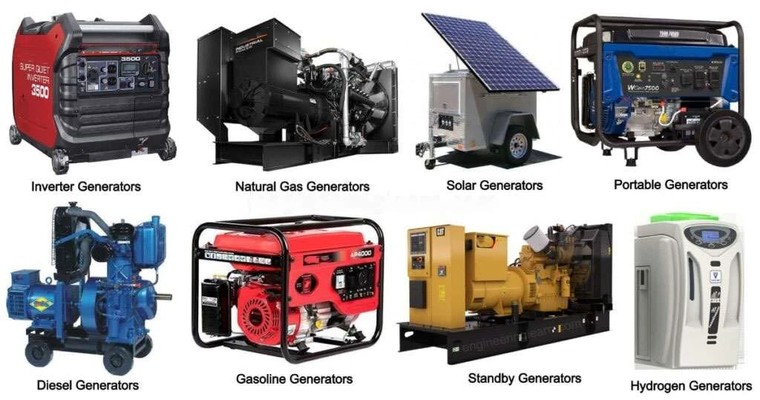
Seven Factors That Impact Your Generator Investment
Two generators with the same Yuchai engine and similar kW ratings can have vastly different prices. Here’s why.
1. Alternator Brand and Quality Grade
This is where manufacturers differentiate themselves—and where you need to pay attention.
Budget-tier alternators (Chinese no-name brands) might save $2,000-$5,000 upfront but typically exhibit 8-15% voltage regulation, high THD (10-15%), and shorter bearing life. They’re acceptable for powering basic resistive loads but problematic for computers, medical equipment, or VFD-controlled motors.
Mid-tier alternators (Engga, some Marathon models) offer 3-5% voltage regulation and 5-8% THD. They’re solid choices for most commercial generator applications where you have mixed loads but not ultra-sensitive equipment.
Premium alternators (Stamford, Leroy-Somer, top Marathon series) deliver ±1-2% voltage regulation and sub-5% THD even under non-linear loads. They cost 30-50% more than budget options but are essential for data centers, hospitals, and precision manufacturing.
A 250 kW generator might have a $4,000 budget alternator, a $7,000 mid-tier, or an $11,000 premium alternator. That $7,000 difference shows up in your quote—often without clear explanation of what you’re getting.
2. Controller Features and Complexity
Basic auto-start controllers cost $800-$1,200. But your application might demand more:
Paralleling capability for running multiple generators: add $1,500-$3,000 per unitRemote monitoring with cloud connectivity: add $500-$1,200Advanced protection and load management: add $800-$2,000Utility-grade synchronization for grid connection: add $2,500-$5,000
Manufacturers like Tesla Power often offer tiered controller packages. Know what you need before accepting the lowest-cost option.
3. Enclosure Type and Acoustic Treatment
This can be the biggest cost variable after the core generator itself.
Open frame on steel skid: baseline costWeatherproof steel enclosure: +15-25%Sound-attenuated enclosure (65-75 dB@7m): +35-50%Super-silent enclosure (55-65 dB@7m): +55-80%
Urban installations with noise restrictions often require super-silent enclosures. That $45,000 generator suddenly becomes $75,000 when you add proper acoustic treatment. Budget for this from the beginning—retrofitting acoustic enclosures later costs even more.
4. Emission Compliance Level
Yuchai offers multiple emission tiers. Your jurisdiction determines what you need:
Non-certified engines (export markets with no regulations): baselineEPA Tier 2 / EU Stage II: +10-15%EPA Tier 3 / EU Stage IIIA: +18-25%EPA Tier 4 Final / EU Stage V: +30-45% (requires exhaust after-treatment)
Don’t pay for emission features you don’t legally require, but don’t assume you can install non-compliant equipment either. Verify local requirements early.
5. Cooling System Design for Extreme Conditions
Standard radiators assume 40°C (104°F) ambient temperature. If you’re operating in hotter environments:
Standard cooling: baseline50°C ambient rating: +8-12%High-altitude derating with oversized cooling: +15-20%Tropical/desert specification: +18-25%
I’ve seen generators fail within months because buyers purchased standard cooling specs for 45°C environments to save $3,000. The eventual repairs and downtime cost ten times that amount.
6. Testing and Quality Assurance Level
How thoroughly the manufacturer tests your generator directly impacts reliability—and price.
No-load testing only: cheapest (and riskiest)Partial load testing (50% capacity): +2-3%Full load testing (100% for 2+ hours): +4-6%Comprehensive testing with documented data: +6-10%
That extra $2,500 for full load testing verifies the generator actually performs as rated before it leaves the factory. This is insurance worth paying for.
7. Warranty Terms and After-Sales Support
Longer warranties and comprehensive support cost manufacturers more—costs they pass to you:
1-year basic warranty, email support: baseline2-year comprehensive warranty with parts coverage: +3-5%3-5 year extended warranty with on-site service: +8-12%Lifetime engine warranty (uncommon): +15-20%
Cheaper quotes often include minimal warranties. Compare what’s actually covered, not just the time period.
The Hidden Costs Nobody Mentions
The generator purchase price is just the beginning. Here are the additional expenses that catch buyers off guard:
Installation and Commissioning
Civil works: Concrete pad, mounting, vibration isolation: $2,000-$15,000 depending on sizeElectrical connection: Cabling from generator to your distribution panel, breakers, ATS: $5,000-$25,000Fuel system: Tank installation, fuel lines, leak detection, permits: $8,000-$40,000Exhaust system: Properly routed exhaust with supports, rain cap, silencer: $2,500-$12,000Commissioning and testing: Professional startup and load testing: $1,500-$8,000
For a 250 kW installation, these “extras” easily add $25,000-$50,000 to your project cost.
Permits, Inspections, and Compliance
Don’t forget regulatory costs:
- Building permits: $500-$5,000
- Electrical permits and inspections: $800-$3,000
- Environmental permits (emissions, noise, fuel storage): $1,000-$8,000
- Fire marshal approval for fuel systems: $500-$2,500
These vary wildly by jurisdiction but are never optional.
Training and Documentation
Operator training: $1,000-$3,000 per sessionTechnical manuals and drawings: Usually included, but comprehensive O&M documentation might be extraControl system programming customization: $1,500-$5,000 if you need site-specific parameters
Shipping, Handling, and Rigging
International shipping: $3,000-$15,000 depending on generator size and originCustoms, duties, taxes: 5-25% of FOB price depending on destination countryRigging and crane service: $2,000-$10,000 for large unitsInsurance during transport: 1-3% of equipment value
A generator with a $60,000 FOB price might cost $75,000-$85,000 landed at your facility.
Total Cost of Ownership: The Real Investment Picture
Smart buyers think beyond purchase price. Total cost of ownership (TCO) over the generator’s lifespan often exceeds the initial investment by 2-4 times.
Operating Costs: Fuel Consumption
Yuchai engines are fuel-efficient, but fuel is still your largest ongoing expense.
A 250 kW Yuchai diesel generator running at 75% load consumes approximately 15-17 gallons (57-64 liters) per hour. At $4/gallon diesel:
- Per hour: $60-$68
- 100 hours/year (typical standby generator usage): $6,000-$6,800/year
- 1,000 hours/year (prime power application): $60,000-$68,000/year
Over 10 years in standby duty, you’ll spend $60,000-$68,000 in fuel—roughly matching the generator’s purchase price. In prime power applications, fuel costs dwarf the equipment investment.
Fuel efficiency improvements of even 3-5% compound dramatically over time. This is why premium engine optimization and proper sizing matter—they reduce operating costs for years.
Maintenance Costs
Budget for routine maintenance:
Consumables (filters, oil, coolant):
- 50-150 kW: $300-$600 per service
- 200-400 kW: $600-$1,200 per service
- 500-1000 kW: $1,200-$2,500 per service
Service intervals:
- Oil change: every 250-500 hours depending on load factor
- Major service (valve adjustment, injector service): every 2,000-3,000 hours
Annual maintenance contracts:
- 50-150 kW: $1,500-$3,500/year
- 200-400 kW: $3,500-$7,000/year
- 500-1000 kW: $7,000-$15,000/year
For a 250 kW unit operating 100 hours annually, expect $2,500-$4,000/year in maintenance. Over 15 years, that’s $37,500-$60,000.
Parts Replacement and Major Overhauls
Even well-maintained generators need periodic major work:
Battery replacement: every 3-5 years, $400-$1,500Alternator bearing service: every 5,000-8,000 hours, $1,500-$4,000Engine overhaul: at 20,000-25,000 hours, 30-50% of original generator cost
A 250 kW generator that cost $55,000 might need a $18,000-$25,000 engine overhaul after 20,000 hours of operation.
Downtime Costs
This is where cheap generators get expensive.
If your facility loses $5,000/hour during power outages and a cheap generator fails 3x more often than a quality unit (needing an extra 20 hours/year of downtime for repairs), you’re losing $100,000 annually in downtime costs that a $15,000 higher equipment investment would have prevented.
For critical applications, reliability isn’t a luxury—it’s a financial imperative.
TCO Example: 250 kW Generator Over 15 Years
Scenario: Hospital standby power, 100 hours/year operation
- Initial purchase (quality manufacturer): $55,000
- Installation and commissioning: $35,000
- Fuel (100 hrs/yr × 15 years): $102,000
- Routine maintenance: $52,500
- Major parts and overhaul: $25,000
- Total 15-year TCO: $269,500
Purchase price represents only 20% of total cost of ownership. A manufacturer offering a generator for $45,000 instead of $55,000 looks attractive—until the higher fuel consumption (5% worse efficiency) costs you an extra $5,100, poor reliability causes $15,000 in additional repairs, and early failure requires replacement at year 12 instead of year 18.
Choosing quality upfront reduces TCO dramatically.
Budget Planning by Application and Size
How much should you actually budget? Here’s practical guidance by common applications.
Small Business Backup Power (20-75 kW)
Typical applications: Retail stores, small offices, restaurants, clinics
- Generator equipment: $10,000-$22,000
- Installation: $8,000-$18,000
- Total project budget: $18,000-$40,000
At this scale, portable diesel generators might be viable alternatives, though permanent installations offer better reliability for critical operations.
Medium Commercial Facilities (100-300 kW)
Typical applications: Supermarkets, medical clinics, multi-tenant buildings, light manufacturing
- Generator equipment: $25,000-$65,000
- Installation and fuel system: $25,000-$60,000
- Total project budget: $50,000-$125,000
This is where choosing quality manufacturers like Tesla Power makes sense—equipment at this scale needs to be reliable, and you have enough budget for proper specifications.
Large Commercial/Industrial (400-800 kW)
Typical applications: Hospitals, data centers, manufacturing plants, high-rise buildings
- Generator equipment: $70,000-$135,000
- Installation, fuel, electrical integration: $60,000-$150,000
- Total project budget: $130,000-$285,000
At this tier, TCO analysis becomes critical. Spending an extra $20,000 for premium components that reduce fuel consumption 4% pays for itself in 3-5 years.
Large Industrial/Co-Generation (1+ MW)
Typical applications: Large industrial facilities, utility-scale power, continuous prime power
- Generator equipment: $150,000-$400,000+
- Turnkey installation: $150,000-$500,000+
- Total project budget: $300,000-$900,000+
Projects at this scale require detailed engineering, and total cost depends heavily on site conditions, grid integration requirements, and operational complexity.
Smart Strategies to Reduce Costs Without Sacrificing Quality
You don’t have to buy the cheapest generator or the most expensive one. Here’s how to optimize value:
1. Size Correctly
Oversizing wastes money upfront and increases fuel costs forever. Under-sizing causes failures. Invest in proper load analysis before specifying capacity—it often reveals you need less generator than you thought.
2. Specify Only Required Features
Don’t pay for capabilities you won’t use:
- If you don’t need remote monitoring, skip the cloud-connected controller
- If noise isn’t restricted, open-frame generators cost 30-40% less than silent enclosures
- If you have moderate loads, mid-tier alternators perform fine—you don’t always need the premium option
3. Plan Installation Efficiently
Locating the generator near your electrical panel reduces cabling costs. Choosing a site with good access reduces crane time. Simple things that save thousands.
4. Bundle Multi-Unit Purchases
If you’re specifying generators for multiple facilities, order together. Manufacturers often discount 10-15% for multi-unit orders.
5. Consider Refurbished Units for Non-Critical Applications
For applications where a few hours of downtime won’t hurt, quality refurbished generators from reputable dealers cost 40-60% less than new. Just verify the warranty and inspection documentation.
6. Invest in Preventive Maintenance
This seems counterintuitive for reducing costs, but proper maintenance extends engine life 50-100%. A $3,000/year maintenance contract that gets you 25,000 hours instead of 15,000 hours saves enormous replacement costs.
7. Negotiate Payment Terms
Many manufacturers offer better pricing for upfront payment or can arrange financing that spreads costs over years. Compare the total cost of both options.
What NOT to Cheap Out On
Never compromise on:
- Load bank testing — You must verify performance before delivery
- Quality alternators — Cheap alternators damage electronics and fail prematurely
- Cooling capacity — Undersized cooling destroys engines
- Proper sizing — Wrong capacity wastes money or fails to support loads
- Controller quality — Your generator won’t start reliably without good controls
These aren’t luxuries. They’re requirements for reliable backup power.
Making Cost-Effective Decisions
By now you understand that “How much does a Yuchai diesel generator cost?” requires a nuanced answer.
The equipment itself ranges from $8,000 for small units to $400,000+ for large industrial systems. Total installed costs double or triple that. And lifetime operating costs exceed purchase price by 2-4x in most applications.
Smart buyers don’t chase the lowest quote. They evaluate:
- What components and quality level justify the price?
- What’s the total installed cost including all hidden expenses?
- What’s the projected TCO over the generator’s service life?
- Does this manufacturer’s reliability record justify any price premium?
A $55,000 generator from Tesla Power with proper testing, quality components, and comprehensive support often delivers better value than a $45,000 unit that cuts corners—especially when you account for fuel efficiency, maintenance costs, and reliability over 15+ years.
Get detailed quotes. Ask questions about every component. Calculate TCO for your specific application. The right investment now prevents expensive regrets later.
Frequently Asked Questions
How much does a 100 kW Yuchai diesel generator cost?
A quality 100 kW Yuchai diesel generator typically costs $20,000-$32,000 depending on configuration. This includes the Yuchai engine, quality alternator (Stamford or Marathon), controller, and weatherproof enclosure. Adding silent diesel generator acoustic treatment increases this to $28,000-$42,000. Installation adds another $15,000-$30,000 depending on site requirements.
What factors increase diesel generator prices the most?
The biggest cost drivers are: (1) acoustic enclosures—adding 35-80% for noise control, (2) premium alternators—adding $3,000-$15,000 for low-THD voltage regulation, (3) emission compliance—EPA Tier 3/4 adds 18-45%, and (4) advanced controllers with remote monitoring and paralleling—adding $2,000-$5,000. These four factors can nearly double the base generator price.
Is it worth paying more for a quality manufacturer?
Yes, for most applications. Quality manufacturers like Tesla Power charge 15-25% more but deliver properly integrated systems with full load testing, better fuel efficiency (saving 3-5% ongoing), longer component life, and reliable warranty support. Over a generator’s 15-20 year lifespan, the TCO difference favors quality manufacturers significantly—often saving 20-40% of total lifetime costs through better reliability and efficiency.
What’s included in a diesel generator quote?
Standard quotes should include the complete generator set (engine, alternator, controller, enclosure, cooling system, batteries), factory testing, and technical documentation. What’s typically NOT included: shipping, installation, electrical connections, fuel tank and system, exhaust routing, permits, commissioning, and training. Always clarify exactly what’s covered—these “extras” often equal 40-80% of equipment cost.
How can I reduce total cost of ownership for my generator?
Focus on three areas: (1) Size correctly—oversizing wastes fuel forever; proper load analysis typically reduces capacity requirements 15-30%. (2) Invest in fuel efficiency—a generator with 5% better fuel economy saves thousands annually in prime power applications. (3) Maintain properly—preventive maintenance contracts costing $2,000-$5,000/year extend engine life 50-100%, delaying expensive overhauls or replacement. These strategies reduce 15-year TCO by 20-35%.