
Imagine it’s 2:00 PM on a busy Tuesday. Your production line is humming, orders are being processed, and your team is in full swing. Suddenly, silence. The lights flicker and die, and that reassuring hum of machinery stops dead. You wait for the backup power to kick in—five seconds, ten seconds… nothing.
That sinking feeling in your gut? That’s the realization that the “good enough” power solution you settled for wasn’t actually good enough.
For business owners and facility managers, this isn’t just an inconvenience; it’s a financial hemorrhage. Choosing a diesel generator manufacturer isn’t simply about buying a piece of heavy machinery. It’s about securing an insurance policy for your operational continuity. Too many buyers get caught up in the sticker price, overlooking the fact that the manufacturer’s pedigree is just as critical as the engine’s horsepower. Whether you are running a data center or a manufacturing plant, the wrong choice can lead to costly downtime, safety risks, and endless maintenance headaches.
In this guide, we’re going to walk through exactly how to vet and select a partner that ensures your lights—and your business—stay on.
1. Understanding Your Specific Power Requirements
Before you even open a browser tab to search for a diesel generator manufacturer, you need to look inward. A manufacturer can’t give you the right solution if you don’t know the problem you’re trying to solve. I’ve seen seasoned procurement officers ask for “a big generator” without knowing their load profile—that’s like asking for “a fast car” without knowing if you’re driving on a racetrack or a rocky mountain trail.
Define Your Application: Standby, Prime, or Continuous?
First, clarify the mission. Not all generators are built for the same duty cycle.
- Standby Power: This is your emergency insurance. It runs only when the grid fails. Most commercial generator applications fall here.
- Prime Power: You’re running off-grid for extended periods, perhaps at a remote construction site. These units are built to run for 8+ hours a day.
- Continuous Power: The generator is the grid. This is for power plants or extremely remote mining operations where the unit runs 24/7/365.
Misclassifying this is the #1 error buyers make. Using a standby-rated unit for prime applications will void your warranty and destroy the engine in months.
The Math Behind the Magic: Load Calculations
You need to know your numbers. It’s not just about summing up the wattage of every lightbulb. You must account for:
- Starting Currents (Inrush): heavy motors (like in HVAC systems or conveyors) need 3-6 times their running current just to start. A generator might handle the running load but trip immediately when the AC kicks on.
- Linear vs. Non-Linear Loads: Modern office equipment (computers, UPS systems, LED lighting) creates “dirty” power usage (harmonics) that can confuse an undersized generator’s alternator.
Peak Demand vs. Average Load
Don’t size for your average Tuesday. Size for your busiest day of the year. If you run a backup power systems setup that covers 80% of your facility, Murphy’s Law dictates the blackout will hit when you need 100%. However, oversizing is also a risk—running a massive diesel engine at 30% load causes “wet stacking” (unburned fuel buildup), which can ruin the engine. It’s a balancing act.
Environmental Context Matters
Finally, where will this beast live?
- Altitude: Diesel engines lose power as you go up. At 5,000 feet, a 500kW generator might only deliver 400kW.
- Temperature: Extreme heat reduces efficiency; extreme cold requires block heaters and specific fuel additives.
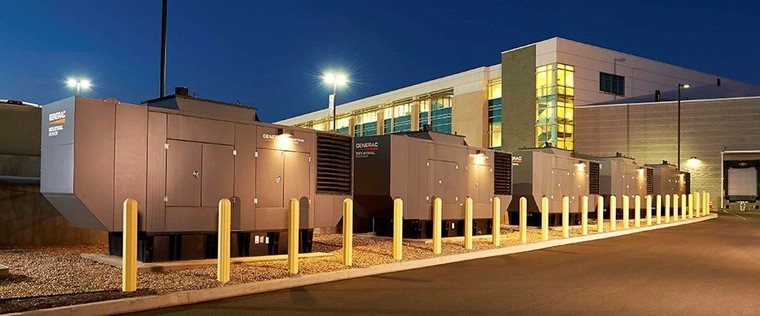
- Noise Constraints: Putting a generator next to a hospital ward or a residential zone? You’ll need a manufacturer who specializes in sound-attenuated enclosures.
2. Key Selection Criteria for Manufacturers
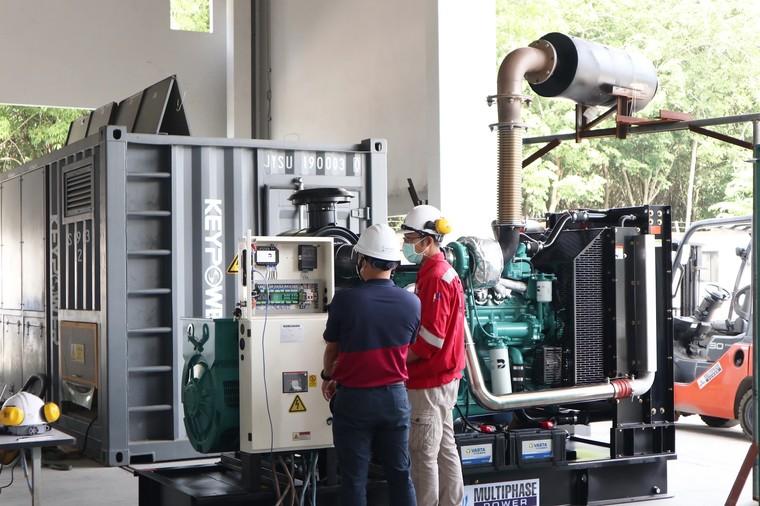
Once you have your requirements pinned down, the landscape of potential partners becomes clearer. But be warned: the market is flooded with assemblers who simply bolt an engine to an alternator and call it a day. A true diesel generator manufacturer offers engineering depth, quality assurance, and long-term support.
Here is the framework I use to evaluate manufacturers, separated into “Must-Haves” and “Nice-to-Haves.”
Manufacturing Pedigree and Track Record
How long has the company been navigating the industrial power generation landscape? Longevity is a strong indicator of reliability. You want a manufacturer that has weathered economic downturns and technology shifts. Look for case studies similar to your project. If you are a hospital administrator, ask specifically for healthcare references. A manufacturer might be great at powering construction sites but completely inexperienced with the strict regulatory environment of life-safety systems.
Component Quality and Brand Partnerships
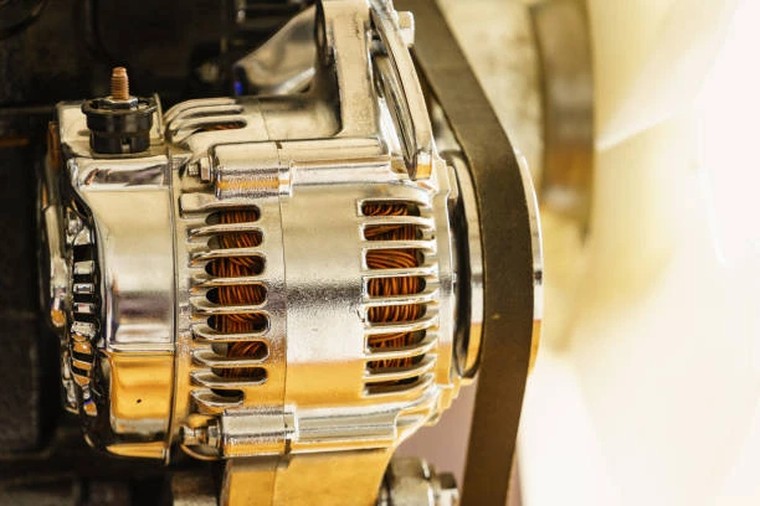
A generator is the sum of its parts. The best manufacturers don’t try to reinvent the wheel; they partner with the masters of the wheel. Look for a genset manufacturer that utilizes engines from globally recognized OEMs like Cummins, Perkins, Volvo, or Baudouin, and alternators from Stamford or Leroy-Somer.
This is where the difference in build quality shines. For instance, reputable brands like Tesla Power clearly specify their component sourcing, ensuring that the engine driving your backup system is a proven workhorse, not a generic clone with no spare parts availability. When a manufacturer is transparent about their supply chain, it’s a green flag.
Warranty and After-Sales Support
A warranty is only as good as the company standing behind it. Read the fine print.
- Duration: Is it 1 year, 2 years, or hour-based?
- Inclusions: Does it cover travel time for the technician? Does it cover the battery (often excluded)?
- Response Time: In a blackout, “next business day” is unacceptable.
Local Service Availability
This is the single most overlooked factor in generator selection. You could buy the best generator in the world, but if the nearest certified technician is three states away, you have a problem. Ensure the manufacturer has a robust local dealer network or their own service fleet within a 2-hour drive of your facility.
Financial Stability
It sounds boring, but it matters. Manufacturing generators is capital intensive. A financially shaky company might cut corners on testing or, worse, go out of business, leaving you with an orphaned machine and no warranty support.
The “at-a-Glance” Evaluation Checklist
Use this checklist when reviewing manufacturer proposals:
- ISO Certification: Are they ISO 9001 certified for quality management?
- Testing Protocol: Do they perform full-load testing on every unit before shipping (not just batch testing)?
- Spare Parts: Do they guarantee parts availability for at least 10-15 years?
- Customization: Can they engineer custom enclosures or fuel tanks, or do they only sell “off-the-shelf” units?
- Compliance: Do their units meet local EPA/emissions standards?
3. Industry-Specific Considerations
A “one-size-fits-all” approach is dangerous in power generation. Different industries have radically different pain points, and a competent diesel generator manufacturer should speak your industry’s language.
Healthcare Facilities
In healthcare, power isn’t just an asset; it’s a life-support system. The NFPA 110 standard is the bible here.
- Requirement: The generator must be online and accepting load within 10 seconds of a grid failure.
- Manufacturer quality: Look for experience with automatic transfer switches (ATS) that handle seamless transitions to avoid damaging sensitive medical imaging equipment.
Data Centers
For data centers, uptime is the only metric.
- Requirement: Redundancy is key (N+1 or 2N configurations). The generator needs to handle massive step-loads without frequency dips that could crash servers.
- Manufacturer quality: You need power equipment suppliers who understand “Tier” ratings (Tier III/IV) and can provide continuous-rated units that can run indefinitely if the grid is down for weeks.
Industrial and Manufacturing
Factories have messy power profiles. Large motors, welders, and robotics create massive inrush currents.
- Requirement: A generator with a “motor starting capability” (kVA/kW) well above the running load.
- Manufacturer quality: Look for rugged, heavy-gauge steel enclosures. These units often sit in dusty, dirty, or outdoor environments. A pretty plastic casing won’t survive a foundry.
Commercial Buildings and Retail
Here, the generator interacts with the public.
- Requirement: Noise control. You cannot have a 100-decibel engine roaring next to an outdoor café or an apartment complex.
- Manufacturer quality: Expertise in sound attenuation is critical. Top-tier manufacturers like Tesla Power often offer hospital-grade silencers and double-walled acoustic enclosures that drop noise levels to that of a conversation.
4. Red Flags to Avoid
In my years in this industry, I’ve seen too many businesses burn cash on bad equipment. When evaluating a proposal, these warning signs should trigger immediate skepticism.
Unrealistic Pricing
If a quote comes in 30% lower than the competition, run. There is no magic in manufacturing; raw materials cost what they cost. A drastically lower price usually means the manufacturer has used inferior copper in the alternator, a non-branded engine, or skipped necessary safety testing. Cheap generators are expensive in the long run.
Vague Component Specifications
Does the spec sheet list the engine as a “4-cylinder diesel engine” without naming the brand? That’s a massive red flag. A reputable diesel generator manufacturer will proudly list the engine make and model (e.g., “Perkins 1104 Series”). If they are hiding the brand, it’s likely a knock-off with poor reliability and zero parts support.
No Local Service Presence
A manufacturer who wants to ship you a container and wave goodbye is not a partner. If they can’t tell you who will service the unit in your zip code, do not sign the contract. I once worked with a client who bought a unit from overseas; when a $50 sensor failed, the unit sat useless for six weeks while parts shipped from abroad.
Rushed Sales Tactics
Be wary of sales reps who push you to sign “by Friday for a special discount” before a site visit has occurred. Proper generator selection requires technical analysis, not high-pressure sales tactics. A professional will want to ensure the unit fits your needs before taking your money.
5. Making the Final Decision
You’ve narrowed the field. Now, how do you pick the winner? It comes down to due diligence.
Due Diligence Steps
Don’t just take their word for it. Ask for:
- Factory Acceptance Test (FAT) Reports: Proof that your specific unit was tested under load.
- Certificate of Origin: Verifies where the machine was actually assembled.
- Warranty Certificates: Get the actual policy document, not just a brochure summary.
Get Multiple Quotes
Obtain at least three detailed quotes. Compare line items carefully. One quote might include shipping, off-loading, and startup commissioning, while another might just be for the hardware “ex-works” (you pick it up). Ensure you are comparing apples to apples.
Site Surveys and Load Analysis
Before signing, insist on a site visit. A qualified engineer needs to check:
- Physical space constraints (doorways, pads).
- Airflow and ventilation requirements.
- Cable routing distances.
- Fuel storage safety compliance.
Reference Checking
Ask for the phone number of a customer who bought a similar unit 3-5 years ago. Ask them: “How did the manufacturer handle the first breakdown?” That answer will tell you everything you need to know about their integrity.

Conclusion
Choosing the right diesel generator manufacturer is a high-stakes decision that reverberates through your business for decades. It’s not just about the steel and copper; it’s about the peace of mind that comes from knowing you have a partner ready to support you when the grid fails.
Don’t let price be the only driver. Prioritize transparency, component quality from trusted brands like Tesla Power or Cummins, and a robust local support network. By doing your homework on load requirements and validating the manufacturer’s track record, you aren’t just buying a standby generator—you’re investing in your business’s resilience. Take your time, ask the hard questions, and choose a partner who treats your power security as seriously as you do.
FAQ Section
1. What size generator does my business actually need?
The short answer: it depends on your critical load. Start by listing every piece of equipment that absolutely must run during an outage. Add up their running wattages, then multiply by 1.25 to account for inefficiencies. Next, identify the largest motor in that list and add its starting current (typically 3-6x the running watts). If your calculation shows 150kW peak demand, specify a generator rated for at least 175-200kW to avoid overloading. A qualified diesel generator manufacturer should offer a free load analysis to verify your math before quoting.
2. Should I buy local or from international manufacturers?
Both have merits, but prioritize service accessibility over price. A top-tier international brand (like Cummins or Perkins engines integrated by manufacturers including Tesla Power) is fine if they have certified local service partners within a 2-hour radius. Buying direct from overseas with no local support is risky—you’ll wait weeks for parts and technicians. Verify the commercial generator provider has physical inventory and trained staff in your region before committing, regardless of their headquarters location.
3. How important is fuel efficiency in manufacturer selection?
Extremely important for prime and continuous applications, moderately important for standby. If you’re running the generator 500+ hours annually, a 10% difference in fuel consumption translates to thousands of dollars over the generator’s lifespan. Top manufacturers publish BSFC (Brake-Specific Fuel Consumption) data—look for engines consuming 0.20-0.22 kg of diesel per kWh. However, don’t sacrifice reliability for efficiency. A slightly thirstier engine from a reputable OEM is better than an “ultra-efficient” mystery engine.
4. What questions should I ask during manufacturer consultations?
Drill into the details they don’t advertise. Ask: “What specific engine model and alternator brand are in this unit?” “Can you provide third-party test reports for emissions and load acceptance?” “Who performs warranty service in my zip code, and what’s their average response time?” “What’s the expected time between overhauls (TBO) for this engine?” A confident industrial power generation expert will answer these immediately. Hesitation or vague responses mean they’re hiding something.
5. How do I verify a manufacturer’s claims and certifications?
Don’t take brochures at face value. For ISO 9001, ask for the certificate number and verify it on the ISO registry website. For UL 2200 listings (critical for North America), check the UL Product iQ database directly. Request copies of EPA emission certificates if they claim compliance. Ask for customer references from installations similar to yours (same industry, same capacity) from at least 2-3 years ago—new installations haven’t been stress-tested yet. If a manufacturer balks at providing verifiable proof, walk away.