
What buyers should know first
Prime and standby diesel generator ratings describe different duty expectations, not just different marketing labels. A standby rating is normally used for emergency backup when utility power fails and the generator runs for limited hours. A prime rating is used when the generator is expected to carry variable load for longer periods, such as remote projects, construction sites, temporary power, or areas with unreliable utility supply. Buyers should not compare only the kW or kVA number; they should ask which rating standard is being used, what average load is allowed, whether overload is permitted, and how many operating hours are expected each year.
What buyers should confirm first
Prime vs Standby Diesel Generator Ratings should be evaluated against the real load profile, voltage and frequency standard, duty rating, enclosure requirement, and installation environment before the order is confirmed.
Before requesting a quotation
- Confirm standby or prime duty and the expected running hours.
- Match site voltage, phase, and 50Hz or 60Hz requirement with the destination equipment.
- Check whether ATS, canopy, fuel tank, trailer, or remote monitoring are part of the same quote.
- Ask for the exact engine model, alternator model, controller type, and factory test scope.
Documents worth requesting
- Rated power table with standby and prime values clearly separated.
- Dimension and weight information for shipping, foundation, and room layout checks.
- Wiring diagram or ATS scope when the package includes switching equipment.
- Factory test record, packing list, and after-sales contact route for export support.
Related product resources
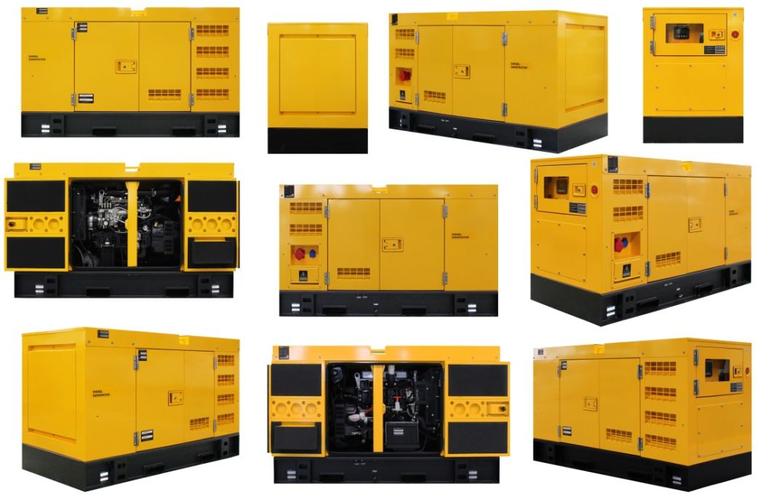
Prime vs standby comparison
| Item | Prime rating | Standby rating |
|---|---|---|
| Typical use | Regular power supply where utility power is absent or unreliable | Emergency backup when utility power fails |
| Load profile | Variable load over longer running periods | Emergency load for limited periods |
| Buyer focus | Fuel consumption, durability, cooling, maintenance access, runtime | Fast start, ATS integration, reliability, enclosure, readiness |
| Risk if misused | Underrating can shorten engine life | Using standby rating for regular duty can overload the system |
How to choose the correct rating
Choose standby rating when the generator protects a facility during grid outages and is not intended as a daily power source. Choose prime rating when the generator will support working loads for extended periods, especially where utility power is unstable or unavailable. For mission-critical facilities, the rating decision should also include redundancy, load steps, fuel storage, ventilation, and maintenance windows.
Questions to send with an inquiry
- Will the generator run only during outages, or will it be used as the main power supply?
- How many hours per day and per year is operation expected?
- What average load and peak load should the set carry?
- Does the project require silent canopy, containerized structure, open-frame design, or ATS?
- What voltage, phase, frequency, and site conditions must be supported?
Related generator options
For standby systems with automatic transfer requirements, compare sound proof generator sets with ATS option. For regular industrial power where enclosure is less important than service access, review open-frame diesel generator configurations. For mixed requirements, send a project brief through the Tesla Diesel generator set website.
FAQ
Is standby rating always higher than prime rating?
Often the standby number is higher for the same engine family because it assumes limited emergency operation. That does not mean the generator can safely run at standby rating as a regular power source.
Which rating is better for a factory?
A factory with reliable utility power usually uses standby rating for outage protection. A factory in an area with frequent or long outages may need prime-rated planning or a redundant standby design.
Can one generator support both prime and standby uses?
The same physical generator may be quoted with different rating labels, but the allowed duty, load, and maintenance plan change. The supplier should confirm the rating basis in the quotation.
Prime vs standby ratings in ISO 8528-1 terms
Prime and standby are duty definitions, not quality grades, and the difference between them is measured in permitted running
hours and average load rather than in hardware. ISO 8528-1 classifies generating set output into four duties: continuous power
(COP) for unlimited hours at constant load, prime power (PRP) for unlimited hours at variable load with the 24 hour average held
to roughly 70 % of the rating, limited-time power (LTP) for up to about 500 hours a year, and emergency standby power (ESP) for
around 200 hours a year during a mains failure. Because the standby duty assumes far fewer hours and a lighter duty cycle, the
ESP figure quoted for an engine is always higher than its PRP figure. Selecting on the larger number without checking the duty is
the single most common sizing error in export enquiries, and it is usually discovered only after the warranty claim is rejected.
ISO 8528-1 duty ratings compared
| Duty rating | Permitted running hours | Average load factor | Overload capability | Typical application |
|---|---|---|---|---|
| COP – Continuous power | Unlimited | Up to 100 %, constant load | None | Base load, island grid, cogeneration, export to utility |
| PRP – Prime power | Unlimited | ≤ 70 % averaged over 24 h | Often 10 % for 1 h in 12 h (confirm on rating sheet) | Construction sites, mining, remote communities, rental fleets |
| LTP – Limited-time power | ≤ 500 h/year, of which ≤ 300 h may be continuous | Variable | None | Peak shaving, planned outage cover, grid support |
| ESP – Emergency standby power | ≤ 200 h/year | ≤ 80 % averaged over 24 h | None | Hospitals, data centres, water utilities, commercial backup |
Figures follow the duty definitions in ISO 8528-1. Engine manufacturers may publish tighter limits for specific platforms,
so the rating sheet should always be checked before the size is fixed.
Standards referenced when comparing ratings
- ISO 8528-1 – Ratings and performance for engine driven alternating current generating sets. Source of the COP / PRP / LTP / ESP definitions.
- ISO 8528-5 – Voltage and frequency performance classes G1 to G4. Data centre and telecom loads normally specify class G3.
- ISO 3046-1 – Engine reference conditions (100 kPa, 25 °C, 30 % relative humidity) that published ratings are corrected back to.
- NFPA 110 – Emergency and standby power systems. Type is the time allowed to restore power (10 s, 60 s, 120 s, 600 s), Class is the minimum run time in hours, Level 1 covers life safety systems.
- Uptime Institute Tier I–IV – Data centre topology model; Tier III is concurrently maintainable (99.982 % availability) and Tier IV is fault tolerant (99.995 %).
- EPA Tier 4 Final and EU Regulation 2016/1628 (Stage V) – Non-road diesel emission tiers that decide which engine platform may be sold in each market.
Sizing checks before you fix the rating
- Confirm total running hours per year. Above roughly 200 h, size on PRP or LTP rather than ESP.
- Calculate the 24 hour average load. If it exceeds about 70 % of the PRP figure, move to the next frame size.
- Keep the continuous load above roughly 30 % of rated output to avoid wet stacking during long light-load runs.
- Apply altitude and ambient temperature derating: as a rule of thumb around 1 % of output per 100 m above 1 000 m, plus an allowance for ambient temperatures above the rating reference.
- State the duty code on the enquiry. Asking for “500 kW” without ESP or PRP invites two very different machines at two very different prices.
Frequently asked questions
What is the difference between prime and standby generator ratings?
Prime rating (PRP) is the power a set can deliver at variable load for an unlimited number of hours per year, with the average load over any 24 hour period kept at or below about 70 % of the rating. Standby rating (ESP) is the power available during a mains failure, normally limited to about 200 hours per year with an average load of about 80 % or less. A standby rating is usually numerically higher than the prime rating on the same engine, because it assumes far fewer running hours and no sustained load.
Can a standby-rated generator be used as a prime power source?
Not without derating. If the set will run more than roughly 200 hours a year, or will carry a continuous base load, it must be sized on its prime (PRP) or continuous (COP) rating. Running a standby-rated set beyond its hour and load limits shortens engine life, increases the risk of wet stacking, and in most cases voids the warranty terms attached to the published rating.
How many hours per year can a standby generator run?
ISO 8528-1 treats emergency standby power as a limited-hours duty. Industry practice places it at roughly 200 hours per year, including scheduled exercise runs. If the application needs more hours, the specification should move to limited-time power (LTP, up to about 500 hours per year) or prime power (PRP, unlimited hours).
Which generator rating is correct for a data centre?
Data centre standby plant is normally specified on the standby (ESP) rating, but the governing documents are usually NFPA 110 and the Uptime Institute tier model rather than the rating alone. Most data centres ask for NFPA 110 Type 10 (power restored within 10 seconds), Level 1, with a fuel Class expressed in hours of run time, plus ISO 8528-5 performance class G3 for voltage and frequency stability.
What is the 70 % prime load-factor rule?
Under ISO 8528-1, prime power assumes a variable load with an average output over any 24 hour period of no more than about 70 % of the PRP figure. This is why a site with a fairly flat load profile often needs a physically larger generator than a site with the same peak but a peaky profile. Ignoring the average, and sizing on peak alone, is one of the most common causes of premature engine overhaul.
Why do two suppliers quote different kW for the same engine model?
Because they are quoting different duty definitions. The same engine can be offered at a standby kW, a prime kW and a continuous kW, and the standby number is always the largest. When comparing quotations, ask each supplier to state the ISO 8528-1 duty code (ESP, PRP, LTP or COP) next to every kW and kVA figure.