
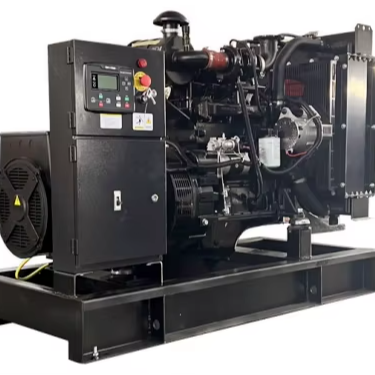
Temporary industrial sites often need a generator that can move, connect quickly, and run without causing avoidable noise or access problems. A soundproof mobile diesel generator enquiry should include load, site layout, noise expectation, trailer movement, fuel arrangement, and cable routing.
In practice
Soundproof does not mean silent in every environment. Noise depends on enclosure design, load, distance, reflection from nearby walls, and installation position. Use the site reference on silent diesel generator noise level planning when discussing expectations with the supplier.
Temporary-site planning table
| Site question | What to confirm | Why it affects the offer |
|---|---|---|
| Load profile | Running load, starting load, single or three phase | Controls generator size and alternator response |
| Movement route | Road width, turning space, ground condition | Decides trailer suitability and lifting plan |
| Noise target | Distance and operating hours | Defines enclosure and exhaust treatment expectations |
| Fuel plan | Tank size, refill access, bunding rules | Affects base tank and operating schedule |
| Connection | Cable length, grounding, panel location | Prevents installation delay on arrival |
Related product reference
A relevant live product page is the 300 kW soundproof mobile trailer-mounted diesel generator set. Use it as a starting point for enclosure and mobility discussions, then provide the project load and access information for final sizing.
Common mistakes to avoid
- Using the same noise expectation for open fields, factory yards, and streets with reflective walls.
- Forgetting to confirm trailer movement rules, towing vehicle capacity, and site turning radius.
- Treating temporary power as a small project while leaving grounding and protection details unclear.
- Asking for a low-noise set without stating operating distance or nearby sensitive areas.
- Leaving fuel refill and maintenance access out of the site plan.
Before requesting a quotation
Send site photos if possible, a load list, expected running hours, preferred enclosure type, trailer or skid preference, cable distance, and any local noise limit. If the unit will be moved between sites, ask the supplier which parts should be checked after transport.
Questions purchasers often ask
Is a trailer generator always better for temporary projects?
Not always. A skid or container package may be better when the unit stays in one location for a long period.
Can soundproof sets work beside factories?
They can be suitable, but the exact noise result depends on distance, load, enclosure, exhaust route, and surrounding walls.
Should ATS be included for temporary power?
Include ATS only when the generator must start and transfer automatically. Manual connection may be enough for some temporary loads.
What site photos are useful?
Send access roads, generator location, cable route, fuel refill area, and nearby buildings or boundaries.
How should buyers compare quotations?
Compare capacity, enclosure, fuel tank, trailer details, controller, breaker, accessories, test documents, and packing terms together.
What a soundproof mobile set solves on a temporary site
A soundproof mobile diesel generator combines a sound attenuated enclosure with a road-towable chassis so that power can be
delivered where it is needed and moved when the work moves. On a temporary industrial site it has to satisfy four constraints at
once: enough output for the load including motor starts, a noise level the surrounding area will accept, an access route and
ground that will carry the trailer, and a fuel arrangement that matches the working shift. Most enquiries concentrate on the kW
figure and leave the other three to be discovered on delivery day. The tables below set out the numbers that are worth agreeing
before the quotation is issued.
Typical noise levels by enclosure type
| Enclosure type | Typical sound pressure at 7 m | Where it is normally used |
|---|---|---|
| Open skid, no canopy | 95 – 105 dB(A) | Plant rooms, remote compounds, generator houses |
| Weatherproof canopy | 80 – 90 dB(A) | General industrial standby where noise is not regulated |
| Sound attenuated canopy | 70 – 80 dB(A) | Commercial buildings, hospitals, factories with nearby offices |
| Super-silent or containerised | 60 – 70 dB(A) | Urban work, night operations, residential or event sites |
Measured in free field at 7 m with the set at full load. Sound level drops by roughly 6 dB(A) each time the distance
doubles, and reflecting surfaces such as walls reduce that benefit. Local authority limits are normally set at the site boundary
or at the nearest facade, so work back from the receptor rather than from the machine.
Site planning figures
| Planning item | Typical figure to design around |
|---|---|
| Fuel autonomy | About 8 h from an integral base tank, 24 h commonly specified, 72 h for critical or unattended sites |
| Cable voltage drop | About 3 % in any single section, about 5 % total from set to the furthest load |
| Minimum continuous load | Roughly 30–40 % of rated output, to avoid wet stacking on long light-load runs |
| Access and ground | Check gate width, turning circle, gradient, axle loads and bearing capacity of soft ground |
| Earthing | Electrode resistance is commonly specified at 10 Ω or better for temporary supplies; the local electrical code governs |
| Exhaust and cooling air | Keep discharge clear of intakes, walkways and neighbouring buildings; allow unrestricted cooling airflow |
Mistakes that delay temporary power projects
- Specifying a noise level at the machine instead of at the site boundary, so the set arrives compliant but still breaches the local limit.
- Assuming the trailer can reach the set-down position, without checking gate width, gradient or soft ground.
- Pricing the cable run after the set is on site, when voltage drop forces a larger cross-section.
- Underestimating fuel logistics, so a 24 h shift needs a delivery that was never arranged.
- Running a large set on a light load for weeks, which causes wet stacking and avoidable maintenance.
- Leaving the changeover method undefined, and finding at commissioning that no transfer equipment was supplied.
Standards and references worth citing
- ISO 8528-10 – Measurement of airborne noise from generating sets using the enveloping surface method.
- ISO 8528-5 – Voltage and frequency performance classes G1 to G4; class G3 is normally specified for sensitive loads.
- ISO 8528-1 – Duty ratings ESP, PRP, LTP and COP that decide how many hours the set may run.
- EU Directive 2000/14/EC – Noise emission in the environment by equipment for use outdoors, relevant to the European market.
- EPA Tier 4 Final or EU Regulation 2016/1628 (Stage V) – Emission tier that determines which engine platform is legal on the site.
Frequently asked questions
How quiet is a soundproof mobile generator in practice?
Sound attenuated canopies typically measure around 70–80 dB(A) at 7 m, and super-silent or containerised units around 60–70 dB(A) at the same distance. An open skid set is far louder, commonly 95–105 dB(A) at 7 m. Noise falls by roughly 6 dB(A) each time the distance from the set doubles in open air, which is why set-down position often matters more than the enclosure specification.
Is a trailer generator always the right choice for temporary power?
Not always. A trailer suits sites that move or that have hard standing and a clear access route. Where the set will stay for months, or where ground bearing is poor, a skid unit on a prepared plinth or a containerised set can be cheaper and easier to secure. The decision should follow the hire or project duration, the ground conditions and the security arrangements rather than habit.
What fuel autonomy should a temporary site specify?
Base tanks built into a mobile set usually give around 8 hours at full load, and 24 hours is a common requirement for sites that run overnight. Critical or unattended applications often ask for 72 hours or a bundled external tank. The autonomy figure should always be stated as hours at a named load, because hours at 100 % and hours at 50 % load are very different numbers.
How far can the generator be sited from the load?
The limit is normally voltage drop rather than distance. A widely used planning rule is no more than about 3 % drop in any single cable section and about 5 % from the generator terminals to the furthest load. Long runs therefore need a larger cable cross-section, which is a cost item worth confirming at quotation stage rather than on site.
Can soundproof sets work right beside occupied buildings?
They can, but the governing constraint is usually the local noise limit at the nearest receptor rather than the machine’s own figure. Ask what the permitted level is at the site boundary or facade, then work back to the required level at 7 m using the distance attenuation of roughly 6 dB(A) per doubling of distance. Night-time limits are typically 10 dB(A) or more stricter than daytime limits.
What site information is most useful to send with the enquiry?
Photographs of the intended set-down position and access route, a simple site plan showing the load position and cable run, the available fuel supply or delivery arrangement, the ground type, the required autonomy in hours at a stated load, and any noise limit and working hours imposed by the local authority.