
When you’re investing in a Cummins diesel generator, you’re not just buying a piece of equipment—you’re making a decision that affects your business continuity, compliance standing, and operational safety for years to come. But here’s the uncomfortable truth: not all generator manufacturers are created equal, and the market is flooded with suppliers making bold claims about quality and reliability.
So how do you separate the serious manufacturers from the pretenders? The answer lies in certifications.
Manufacturer certifications are far more than bureaucratic paperwork. They represent independently verified proof that a company follows rigorous processes, meets international safety standards, and commits to quality at every stage—from design and sourcing to production and testing. For procurement professionals and facility managers, diesel generator certification requirements serve as the first line of defense against costly mistakes: non-compliant equipment, premature failures, and regulatory headaches that can shut down operations.
In this comprehensive guide, we’ll walk through the essential certifications every reputable Cummins diesel generator manufacturer should have, what each certification actually means for your purchase decision, and how to verify these credentials before signing a contract. Whether you’re specifying a backup power system for a hospital, a prime power solution for a remote facility, or standby generators for a data center, understanding generator quality certifications will give you the confidence to choose a supplier who won’t let you down when the lights go out.
Figure 1: ISO 9001 and ISO 14001 certifications are the cornerstone quality and environmental management standards that reputable diesel generator manufacturers must maintain.
Understanding Generator Manufacturer Certifications
Before we dive into specific certifications, let’s clarify what we’re actually talking about. In the power generation industry, certifications generally fall into three categories:
1. Management System CertificationsThese demonstrate that a manufacturer has implemented formal systems for managing quality, environmental impact, or occupational health and safety. ISO 9001 and ISO 14001 are the most recognized examples. Think of these as proof that a company has mature, documented processes—not just ad-hoc improvisation.
2. Product Safety and Performance CertificationsThese verify that specific products (the generator sets themselves) meet defined safety, performance, and construction standards. UL, CE marking, and CSA fall into this category. These certifications protect end users from electrical hazards, mechanical failures, and fire risks.
3. Regulatory Compliance CertificationsThese confirm that engines or complete generator systems meet emissions, noise, or environmental regulations mandated by law. EPA Tier 4 certified diesel generators are the prime example in the United States, where non-emergency operation of stationary diesel engines is strictly regulated.
Why does this distinction matter? Because when you’re evaluating a manufacturer, you want all three. A supplier might have spotless quality processes (ISO 9001) but sell products that aren’t UL-listed for your jurisdiction. Conversely, a manufacturer might offer CE-marked generators but lack the management systems that ensure consistent quality batch after batch.
The best manufacturers—companies like Tesla Power, for instance—integrate all three categories. They maintain robust quality and environmental management systems, rigorously test products to meet safety standards, and ensure every generator leaving the factory complies with the environmental regulations of its destination market. This multi-layered approach is what separates ISO certified generator manufacturers who can deliver reliably at scale from smaller operators who might cut corners when volumes rise or margins tighten.
ISO 9001: The Quality Management Foundation
What Is ISO 9001?
ISO 9001 is the international standard for Quality Management Systems (QMS). Published by the International Organization for Standardization, the current version—ISO 9001:2015—lays out requirements for how a company should structure its operations to consistently deliver products that meet customer expectations and applicable regulations.
At its core, ISO 9001 isn’t about dictating what you make; it’s about proving how you make it. The standard requires documented processes for design control, supplier management, production oversight, testing protocols, corrective actions, and continuous improvement. When a manufacturer holds ISO 9001 certification, an accredited third-party auditor has verified that these processes exist, are followed, and are regularly reviewed.
Why It Matters for Diesel Generator Manufacturing
Diesel generators are complex assemblies. A typical Cummins-powered genset integrates an engine, alternator, control panel, cooling system, fuel system, exhaust components, and often sophisticated automation—all of which must work flawlessly together under load. A single quality failure—a miscalibrated governor, a faulty sensor, a substandard wiring harness—can cascade into expensive downtime or catastrophic failure.
ISO 9001 certification signals that a manufacturer has instituted controls to catch defects before they reach the customer. This includes:
- Supplier qualification: Ensuring that Cummins engines, alternators, and other critical components come from vetted sources and are inspected upon receipt
- Process validation: Confirming that assembly procedures are repeatable and that operators are trained
- Testing and inspection: Mandatory load testing, voltage regulation checks, and safety function verification before shipment
- Traceability: Serial number tracking and documentation so that if an issue emerges, the manufacturer can quickly identify affected units and root causes
- Corrective and preventive action (CAPA): Structured methods to investigate failures, implement fixes, and prevent recurrence
For buyers, ISO 9001 certification translates into measurably lower risk. Industry data shows that ISO 9001-certified suppliers experience fewer customer complaints, shorter lead times, and more predictable delivery performance. When you’re depending on a generator to keep a hospital operational during a storm or maintain production at a remote mining site, that reliability isn’t optional.
How to Verify ISO 9001 Certification
Unfortunately, some suppliers inflate or fabricate certification claims. Here’s how to verify legitimacy:
- Request the certificate: Ask the manufacturer for a copy of their ISO 9001:2015 certificate. It should list the issuing certification body, the scope of certification, and the validity period.
- Check the certification body’s accreditation: ISO itself doesn’t issue certificates. Instead, independent certification bodies (like BSI, TUV, SGS, or DNV) conduct audits. Verify that the certification body is accredited by checking with the national accreditation body or the International Accreditation Forum (IAF) database.
- Confirm validity: Certificates typically expire after three years, with annual surveillance audits in between. If a certificate is expired or the scope doesn’t cover generator manufacturing, that’s a red flag.
- Ask about audit reports: While full audit reports are confidential, a reputable manufacturer should be willing to discuss their most recent audit findings and corrective actions in general terms.
Take the time to verify. A legitimate ISO 9001-certified manufacturer will welcome your due diligence; a dubious supplier will deflect or delay.
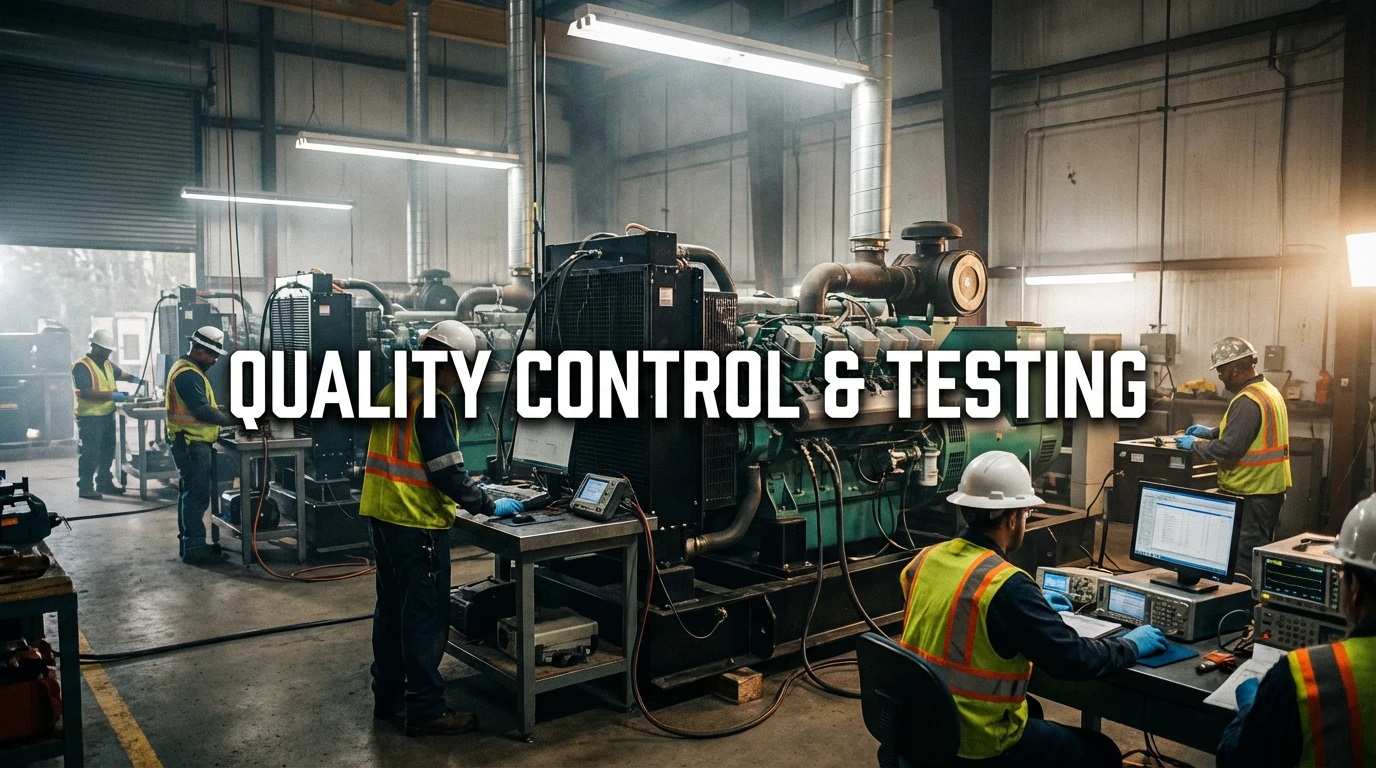
Figure 2: Professional generator manufacturers implement comprehensive quality control testing procedures including load testing, voltage regulation checks, and safety function verification before shipment.
ISO 14001: Environmental Management Systems
What Is ISO 14001?
ISO 14001:2015 specifies the requirements for an Environmental Management System (EMS). Like ISO 9001, it’s a process standard—but instead of focusing on product quality, ISO 14001 addresses how a manufacturer identifies, controls, and reduces its environmental impact.
The standard requires companies to:
- Identify environmental aspects and impacts of their operations (emissions, waste, energy use, water consumption)
- Establish environmental objectives and targets
- Ensure compliance with applicable environmental laws and regulations
- Implement operational controls to minimize negative impacts
- Monitor performance and continuously improve
Certification involves third-party audits by accredited bodies, similar to ISO 9001.
Why It Matters in Generator Manufacturing
Diesel generator manufacturing and testing involve significant environmental considerations:
- Emissions from testing: Generators must undergo full-load testing before shipment, which produces exhaust emissions and noise
- Paint and coatings: Industrial painting processes can release volatile organic compounds (VOCs)
- Waste management: Metal shavings, used oils, coolant, packaging materials, and defective components must be handled and disposed of properly
- Energy and water: Manufacturing facilities consume substantial electricity (for machining, welding, overhead) and water (for cooling system testing)
An ISO 14001-certified manufacturer has structured systems to manage these impacts legally and responsibly. This isn’t just about corporate social responsibility—it’s about operational risk. Environmental violations can trigger fines, permit suspensions, and reputational damage. For buyers, choosing an ISO certified generator manufacturer with both 9001 and 14001 reduces the risk that your supplier will face regulatory shutdowns or supply chain disruptions due to environmental non-compliance.
Additionally, many buyers face their own sustainability reporting requirements. Sourcing from ISO 14001-certified manufacturers supports your own environmental goals and simplifies supply chain due diligence when customers or investors ask about Scope 3 emissions.
CE Marking: Gateway to European Markets
What Is CE Marking?
CE marking (Conformité Européenne) is a mandatory conformity mark for products sold within the European Economic Area (EEA). It indicates that the manufacturer has assessed the product and declares it meets EU safety, health, and environmental protection requirements.
Important clarifications:
- CE is not a certification issued by an external body. It’s a declaration by the manufacturer.
- CE is not a quality mark. It signifies regulatory compliance, not superior performance.
- CE is not an indication of origin. Products manufactured anywhere (China, USA, India, Europe) can carry CE marking if they meet EU requirements.
Requirements for Diesel Generators
For diesel generators, CE marking typically involves compliance with several EU directives and regulations:
- Machinery Directive (2006/42/EC) or the newer Machinery Regulation: Covers mechanical safety, guarding, control systems, and operational risks
- Electromagnetic Compatibility (EMC) Directive (2014/30/EU): Ensures the generator doesn’t emit excessive electromagnetic interference and can tolerate interference from other equipment
- Low Voltage Directive (LVD) (2014/35/EU): Applies if the generator produces output within specific voltage ranges (typically 50-1000V AC)
- Noise Emission Directive (where applicable): Limits environmental noise from outdoor equipment
To apply CE marking, a manufacturer must:
- Perform a conformity assessment: Evaluate the product against applicable directives, conduct risk assessments, and gather technical evidence
- Compile a Technical File: Detailed documentation including drawings, test reports, risk analysis, and evidence of compliance
- Issue an EU Declaration of Conformity (DoC): A formal document listing the product, applicable directives, applied standards, and the manufacturer’s declaration
- Affix the CE mark: The mark must be visible, legible, and indelible on the product
Why It Matters
If you’re sourcing generators for installation in the EU or EEA, CE compliance isn’t optional—it’s legally required. Generators without proper CE marking and accompanying Declarations of Conformity can be stopped at customs, rejected by local inspectors, or subject to market surveillance actions that result in costly recalls.
Beyond legal compliance, CE marking reflects a manufacturer’s engineering discipline. Preparing a proper Technical File and Declaration of Conformity requires understanding of safety standards, EMC testing, and risk management. Manufacturers who treat CE as a formality (slapping a mark on the product without proper documentation) expose buyers to liability if an accident or regulatory audit occurs.
How to Verify CE Compliance
- Request the EU Declaration of Conformity (DoC): This should specify the product model, applicable directives and standards (e.g., EN 12601 for generator sets), and the responsible manufacturer.
- Check for Notified Body involvement (if required): Some directives mandate third-party assessment by a “Notified Body.” If one was involved, confirm their identity through the EU’s NANDO database.
- Inspect the Technical File: While manufacturers aren’t required to share the entire file upfront, they must make it available to authorities on request. Ask what testing was performed and which standards were applied.
- Look for the CE mark on the nameplate: It should be accompanied by the manufacturer’s name and address.
Be wary of suppliers who claim “CE approval”—there’s no such thing. CE is a self-declaration, not an approval granted by the EU.
EPA Tier 4: U.S. Emissions Compliance
What Is EPA Tier 4?
The U.S. Environmental Protection Agency (EPA) established Tier 4 emission standards for nonroad diesel engines, including those used in stationary diesel generators. These standards, phased in between 2008 and 2015, drastically reduce allowable emissions of particulate matter (PM) and nitrogen oxides (NOx)—pollutants that contribute to respiratory disease, smog, and acid rain.
EPA Tier 4 certified diesel generators meet some of the strictest emissions requirements in the world. Tier 4 compliance typically requires advanced engine technologies such as:
- Selective Catalytic Reduction (SCR): Injects diesel exhaust fluid (DEF/AdBlue) to convert NOx into harmless nitrogen and water
- Diesel Particulate Filters (DPF): Captures soot and PM for periodic regeneration
- Advanced fuel injection and turbocharging: Optimizes combustion to minimize emissions at the source
Cummins, a leader in diesel engine technology, offers a comprehensive range of Tier 4 certified diesel generators across power nodes from 60 kW to over 2,750 kW, demonstrating how manufacturers can meet stringent regulations without sacrificing performance.
Why It Matters: Non-Emergency Use and Compliance
Here’s the critical point many buyers miss: as of January 1, 2015, only EPA Tier 4-certified generators can be used for non-emergency operation in the United States. If you plan to use your generator for peak shaving, load management, demand response, or continuous prime power, Tier 4 compliance is legally mandatory.
Non-compliant generators can trigger:
- EPA enforcement actions: Fines, stop-use orders, and required retrofits
- Permit denials: State and local authorities will refuse operating permits for non-compliant units
- Utility program rejection: Demand response and load management programs require certified equipment
Even for standby/emergency use, choosing Tier 4 engines provides flexibility. Business needs change—what starts as pure backup might evolve into a combined heat and power (CHP) application or a microgrid node. Starting with certified power generation equipment avoids costly re-engineering later.
How to Verify EPA Tier 4 Compliance
- Request the EPA Certificate of Conformity: The engine manufacturer (Cummins, in this case) must hold a valid Certificate for each engine family. This document lists the engine model, emissions levels, and certification status.
- Check the engine label: EPA regulations require a permanent emissions label on the engine showing the tier level, model year, and engine family.
- Confirm with the genset manufacturer: Ask the generator assembler to provide documentation showing that the installed Cummins engine is covered by a current EPA Certificate of Conformity.
- Consult EPA’s certification database: The EPA publishes online databases of certified engines. Cross-reference the engine model and family against this list.
For buyers, the lesson is straightforward: if the manufacturer can’t produce clear EPA Tier 4 documentation, walk away. The regulatory risk isn’t worth the savings.
Figure 3: EPA Tier 4 certification is mandatory for diesel generators used in non-emergency applications in the United States, ensuring compliance with stringent emissions standards.
UL and CSA: North American Safety Standards
What Are UL and CSA Certifications?
UL (Underwriters Laboratories) and CSA (Canadian Standards Association, now CSA Group) are independent safety certification organizations that test and certify electrical and mechanical products for North America. Their marks are widely recognized and often legally required.
- UL 2200: The primary standard for stationary engine generator assemblies in the United States. It covers construction, wiring, control systems, safety interlocks, grounding, and protection against fire and electrical hazards.
- UL/ULC 2200: The harmonized version covering both U.S. (UL) and Canadian (ULC) requirements
- CSA C282: Canadian standard for emergency electrical power supply systems in buildings, specifying installation, maintenance, and testing requirements
When a generator carries a UL or CSA listing mark, it means the product has been evaluated by a Nationally Recognized Testing Laboratory (NRTL) and meets applicable safety standards. The certifying body conducts initial testing, inspects the manufacturing facility, and performs ongoing surveillance to ensure continued compliance.
Why UL/CSA Certification Matters
Most U.S. states and Canadian provinces mandate UL- or CSA-listed equipment for commercial and institutional installations. Here’s why:
- Code compliance: The National Electrical Code (NEC) and Canadian Electrical Code (CEC) require listed equipment in many applications
- Insurance requirements: Insurers often refuse coverage or charge higher premiums for non-listed generators
- Inspector acceptance: Local electrical inspectors will reject installations using unlisted equipment
- Liability protection: If an accident occurs, using listed equipment demonstrates due diligence and reduces legal exposure
For industrial generator compliance standards, UL/CSA listings are non-negotiable in most commercial contexts. A generator might function perfectly well without certification, but you won’t get it permitted, insured, or accepted by inspectors.
ETL and Other NRTL Marks
Beyond UL and CSA, other NRTLs such as Intertek (ETL mark) also certify generators to the same standards. An ETL Listed generator evaluated to UL 2200 carries the same regulatory weight as a UL-listed unit. What matters is that the mark comes from an OSHA-recognized NRTL and the product is tested to the applicable standard.
How to Verify UL/CSA Certification
- Check the product label: Listed generators must display the certification mark (UL, CSA, ETL, etc.) along with the listing mark, file number, and applicable standard.
- Search the certifier’s online database: UL, CSA, and Intertek maintain public databases where you can search by manufacturer, model number, or file number to confirm listing status.
- Verify the listing scope: Ensure the exact model, voltage, and configuration you’re purchasing are covered by the listing—not just a similar model.
- Ask for a listing notice or certification letter: Reputable manufacturers will provide documentation confirming their products’ listing status.
Counterfeit certification marks do exist. Always cross-check the mark on the product against the certifier’s official database.
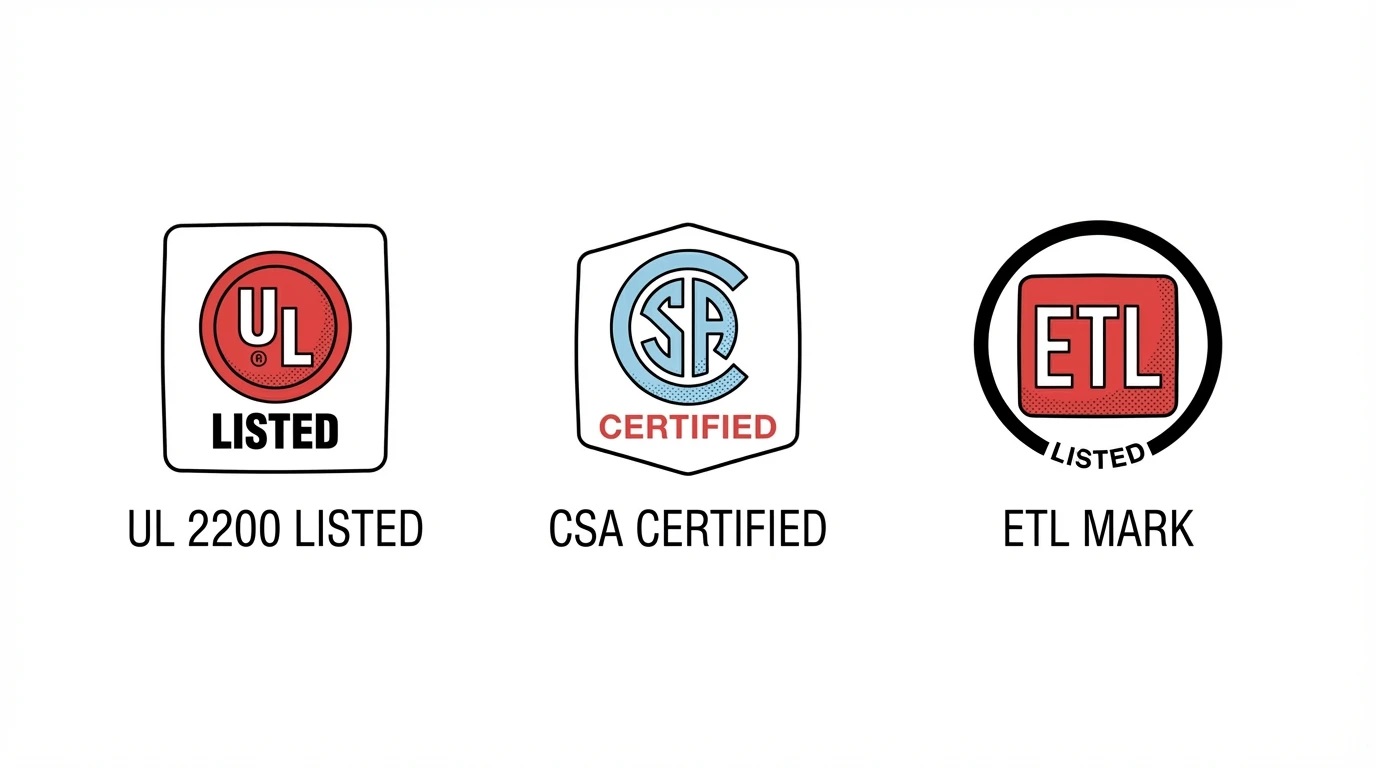
Figure 4: UL, CSA, and ETL certification marks indicate that generator assemblies have been tested and approved by Nationally Recognized Testing Laboratories for safety compliance.
How to Verify Manufacturer Certifications
You’ve learned what certifications matter—now let’s talk about how to confirm a manufacturer actually holds them. Certification fraud is real, and even well-intentioned suppliers sometimes let certificates lapse or misrepresent their scope.
Step-by-Step Verification Process
For ISO 9001 and ISO 14001:
- Request a copy of the current certificate
- Verify the certificate lists ISO 9001:2015 and/or ISO 14001:2015 (the current editions)
- Check the issuing certification body’s name and accreditation mark
- Confirm the certification body is accredited through the International Accreditation Forum (IAF) member database or the national accreditation body’s website
- Confirm the scope explicitly covers “diesel generator manufacturing” or similar wording
- Verify the certificate hasn’t expired (ISO certificates are valid for three years with annual surveillance audits)
For CE Marking:
- Request the EU Declaration of Conformity (DoC)
- Verify it lists all applicable directives (Machinery, EMC, LVD, etc.)
- Check which harmonized standards were applied (e.g., EN 12601 for gensets, EN 60204 for electrical equipment)
- If a Notified Body is referenced, confirm their identity and scope via the EU NANDO database
- Inspect the actual CE mark on the generator nameplate
For EPA Tier 4:
- Request a copy of the engine’s EPA Certificate of Conformity
- Check the permanent emissions label on the engine itself
- Cross-reference the engine family and model year with EPA’s online certification database
- Confirm the engine configuration (rating, application) matches what’s certified
For UL/CSA/ETL:
- Locate the certification mark on the generator’s data plate
- Note the file number or listing number
- Search the certifier’s public online product database (UL Product iQ, CSA Product Listing, Intertek Directory)
- Verify the exact model, voltage, and configuration are covered
- Confirm the listing is current (not expired or withdrawn)
Tools and Resources
Here are the key verification tools:
- IAF Database: IAF Members – Confirms accreditation of ISO certification bodies
- EU NANDO Database: NANDO – Lists authorized Notified Bodies
- EPA Certification Database: EPA – Engine compliance verification
- UL Product iQ: UL Certification Directory
- CSA Product Listing: CSA Certification
- Intertek Directory: Intertek Certified Products
Don’t skip this step. I’ve seen buyers lose six figures when generators arrived without proper certifications, triggering permit delays, retrofit costs, and lost production. Fifteen minutes of verification upfront can save months of headaches.
What Factors Determine Which Certifications You Need?
Not every generator installation requires every certification we’ve discussed. The certifications you should prioritize depend on several factors:
1. Geographic Market
- European Union/EEA installations: CE marking is legally mandatory
- United States installations: UL or ETL listing + EPA Tier 4 (for non-emergency use)
- Canadian installations: CSA certification + emissions compliance
- Export/international markets: Often require ISO 9001/14001 as baseline credibility, plus market-specific product certifications
2. Application Type
- Non-emergency / prime power / peak shaving: EPA Tier 4 is mandatory in the U.S.
- Emergency standby only: Lower emissions tiers may be permissible, but Tier 4 provides future flexibility
- Critical facilities (hospitals, data centers): UL/CSA listing typically required by code and insurance
- Rental/portable units: PGMA G300 standard may apply for portable generators
3. Regulatory Environment
- Air quality non-attainment areas: Stricter local emissions rules may apply beyond federal EPA requirements
- Noise-sensitive locations: May require additional noise emission certifications or testing
- Hazardous locations: IECEx or ATEX certification for explosive atmospheres
4. Contractual and Insurance Requirements
Many buyers discover certification requirements buried in:
- Engineering specs: Consultants often specify UL-listed or ISO-certified manufacturers
- Insurance policies: Underwriters may mandate listed equipment or refuse coverage
- Utility interconnection agreements: Grid-connected generators must meet specific standards
- Financing covenants: Lenders may require certified equipment as collateral protection
5. Industry Sector
Certain industries have sector-specific expectations:
- Healthcare: Joint Commission and local codes require UL-listed emergency power systems
- Oil & gas: Often require ISO 9001 suppliers and ATEX/IECEx for hazardous areas
- Data centers: Tier III/IV certifications often specify UL-listed generators with specific testing protocols
- Government/military: May mandate domestic content, ISO certifications, and cybersecurity standards
The safest approach? Start with ISO 9001 and 14001 as baseline manufacturer credentials, then add product certifications (UL/CE/EPA) based on your installation location and application. When in doubt, over-specify. It’s far easier to have certifications you don’t strictly need than to retrofit or replace equipment that doesn’t meet unexpected requirements.
Industry Best Practices: What Top Manufacturers Do Differently
After evaluating dozens of generator manufacturers, clear patterns emerge that separate industry leaders from the rest. Here’s what generator manufacturer accreditation excellence looks like in practice:
Integrated Management Systems
Top-tier manufacturers don’t treat ISO 9001 and ISO 14001 as separate silos. They integrate quality and environmental management into a unified system that governs every function—from supplier audits to customer feedback loops. When you visit their facilities, you’ll see:
- Real-time quality dashboards visible on the production floor
- Environmental metrics (energy use, waste generation) tracked alongside production KPIs
- Regular management reviews where certification audit findings drive strategic decisions
Tesla Power, for example, has implemented comprehensive quality management systems that strictly follow ISO9001-2000 standards, ensuring each generator leaving the factory meets rigorous specifications—a commitment reflected in their track record of customer satisfaction and regulatory compliance.
Proactive Certification Maintenance
Leading manufacturers don’t wait for audit findings to drive improvements. They:
- Conduct internal audits more frequently than required
- Track near-misses and process variations before they become nonconformities
- Assign dedicated compliance personnel to monitor regulatory changes
- Maintain buffer time before certificate expiration to address any renewal issues
Transparent Documentation
Reputable manufacturers make verification easy:
- Certificates are posted on their website and readily available to prospective customers
- Technical files, Declarations of Conformity, and EPA documentation are part of the standard quotation package
- Factory acceptance test (FAT) protocols include certification verification as a checklist item
- Sales teams can articulate what certifications apply to each model and configuration
Continuous Testing and Validation
Beyond minimum certification requirements, the best manufacturers:
- Perform 100% load testing on every generator (not just sample testing)
- Maintain in-house EMC testing capabilities to catch issues before third-party assessment
- Run accelerated life testing on new designs
- Participate in industry standards committees to stay ahead of regulatory changes
Supply Chain Governance
Quality starts with components. Leading manufacturers:
- Source Cummins engines directly from authorized distributors with documented chain of custody
- Qualify and audit critical suppliers (alternators, control panels, cooling systems)
- Implement incoming inspection protocols with defined acceptance criteria
- Maintain alternative suppliers to prevent single-source dependency risks
When evaluating manufacturers, ask about these practices. Companies that can articulate their processes in detail—and show you evidence—are far more likely to deliver on their certification promises.
Making Informed Decisions
Choosing a Cummins diesel generator manufacturer isn’t just about comparing spec sheets and prices. The certifications a manufacturer holds—and how seriously they maintain them—tell you everything about their commitment to quality, compliance, and customer protection.
To recap, here’s your certification checklist:
✅ ISO 9001:2015 – Quality management foundation✅ ISO 14001:2015 – Environmental responsibility✅ CE Marking (for EU/EEA markets) – Product safety and regulatory compliance✅ EPA Tier 4 (for U.S. non-emergency applications) – Emissions compliance✅ UL/CSA/ETL (for North America) – Safety certification and code compliance
Remember: certifications are only valuable if they’re legitimate and current. Always verify claims through official databases and request supporting documentation. A manufacturer who makes verification difficult probably has something to hide.
When you choose a properly certified manufacturer like Tesla Power, you’re not just buying a generator—you’re buying peace of mind. You know the equipment will pass inspection, satisfy insurance requirements, meet environmental regulations, and deliver reliable performance when you need it most. That’s worth far more than saving a few percentage points on the purchase price.
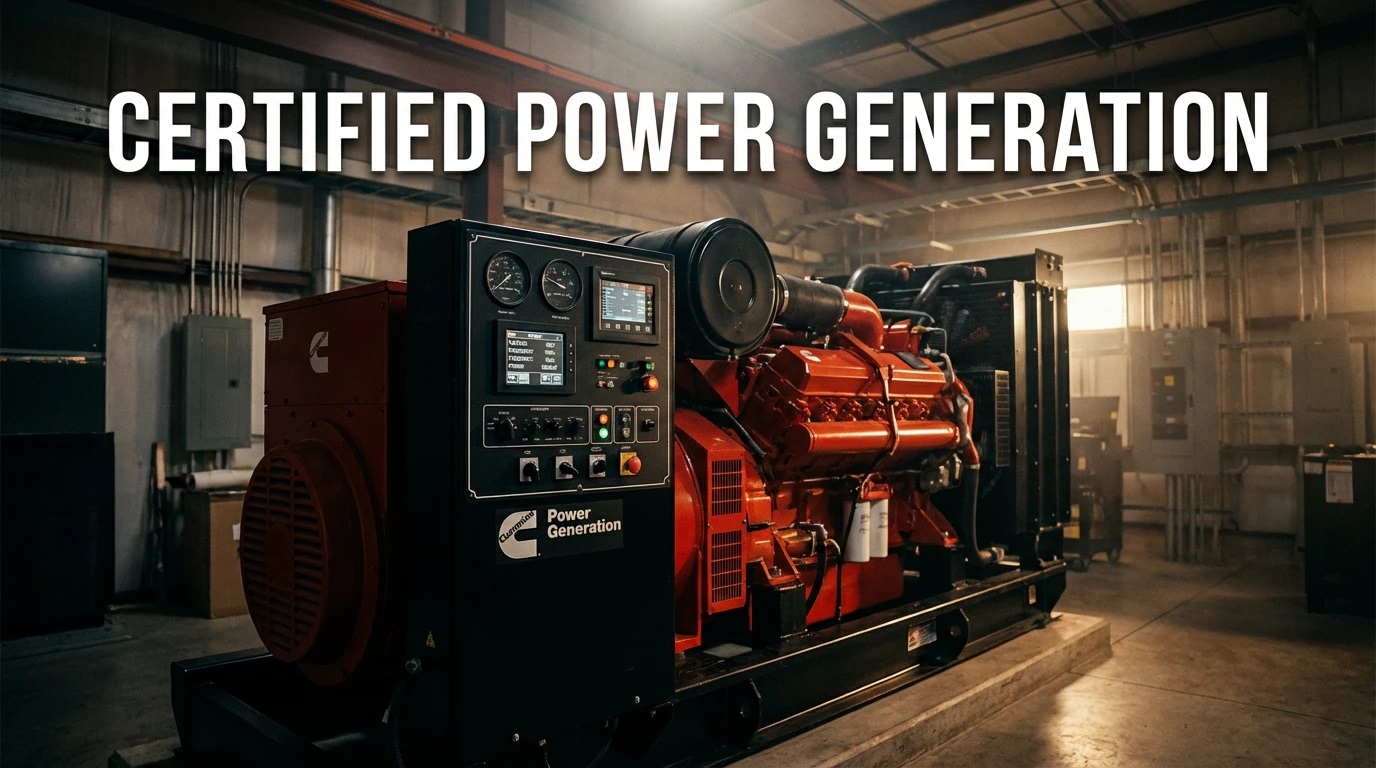
Figure 5: A properly certified Cummins diesel generator from a reputable manufacturer ensures quality, compliance, and reliable performance for mission-critical applications.
Frequently Asked Questions
1. Can a manufacturer be ISO 9001 certified but still sell poor-quality generators?
Technically, yes. ISO 9001 certifies that a manufacturer has implemented a Quality Management System—not that their products are superior. However, a properly functioning QMS should catch defects, drive continuous improvement, and respond to customer complaints, making sustained poor quality unlikely. The risk is higher with manufacturers who treat ISO 9001 as a marketing checkbox rather than an operational philosophy. That’s why it’s important to look for multiple certifications (ISO 9001 + ISO 14001 + product certifications) as a more complete picture of manufacturer capability.
2. What’s the difference between UL Listed and UL Recognized?
This distinction confuses many buyers:
- UL Listed: The complete product (in this case, the entire generator assembly) has been tested and meets all applicable safety standards. This is what you want for a generator installation.
- UL Recognized: Only a component within a larger system has been evaluated. For example, an alternator might be UL Recognized, but that doesn’t mean the complete generator is UL Listed.
Always verify the entire generator assembly is UL Listed (or ETL Listed, CSA certified, etc.), not just individual components.
3. Do I really need EPA Tier 4 if I’m only using the generator for emergency backup?
For standby/emergency use only, you may be exempt from Tier 4 requirements under EPA regulations. However, there are three reasons to consider Tier 4 even for emergency applications:
- Future flexibility: If your needs change (adding peak shaving, participating in demand response), a Tier 4 engine gives you options without re-engineering
- Local regulations: Some states and municipalities have stricter rules than federal EPA standards
- Resale value: Tier 4 generators command higher resale prices and broader market appeal
Consult with your permitting authority and legal counsel to determine what applies to your specific situation.
4. How often should I re-verify a manufacturer’s certifications?
ISO certificates expire after three years, product certifications can be withdrawn or suspended, and manufacturers sometimes sell facilities or reorganize in ways that affect certification scope. Best practices:
- At initial evaluation: Full verification as described in this article
- With each new purchase order: Quick check that certificates remain valid
- Annually for ongoing relationships: Reconfirm certificates haven’t expired
- After any major change: New facility, ownership change, significant model redesign
Treat certification verification like insurance—you hope you never need it, but you’ll be grateful you did it if problems arise.
5. What should I do if I discover a manufacturer has misrepresented their certifications?
This is a serious red flag that should trigger immediate action:
- Document everything: Save all communications, marketing materials, and documentation where claims were made
- Stop procurement: Don’t proceed with purchases until discrepancies are resolved
- Notify stakeholders: Inform your legal, procurement, and engineering teams
- Consider reporting: Fraudulent certification claims may violate consumer protection laws; you can report to the FTC, certification bodies, or relevant authorities
- Evaluate existing equipment: If you’ve already purchased from this manufacturer, verify your installed generators’ actual compliance status and consult with qualified inspectors
Certification fraud isn’t just unethical—it exposes you to liability. Take it seriously.
References
- ISO 9001:2015 – Quality Management Systems
- ISO 14001:2015 – Environmental Management Systems
- European Commission – CE Marking
- U.S. EPA – Nonroad Diesel Engines
- UL 2200 – Stationary Engine Generator Assemblies
- CSA C282 – Emergency Electrical Power Supply for Buildings
- Cummins – Tier 4 Certified Generator Sets
- International Accreditation Forum (IAF)
- Tesla Power – Diesel Generator Sets