
When you’re looking for a diesel generator to power your facility, the manufacturer you choose matters just as much as the generator itself. I’ve spent over a decade working with power equipment, and I’ve seen firsthand how the right manufacturer can mean the difference between reliable backup power and costly downtime.
The diesel generator manufacturer landscape is crowded with options—from global giants to regional players, from established brands to newer entrants. Yuchai, a prominent name in diesel engine technology, powers generator sets distributed by various manufacturers worldwide. But what actually separates a reliable manufacturer from one that’ll leave you stranded when the power goes out?
Let’s cut through the marketing noise and examine what truly matters.
Understanding the Diesel Generator Manufacturing Landscape
The global diesel generator market includes hundreds of manufacturers, but they fall into three distinct categories.
Tier 1: Global OEMs (Original Equipment Manufacturers). These are the household names—Cummins, Caterpillar, Kohler, Generac. They design engines, manufacture generator sets, control integration, and operate extensive service networks. You’re paying premium prices, but you get comprehensive engineering resources and worldwide support.
Tier 2: Regional Specialists. This is where companies like Tesla Power operate—manufacturers who source proven diesel engines (often Yuchai, Perkins, or Cummins) and integrate them with quality alternators and control systems. They offer competitive pricing with solid engineering, though their service footprint may be more regional than global.
Tier 3: Local Assemblers. These operations purchase components and assemble generator sets with minimal engineering input. Quality varies dramatically. Some deliver excellent value; others cut corners on critical components and testing.
Here’s what many buyers don’t realize: the engine brand (Yuchai, Cummins, Perkins) tells only part of the story. A Yuchai diesel generator from one manufacturer can perform very differently than the same Yuchai engine paired with different alternators, controllers, and system integration by another manufacturer.
I’ve tested generator sets where identical Yuchai engines delivered 5-7% different fuel consumption figures simply because of how the manufacturer configured the fuel system and optimized the load response curves. The manufacturer’s engineering capability matters enormously.

The Six-Pillar Evaluation Framework
After years of evaluating manufacturers for critical power projects, I’ve developed a framework that cuts through sales pitches and focuses on what actually predicts long-term success. Here are the six pillars that separate manufacturers you can trust from those you should avoid.
1. Engineering Depth and Integration Capability
Any manufacturer can bolt an engine to an alternator, but proper integration requires deep technical knowledge. What should you look for?
System Matching: The manufacturer should demonstrate how they match engine power curves to alternator characteristics for optimal efficiency. Ask about their alternator selection process. Quality manufacturers like Tesla Power test multiple alternator brands (Stamford, Marathon, Leroy-Somer) with their Yuchai engines to optimize voltage regulation and transient response.
Control System Expertise: Modern industrial generators use sophisticated controllers (Deep Sea Electronics, DEIF, ComAp). A capable manufacturer doesn’t just install these—they program them correctly for your application, whether that’s emergency generator fast-start scenarios or parallel operation with utility power.
Thermal Management: This is where cheap manufacturers fail spectacularly. Proper cooling system design, correct radiator sizing, and exhaust heat management separate reliable units from ones that overheat and fail prematurely. Ask to see thermal analysis documentation.
2. Component Sourcing and Supply Chain Transparency
You need to know exactly what’s inside your generator. Reputable manufacturers provide detailed bills of materials specifying:
- Engine model and serial number (not just “Yuchai engine”)
- Alternator brand, model, and insulation class
- Controller make and model with firmware version
- Battery specifications and brand
- Radiator and heat exchanger specifications
- Circuit breaker and electrical component manufacturers
If a manufacturer is vague about components or refuses to provide this information before purchase, walk away. You’re buying a critical power system, not a black box.
3. Manufacturing Facilities and Quality Systems
Here’s a reality check: most buyers never visit the factory. That’s a mistake for any significant purchase.
What to look for during factory visits:
CNC machining capability for custom base frames and enclosures (not just welding shop). Proper engine-mounting systems reduce vibration and extend component life.
Clean room or controlled environments for alternator assembly and electrical panel construction. Dust and contamination cause early failures.
Load bank testing capacity that matches the generator ratings they sell. If they sell 1000 kVA commercial generators but only have a 500 kVA load bank, they’re not testing at full capacity. That’s a red flag.
ISO 9001 certification is nice, but ask for factory acceptance test (FAT) procedures and actual test reports from recent units. Documentation discipline matters.
4. After-Sales Support Infrastructure
The sexiest generator spec sheet means nothing if you can’t get support when something goes wrong.
Service Network Coverage: Where are their service centers? What are response time commitments? For critical applications, you need technicians who can reach you within 24 hours. Ask for the service network map and verify it matches your operational locations.
Spare Parts Availability: This is huge. What’s the lead time for common wear items (filters, belts, injectors)? Do they stock parts locally or is everything shipped from overseas? I’ve seen facilities shut down for weeks waiting for parts that quality manufacturers stock regionally.
Technical Support Access: Can you reach a competent technician 24/7? Many manufacturers promise this but route you through call centers that can’t diagnose problems. Ask for references from existing customers about their support experiences.
5. Testing Protocols and Quality Assurance
Every reputable manufacturer should perform these tests on every unit before shipment:
- No-load testing: Verify proper start, voltage/frequency regulation, and control panel functions
- Load testing: Run at 25%, 50%, 75%, and 100% rated load for minimum 2 hours
- Step-load testing: Apply sudden loads to verify transient voltage recovery (critical for motor starting)
- Protection testing: Confirm all safety shutdowns work (low oil pressure, high coolant temp, overspeed)
- Insulation resistance and hi-pot testing: Verify electrical safety
Don’t just take their word for it. Request test reports with actual recorded data, not just “pass/fail” checkboxes. Quality manufacturers will gladly provide detailed commissioning documentation.
6. Track Record and Reference Projects
New manufacturers can deliver quality, but established track records reduce your risk.
Ask for reference installations in your industry and application type. A manufacturer selling hospital emergency generators should easily provide multiple healthcare references. Request contact information and actually call those facilities.
What to ask references:
- “How long has the generator been operating?”
- “What issues have you experienced?”
- “How responsive is the manufacturer to service calls?”
- “Would you buy from them again?”
- “What should I watch out for?”
Pay attention to how the manufacturer responds when you request references. Hesitation or vague responses suggest problems they’re hiding.
Technical Capabilities That Separate Leaders from Followers
Beyond the evaluation framework, certain technical capabilities signal whether a manufacturer has deep expertise or is just assembling parts.
Alternator Selection and Voltage Regulation
The alternator is the heart of power quality, yet many buyers focus only on engine brand. Here’s what knowledgeable manufacturers understand:
Brushless vs. Brush-Type: Quality diesel generators use brushless alternators with automatic voltage regulators (AVRs). Brush-type alternators require regular maintenance and have shorter lifespans. If a manufacturer is pushing brush-type alternators for anything except the smallest portable units, that’s a cost-cutting red flag.
Voltage Regulation Performance: Ask about transient voltage dip and recovery time when applying rated load. Quality alternators paired with proper excitation systems should recover to ±3% of nominal voltage within 0.5 seconds. Cheap alternators can see 15-20% voltage dips that damage sensitive electronics.
Harmonic Distortion: With modern non-linear loads (computers, LED lighting, VFDs), total harmonic distortion (THD) matters. Premium alternators with appropriate winding designs keep THD under 5%. Ask manufacturers about their THD specifications under non-linear loads—if they don’t know what you’re talking about, they lack technical depth.
Controller Integration and Programming
The controller is the generator’s brain. Here’s where manufacturer capability shows:
Deep Sea Electronics (DSE), DEIF, and ComAp dominate the quality controller market. Each has strengths for different applications. A technically competent manufacturer like Tesla Power can explain when to use each system and provide pre-configured parameter files for your application.
Auto-start sequencing: For standby generator applications, the controller must coordinate with the automatic transfer switch (ATS). Poor programming causes failed starts or dangerous paralleling situations. Ask to see their standard programming documentation.
Remote monitoring integration: Modern controllers support cloud monitoring and SCADA integration. Quality manufacturers include this configuration as standard, not an expensive add-on.
Sizing and Load Analysis Capability
This separates engineers from salespeople.
Do they ask about your starting loads? Motors, especially HVAC compressors and elevators, can require 6-10x running current during starting. A manufacturer who just asks “what’s your total load?” without analyzing inrush requirements will undersize your generator.
Can they provide load profile analysis? For applications with varying loads throughout the day, proper sizing considers duty cycle and optimal loading range (diesel engines run most efficiently between 70-85% load). Over-specified units waste fuel and experience wet stacking.
Do they understand prime vs. standby ratings? This confusion causes massive problems. Prime power ratings are for continuous operation; standby power ratings are for emergency use only (typically limited to 200 hours per year). Some manufacturers quietly quote standby ratings because they’re 10% higher numbers. Always verify which rating you’re getting.
Enclosure Design and Noise Control
For many installations, acoustic performance determines whether the project gets approved.
Sound-attenuated enclosures require engineering, not just wrapping the generator in foam. Proper silent diesel generator designs incorporate:
- Acoustic panel materials with specific absorption coefficients
- Strategic placement of sound baffles that allow airflow while blocking noise paths
- Anti-vibration mounting systems that prevent structure-borne noise transmission
- Properly sized inlet/outlet paths that don’t choke cooling airflow
Quality manufacturers provide sound level measurements at 1 meter and 7 meters distance (ISO 8528-10 standard). They’ll specify both dB(A) overall level and frequency spectrum. If they only quote a single dB number with no measurement distance or standard reference, the data is unreliable.
Quality Systems and Testing Infrastructure
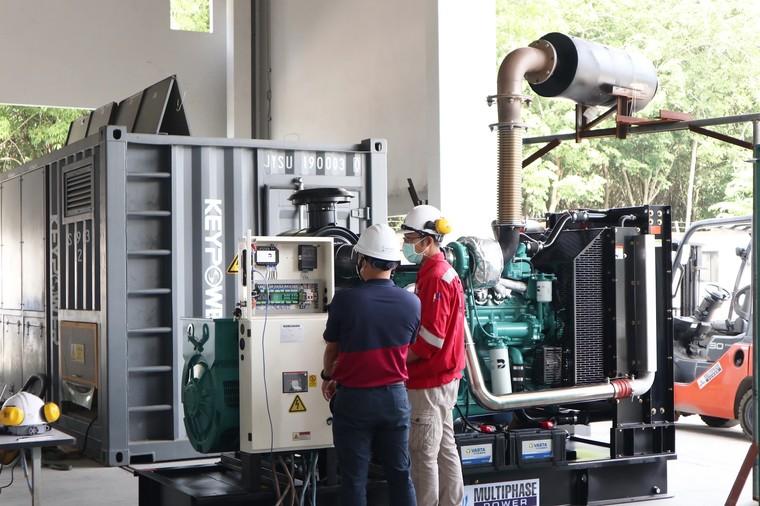
Let me tell you about two facilities I visited in the same month. Both manufactured diesel generators with Yuchai engines. Both had impressive showrooms.
The first facility had beautiful marketing materials and a modern office. But their “testing facility” was a concrete pad where they started engines, listened for unusual noises, and called it good. No load bank. No instrumentation. Just eyeballs and ear drums.
The second facility looked less impressive from the outside. But they had a 2 MW load bank system, data acquisition equipment recording voltage, frequency, and harmonic distortion, and a formal test procedure that every unit went through. Guess which one I recommended?
Essential Testing Equipment
A manufacturer serious about quality will have:
Resistive load banks sized to fully load their largest generators. For three-phase testing, they need balanced loading capability across all phases. Some manufacturers only load two phases and “estimate” the third phase performance. That’s not testing—that’s guessing.
Reactive load banks (inductive or capacitive) to simulate real-world power factor conditions. Running a generator at unity power factor (resistive only) is the easiest condition. Your actual facility loads will have motors and other reactive components that stress the alternator differently.
Power quality analyzers that record voltage/frequency transients, THD, and individual harmonic components. If they’re not measuring and documenting these parameters, they don’t know what they’re selling you.
Insulation testers and high-voltage test equipment for electrical safety verification. This isn’t optional—it’s required by IEC 60034 standards for rotating machinery.
Documentation Standards
Here’s a quick test: ask to see a complete test report from a recently shipped unit. Not a template—an actual report with recorded data.
Quality manufacturers provide:
- Complete generator nameplate data and serial numbers
- No-load voltage and frequency readings for all phases
- Load test data at multiple load points with recorded voltage, frequency, and current
- Transient response curves showing voltage dip and recovery when load is applied
- Recorded engine parameters (oil pressure, coolant temperature, exhaust temperature)
- Protection system verification results
- Sound level measurements (if applicable)
- Photographs of the tested unit
If they hand you a single page with checkmarks and no actual measured values, you’re dealing with a manufacturer who’s cutting corners.
The Yuchai Engine Advantage and Manufacturer Integration
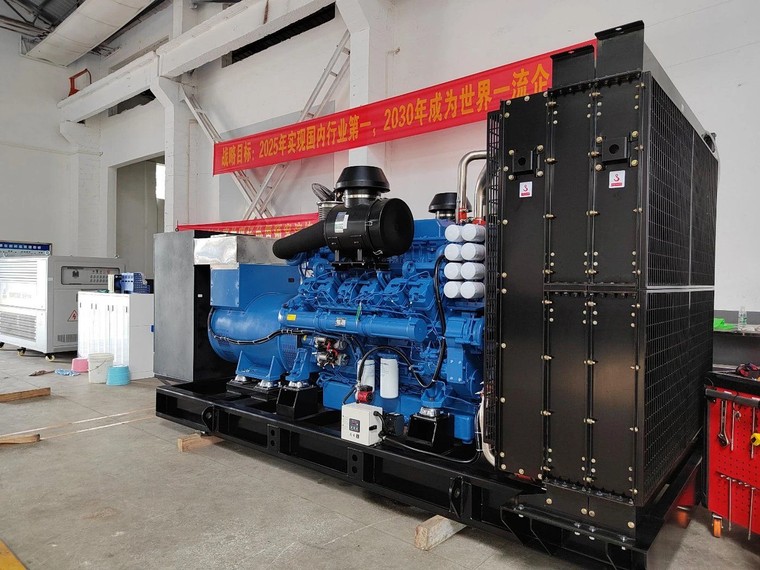
Yuchai engines power millions of generator sets globally, but not all Yuchai-powered generators are created equal. The engine is just one component—how manufacturers integrate and optimize it makes all the difference.
Why Yuchai?
Yuchai has been manufacturing diesel engines since 1951 and produces over 600,000 engines annually. Their genset-specific engine series offer several advantages:
Wide power range: From 15 kW portable units to 4,200 kW industrial generator systems. This breadth means you can standardize on Yuchai engines across your entire facility’s backup power infrastructure.
Proven reliability: Yuchai engines in generator applications routinely exceed 20,000 operating hours before major overhaul when properly maintained. That’s 10+ years of service life for typical standby generator duty cycles.
Parts availability: As one of China’s largest engine manufacturers, Yuchai has established global parts distribution. Quality manufacturers maintain parts inventory for common service items.
Emission compliance: Yuchai offers engines meeting EPA Tier 3, EU Stage IIIA, and other regional emission standards. Critical for installations in regulated jurisdictions.
Integration Excellence Matters
Here’s where manufacturer capability separates good from mediocre. A Yuchai diesel generator from a quality manufacturer like Tesla Power differs from a cheap one in these ways:
Engine derating and optimization: Raw engine ratings don’t directly translate to generator ratings. Quality manufacturers properly derate engines for altitude, ambient temperature, and continuous duty. They optimize governor settings for load response rather than just accepting factory settings.
Cooling system sizing: Undersized radiators are a common failure mode. Proper integration requires calculating total heat rejection (engine + alternator losses) and sizing cooling capacity with appropriate margin for site ambient conditions.
Fuel system optimization: Quality manufacturers tune fuel injection timing and parameters for generator duty, which involves sustained load rather than vehicle-style varying RPM operation. This optimization improves fuel efficiency and reduces emissions.
Mounting and vibration isolation: Proper engine mounting reduces stress on the block and minimizes vibration transmission to the alternator and frame. Poor mounting causes accelerated wear and eventual failure of engine-to-alternator alignment.
Don’t just ask if it’s a Yuchai engine. Ask how the manufacturer has optimized and integrated that engine for generator duty.
Your Step-by-Step Manufacturer Selection Checklist
You’ve absorbed a lot of technical detail. Let’s distill it into a practical action plan you can use tomorrow.
Phase 1: Initial Screening
✓ Request detailed technical specifications including complete component bills of materials✓ Verify they offer the power range and configuration (voltage, frequency, phase) you need✓ Check if they provide Yuchai engines in the appropriate power band for your application✓ Confirm they can meet your timeline for design, manufacturing, and delivery
Phase 2: Technical Evaluation
✓ Request alternator specifications and ask about voltage regulation performance under transient loads✓ Verify controller brand and ask to see typical programming parameters for your application type✓ Request cooling system specifications and ask how they sized the radiator✓ If noise is critical, request sound level data with measurement standards and distances✓ Ask about their load analysis process and how they account for motor starting currents
Phase 3: Quality Verification
✓ Request facility tour or detailed photos/videos of manufacturing and testing areas✓ Ask for load bank capacity and confirm it matches the generators they’re proposing✓ Request a sample test report from a recently completed unit (with recorded data, not just checkboxes)✓ Verify ISO certifications and ask for FAT procedure documentation
Phase 4: Support Assessment
✓ Request service network map and response time commitments in writing✓ Ask about parts inventory locations and typical lead times for common wear items✓ Verify warranty terms including what’s covered and what requires additional cost✓ Request 3-5 reference contacts with similar applications and actually call them
Phase 5: Final Due Diligence
✓ Compare total cost of ownership (not just purchase price) including service agreements and estimated parts costs✓ Review all technical documents for completeness and professionalism✓ Verify delivery terms, installation support, and commissioning procedures✓ Confirm training provisions for your maintenance staff
Don’t skip steps to save time. A thorough evaluation now prevents expensive problems later.
Making Your Decision
Choosing a diesel generator manufacturer isn’t about finding the cheapest option or the biggest brand name. It’s about matching your specific requirements to a manufacturer’s proven capabilities.
Small facilities with basic backup power needs might do fine with a local assembler who sources Yuchai engines and provides adequate local support.
Critical applications—hospitals, data centers, industrial processes that can’t tolerate downtime—demand manufacturers with engineering depth, rigorous testing protocols, and established support infrastructure. Companies like Tesla Power occupy this quality tier, delivering professional-grade backup power systems with the technical capability and support to match.
The evaluation framework and checklist in this article will guide you toward manufacturers who can actually deliver on their promises. Use it systematically. Ask hard questions. Verify claims. Your facility’s reliability depends on the choice you make today.
Frequently Asked Questions
What’s the difference between a diesel generator manufacturer and an engine manufacturer?
An engine manufacturer like Yuchai produces diesel engines. A generator manufacturer integrates those engines with alternators, controllers, cooling systems, and other components to create complete power generation systems. The generator manufacturer’s engineering capability in integration, testing, and system optimization significantly impacts the final product’s reliability and performance—even when using identical engines.
How do I verify a manufacturer’s quality claims?
Request factory acceptance test reports from recently shipped units with actual recorded data, not just checkboxes. Ask for facility tours or detailed documentation of their testing equipment, particularly load bank capacity. Contact their reference customers directly and ask specific questions about long-term reliability and service responsiveness. Quality manufacturers welcome this scrutiny; those cutting corners will be evasive.
Are Chinese diesel generator manufacturers like those using Yuchai engines reliable?
Reliability depends on the specific manufacturer, not the country of origin. China produces both world-class manufacturers with rigorous quality systems and low-end assemblers cutting corners. Yuchai engines themselves are proven reliable—over 600,000 produced annually with global distribution. The key is evaluating each manufacturer’s engineering capability, testing protocols, and support infrastructure using the framework in this article.
What should I look for in after-sales support?
Three critical factors: response time commitments in writing (24-48 hours for critical applications), local parts inventory for common wear items (filters, belts, injectors) rather than everything shipped from distant facilities, and access to competent technicians who can diagnose problems remotely and dispatch qualified personnel when needed. Ask reference customers about their actual support experiences, not just what’s in the marketing materials.
How important is load bank testing before generator delivery?
Extremely important. Load bank testing at 25%, 50%, 75%, and 100% of rated capacity is the only way to verify a generator performs as specified before it ships. Testing reveals voltage regulation issues, cooling system inadequacies, protection system failures, and other problems that won’t appear during no-load testing. Any manufacturer unwilling to provide full-load test data is selling you an untested product—a massive risk for critical power applications.