
Cummins generators are made in two places at once: the engine in a Cummins engine plant, the generator set in a packager’s works.
Key takeaways
A Cummins generator set combines an engine built in a Cummins plant with an alternator, skid and canopy built by a packager. Cummins owns engine plants in the United States, the United Kingdom, India and China, and licenses or supplies engines to set builders worldwide. Tesla Power assembles sets in Yangzhou around Cummins engines rather than claiming to be Cummins.
- The engine and the set are built by different companies in most cases.
- Chinese Cummins engine plants build the KTA19, KTA38 and KTA50 families.
- The engine data plate names the plant that built the engine, not the set.
- The emission approval number ties the engine to its build location.
- The generator sourcing notes explain how the documents fit together.
Table of contents
- Who actually builds a Cummins generator set?
- Which Cummins engine families come from which country?
- How do you read an engine data plate?
- Worked example: what twenty years of running means for parts
- Why does the distinction matter commercially?
- What documents prove where an engine was built?
- How do you check a supplier’s claim of origin?
- Frequently asked questions
Who actually builds a Cummins generator set?
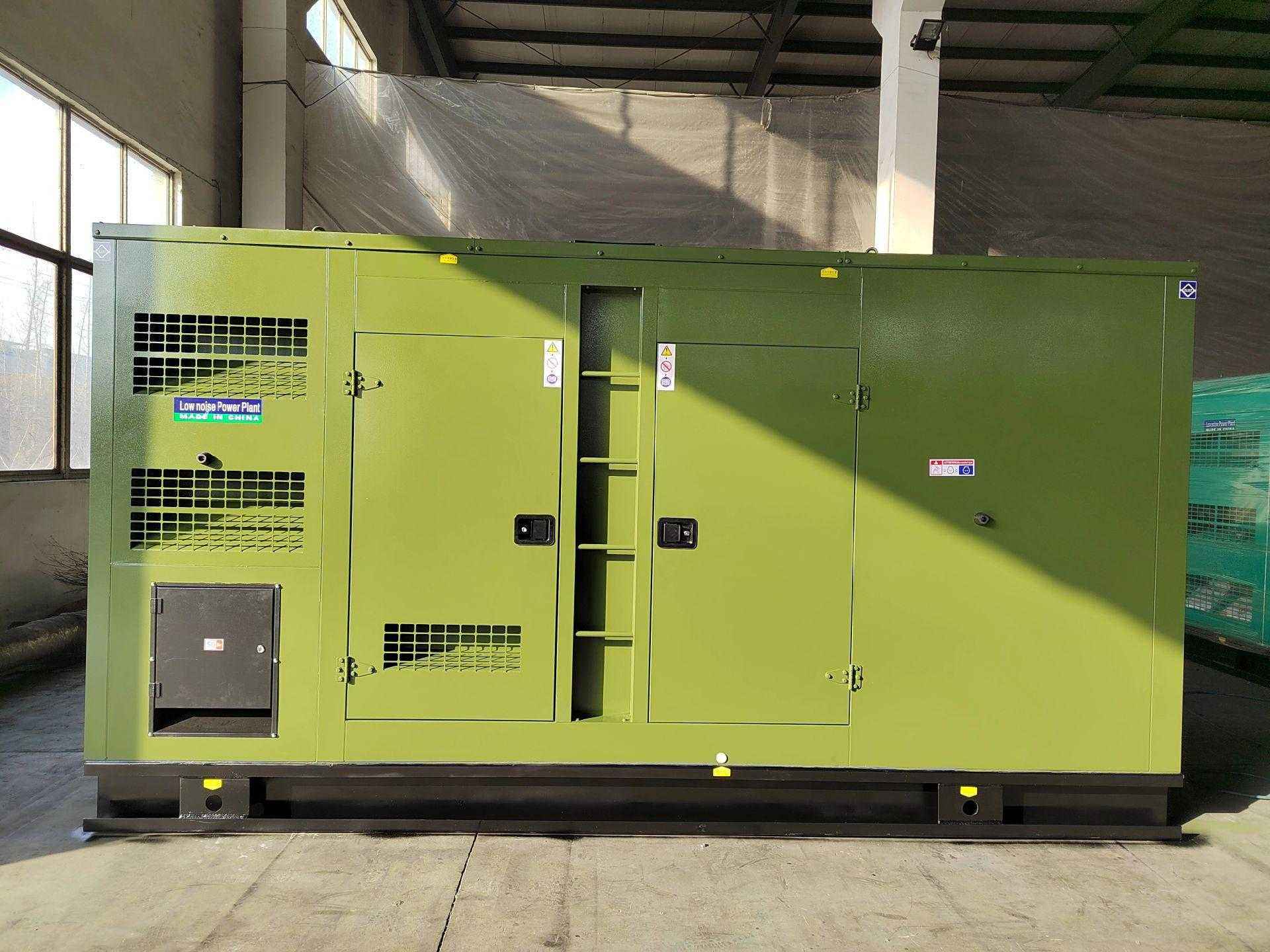
A Cummins generator set is built by a packager in almost every case, and the packager is a separate company that buys or licenses the engine. Cummins builds engines and also builds complete sets in some markets, but the majority of sets carrying a Cummins engine are assembled by independent manufacturers who add the alternator, the base frame, the canopy and the control system. The engine is Cummins; the set is the packager’s product.
That split is not a technicality, because the warranty, the drawings and the documentation follow it. An engine fault goes to the engine maker’s network and a control fault goes to the packager, and a buyer who does not know which is which spends the first week of an outage on the telephone. Tesla Power states the split on the quotation rather than leaving it to be discovered at commissioning.

Which Cummins engine families come from which country?
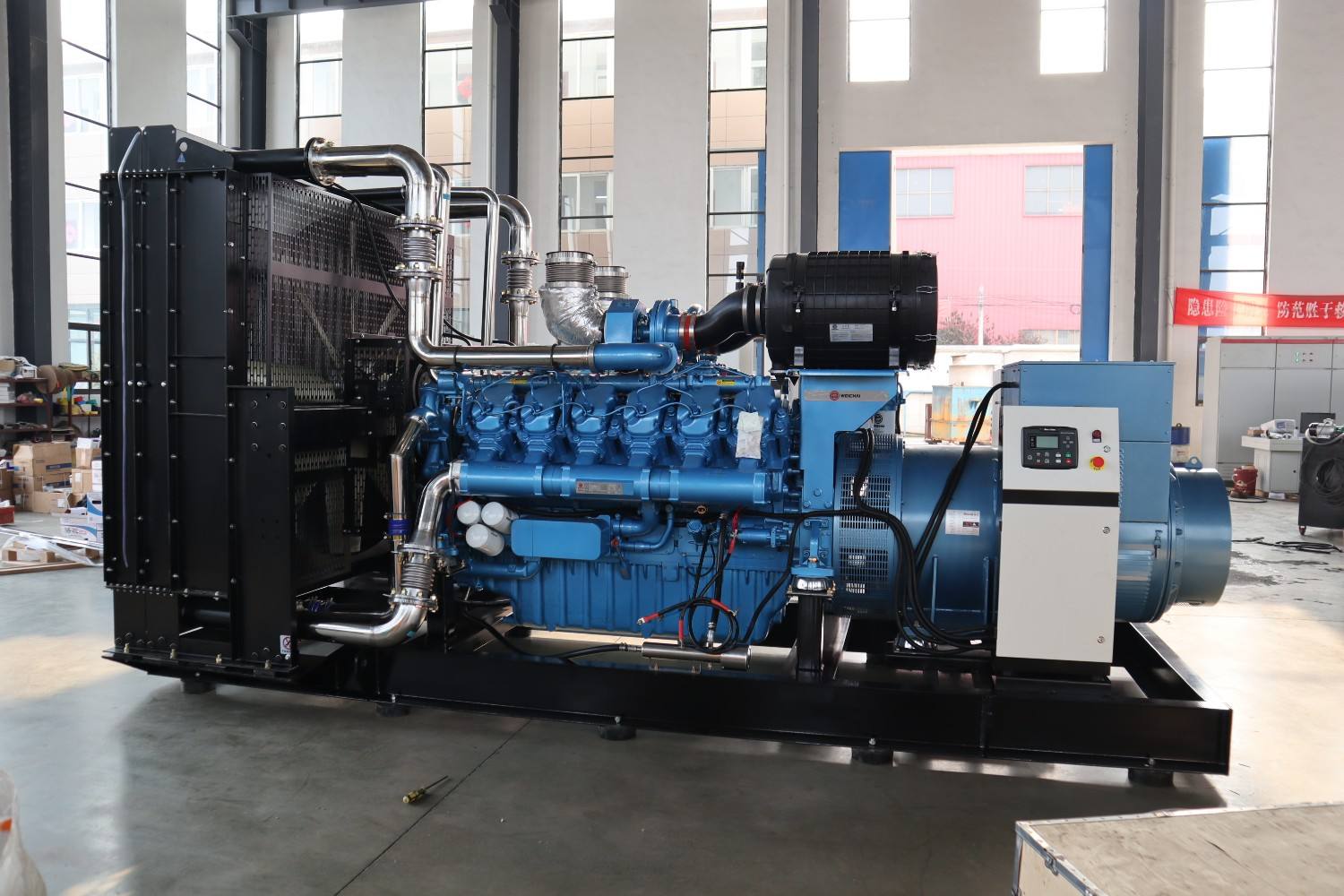
Cummins engine families come from several countries, and the family name usually tells you which. The large KTA19, KTA38 and KTA50 families are built in China by the Chongqing joint venture, the mid-range B and C series by the Dongfeng joint venture in Hubei, and the QSK and QSX families in the United States and the United Kingdom. Displacement is the quickest way to place a family: 19, 38 and 50 litres for the KTA range, and 3.9 to 8.3 litres for the B and C ranges.
| Engine family | Displacement band | Typical build location | Typical set duty |
|---|---|---|---|
| B series, 4 and 6 cylinder | 3.9 L and 5.9 L | Joint venture plants | Small standby and prime sets |
| C series | 8.3 L | Joint venture plants | Mid-range standby sets |
| QSB and QSL | 5.9 L and 8.9 L | Joint venture plant | Mid-range prime sets |
| KTA19 | 19 L | Chongqing plant | Heavy standby and prime sets |
| KTA38 | 38 L | Chongqing plant | Large prime and continuous sets |
| KTA50 | 50 L | Chongqing plant | Largest single-engine sets |
The table answers the question most buyers are actually asking, which is whether a Cummins engine in a packaged set is a genuine Cummins engine. It is, and in the KTA families it is built in China by a Cummins joint venture rather than imported and installed. That is also why the price gap between a packaged set and a set assembled in Europe is mostly labour, enclosure and freight rather than engine origin.
How do you read an engine data plate?
An engine data plate names the engine model, the serial number, the rating and the plant code, and the plant code is the part that answers the origin question. The plate is on the engine block, not on the set, and it stays with the engine through every rebuild. Tesla Power photographs it at the factory gate as part of the document pack. Photograph it at inspection, because it is the one piece of evidence that cannot be reissued later.
The serial number then resolves to a build record through the engine maker’s system, which states the plant and the date. That record is what a customs broker or an emission authority will ask for, and it is also what a service network uses to confirm the parts list. The certification route for an imported engine is set out in the EPA engine certification requirements. A set with no readable engine plate is a set with no verifiable origin, however good the paperwork that surrounds it, which is why Tesla Power puts the plate photograph on the pre-shipment checklist. The pre-shipment inspection for a generator set puts the plate photograph on the checklist for that reason.
Worked example: what twenty years of running means for parts
Take a standby set running 300 hours a year for twenty years, which is 6,000 hours of operation, and check the shaft revolutions behind that. At 50 Hz a four-pole engine runs at 1,500 rpm, since 4 × 1,500 ÷ 120 = 50 Hz, so 6,000 hours is 1,500 × 60 × 6,000 = 540,000,000 revolutions. That is the service life a parts network has to cover, and it is why the engine family matters more than the badge on the canopy.
Now put the same arithmetic against a prime set at 4,000 hours a year. Twenty years is 80,000 hours, which no single engine reaches without major overhauls, and the overhaul interval is what the buyer is really buying when choosing a family. A packager with a parts agreement behind the engine can support that horizon; a trader without one cannot, however cheap the first shipment was. Tesla Power stocks the consumable parts list for the families it builds around, and states the overhaul expectation with the quotation.
Why does the distinction matter commercially?
The distinction matters because it decides who answers for what. The comparison of Cummins and Yuchai engines for an imported set covers the same split from the engine-selection side. A buyer who believes the set is a Cummins product will call Cummins for a canopy fault and be redirected, and a buyer who believes the set is the packager’s product will call the packager for an engine fault and be redirected the other way. Knowing which is which is worth more than any single line in the specification.
It also decides what a buyer can negotiate, and Tesla Power prices the engine and the set scope as separate lines. The engine is a fixed cost set by the engine maker and the family chosen; the enclosure, the alternator, the control system and the documentation are the packager’s scope and are where a specification can be improved for the same money. A packager competes on that scope, not on the engine, and a buyer who understands the split negotiates better.
What documents prove where an engine was built?
Three documents prove where an engine was built: the engine data plate, the engine maker’s build record resolved from the serial number, and the emission approval certificate that names the engine family and the approving authority. Together they answer origin, conformity and date, and any one of them alone is incomplete.
The certificate of origin is a fourth document and it is a customs instrument rather than a technical one. The rating the engine is certified at follows ISO 8528-1, which is a separate question from origin. It states the country of origin for tariff purposes, which is not always the country where the engine was assembled, because origin rules look at where the substantial transformation happened. That is why a set assembled locally from a locally built engine and a set assembled locally from an imported engine can carry different origin statements. Tesla Power issues the certificate with the shipping documents rather than after the vessel sails.
How do you check a supplier’s claim of origin?
Check a claim of origin in three steps: ask for the engine plate photograph, ask for the build record against the serial number, then compare both with the emission certificate. A supplier who can produce all three quickly is describing a real supply chain; one who produces a brochure is describing a brand association.
Step one. Ask for the plate photograph before the order, not after. A plate that is unreadable in a photograph taken in good light will not be readable in a plant room at night, and the engine model and serial number are what every later conversation depends on.
Step two. Ask for the build record and check that the plant on it matches the country claimed. A 700 kW container set for industrial duty built around a KTA family engine will resolve to a joint-venture plant record, which is consistent rather than suspicious.
Step three. Compare the emission certificate with the destination market. The 550 kW trailer-mounted set for communal facilities may travel to a market with a lenient tier, but the engine still carries the approval that was issued where it was built. The engine component sourcing behind Chinese generator sets covers the supply chain in more detail.
Frequently asked questions
Are Cummins generators made in China?
The engines in many of them are. Cummins joint ventures in China build the KTA19, KTA38 and KTA50 families and the mid-range B and C series, and local packagers assemble complete sets around those engines. The set itself is the packager’s product, not a Cummins product.
Is a Chinese Cummins generator genuine?
The engine is genuine if the data plate, the build record and the emission certificate agree. A Cummins engine built by a Cummins joint venture in China is a Cummins engine. The set around it is assembled by the packager, which is a normal arrangement rather than a compromise.
How can I tell where my engine was built?
Read the engine data plate for the model, serial number and plant code, then have the serial number resolved to a build record. The plate is on the block and survives rebuilds, which makes it the most durable evidence available.
Does the country of origin affect the price?
Less than most buyers expect. The engine cost is set by the family and the rating, and the price difference between a Chinese-packaged set and a European one is mostly enclosure, labour, documentation and freight rather than engine origin.
Who honours the warranty on a Cummins engine in a Chinese set?
The engine warranty runs through the engine maker’s network and the set warranty runs through the packager. Ask which is which on the quotation, and ask for the engine warranty terms in writing, because the two are separate documents with separate procedures.
Why does the emission certificate name a plant?
Because the approval is granted for engines built at a specific facility under a specific quality system. A certificate that does not resolve to the plant on the data plate is a paperwork problem that can hold a shipment at the border.
Next step: ask for the plate before the price
Origin is a document question, not a marketing question. Ask for the engine plate photograph, the build record and the emission certificate, then check that all three name the same plant. Send the engine model and the destination market to the Tesla Power export team through the contact page for an origin review, and the reply will carry the engine family, the plant record and the certificate that travels with the set.