
The facility engineer walked me through their brand-new data center. State-of-the-art servers, redundant cooling, fiber optic connections—everything perfect. Then we stepped outside to the generator pad.
Their 500 kW Volvo diesel generator sat fifteen feet from the property line, next to a residential neighborhood, with no sound enclosure. “Why is the generator so loud?” neighbors had been calling to complain. The unit met code—barely—but at 102 dB(A), it was keeping people awake during monthly test runs.
The fix? A $35,000 retrofit: relocate the generator to the building’s far side, add a super-silent enclosure, and reroute the exhaust. All preventable if they’d asked “where” before “what size.”
Location determines more than convenience. Where you install a Volvo diesel genset affects fuel logistics, service access, noise impact, cooling performance, code compliance, and total cost. Make the wrong choice and you’ll spend years—and tens of thousands of dollars—dealing with the consequences.
In this guide, we’ll compare installation locations and walk through the key criteria that should drive your decision. Whether you’re retrofitting an existing facility or specifying a new construction project, understanding where to place your standby power systems is just as critical as selecting the right size.
Installation Location Comparison Matrix
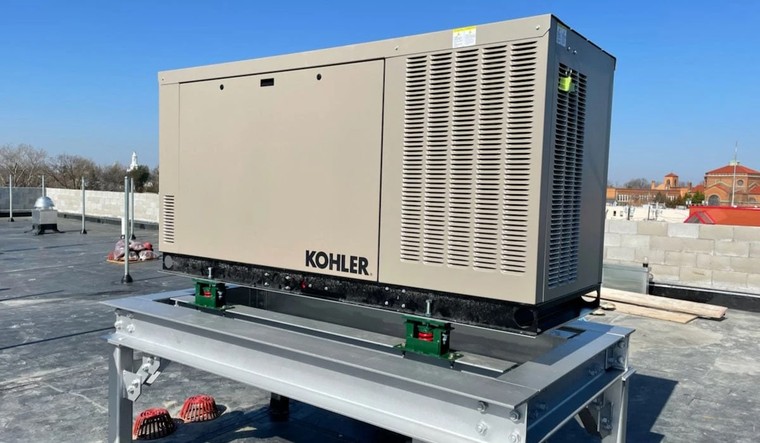
Every site is different, but most diesel generator installations fall into one of these categories:
LocationBest ForAdvantagesDisadvantagesTypical Cost PremiumOutdoor Ground-Level PadIndustrial sites, warehouses, rural facilitiesEasy installation, good ventilation, simple fuel deliveryWeather exposure, larger footprint, noise concerns, security riskBaselineOutdoor RooftopUrban buildings, limited ground space, high-risesMaximizes usable ground area, good security, away from floodingStructural reinforcement needed, crane lift required, service access challenges, noise travels farther+25-40%Indoor Mechanical RoomHospitals, data centers, cold climatesProtected from weather, secure, quiet to exterior, integrated with building systemsRequires ventilation/exhaust systems, fire suppression, larger room for clearances, costly HVAC+30-50%Outdoor Enclosure (Separate Building)Facilities with high security or aesthetic requirementsWeather protection, sound attenuation, controlled environmentHigher construction cost, requires foundation and permitting as structure+40-60%Containerized/PortableTemporary sites, rental applications, mobile powerTurnkey solution, relocatable, all systems integratedLimited capacity (usually <1000 kW), less efficient cooling, shorter lifespan+15-25%
This matrix is a starting point. Your actual choice depends on evaluating four key criteria.
Criterion 1: Environmental Exposure and Climate
Diesel engines don’t like extremes, and your Volvo Penta generator set will live longer and run more reliably if you protect it from harsh conditions.
Temperature Considerations
Cold climates (sustained temps below 32°F / 0°C):
- Indoor advantage: No block heater cycling, instant starts, no fuel gelling risk, batteries stay warm
- Outdoor requirement: Engine block heaters (typically 5-10 kW), battery warmers, fuel tank heaters, and cold-weather fuel additives
- Cost impact: Block heaters add $2,000-$5,000 plus ~$200/month in electricity during winter
Hot climates (sustained temps above 95°F / 35°C):
- Outdoor advantage: Natural airflow assists cooling; oversized radiators handle ambient heat
- Indoor challenge: Mechanical room HVAC must remove engine heat rejection (30-40% of fuel energy becomes waste heat)
- Design consideration: Provide adequate ventilation—10-15 air changes per hour minimum—and confirm alternator isn’t derated for high ambient
Humidity and salt air:
- Coastal installations face accelerated corrosion on alternators, wiring, and exhaust systems
- Specify marine-grade coatings and enclosed alternators
- Indoor installation extends component life significantly in these environments
Weather Protection
Outdoor generators need enclosures rated for local conditions:
- Standard canopy: Rain/snow protection, basic sound attenuation
- Weatherproof (IP54/55): Dust and water ingress protection
- Severe weather (IP56): High-pressure water jets, extreme dust, suitable for coastal or industrial environments
At Tesla Power, we always recommend at least IP54-rated enclosures for any outdoor industrial generators, even in mild climates. The upfront cost ($3,000-$8,000) is minor compared to premature alternator or control failures.
Criterion 2: Noise Regulations and Acoustic Management
This is where “where” becomes critical. A 75 dB(A) generator might be perfectly acceptable at a remote industrial site but utterly illegal in an urban commercial district.
Know Your Limits
Noise ordinances vary widely:
Jurisdiction TypeTypical Daytime Limit at Property LineNighttime LimitNotesResidential zoning55-65 dB(A)45-55 dB(A)Stricter in affluent areasCommercial zoning65-75 dB(A)55-65 dB(A)May allow emergency exemptionsIndustrial zoning75-85 dB(A)70-80 dB(A)Rarely enforced unless complaintsHospitals/schools50-60 dB(A)45-50 dB(A)Among strictest; may prohibit generators during certain hours
Emergency vs. non-emergency: Some jurisdictions exempt emergency standby generators from noise limits during actual power outages, but NOT during testing. Check local codes before assuming exemptions apply.
Location Strategies for Noise Control
Distance is your friend: Sound pressure level drops roughly 6 dB with every doubling of distance. A generator producing 95 dB(A) at 1 meter drops to:
- 89 dB(A) at 2 meters
- 83 dB(A) at 4 meters
- 77 dB(A) at 8 meters
- 71 dB(A) at 16 meters
If you have land, placing the Volvo diesel generator 50+ feet from property lines and occupied buildings solves most noise complaints.
Barriers and berms: Earth berms or masonry walls between the generator and sensitive receptors can reduce noise by 10-15 dB(A), but only if the barrier breaks the line-of-sight and extends beyond the generator on both sides.
Enclosure upgrades:
- Open genset: 95-105 dB(A)
- Standard canopy: 75-82 dB(A)
- Super-silent enclosure: 65-72 dB(A)
- Hospital-grade enclosure: 58-65 dB(A)
Each step up in enclosure cost roughly doubles. A super-silent enclosure for a 500 kW unit might add $25,000-$40,000.
Rooftop paradox: Rooftops feel far from neighbors, but sound travels upward and outward with less obstruction. Rooftop installations often need better enclosures than ground-level, especially in dense urban areas where sound reflects off surrounding buildings.
Criterion 3: Service Accessibility and Maintenance
Diesel generator manufacturers recommend service intervals every 250-500 hours or annually, whichever comes first. Your installation location directly affects maintenance costs and downtime risk.
What Techs Need
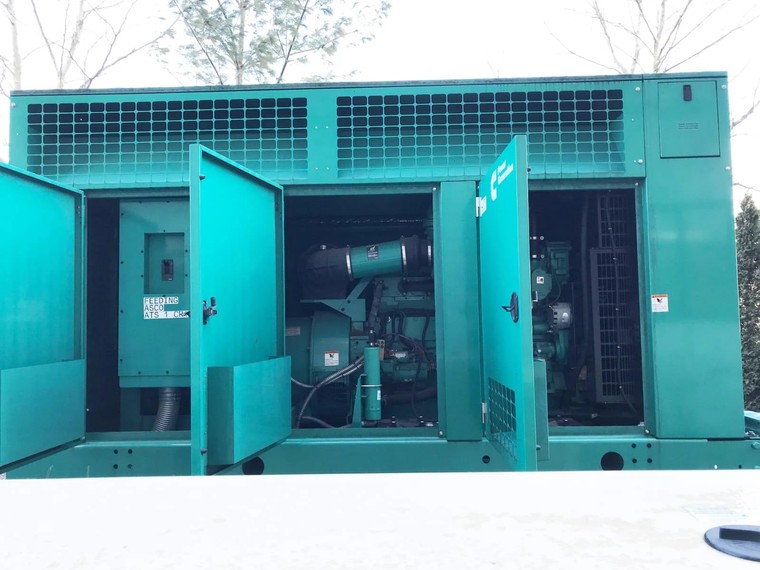
- Clearances: Minimum 3 feet on all sides for most codes; 4-5 feet preferred for comfortable service access
- Headroom: 7-8 feet above the genset for overhead lifting of alternator covers and pumps
- Access paths: Can a technician wheel in a 300-pound battery or a replacement radiator? Can a crane or forklift reach the site for major component swaps?
- Lighting and power: 120V outlets and adequate lighting in the generator room or enclosure
Common Access Mistakes
The rooftop trap: Lifting a failed alternator off a 12-story rooftop requires a crane rental ($5,000-$15,000 per day). Ground-level generator? A forklift does it for $500.
The tight mechanical room: I’ve seen generators installed with 18 inches of clearance on one side. Code-compliant? Technically. Serviceable? Barely. Changing an oil filter becomes an hour-long ordeal instead of a 10-minute task. Over the life of the generator, this inefficiency costs thousands in labor.
The buried fuel tank: Underground fuel storage is common, but if you bury a 1,000-gallon tank 100 feet from the generator with no provision for future access, any tank leak or pump failure becomes a nightmare excavation project.
Remote Monitoring Can’t Replace Access
Modern controllers with cellular connectivity let you monitor generator status remotely, but they don’t change oil, replace filters, or troubleshoot why the unit won’t start at 2 a.m. Easy physical access remains essential.
Criterion 4: Fuel Supply and Exhaust Management
Fuel and exhaust routing are often afterthoughts—until they become expensive problems.
Fuel Logistics
Subbase tank (integral):
- 150-500 gallons built into generator base
- Pros: Simple, no separate tank permitting
- Cons: Limited runtime (12-24 hours at full load), difficult to refill during extended outages
Aboveground storage tank (AST):
- 500-10,000 gallons in separate tank
- Pros: Extended runtime, easier to refill
- Cons: Requires secondary containment, spill prevention plan, and permitting
Underground storage tank (UST):
- 1,000-20,000 gallons
- Pros: Doesn’t consume ground space, secure, protected from weather
- Cons: Expensive installation, strict EPA/state regulations, leak detection requirements, costly removal at end-of-life
Delivery access: Can a fuel truck reach your tank? If the generator is on a rooftop or in a basement, you may need pumps to transfer fuel from street-level delivery. We’ve seen projects where this detail was forgotten until the first refueling attempt—requiring a $15,000 pump and piping retrofit.
Exhaust System Design
Volvo diesel generators produce exhaust at 800-1,100°F. Routing this safely is critical:
- Outdoor ground-level: Vertical exhaust stack, 10-15 feet above grade, with rain cap. Simple and code-compliant.
- Rooftop: Shorter stack (already elevated), but check for HVAC intakes nearby—exhaust can’t enter building air systems.
- Indoor: Insulated exhaust piping through walls or roof, with fire-rated penetrations. Long horizontal runs reduce performance; keep vertical rise dominant.
Emissions and permitting: EPA and state/local air quality districts regulate generator exhaust. Tier 2/Tier 3 engines usually pass with minimal add-ons. Tier 4 Final engines include onboard emissions controls (DPF, SCR) that complicate installation with DEF tanks and regeneration requirements.
Real-World Case Studies
Let’s see how different facilities solved the “where” question.
Case 1: Urban Hospital—Rooftop Installation
Challenge: 250-bed hospital in downtown Chicago, zero available ground space, must meet NFPA 110 (life safety) and stringent city noise limits (55 dB(A) at property line).
Solution: Two 750 kW Volvo Penta generator sets on reinforced rooftop pad, N+1 redundancy. Hospital-grade sound enclosures (60 dB(A) at 1 meter). Structural engineering to support 18,000 lbs per unit. Crane lifts during construction.
Outcome: System meets all codes. Monthly testing at 2 a.m. generates zero noise complaints. Service access via rooftop door, though major repairs require crane. Total installation cost: $1.2M ($800/kW, about 30% above ground-level equivalent).
Lesson: Rooftop works for urban sites if you budget for structure and sound control.
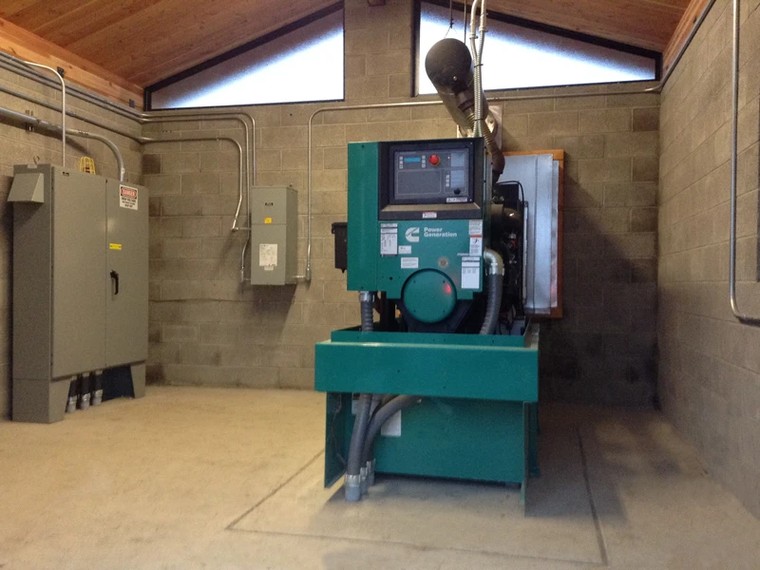
Case 2: Data Center—Indoor Mechanical Room
Challenge: Tier 3 data center in Phoenix, Arizona (extreme heat, 115°F summer peaks). Requires 2.5 MW backup with <10-second transfer.
Solution: Four 650 kW Volvo diesel gensets in dedicated ground-floor mechanical room (N+1 redundancy). Room features:
- 50,000 CFM ventilation fans ducted to exterior
- Concrete exhaust plenums with double-wall insulated stacks
- 10,000-gallon underground diesel tank with redundant pumps
- Fire suppression (FM-200 gas)
Outcome: Generators maintain perfect temperature control year-round. Service access excellent—technicians work in air-conditioned comfort. Noise outside building: 62 dB(A), well under commercial limit. Total installation: $2.8M ($430/kW, about 45% above outdoor pad).
Lesson: Indoor installation pays off for mission-critical facilities in extreme climates, despite higher upfront cost.
Case 3: Manufacturing Plant—Outdoor Pad with Berm
Challenge: Automotive parts plant in rural Michigan, 1,200 kW prime power generator for load management and emergency backup. Nearest residence 300 feet away.
Solution: Ground-level concrete pad, standard weatherproof canopy, 6-foot earth berm on residential side. 2,500-gallon aboveground fuel tank with secondary containment. Minimal site work.
Outcome: Total installed cost: $420K ($350/kW). Noise at property line: 68 dB(A), acceptable for rural zoning. Easy fuel delivery via truck. Maintenance costs lowest of any comparable site in the client’s portfolio.
Lesson: When you have space, simple ground-level installation with basic noise mitigation is the most cost-effective and maintainable option.
Decision Framework: Choosing Your Location
Use this framework to evaluate your options:
Step 1: Identify constraints
- Available space (ground, rooftop, or interior)
- Noise limits (check local ordinances, not assumptions)
- Access for fuel delivery and maintenance
- Climate extremes (cold start, high heat, humidity, salt air)
Step 2: Prioritize factors
Rank these 1-5 (1 = least important, 5 = most important) for your facility:
- Upfront cost: ___
- Long-term maintenance cost: ___
- Noise control: ___
- Weather protection: ___
- Security: ___
- Aesthetics: ___
Step 3: Map to location types
- High noise sensitivity + limited space = Rooftop or indoor with premium enclosure
- Extreme climate + high reliability = Indoor mechanical room
- Cost-sensitive + adequate space = Outdoor ground-level pad
- High security or aesthetic requirements = Separate enclosure building
- Temporary or mobile needs = Containerized
Step 4: Validate with site visit
Before finalizing, walk the proposed location with your installer (companies like Tesla Power do this as part of site assessment). Look for:
- Utility and fuel routing paths
- Property line distances
- Overhead obstructions (power lines, HVAC discharge)
- Drainage and flood risk
- Structural capacity (for rooftop)
Catch problems on paper, not during installation.
Frequently Asked Questions
Can I install a Volvo diesel generator indoors without an enclosure?
Yes, if the mechanical room is designed for it. You’ll need:
- Adequate ventilation (typically 10-15 air changes per hour, calculated based on engine heat rejection)
- Fire-rated room per NFPA 37 (1-2 hour rating depending on fuel storage)
- Exhaust piping to exterior with insulation and fire-rated penetrations
- Concrete floor with oil containment (sloped to drain or curbed)
- Emergency shutoffs and CO detection
Skipping the enclosure saves money but shifts cost to room construction. For new buildings, this is often worthwhile. For retrofits, adding a proper mechanical room can exceed the cost of outdoor installation.
How far should a generator be from the building it serves?
NFPA 37 requires minimum 5 feet from buildings, openings, and lot lines for units ≤100 gallons integral fuel. Larger fuel capacities or separate tanks require greater setbacks—often 15-50 feet depending on fuel volume. Local codes may be stricter. Also consider:
- Electrical run length (voltage drop on long conductor runs requires larger wire)
- Exhaust clearances from air intakes (minimum 10 feet horizontal or 3 feet vertical per IMC)
- Noise propagation to occupied spaces
Further isn’t always better—excessive distance increases installation cost and electrical losses. Work with an engineer to find the optimal balance.
What’s the best location for a generator at a facility with multiple buildings?
Centralize if all buildings share electrical distribution; otherwise, distribute.
Centralized (one large generator):
- Pros: Lower capital cost per kW, easier maintenance, single fuel supply
- Cons: Longer electrical runs, all buildings lose power if single generator fails
Distributed (smaller generator per building):
- Pros: Load diversity (not all buildings need full backup), redundancy, shorter electrical runs
- Cons: Higher total capital cost, more maintenance points, multiple fuel supplies
For mission-critical facilities, distributed with paralleling capability offers the best of both worlds—each building has local backup, but units can share load or provide mutual redundancy.
Should I install the generator near the electrical room?
Preferred, but not mandatory. Locating the Volvo diesel genset within 50-100 feet of the main switchgear or automatic transfer switch (ATS) minimizes conductor cost and voltage drop. However, don’t sacrifice other factors (noise, fuel access, ventilation) just to shorten electrical runs. Copper is cheaper than fixing a poorly located generator.
Can I relocate a generator after it’s installed?
Possible, but expensive. Moving a large diesel generator involves:
- Disconnecting electrical, fuel, and exhaust systems
- Rigging and transport (generators >500 kW can weigh 12,000+ lbs)
- New foundation, permits, and system reconnections
- Testing and commissioning
Budget $25,000-$75,000 for relocating a mid-size genset, more for large units or rooftop moves. The lesson: get location right the first time. At Tesla Power, we always emphasize site selection before equipment selection for exactly this reason.
Choosing the right location for your Volvo diesel generator requires balancing technical, regulatory, and operational factors. Tesla Power provides comprehensive site assessments, including noise modeling, structural analysis, and fuel logistics planning, to help you make the optimal location decision. Contact us for a free consultation—because where you put your generator is just as important as which one you choose.