
A genset origin certificate decides what duty a generator set pays when it reaches the destination port, and it is issued per shipment rather than per model. Tesla Power Equipment builds these sets for export and assembles the origin file before the machine leaves the works.
- Per shipment, not per model. Two identical sets can carry different certificates when the engines come from different sources.
- Three families exist. An ordinary certificate of origin, a Form E under ACFTA, and a Form R under RCEP.
- The engine decides most cases. A third-country engine is the usual reason a claim fails.
- Evidence beats paperwork. A form with no bill of materials behind it cannot be defended.
Why a genset origin certificate decides landed cost
Duty is not a property of the machine. It is a property of the machine plus the documents that travel with it, which is why the HS code 8502 classification and the certificate of origin are read together at the border. A set with no valid preferential certificate is assessed at the ordinary rate, and the same set with the right form and the evidence behind it is assessed at the preferential rate. That difference lands on the invoice the importer receives.
Two files decide the outcome, and two different people produce them. The commercial invoice describes the transaction, and the certificate of origin describes the goods themselves. When those two documents describe the same machine differently, the claim is refused and the duty is assessed at the ordinary rate, with the importer carrying the whole difference.
The certificate is not a mark of quality
An origin certificate states where goods were produced, and nothing more. It is not a warranty, not a conformity mark, and not evidence the set meets any technical standard. Importers sometimes file it expecting an engineering answer, and the broker returns it asking for the conformity documents instead. Tesla Power keeps those two folders apart for that reason.
- Origin answers a duty question; conformity answers a market-access question.
- Different officers read the two files at the port.
- A missing origin form delays the assessment; a missing conformity file can stop the entry outright.
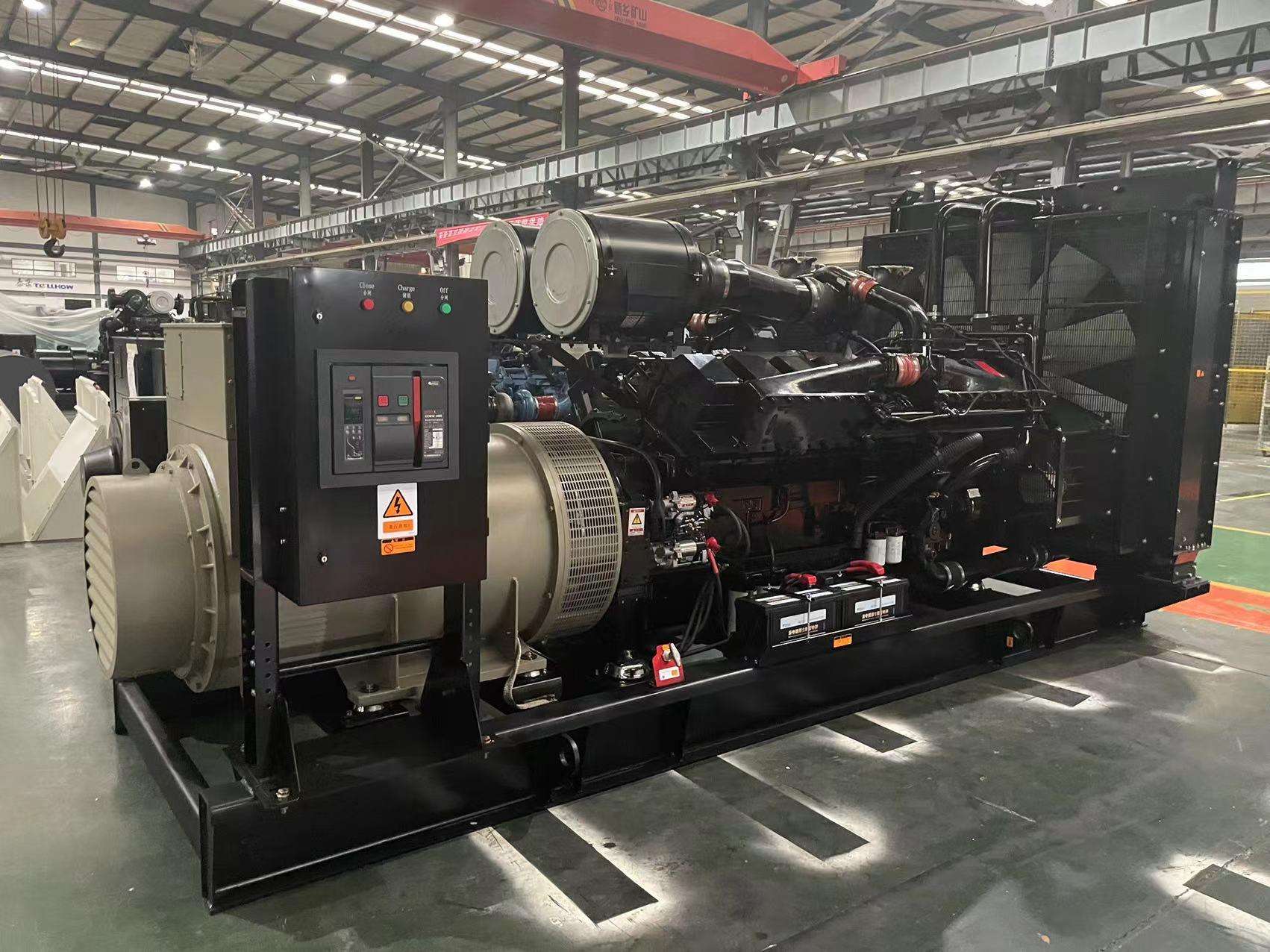
The three certificate families an exporter can issue
Every preferential claim starts from the same place: a certificate of origin that names the goods, the exporter, the importer and the origin criterion the shipment is claimed under. What changes between families is which agreement the certificate draws on, and therefore which markets accept it without argument. Tesla Power issues all three families.
A genset for export is not the same object as a genset for a domestic site, at least not in the origin file. A certificate of origin is not one form either. The issuing bodies produce an ordinary non-preferential certificate, a Form E for the ASEAN agreement, and a Form R for the RCEP agreement, and each one is tied to its own rulebook. Choosing the wrong family is not a clerical slip, because it decides whether the importer pays the preferential rate or the ordinary one.
| Document | Agreement behind it | Issued by | What it buys the importer |
|---|---|---|---|
| Ordinary certificate | None; non-preferential | Chamber of commerce or trade promotion body | Origin evidence only, at the ordinary rate |
| Form E | ACFTA, China and the ASEAN states | Authorised issuing body | The ASEAN preferential rate |
| Form R | RCEP, fifteen economies | Authorised issuing body | The RCEP preferential rate |
| Supplier declaration | Supports both forms | Engine and alternator makers | The evidence an issuing body checks |
The issuing body cares about one thing: whether the goods qualify under the agreement you named. It reads the invoice, the packing list and the declaration of origin, then either stamps the form or asks for more.
One more question decides the family, and it comes from the machine rather than the map. If the bill of materials cannot satisfy the origin rule of the agreement you named, the claim is rejected later and the ordinary rate applies.
Which certificate applies to your destination market?
Destination sets the shortlist. An ASEAN member state can be claimed under either agreement, because it belongs to both. Japan, South Korea, Australia and New Zealand sit inside RCEP and outside the ASEAN agreement, so Form R is the only preferential route open to them. A genset in Vietnam or Indonesia faces a genuine choice. A destination in the Gulf, in most of Africa or in Latin America sits outside both, and an ordinary certificate is the honest answer there.
The choice between Form E and Form R for an ASEAN buyer is a rulebook question, not a preference question. Each agreement writes its own origin criteria, and a set that qualifies under one may fail under the other. Conformity assessment for the destination market is a separate file, and it does not replace the certificate of origin.
Overlapping memberships create the confusion
The overlap is the most common source of wasted certificates. A buyer in Vietnam or Indonesia can be served under either agreement, and the forwarder’s default answer is often the older form because it is the one the desk knows.
- Name the agreement on the purchase order, not just the destination country.
- Check that the engine and alternator declarations support that same agreement.
- Ask the issuing body which rulebook your bill of materials satisfies before you commit.
Why a third-country engine threatens your origin claim
A generator set is an assembly, and the engine is the largest single line in it. When that engine was built outside China, the set is no longer automatically a Chinese product for origin purposes, no matter where the canopy was folded or the wiring was run.
Genset manufacturers answer this question from their own bill of materials, and Chinese genset suppliers that cannot name the engine’s country of manufacture are answering a different question. Tesla Power asks for that country and the engine’s customs classification at quotation stage, because those two facts decide which agreement the finished set can be claimed under months later. Buyers comparing generator sets built for export should ask the same question of every offer.
- A 500 kVA set with an imported engine is the case that starts the argument.
- Ask for the engine’s country of manufacture before you compare two offers.
- Record the answer on the order, not in an email thread.
What does substantial transformation mean for a genset?
Every preferential agreement defines a threshold that turns a pile of imported parts into a product of the exporting country. The agreement writes that threshold as a rule, expressed as a change in tariff classification, a minimum regional value content, a specific manufacturing process, or a combination of the three. Tesla Power builds to whichever test the destination agreement applies.
Assembly alone rarely settles the question. A set built from a fully imported engine, alternator and control panel can fail a value test even though all of the work was done in-house, and the same set with a domestically made alternator and canopy can pass it, because the value that stays inside the country is larger.
- Pull the origin rule for the exact HS heading you are shipping under.
- Value every non-originating line, not just the engine.
- Keep the calculation, because the importer’s customs broker will ask for it.
Work the arithmetic on the value of the machine rather than on its weight. Split the ex-works price of a containerised set across its main lines: engine 42%, alternator 18%, canopy and base frame 9%, control panel 4%, and in-house labour, wiring and testing 27%. The non-originating share is 42% + 18% = 60%, and the originating share is 9% + 4% + 27% = 40%. Substitute your own invoice lines for these illustrative figures; the method is the point, because the certificate is only as strong as the bill of materials behind it.
How to build the origin file before the order is placed
The origin file is easier to build at quotation than at shipment, when the makers are still answering questions. Waiting until the set is packed turns a two-day task into a two-week one, and the vessel does not wait.
Start with the bill of materials and work outwards. Every line needs a value, a maker, a country of manufacture and a customs classification, and the lines must add up to the invoice value you present.
The bill of materials is the first document
The bill of materials is the document the issuing body reads first. It is also the document buyers ask for last, which is why the claim fails at the port rather than at the counter.
- Value lines at the price you actually paid, not at a list price.
- Record the country of manufacture for the engine and the alternator separately.
- Keep the declarations signed and dated, and re-check them when a maker changes.
Tesla Power records those sources per order rather than per model, because the origin answer changes when they change. The inspection record is the other half of the file, and our pre-shipment inspection notes explain what an inspector signs off before the crate is closed.
What the engine maker must declare in writing
A supplier declaration carries the origin claim for the engine, and it is worth less than it looks when it is vague. A letter that names a brand and a model but not a country of manufacture cannot support a preferential claim.
Ask for the country of manufacture, the customs classification of the engine as supplied, the invoice value and the engine serial number, and ask for all four on one signed page. Where the engine is sold through a trading company rather than the maker, the declaration has to come from the party that knows the manufacturing location. Yangzhou Tesla Power treats a missing country of manufacture as a stop, not a detail to fix later.
The chain has to hold together at the destination too. A certificate that names a rating the nameplate data does not carry, or a serial number the packing list does not list, is a certificate the customs broker cannot use, and the rating on the nameplate follows ISO 8528-1 for the definitions of the power ratings involved.
Which paperwork mistakes get a claim rejected at the port?
Rejections cluster around a few habits, and most are visible before the set is packed. The first is a description that drifts: the invoice says one thing, the certificate another, and the packing list a third.
The second is timing. A certificate issued before the goods are ready, or applied for after the vessel has sailed, creates a mismatch the destination authority can act on. Keep the genset documentation for customs in the same folder as the invoice, so a discrepancy is caught before the file leaves.
- Check the goods description word for word across invoice, packing list and certificate.
- Match the serial numbers, the rating and the quantity on every document.
- Confirm the direct consignment rule before you route the cargo through a third country.
- Keep a copy of the whole file for the period the agreement requires.
Tesla Power sends the draft certificate to the buyer before it is stamped, because a mismatch found at that stage costs an email, and the same mismatch found at the port costs a duty assessment. Our conformity certification notes cover the second file in the folder.
What to write into the contract and the purchase order
The purchase order is where an origin claim is won or lost, because it is the only document that binds both parties before the machine exists. A clause that names the agreement, the certificate and the party who applies for it costs nothing to write at quotation stage, and it saves a dispute at shipment.
Make the seller responsible for applying for the certificate and for delivering it within a stated period, and make the buyer responsible for naming the destination and the agreement. Where the destination is an ASEAN member state that belongs to both agreements, the buyer should say which one it wants, because the seller cannot choose between them on the buyer’s behalf.
- Name the agreement and the certificate, not just the destination country.
- State who applies, who pays and by when the certificate is delivered.
- Say what happens if the claim is refused, and who carries the duty difference.
Hospitals and data centres bring a second document set into the same folder. Our export shipping document checklist lists the rest of the folder. A set bound for a United States healthcare site also carries an NFPA 110 documentation package, and the customs file has to agree with it.
Frequently asked questions
What is the difference between a certificate of origin and Form E?
A certificate of origin is the general document. Form E is the specific version issued under the ASEAN agreement, and it carries a declaration that the goods meet that agreement’s origin rule. An ordinary certificate proves origin but claims no preferential treatment.
Can a generator set with a Cummins engine still qualify?
It can, and the engine’s origin does not settle the question either way. What matters is whether the finished set satisfies the rule the agreement writes for that heading, which may be a value test, a classification change, or both.
Which certificate do I need for Vietnam or Indonesia?
Either the ASEAN form or the RCEP form, because both countries belong to both agreements. The one to use is the one whose origin rule your bill of materials can satisfy, and the purchase order should name it.
Does the certificate cover the whole order or one machine?
One shipment. A project that moves in three consignments needs three certificates, and the description on each has to match the goods actually on that vessel rather than the goods on the contract.
What happens if the origin claim is rejected at the port?
The entry is assessed at the ordinary rate, and the importer pays the difference plus any penalty the destination authority applies. Recovery from the seller depends on the contract terms for refused claims.
Who applies for the certificate, the buyer or the seller?
The seller, in almost every case, because the evidence sits with the builder and its vendors. The buyer’s job is to name the destination, the agreement and the certificate on the purchase order, and to check the draft before it is stamped.
How long should the origin file be kept?
Long enough to survive an audit, and the period is set by the agreement and by the destination country’s own rules rather than by the exporter. Keep the bill of materials, the declarations and the certificate together for the full period.
One check is worth doing before the next enquiry goes out. Take the bill of materials for the set you are buying and mark every line that was manufactured outside China. If the engine is on that list, the preferential claim becomes a question about value and process, and not about where the canopy was folded or where the wiring was run. Send the destination port and the engine source to our export desk, and Tesla Power Equipment will confirm which certificate the shipment can support before the order is placed: send our export desk the destination port.