
A new Cummins generator set is factory-built, with a traceable engine serial, a witnessed test record and a nameplate that matches your order exactly. A genuinely new set is defined by paperwork and a serial, not by clean paint. Across projects supplied by Yangzhou Tesla Power Equipment Co., Ltd. to factories, ports and clinics, the same check repeats: match the engine serial to the order, read the witnessed factory test, confirm the nameplate and reconcile the packing list. The reference point most buyers compare against is a 160 kW set at 0.8 pf, declared as 200 kVA, because that frame is where the rating, the alternator and the cooling system are all easy to verify. This guide sets out what factory-fresh actually means, the four documents that prove it, a worked load calculation, the difference between factory and site acceptance, and the clauses in ISO 8528-1 and ISO 8528-6 that define the ratings. It also covers the mistakes that make a set described as new fail commissioning. Compare your load list and site limits against the sections below, then request a generator documentation checklist before you confirm an order.
- A new set carries a current engine serial and a nameplate that agrees with the purchase order.
- A witnessed factory acceptance test and a shipping list are the two records that cannot be faked.
- Ratings follow ISO 8528-1 duties; a 160 kW prime set at 0.8 pf is 200 kVA.
- Site acceptance repeats the factory checks under your own load and site conditions.
Table of contents
- What Does a New Cummins Generator Set Actually Include?
- Why the Engine Serial and Nameplate Decide What Is New
- The Four Documents That Prove a Set Is Factory-Fresh
- Worked Example: Checking a 160 kW Set at 0.8 pf
- What Does Factory Acceptance Testing Actually Prove?
- What ISO 8528-1 and ISO 8528-6 Define
- How Do You Read a Rating Plate Without Being Misled?
- How Do You Verify a Set Has Not Been Rebuilt?
- Frequently Asked Questions
- Final Checks Before You Accept a New Set
What Does a New Cummins Generator Set Actually Include?
A new set includes four things: an unused engine with a current serial, an alternator matched to that engine, a factory test record witnessed at the rated load, and a nameplate whose rating matches the order. Remove any one of those and the word “new” stops being useful. Tesla Power builds each unit as that complete package, so a buyer can trace the engine, the test and the plate back to the same build.
A set described as new but delivered without a witnessed test record is only an assembled machine. The engine may be new while the alternator has been rewound, or the radiator may come from a previous installation. Those substitutions do not show in a photograph. They show in the serial range on the engine, in the alternator test sheet and in the load figures recorded during the factory run. Ask for all three before the unit leaves the factory, and keep them with the shipping documents.
The serial is the anchor. Everything else in the file points back to it. If the number on the block differs from the number on the test sheet, the paperwork describes a different machine and the claim of a new build cannot be supported.
Why the Engine Serial and Nameplate Decide What Is New
The engine serial and the nameplate are the two pieces of evidence a supplier cannot easily substitute, which is why they decide whether a set is genuinely new. Tesla Power records the engine number at intake and prints the same number on the factory test sheet. A buyer who compares the two at delivery is checking the build, not the marketing.
A nameplate carries the declared rating, the frequency, the voltage and the power factor. On a 160 kW set at 0.8 pf, the plate should also show 200 kVA, because the two figures describe the same machine from different sides. If the plate shows only one of them, or a value that does not match the order, ask for the datasheet before accepting delivery.
The plate is not a warranty in itself. It is a declaration of the duty the factory tested. The witnessed test sheet states the load at which that declaration was checked, so the plate and the test result can be read together.
The Four Documents That Prove a Set Is Factory-Fresh
Four documents establish a factory-fresh set: the engine serial record, the witnessed factory acceptance test, the alternator and nameplate data, and the packing list. A supplier who withholds any one of them is asking you to accept the claim of “new” on trust. Tesla Power issues all four as one file at handover.
Engine serial and intake record
The intake record ties the engine number to the date it entered the build. A recent serial on an older block moves the set out of the straightforward “new” category and into one that needs a written explanation.
Witnessed factory test sheet
The test sheet records load, voltage, frequency and running time. A sheet with no witness signature or load steps is an internal note, not an acceptance record. Keep the version carrying the observed figures, because that is the one a site inspector will ask for.
Nameplate and alternator data
The alternator serial and its own test sheet confirm that the generator end is as new as the engine. A mismatch is common in rebuilt units, where the prime mover is replaced but the alternator is retained.
| Document | What it proves | Where it originates |
|---|---|---|
| Engine serial record | The block is unused and traceable to the build | Factory intake log |
| Witnessed factory test | The set held its declared load at 0.8 pf | Factory test bay |
| Nameplate and alternator data | Rating and frequency match the order | Factory nameplate and alternator sheet |
| Packing list | Shipped parts match the agreed scope | Dispatch records |
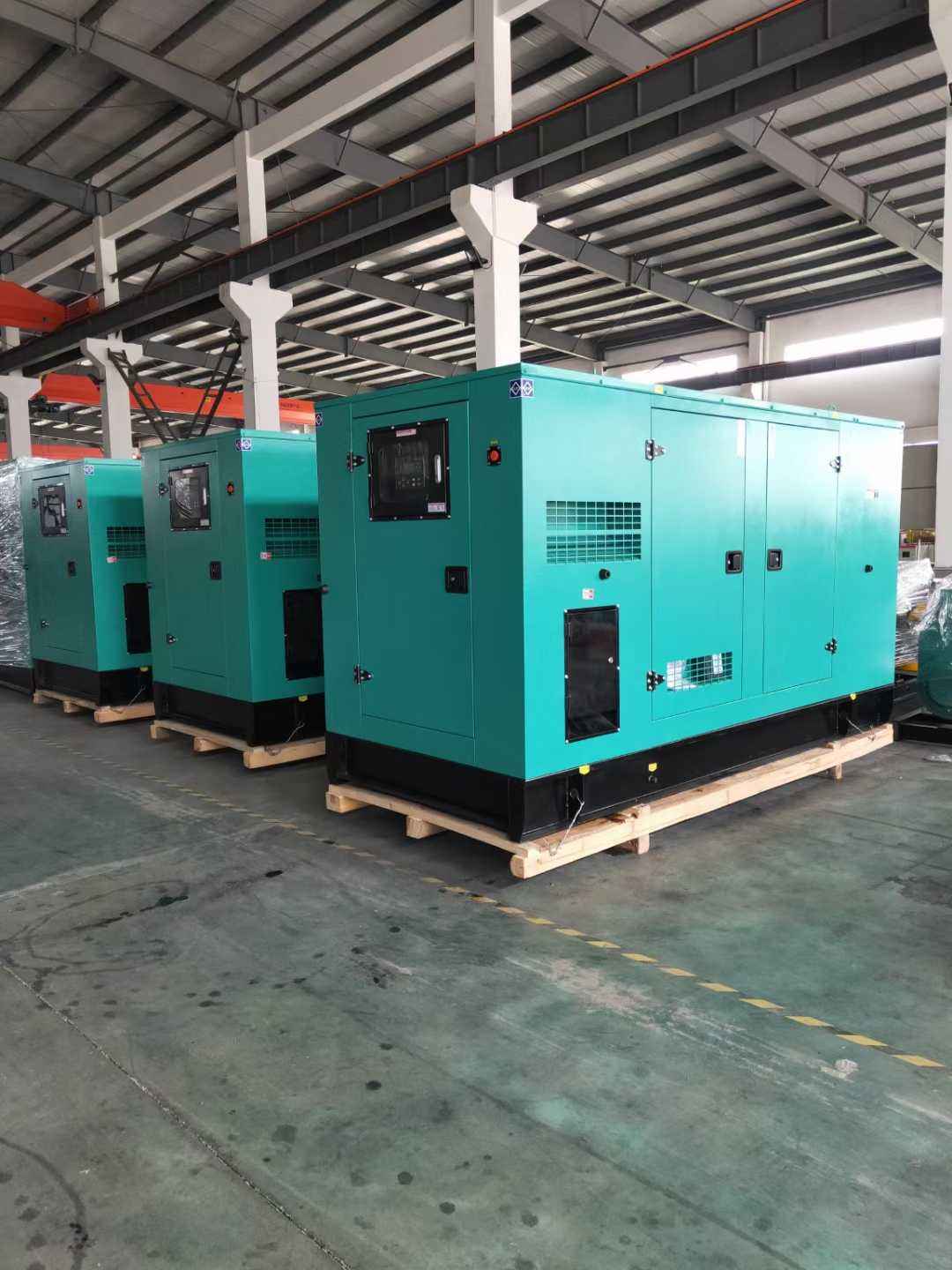
Worked Example: Checking a 160 kW Set at 0.8 pf
A worked check makes the rating concrete. Suppose a site lists three running loads of 30 kW, 50 kW and 40 kW. They sum to 120 kW. At 0.8 pf, a 120 kW demand needs a 150 kVA alternator, and the next approved frame above that is a 160 kW set at 0.8 pf, rated 200 kVA. That is the calculation a factory test should confirm.
The arithmetic is simple enough to repeat: 30 kW plus 50 kW plus 40 kW equals 120 kW; 120 divided by 0.8 equals 150 kVA; the selected 200 kVA plate at 0.8 pf leaves headroom. Tesla Power records that headroom on the test sheet, so the buyer can see the difference between the load the set carried in the bay and the load it will carry on site.
The conclusion matters more than the arithmetic. If the plate rating and the worked load do not agree, the set is the wrong size or the plate is wrong. Either way, the discrepancy should be resolved before the unit is shipped, not after it arrives.
| Step | Figure | Source of the figure |
|---|---|---|
| Add the three loads | 30 kW + 50 kW + 40 kW = 120 kW | Site load list |
| Convert at the stated power factor | 120 kW at 0.8 pf = 150 kVA | Worked calculation |
| Select the next rating | 160 kW at 0.8 pf = 200 kVA | Declared nameplate |

What Does Factory Acceptance Testing Actually Prove?
Factory acceptance testing proves that the set held its declared rating under controlled load before it was shipped. It does not prove that the set will perform at your site, because altitude, ambient temperature and ventilation all change the result. Tesla Power treats the factory sheet as the baseline and the site test as the confirmation.
In the bay, the set runs at step loads up to the rated output. Frequency regulation is recorded, and a steady-state figure such as ±0.25% is only meaningful when attached to that load step and engine. Total harmonic distortion is measured at no load and at balanced load; figures below 2% and 5% need the same conditions to be read correctly.
A site test repeats the check with the real cables, load and room. It is where an intake that recirculates hot air or a transfer that fails under inrush becomes visible. generator load bank and commissioning checks describe how that handover is normally run.
What ISO 8528-1 and ISO 8528-6 Define
ISO 8528-1 defines the duty a rating belongs to; ISO 8528-6 defines how the set is tested against that duty. Neither standard calls a machine “new”, so the standards support the claim of a new build rather than making it. The current edition of Part 1 is ISO 8528-1:2018.
ISO 8528-1:2018 sets out the rating classes, including prime and standby duty. A buyer comparing two offers should first confirm that both quotes use the same class; a standby rating and a prime rating are not interchangeable even when the kilowatt figure is identical. Tesla Power quotes the duty alongside the number for that reason.
ISO 8528-6:2023 specifies the test methods for the whole generating set and was published in 2023 as the third edition. It replaced the 2005 edition and added procedures for sets connected to the grid and for isochronous operation. ISO 8528-5:2025 is the current Part 5, published in 2025 as the sixth edition; the 2022 edition was withdrawn on 1 May 2025. Because the series is under active revision, always confirm the current edition on the official ISO site before you cite a clause in a contract.
How Do You Read a Rating Plate Without Being Misled?
Read a rating plate by checking that every value on it belongs to the same duty and the same test. The plate states output, frequency, voltage and power factor; the test sheet states the conditions under which those values were held. A plate without a matching test sheet is only a label.
The most common trap is a plate that shows both a prime and a standby figure with no duty label. A 160 kW prime set at 0.8 pf may also carry a higher standby figure, and the two are separated by duty and by allowable running hours, not by build quality. Ask which figure the factory tested as the declared rating, and keep that answer in writing with the rest of the handover file.
Voltage and frequency are the other two fields worth reading closely. A plate marked 400/230 V at 50 Hz describes a three-phase machine; the same set ordered for 60 Hz has a different test sheet. The frequency is printed on the plate so the test result and the plate agree. Cummins DG set B check intervals cover what to verify once the unit is in regular service on site.
How Do You Verify a Set Has Not Been Rebuilt?
You verify a set has not been rebuilt by comparing four independent records: the engine serial, the alternator serial, the test sheet and the packing list. A rebuilt unit can pass any one of those checks, but it rarely passes all four with the same build date. Tesla Power’s handover file is arranged so the four records can be read side by side.
Start with the engine serial and ask for the intake date. Then read the alternator sheet for its own serial and test date. A gap of several years between the two is a signal to ask why. Finally, match the packing list to the parts actually on the skid, including the radiator, control panel and breaker.

Service history is the last check. A set that has run in a factory before it was shipped is not new, even if the hours on the meter are low. Ask for the running hours recorded at the factory test and compare them with the meter at delivery. generator spare parts for the first two years explains which consumables a fresh unit should still have sealed.
Frequently Asked Questions
Is a 160 kW set the same as 200 kVA at 0.8 pf?
They describe the same rating from two sides. Kilowatts measure real power and kilovolt-amperes measure apparent power; at 0.8 pf, 160 kW of real power corresponds to 200 kVA of apparent power. Both should appear on the plate. If only one appears, ask the supplier to state the power factor in writing.
What document proves a set is factory-fresh?
No single document proves it. The engine serial record, the witnessed factory test, the alternator data and the packing list together establish a new build. A supplier who offers only a brochure or a photograph has not shown that the unit is unused.
Does a new set need a site acceptance test?
Yes. The factory test proves the rating under controlled conditions, while the site test proves it under your load, ventilation and altitude. A set that passed in the bay can still derate in a hot room. Keep both records; they answer different questions.
Which ISO edition should appear on the test sheet?
Use the edition current at the time of the test and state it explicitly. ISO 8528-1:2018 is the current Part 1, ISO 8528-6:2023 the current Part 6, and ISO 8528-5:2025 replaced the 2022 edition in May 2025. Check the ISO site before citing a clause.
Can a rebuilt set be sold as new?
Not honestly. A rebuilt set may be sound, but it should be sold as rebuilt with its service history disclosed. If the serial, alternator sheet and test sheet do not share a build date, treat the description as unverified and ask for a written explanation.
How long should a new set run in the factory test?
The test length depends on the duty and the agreed scope, so there is no single figure that applies to every set. What matters is that the sheet records the load steps, the observed frequency and voltage, and a witness. A sheet with only a pass mark is not enough.
Why does the power factor matter on the quote?
Because the alternator is sized in kVA while the load is usually stated in kW. Without a stated power factor, two quotes can describe different machines. A 160 kW set at 0.8 pf is 200 kVA; at a different power factor the required alternator changes.
Final Checks Before You Accept a New Set
Accept a new set only when the serial, the test sheet, the nameplate and the packing list agree with each other and with your order. That is the whole test. A clean canopy and a quiet run are pleasant, but they are not evidence of a new build. Work through the four documents, repeat the load calculation, and resolve any mismatch in writing before the unit is dispatched.
Tesla Power prepares the handover file in that order so a buyer can check it section by section. If you want the same list in a form you can mark up, contact the generator team for a document review and ask for the new-set checklist with your load schedule attached. A supplier confident in a genuine new build will send the records without hesitation.
Reviewed by the engineering team · Updated November 2026