
A diesel generator set with accessories is bought as a supply scope, not as a single machine. Here is what belongs in that scope and how to check it first.
A diesel generator set with accessories is quoted against a written supply schedule. The skid, control panel and base frame are the machine. The transfer switch, base fuel tank, exhaust silencer, circuit breaker and enclosure are the accessories that decide whether the set can be installed. Tesla Power lists every one of them.
- Standard scope covers the machine, its mounting and the control panel. Everything bolted to the skid ships with it.
- Three accessories drive sizing — the transfer switch, the main circuit breaker and the fuel tank. Get these wrong and the set cannot carry its rated load.
- Optional does not mean unimportant. A silencer, a day tank or an enclosure changes the footprint, the noise figure and the maintenance access.
- Undrawn accessories arrive late. If an item is named in the quotation but missing from the drawing, expect it at commissioning.
What Belongs in the Scope of a Diesel Generator Set with Accessories
A diesel generator set with accessories is defined by a supply schedule, and that schedule is a document rather than a conversation. The machine is three assemblies on a common base frame: the diesel engine, the AC alternator and the control panel. Everything else is an accessory, and accessories fall into four groups. The mechanical group covers the base tank, the exhaust silencer and the vibration isolators. The electrical group covers the main circuit breaker, the current transformers and the cable entry. The control group covers the automatic transfer switch and the remote annunciator. The enclosure group covers the canopy, the louvres and the lifting frame. ISO 8528-1 fixes what the power figures on the rating plate mean, but says nothing about what is bolted alongside them, so the accessory list is agreed in writing before the engine is ordered.
The Machine, the Skid and the Accessory List
Separate the three words, because they are quoted by different people and blamed on each other when something goes missing. The machine is the engine-alternator assembly with its coupling, radiator and control panel. The skid is the base frame carrying the machine, the fuel tank and the lifting points. The accessory list is everything the buyer adds to make the set usable on site. Tesla Power Equipment quotes all three separately.
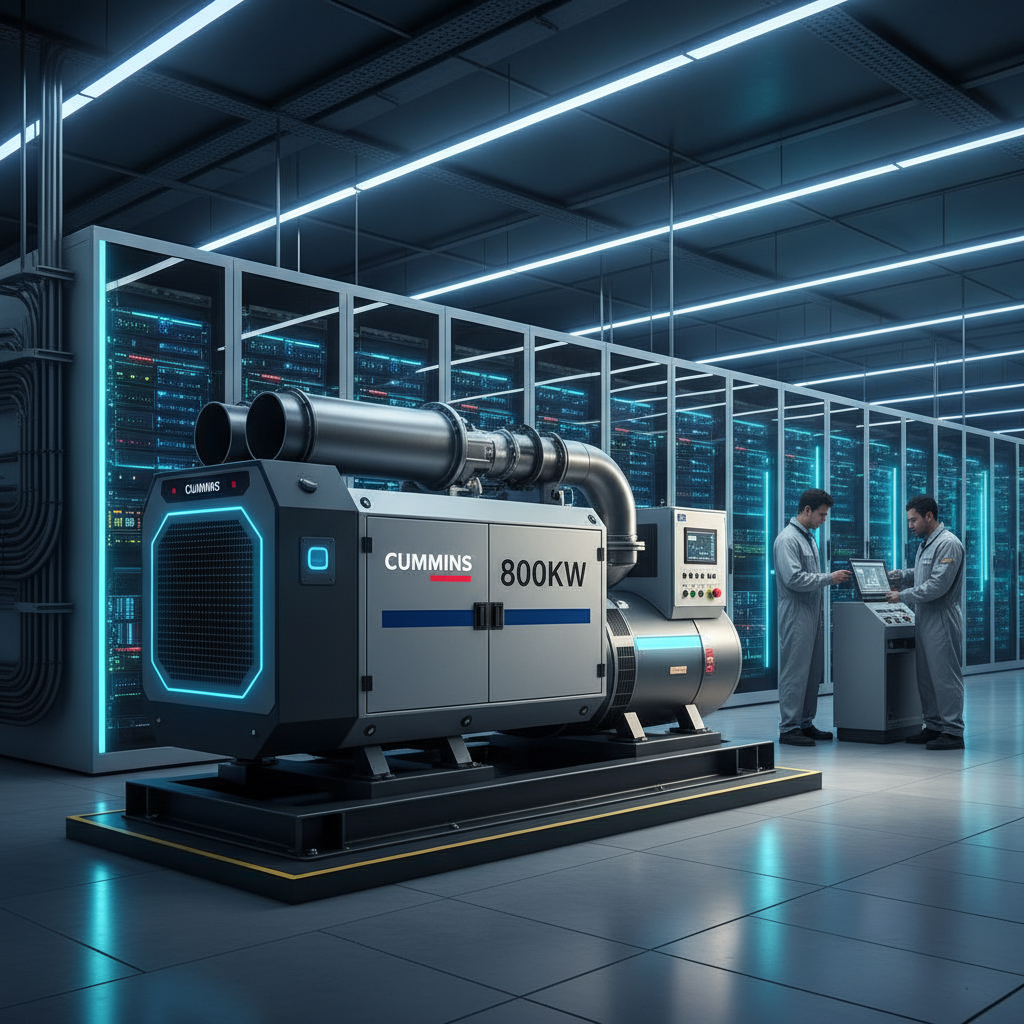
A 160 kW / 200 kVA prime-rated set at 0.8 pf, built around a Cummins QSL9-G5 engine, arrives as the same machine whether it is ordered open-frame or inside a canopy, yet the two orders carry different accessory schedules. The open-frame version leaves the exhaust silencer, the cable entry and the weather protection to the site. The canopy version absorbs them into the enclosure, which then has to be ventilated for the heat the machine rejects and for the noise it has to contain. The compact Cummins set supplied with ATS is rated at 20 kW / 25 kVA at power factor 0.8; its product page shows the matching package.
Accessories Most Often Left Off the Drawing
Four items disappear between quotation and drawing most often. The first is the exhaust silencer: a residential-grade unit attenuates roughly 25 to 40 dB(A) more than an industrial one. The second is the fuel tank connection set: the pipework, isolation valve and level switch between a bulk tank and the engine. The third is the neutral earthing arrangement, which decides whether the site needs a four-pole device. The fourth is the cable entry plate, drilled for the gland the installer brings.
Standard Accessories Versus Optional Extras
The fastest way to compare two quotations is to force both onto one table. Suppliers rarely use identical category names, so each accessory is identified by what it does.
| Accessory | What it does | What to confirm in the order |
|---|---|---|
| Automatic transfer switch | Moves the load from mains to generator without an operator | Rated current, poles, transfer time, and whether it switches 3 poles or 4 |
| Main circuit breaker | Protects the alternator and the cable against overload and fault current | Rating, breaking capacity and standard — IEC 60947-2 applies to moulded-case devices |
| Base fuel tank | Carries the fuel inside the skid footprint | Litres, running hours at full load, and whether a bund is required |
| Exhaust silencer | Reduces exhaust noise at the stack | Attenuation grade in dB(A), back pressure limit and mounting type |
| Enclosure or canopy | Weather protection, sound attenuation, or both | IP rating, louvre area, door access and the derating it implies |
| Lifting frame | Gives the crane certified pick-up points | Point count, working load limit and the marked centre of gravity |
| Remote annunciator | Repeats alarms at a manned position | Protocol, cable type and the signals it repeats |
Reading the Accessory Table
Two of the seven rows above decide whether the set meets its rating at all. The breaker must carry the alternator’s full-load current with margin for the fault level at the site, and the base tank decides how long the set runs once the mains fails. The rest decide cost, noise and maintainability.
Which Accessories Change the Electrical Design?
Three accessories move numbers, and the rest do not. The transfer switch, the main circuit breaker and the earthing arrangement sit in the fault path, so each one changes the single-line diagram the installer works from. A canopy or a silencer changes acoustics but leaves the electrical design untouched. Changing the enclosure asks for a new general arrangement drawing, and changing the breaker for a new protection study.
Automatic Transfer Switch and Changeover Logic
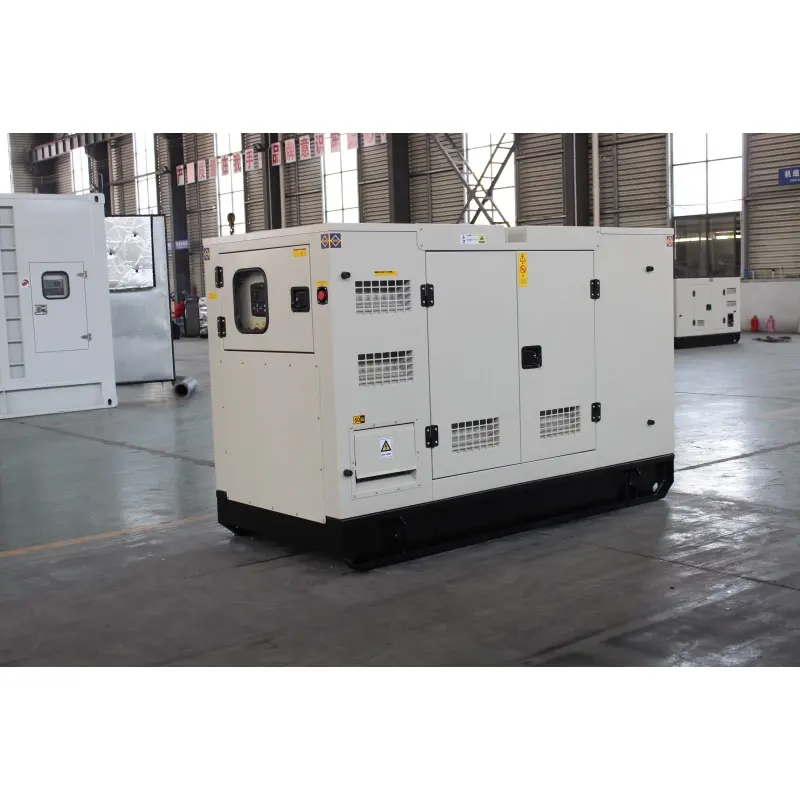
An automatic transfer switch is specified by rated current, pole count and transfer behaviour. A 200 kVA set at 400 V, three-phase, delivers about 289 A, so a switch rated at 320 A leaves usable margin without oversizing the panel. Pole count is the decision buyers most often get wrong: a four-pole device switches the neutral as well as the three phases, which is required where the generator earths separately from the mains supply. Get it wrong and the installation needs a neutral-switching retrofit once the site is energised. Tesla Power’s 80 kW set supplied with the transfer switch included is rated at 0.8 pf and shows the same decisions on a smaller frame.
Main Circuit Breaker and Cable Entry
The breaker protects the alternator, not the load, and its rating follows alternator current rather than engine output. IEC 60947-2 governs moulded-case circuit breakers, and a device carrying that marking is type-tested for a stated breaking capacity. Ask for that capacity in kiloamperes: a 25 kA breaker and a 50 kA breaker look identical on a drawing. Cable entry belongs in the same conversation: the gland plate must match the cable the installer will pull, and on a containerised set the wall fixes the entry position.
How Does the Base Tank Size Follow the Load?
The base tank is sized in running hours, not in litres. A base frame tank is normally dimensioned for about eight hours at full load, which is the point where a refuelling routine can be built around a working shift. Turning that into litres needs one number the supplier must state: the specific fuel consumption of the engine at that rating, expressed in litres per kWh. Take a set burning a typical 0.24 L/kWh at full load, a figure that must be confirmed against the specific model rather than assumed, and a 160 kW machine consumes roughly 38 litres per hour at 100% load, so an eight-hour tank lands near 300 litres. Halve the load and the litres per hour fall while the litres per kWh rise, which is why a tank quoted in litres alone tells a buyer very little.
Base Tank Versus Day Tank
Base tanks and day tanks solve different problems. A base tank is integral to the skid and gives the set autonomy without external pipework, which suits standby and mobile duties. A day tank is a separate vessel close to the engine, fed from a bulk store. Sites expecting more than a day of running usually want both, and Tesla Power names which one the price includes.
Worked Example: Accessory Scope for a 200 kVA Standby Set
Take a prime-rated set of 160 kW / 200 kVA at 400 V, three-phase, 50 Hz and power factor 0.8, and check three numbers.
Rated current. I = S ÷ (√3 × U) = 200,000 VA ÷ (1.732 × 400 V) = 288.7 A. The breaker and the transfer switch are sized from that figure, not the kW rating.
Power factor check. P ÷ S = 160 kW ÷ 200 kVA = 0.80, matching the 0.8 pf a three-phase industrial set should declare. The same 160 kW paired with 250 kVA would divide to 0.64, far below the 0.8 pf a three-phase set declares.
Speed and frequency. A four-pole alternator turns at n = 120 × f ÷ poles, so at 50 Hz it runs at 1,500 rpm and at 60 Hz at 1,800 rpm. A set ordered for a 60 Hz market needs a different alternator and breaker even when the kVA never moves.
Now apply the accessory schedule. The transfer switch must switch 289 A continuously and be rated at 320 A; the breaker must carry the same current with a stated breaking capacity; the base tank must hold about eight hours of fuel. If any of those three is quoted without a number, the order is incomplete.
Why the Accessory Schedule Goes Wrong at Commissioning
Accessory failures cluster in the first days after delivery, and the cause is almost never a defective part. It is a scope boundary that two parties each assumed the other owned. The classic case is the interface between the generator breaker and the site distribution board: the supplier quotes a breaker on the set, the installer plans to use the board’s incoming device, and both expect the other to set the protection. A second case is the neutral arrangement, where a three-pole transfer switch is supplied for an installation that needs the neutral switched. A third is the fuel pipe run, quoted as pipework and delivered as a connection stub. All three are visible on paper before the order is placed, and a pre-shipment inspection report closes the gap while the set is still in the yard. Tesla Power walks each boundary against the drawing first.
What Should Be Written into the Order?
Write the accessory schedule as a numbered list with a quantity and a rating against every line, then attach it to the purchase order as an annex. It should carry the transfer switch rating in amperes and poles, the breaker rating and breaking capacity, the tank capacity in litres and hours, the silencer attenuation grade, the enclosure IP rating, the cable entry size and position, and the lifting point count with its working load limit. Eight lines, one page. Ask for the general arrangement drawing to show each item in position, and give loose accessories their own HS code 8502 classification.
Compliance Accessories: Emissions, Enclosure and Earthing
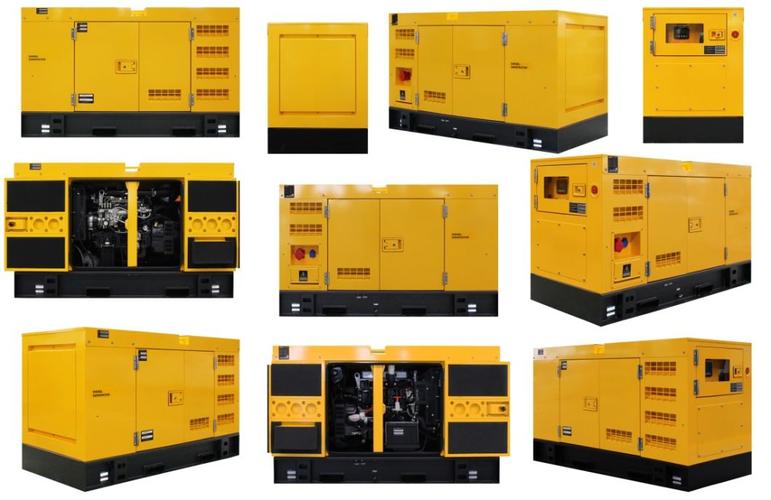
Some accessories exist because a regulation requires them. Exhaust after-treatment is the clearest example: a set sold into the European Union has to meet the emission-stage requirements of Regulation (EU) 2016/1628 for non-road mobile machinery, and the hardware that satisfies it ships with the machine. North America applies its own tier structure, and a set built for one market does not automatically satisfy the other. Enclosure ratings work the same way, because an IP23 canopy and an IP54 canopy differ in gasket, louvre design and gland selection rather than paint. Tesla Power declares the emission stage and enclosure rating on one test record.
Emission Stage and Enclosure Rating
Ask two questions about emissions and two about the enclosure. On emissions: which stage the set is declared against, and which document proves it. On the enclosure: what IP rating the canopy carries, and what derating it imposes at the site ambient temperature. The derating question is the one buyers skip: a canopy that meets an acoustic target with too little louvre area passes its factory test and fails in a plant room.
How Tesla Power Equipment Documents the Accessory Scope
Every set leaves the works with a numbered accessory schedule attached to its factory acceptance test record, and the same numbers appear on the drawing. The most expensive accessory problem is not a missing part, it is a part neither side ordered. A set built around a Cummins QSL9-G5 engine carries a 24 V DC starting motor and a 28 V / 50 A charging alternator as standard, while the battery, leads and isolator sit on the list. Tesla Power’s records show frequency regulation within ±0.25% and harmonic distortion below 2% at no load. In North America the comparable question is the UL 2200 listing scope.
The same discipline runs through the Yangzhou assembly works, where each schedule is checked against its drawing before the frame is released to build.
Frequently Asked Questions
What counts as a standard accessory on a diesel generator set?
Standard scope normally covers the base frame with lifting points, the anti-vibration mounts, the control panel, and the engine and alternator assembly. The transfer switch, silencer, base fuel tank and enclosure are often quoted separately. Ask which group each line belongs to before comparing prices.
Is the automatic transfer switch always included?
No. On many export quotations the transfer switch is an option, because some sites already own a changeover device at the distribution board. Tesla Power asks which controller will command the transfer, and whether it can drive an existing switch or needs a matching interface.
How many hours of fuel should the base tank hold?
A base frame tank is typically dimensioned for about eight hours at full load, enough for a working shift. Convert those hours into litres using the engine’s specific fuel consumption at the rating you are buying. A tank quoted only in litres has not answered the question.
Do accessories change the power rating of the set?
Accessories do not change the rating, but they can prevent the set from reaching it. An enclosure with too little louvre area raises intake air temperature and derates the engine, an undersized breaker trips before full load, and high back pressure costs exhaust efficiency.
What is the difference between a base tank and a day tank?
A base tank is built into the generator skid and needs no external pipework, which suits standby and mobile duties. A day tank sits near the engine, refilled from a bulk store. Many sites use both, so the schedule should say which the price includes.
Should the transfer switch switch the neutral?
A four-pole transfer switch switches the neutral along with the three phases, and it is required where the generator earths independently of the mains supply. A three-pole device suits installations where the neutral is solidly connected. The correct choice follows the site earthing design.
Next Steps
Write the accessory schedule as a numbered annex before you ask for prices, then make every bidder price the same list. Sets that look comparable on a headline kW figure often diverge by the whole electrical group. To have a schedule checked against your load list, send us your load list and site voltage.
Written by the engineering team at Yangzhou Tesla Power Equipment Co., Ltd. Generator sets are assembled to ISO 9001 quality management procedures, with engine options from Cummins, Perkins, Volvo, MTU, Weichai, Yuchai, Shangchai and Mitsubishi, and ratings declared against ISO 8528-1. For life-safety installations, NFPA 110 groups emergency power systems by Type, Class and Level, which you can read on the NFPA 110 page at nfpa.org.