
Quick Answer
Using a Cummins generator set starts with a pre-start check, a controlled crank, a graded load at 0.8 power factor, and steady monitoring of the set daily.
- Inspect fuel, coolant, battery and breaker before you crank the set.
- Load gradually and keep the total at or below the nameplate rating at 0.8 pf.
- Watch voltage, frequency and temperature, then cool down before stopping.
How to start a Cummins generator set
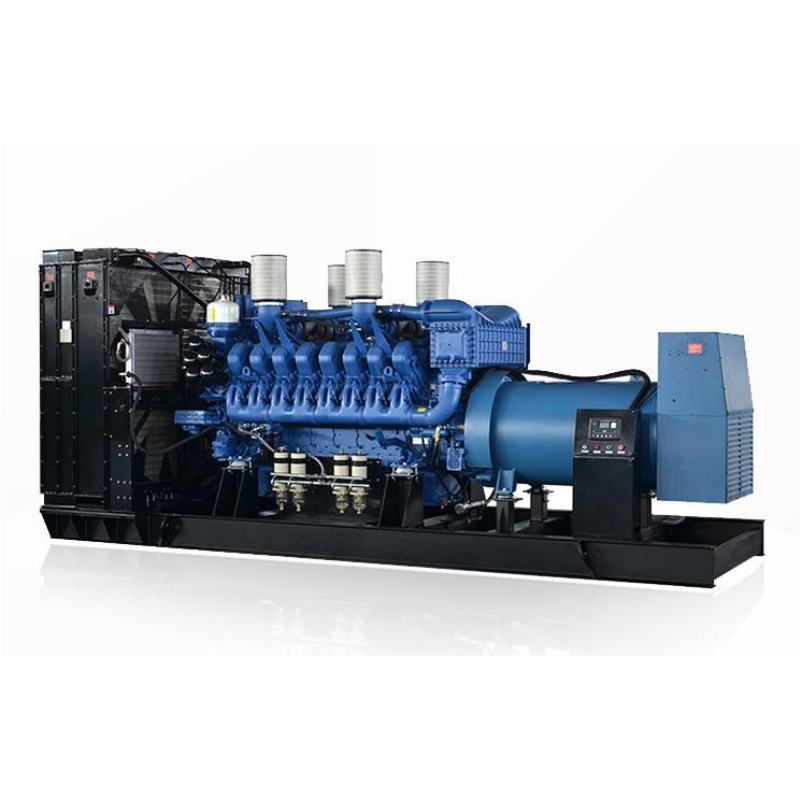
Start a Cummins generator set from Tesla Power by opening the breaker, selecting Manual, and confirming the battery sits near 24 V DC before you hold Start until oil pressure appears on the gauge. On a 50 Hz supply the panel should settle at 400 V line-to-line and 230 V line-to-neutral, a window set by IEC 60034 and confirmed during commissioning, so a no-load reading outside 390-410 V points to a wiring or AVR fault that must be fixed first. Let the engine idle three to five minutes with no load so oil reaches every bearing, then close the breaker and add load in steps rather than all at once. The crank sequence is the same on most Cummins electronic governors, and reading the Cummins generator set data sheet against the nameplate before the first crank avoids the most common surprises.
How to load the set without tripping the breaker
Load a Cummins generator set gradually, adding blocks of load every minute so the governor and AVR can settle between steps. Sudden full-load connection draws a high inrush current that can trip the main breaker even on a correctly sized set, so stage the load and watch the ammeter climb in steps. Keep the total at or below the nameplate rating at 0.8 power factor, and treat that figure as a ceiling, not a number to exceed during an outage.
Single large motors deserve special care because their starting current can exceed running current by six times and drop the voltage enough to trip auxiliary gear. If you must start a big motor, do it first while the set is warm and lightly loaded, and size it so the start sits inside the alternator’s declared step-load acceptance. The product range lists step-load data per model so you can verify it before commissioning.
What does the control panel show you while it runs?
The control panel shows you live voltage, frequency, current, oil pressure, coolant temperature and run hours, and those six readings are your early-warning system while the set runs. A steady 400 V and 50 Hz with a slow, even temperature climb means the set is healthy; a drifting frequency or a creeping temperature means you should investigate before the fault escalates.
The control panel on a Cummins set is built to IP23 protection per IEC 60529, which means it shrugs off dust and dripping water but still needs the plant-room ventilation kept open during a long run. A 24 V DC starting system floats the charger near 27 V while the engine runs, and a reading that sags toward 22 V under cranking signals a weak battery or a poor terminal, the two causes behind most no-start calls on standby sets. Coolant temperature settles around 85°C on load and the thermostat holds that band for efficient combustion, while a climb past 95°C or a sharp swing means low coolant, a stuck thermostat or a blocked radiator. Watch those three numbers every run and the set tells you about faults before they become failures.
How to shut a Cummins generator set down
Shut a Cummins generator set down by removing the load first, letting it run unloaded for three to five minutes to cool the turbo and cylinders, then switching it off at the panel. This cool-down step matters because a hot turbo spinning at speed and then starved of oil will coke its bearings, and that failure shows up as a seized turbo on the next start. Never kill the breaker and the engine in one move, because the abrupt stop is exactly what damages the expensive parts.
After the set stops, leave the battery master on so the charger keeps the 24 V DC bank topped and the panel clock keeps time. Log the run hours and the reason for the start in the commissioning book, because those hours drive the oil-change and filter intervals that keep the warranty valid. A set exercised weekly should show a steady, predictable hour count rather than a sudden unexplained jump.
Which fuel, oil and coolant the set needs
A Cummins generator set needs ultra-low-sulphur diesel, the Cummins-recommended CF-grade engine oil, and a 50/50 ethylene-glycol coolant mix rated for the local low temperature. Diesel fuel has a density near 0.84 kg/L, so a day tank sized by volume converts cleanly to mass when you plan runtime, and clean fuel is the single biggest defence against injector failure. Store it in a sealed, water-separated tank to remove the most common cause of a set that starts but will not stay running.
Fuel grade and storage
Specify diesel that meets the local EN 590 or equivalent standard and keep it filtered at the tank and again at the engine, because water and microbial growth are the quiet killers of standby sets that sit for months. Yangzhou Tesla Power rates coolant concentration for the site’s winter low, not a generic figure. A periodic fuel polish protects the injectors far better than a repair after the fact.
Plan runtime from the day tank with simple arithmetic: a 500 L tank at a burn of 50 L/h gives 10 hours of operation, because 500 divided by 50 equals 10. Knowing that number before you start lets you schedule a refuel or a load shed instead of discovering an empty tank mid-outage. Bulk storage extends the same division, so the maths stays the same for any tank size.
What should you check before the first crank?
Before the first crank you should check coolant level, oil level, battery terminals, fuel level and the main breaker position, because those five items cause the overwhelming majority of no-start calls. A loose terminal or a closed breaker left from the last run will stop a good set before it fires, and both take ten seconds to confirm. Make the five-point check a habit, not an afterthought.
| Check | Why it matters | Pass criterion |
|---|---|---|
| Coolant level | Prevents overheat on first load | Between the min and max marks |
| Oil level | Protects the bearings | On the full mark, no milky colour |
| Battery terminals | Stops no-start calls | Tight, no corrosion, 24 V DC |
| Fuel level | Avoids a mid-run stall | Enough for the planned runtime |
| Breaker position | Safety before crank | Open (off) before start |
Beyond the five points, confirm the area around the set is clear of flammable material and that the exhaust reaches a safe outlet. A set in a plant room needs the ventilation path open so heat and fumes leave, because a blocked louvre turns a safe room into a hazard. Tesla Power ships a clearance diagram with every enclosure so the installer gets the spacing right the first time.
Mistakes that shorten a Cummins set’s life
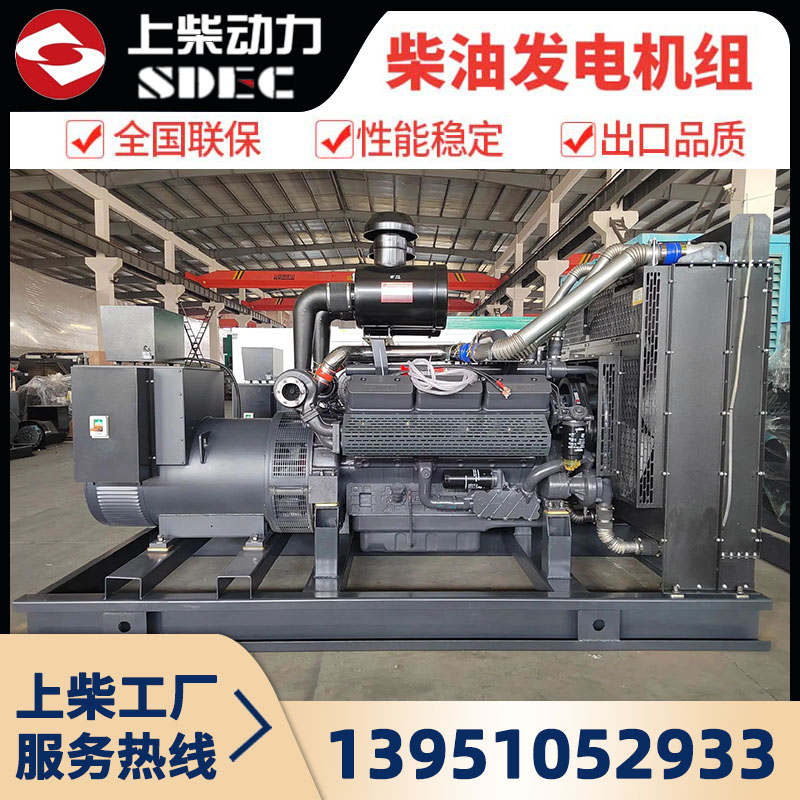
The mistakes that shorten a Cummins set’s life are mostly about neglect: running at tiny loads, skipping oil changes past the 250-hour interval, ignoring the battery, and killing the engine hot. Light loading lets unburned fuel wash the bores and dilute the oil, while a skipped service lets abrasive particles score the internals. A set is only as reliable as the routine wrapped around it.
Another quiet killer is letting the set sit for a year and then expecting it to carry a full building load on the first try. Batteries sulfate, fuel grows bugs, and seals dry out, so a set that is never exercised arrives at the real outage already partly failed. Tesla Power recommends a monthly load test to keep the set conditioned between outages. Your local Cummins DG set dealers can set the schedule if you would rather not track it yourself.
Maintenance you do while using the set
Maintenance you do while using the set is mostly disciplined inspection rather than parts replacement, because a diesel genset ages by run hours, not by the calendar. Read the panel every run, log the hours against the operator manual, and watch for leaks, odd noises or a drifting temperature. The heavy service, oil and filters, falls on the interval the manual sets by run hours, and Yangzhou Tesla Power honours the warranty only when that log is complete and honest.
The air cleaner restriction indicator and the radiator core need attention in dirty or coastal sites, because both quietly erode performance between services. Check the indicator on the interval the environment demands, not the one written for a clean hall, and rinse the fins before they pack with dust. A wholesale Cummins generator set order often bundles the service schedule, so keep that sheet with the set.
When to stop and call a technician
Stop the set and call a technician when you see persistent low oil pressure, coolant loss, a coolant temperature above 105°C, a frequent over-speed or under-frequency trip, or smoke that is not normal exhaust. These are symptoms of internal damage that worsens with every running minute, and continuing to load the set turns a service call into a rebuild. Safe shut-down first, then the phone.
Also call before you modify anything electrical, because the alternator and the AVR are calibrated as a pair and a wrong jumper can take both out. Tesla Power’s service line can quote the correct step-load and protection settings for your exact model. When in doubt, stop and ask rather than force a start, and reach the contact page for the right engineer.
How a Tesla Power set arrives ready to run
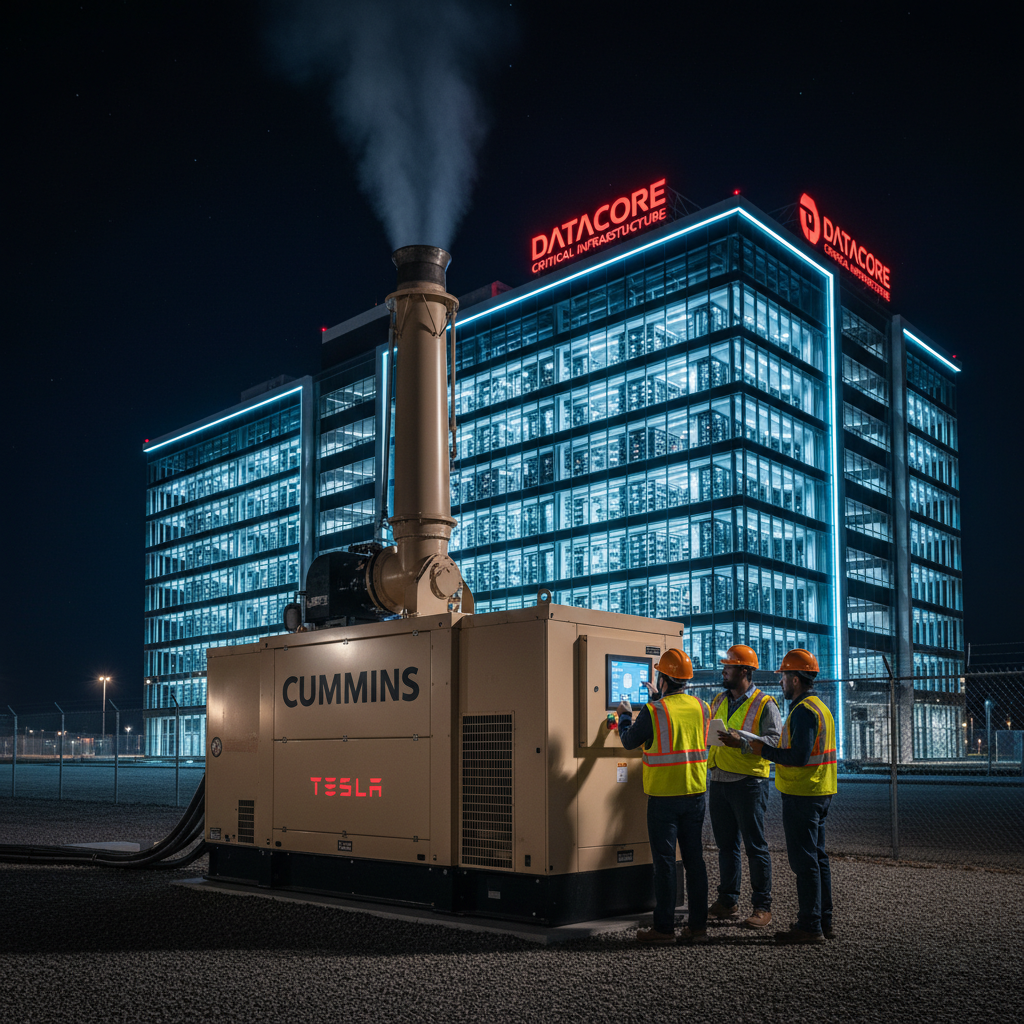
The set arrives factory-tested, filled to the correct fluids, and bundled with the data sheet, the clearance diagram and the commissioning log so your first start is a check, not a rebuild. It is built to run on a 400 V, 50 Hz grid at 0.8 power factor and to hold its rating from sea level to 1000 m and up to a 40°C ambient without derating, per ISO 8528-1 (ISO 8528-1). Where the set is built is explained on the Cummins generator factory location page, and confirming your site sits inside that envelope is the first step before you order. A set that leaves the factory inside its ISO 8528-1 envelope and is commissioned against the same numbers carries its nameplate load for the full service interval, so the envelope check is never optional.
Frequently asked questions
Can a Cummins generator set run on natural gas?
No, a standard Cummins diesel generator set runs on diesel fuel and cannot burn natural gas without a factory gas-conversion kit and a different fuel system. Most standby units in the Cummins range are diesel-only, so check the nameplate before you plan a gas supply. If your site requires gaseous fuel, specify a dedicated gas model rather than retrofitting a diesel block, because the injection and control systems are fundamentally different.
How long can a Cummins set run without stopping?
A Cummins set can run continuously for the length of its fuel supply, commonly 8 to 24 hours on a day tank, then longer with bulk storage and refuelling. Diesel sets are built for extended duty, but you must still follow the oil-change interval measured in run hours and keep coolant and filters in good order. Plan runtime from tank size, not from hope, and the set will carry the load for as long as the fuel holds out.
Do I need a transfer switch to use the set?
Yes, a transfer switch is required to use the set safely with a building, because it isolates the generator from the utility feed and prevents back-feeding the grid. In the United States this duty is governed by NFPA 110, the standard for emergency and standby power systems (NFPA 110). Manual and automatic versions exist, and the automatic type starts the set and moves the load on its own during an outage. Never bridge the two supplies without one.
What voltage does a Cummins generator set put out?
A Cummins generator set on a 50 Hz supply puts out 400 V line-to-line and 230 V line-to-neutral, the IEC 60034 standard for three-phase distribution. Some markets use 60 Hz and 480 V or 208 V instead, so confirm the frequency before you order. The control panel shows the live voltage, and it should sit inside the 390-410 V window at no load, a range confirmed during commissioning against the data sheet.
How often should I exercise the set?
You should exercise the set at least once a month under a real load, not just a no-load crank, so the engine, alternator and fuel system all stay conditioned. A weekly test is better for sets that back up critical loads, and every run should be logged against the hour meter. Regular loading prevents wet-stacking and keeps the batteries healthy between outages, which is why most failures happen on sets that were never exercised.
Why would the set shut down on its own?
The set shuts down on its own because a protection has tripped, most often low oil pressure, high coolant temperature, over-speed, or a low coolant or fuel level. These shutdowns are the control panel protecting the engine, not a fault to bypass, so read the alarm code before restarting. Clearing the cause matters more than clearing the alarm, because restarting into the same fault simply trips again.
Can I parallel two Cummins generator sets?
Yes, you can parallel two Cummins sets if both carry the paralleling option and a synchronising controller, because equal voltage, frequency and phase are required before the breakers close. Retrofitting paralleling onto basic sets is rarely worth it, so specify the capability when you order. Parallel operation lets you match capacity to load and add redundancy, which is why hospitals and data centres choose it for critical power.
What documents come with the set?
Tesla Power ships the set with the data sheet listing ratings and step-load acceptance, the operator manual with service intervals, the clearance diagram for installation, and the commissioning log for your run-hour record. Keep these with the set, because the data sheet is what you check against when sizing loads and the log is what proves the maintenance history. File them on day one and the next operator inherits a set that is documented, not a mystery.