
Key takeaways
Diesel generating sets are classified under heading 8502, and the subheading depends on output, not on engine brand. The United States, the United Kingdom and the European Union all use the same six-digit structure, then publish their own duty rates on top of it.
- Subheadings 8502.11, 8502.12 and 8502.13 split diesel sets by output measured in kVA.
- One machine can be duty-free in the United Kingdom, 2% in the United States and 2.70% in the European Union.
- A containerised set stays in 8502, but the trailer under it is a separate customs line.
Every import declaration turns on a single box: the commodity code, which for a diesel generating set means an HS code 8502 subheading. Get it wrong and the duty bill, the clearance time and the penalty exposure all move. This guide sets out how the code structure works for diesel generating sets, what three markets publish as duty, and how a customs value becomes a landed figure.
Before any of that matters, the set has to be specified. If the rating is still open, start with generator sizing, then come back to the tariff once the output is fixed.
What HS code 8502 actually covers
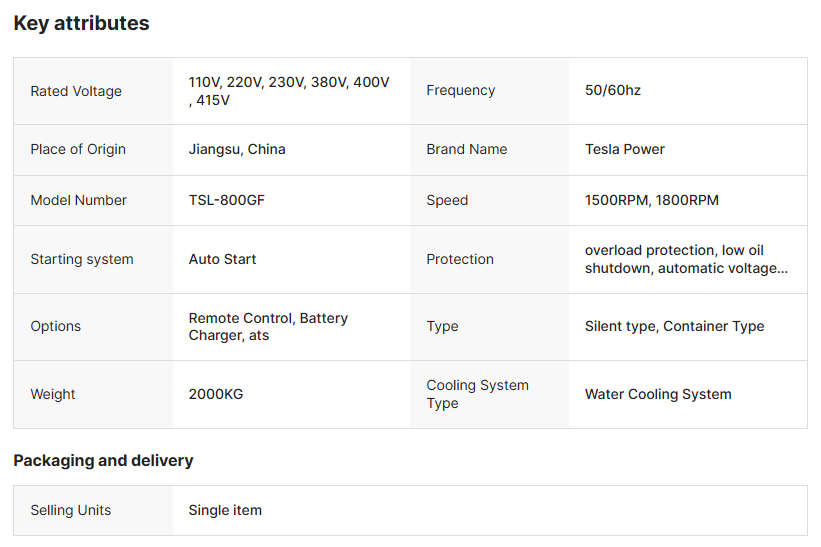
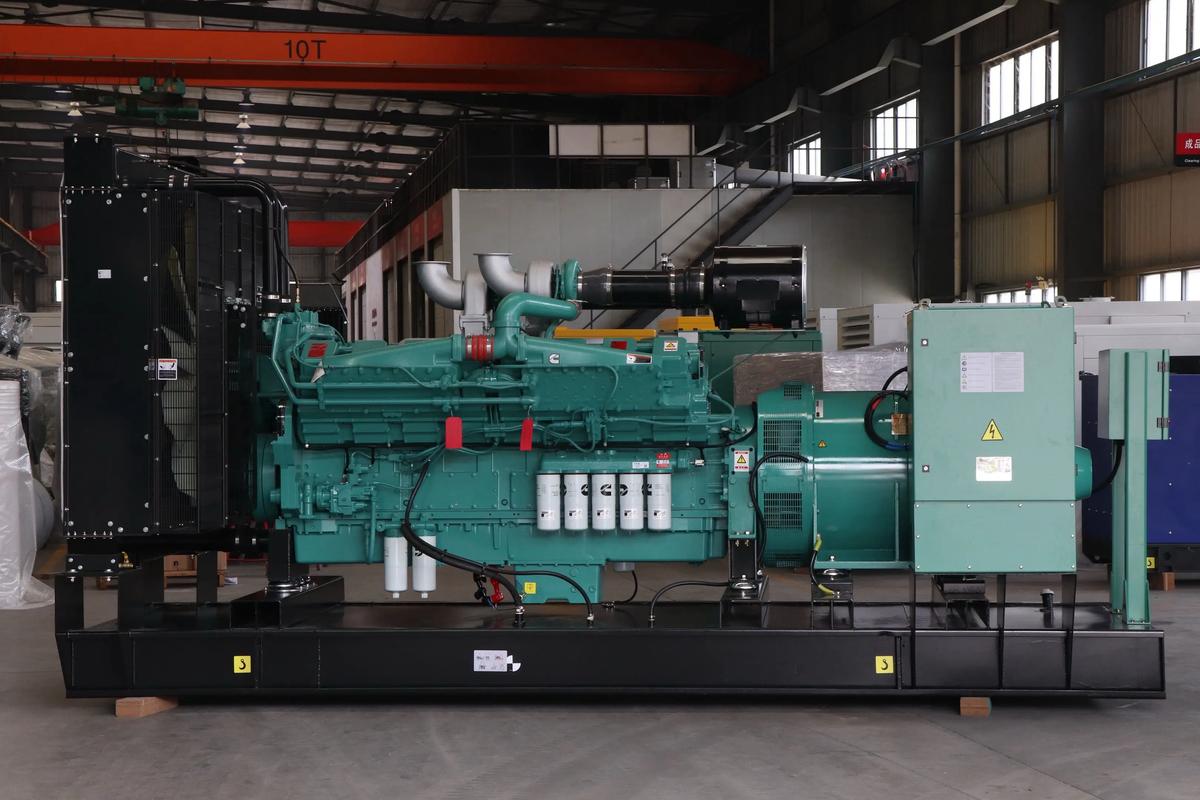
Heading 8502 of the Harmonized System covers electric generating sets and rotary converters. For tariff purposes a generating set is the combination of an electric generator and any prime mover other than an electric motor, mounted together as one unit or on a common base, and presented together. That wording comes from the Explanatory Notes, quoted verbatim by US Customs in ruling HQ 087074 (21 November 1991).
The heading is not a single code. Diesel and semi-diesel sets fall in 8502.11, 8502.12 and 8502.13 according to output, and spark-ignition sets sit in 8502.20. Wind-powered sets are in 8502.31, other sets in 8502.39, and rotary converters in 8502.40. Writing 8502 on a pro forma invoice is not a classification; customs will ask for the subheading, which is what carries the rate.
Two conditions sit inside that definition and both have to hold. The generator and its prime mover must be mounted, or designed to be mounted, as one unit or on a common base. They must also be presented together. US Customs applied that hard in ruling HQ 958835 (16 May 1996), where a turbine and its generator travelled on different vessels ten days apart: the doctrine of entireties does not apply where the imported article is not imported with the article it is claimed to form an entirety with.
A diesel engine imported alone falls in 8408, at a US general rate of Free, and a generator alone goes to 8501. Splitting a shipment to chase that is a classification risk, not a saving.
Where do the 75 kVA and 375 kVA thresholds come from?
The three subheadings that matter to diesel buyers are separated by output, and the unit is kVA rather than kW. That distinction causes more arguments than any other part of this topic. A set sold as 400 kW at 0.8 power factor is a 500 kVA set for customs purposes, and kVA goes on the declaration.
| HTS subheading | Output (kVA) | General rate | Column 2 rate |
|---|---|---|---|
| 8502.11.00.00 | Not exceeding 75 | 2.5% | 35% |
| 8502.12.00.00 | Over 75, not over 375 | 2.5% | 35% |
| 8502.13.00 | Over 375 | 2% | 35% |
All three rows come from the current US Harmonized Tariff Schedule, retrieved 12 September 2026, and the same thresholds appear word for word in the UK Integrated Online Tariff. The general rate is the Column 1 rate applied to most-favoured-nation partners. The United States then adds a statistical suffix at 1,000 kVA, which does not change the rate but does change the code printed on your entry.
Does a canopy, container or trailer change the code?
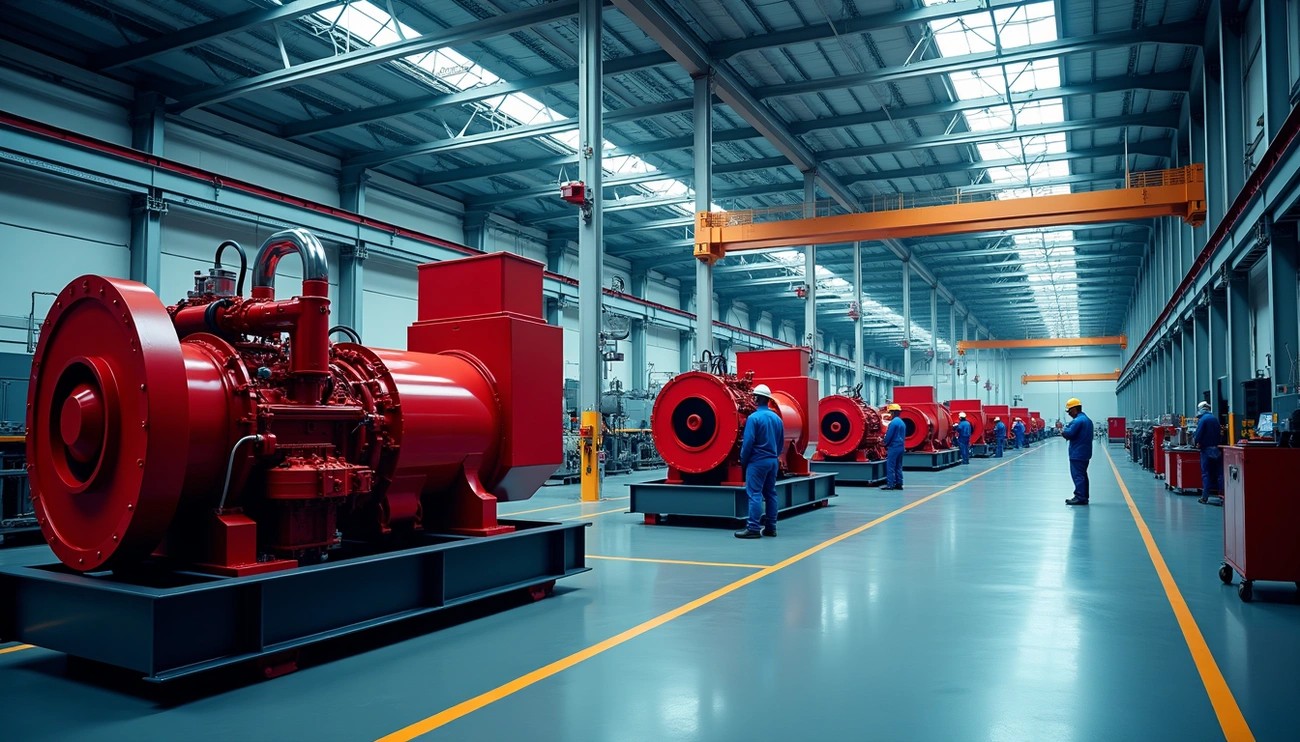
Buyers ask this because the enclosure is the largest object in the shipment. It does not change the heading. The acoustic canopy, exhaust system, cooling package, base tank and controls are treated as part of the generating set, not as separate goods. Our range of containerised generator sets is declared the same way as an open skid.
What US Customs decided about containerised sets
CBP ruling NY H81337 (28 June 2001) is the clearest published answer. The goods were a diesel mobile generating set of 1,000 kW mounted inside an intermodal container of 20 or 40 feet, extensively modified, with insulated walls, cooling, fuel tanks, ventilation, a sound muffling system, and wiring and controls built in.
CBP classified the generating set under subheading 8502.13.0040 at 2 percent. The ruling matters for two reasons beyond the rate: an extensively modified container does not pull the set out of heading 8502, and the acoustic and cooling equipment inside it does not either. Read the qualifier carefully: the ruling covers containers that had been extensively modified, not a standard box used purely as transport.
The trailer is a separate declaration line
The same ruling put the semi-trailer under subheading 8716.39.0050, at Free. One shipment, one invoice, two commodity codes. If your supplier quotes a containerised set on a road trailer and the paperwork carries a single line, the declaration is incomplete on arrival, and it costs more to fix after the vessel sails than before.
What the duty rates look like in three markets
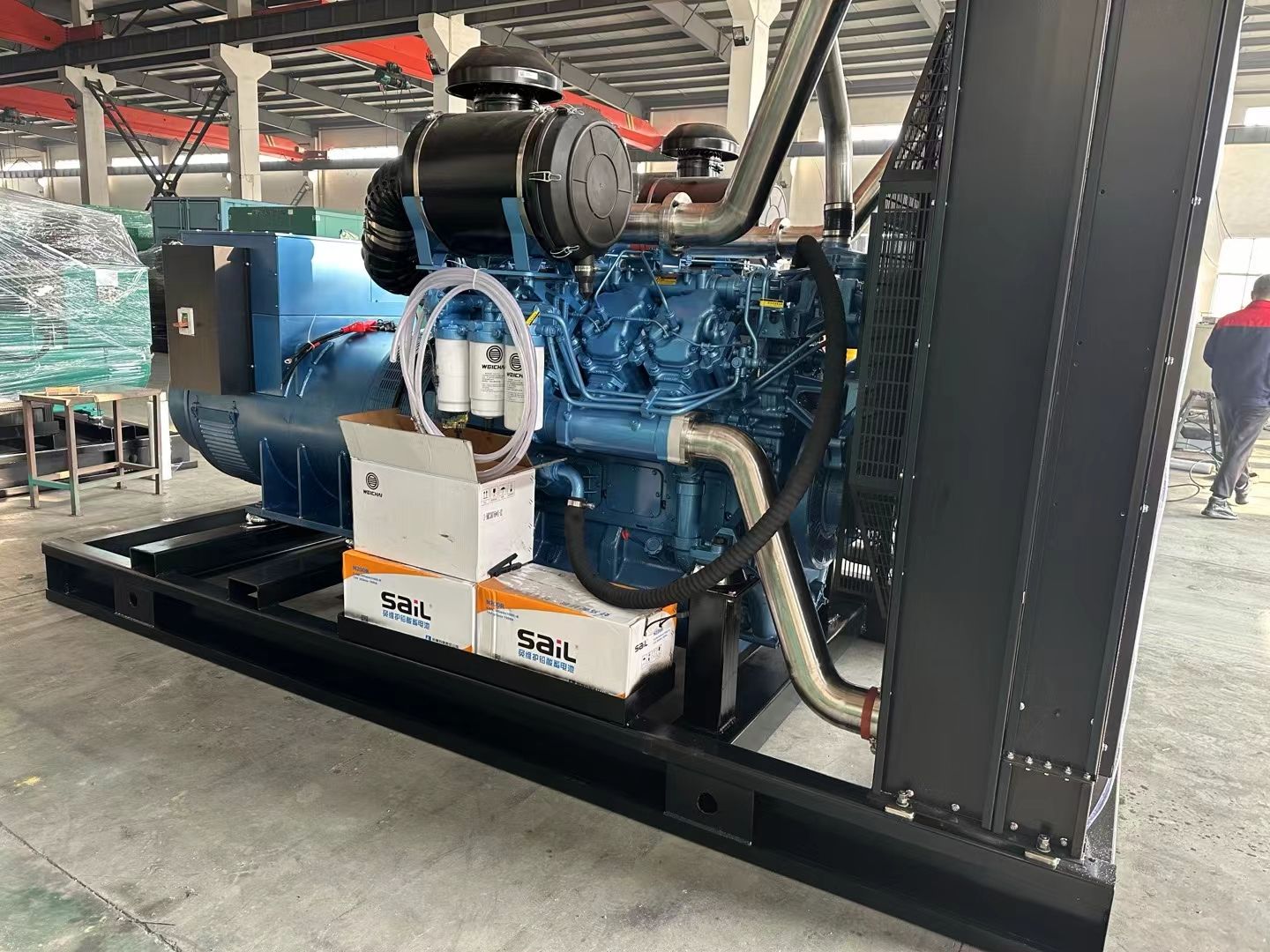
The six-digit code is harmonised; the rate on top of it is not. The table gives the third-country duty published for a diesel generating set above 375 kVA in three markets, all retrieved 12 September 2026, and the worked example applies them to a 500 kVA silent diesel generator.
| Market | Commodity code | Duty on the set | Consumption tax at import | Source |
|---|---|---|---|---|
| United States | 8502.13.00 | 2% general | Not levied at federal level | USITC HTS |
| United Kingdom | 8502130000 | 0.00% | VAT at 20% on the customs value | UK Integrated Online Tariff |
| European Union | 8502130000 | 2.70% | VAT set by the member state of import | Northern Ireland Online Tariff, which applies EU measures |
The 2.70% figure carries a caveat: it comes from the UK Northern Ireland Online Tariff, which applies EU customs measures, because the EU’s own TARIC database could not be queried here. Treat it as indicative and confirm the rate in TARIC before quoting a customer.
Worked example: landing a 500 kVA set in three ports
Take one diesel generating set with a declared customs value of USD 100,000. The figure is illustrative rather than a price indication; the point is the arithmetic, which you can rerun with your own numbers.
United States: 100,000 x 2% gives USD 2,000 of duty. United Kingdom: 100,000 x 0% gives zero duty, plus import VAT at 20% on the customs value, which is USD 20,000 and recoverable if the importer is registered. European Union: 100,000 x 2.70% gives USD 2,700 of duty, plus local VAT.
On duty alone the spread between the cheapest and most expensive market is USD 2,700 on a 100,000 consignment. Add the UK import VAT and the British consignment looks expensive on paper, but that VAT is recoverable by a registered importer, so it is a cash-flow item rather than a cost. A misclassification hurts more than a rounding error: declaring the set under 8502.12 instead of 8502.13 moves the US rate from 2% to 2.5%, or USD 500 here. Put the same figures on your request for quotation so the supplier and the broker work from one number.
Why is 2% not what you pay into the United States?
The 2% general rate is the most quoted number in this topic and the most misused. It is the Column 1 general rate, also called the MFN rate, and it is not the total duty owed on goods of Chinese origin entering the United States. Depending on origin, additional duties under Section 301, IEEPA and other trade remedies may apply on top of it, and Section 232 measures apply to some product categories. None of these were checked here.
That is not a gap we can close with numbers published elsewhere. Ask your broker for the total landed duty rate for your origin, date of entry and HTS line, in writing, before you accept a quotation. The caution works in reverse: a supplier who quotes 2% as the full duty has not checked. The tariff is published by the US International Trade Commission, and rulings can be searched through CBP CROSS.
What the rule allows for disassembled and incomplete sets
Generating sets are sometimes shipped knocked down, either to fit a container or because the destination taxes assembled goods differently. General Rule for the Interpretation of the Harmonized System 2(a) covers this. In the wording published by the World Customs Organization, retrieved 12 September 2026, a reference to an article includes that article incomplete or unfinished provided it has the essential character of the complete article, and also includes a complete article presented unassembled or disassembled.
US Customs applied the incomplete-article principle in ruling NY N016115 (10 September 2007), classifying a steam turbine generating set shipped without its rotors at 2.5%. That case involved a steam turbine set rather than a diesel set and does not cite the rule by name, so treat it as an analogy rather than a precedent. For a diesel crated project, get a written broker opinion before the crates are packed.
Where the rule stops
The commentary sets a limit: the second half applies only where only assembly operations are involved. Components that need welding, cutting, machining or painting fall outside it, and components supplied in excess of the number required are classified separately. There is also a live tension with the condition-as-imported principle from HQ 958835: the rule text does not say the parts must arrive on the same vessel, but that ruling holds they must. The packing list therefore carries legal weight and belongs with your lifting and packing checks.
What does customs ask for on a genset shipment?
The exact list depends on the port and the regime, and we could not obtain an official US Customs checklist because cbp.gov blocks automated access. The UK official process, published on GOV.UK and retrieved 12 September 2026, is representative: an EORI number, the commodity code on the declaration, the customs value, the declaration itself, any licence or certificate the goods require, the commercial invoice, and the import VAT certificate used to reclaim VAT.
Two items need early preparation. The commodity code is what this article is about, and it is the item most often left to a freight agent. The customs value is the second: it is not simply the number on the commercial invoice, and a value that does not reconcile with the rest of the paperwork will slow an entry more reliably than anything else. Both follow the rating printed on the nameplate, so both belong in the same review as your import paperwork.
Mistakes that change your duty bill
- Mixing kW and kVA. The threshold is written in kVA. A 400 kW set at 0.8 power factor is a 500 kVA set, and the declaration must say so.
- Declaring the machine but not the trailer. Two codes, one shipment, one invoice.
- Splitting a consignment to chase a lower rate. The set loses its 8502 identity if the parts do not arrive together.
- Treating the MFN rate as the total. Origin-specific measures and trade remedies sit on top of it.
The same review covers your shipping document checks, because the code has to appear consistently across every document.
Freight is the other half of landed cost, and it is decided before the vessel is booked: how many sets you actually get per container sets the rate you pay per kVA. See how many generator sets fit in a 40ft container for the payload, door and floor limits behind that number.
Frequently asked questions
Is HS code 8502 the same in every country?
The first six digits are: the United States, the United Kingdom and the European Union all publish 8502.11, 8502.12 and 8502.13 with identical kVA thresholds. Beyond six digits each market adds its own extensions, so the ten-digit code on a US entry differs from a UK one.
Do I classify a generating set by kVA or by kW?
By kVA. The subheading thresholds in heading 8502 are stated in kVA, so a machine sold in kW has to be converted using its power factor before the code is chosen. A 400 kW set at 0.8 power factor is a 500 kVA set.
Does a soundproof canopy or a container change the classification?
No. CBP ruling NY H81337 classified a generating set mounted in an extensively modified intermodal container, with insulated walls and a sound muffling system, under 8502.13.0040. The enclosure is part of the set, not separate goods.
What duty applies to a diesel genset imported into the United States?
The Column 1 general rate is 2% for output above 375 kVA and 2.5% at or below it, with a Column 2 rate of 35%. It is not the total owed on goods of Chinese origin. Depending on origin, additional duties under Section 301, IEEPA and other trade remedies may apply, and Section 232 measures apply to some product categories. Applicability to generator sets was not verified here — confirm each layer with your broker against the current CSMS notices.
Is the United Kingdom really at 0% duty on generator sets?
Yes, for third-country duty. The UK Integrated Online Tariff showed 0.00% across the diesel set codes on 12 September 2026. Import VAT at 20% still applies to the customs value and is recoverable if you are registered.
Can I import the engine and the alternator separately to pay less duty?
Not as a duty strategy. A diesel engine imported alone falls in 8408 at a US general rate of Free, but a set whose parts do not arrive together loses its classification as a generating set, as CBP held in HQ 958835. Treat any such saving as a compliance risk.
What happens if the code on the commercial invoice is wrong?
The declaration is wrong with it, and the importer of record carries the liability. Consequences usually include additional duty, interest and a higher inspection rate later, so confirm exposure with your broker.
Before you place the order
Classification is settled before the goods leave the factory, not at the port. Fix the kVA rating on the nameplate, agree the subheading with your broker in writing, and make sure the invoice carries the code the broker expects.
If you want the classification and the duty line checked against a specific machine and destination, send the rating, the enclosure type and the port to our export team.
Prepared by the export documentation team at Yangzhou Tesla Power Equipment Co., Ltd. Tariff text and duty rates were retrieved from USITC, the UK Integrated Online Tariff and CBP CROSS on 12 September 2026; re-check them before issuing a quotation.