
UL 2200 is the North American safety listing for complete stationary generator assemblies. Here is what the mark covers and what to ask a supplier for.
UL 2200 is a safety listing for the whole assembly — engine, alternator, control panel, wiring, fuel system and enclosure evaluated together, not a set of approved parts. The third edition took effect on 31 March 2026. Tesla Power Equipment treats it as a buyer-specified requirement, not a standard inclusion.
- The assembly is listed, not the parts. A panel built from recognised relays and breakers is not a listed generator set, and the difference shows up at the first inspection.
- The third edition is bi-national. A single C-UL-US mark now answers both the United States and Canada, which changes what a cross-border project has to file.
- Above 600 V the scope widens. Medium-voltage assemblies add clearance, creepage and arc-flash coordination to the evaluation.
- Ask for the file number. A mark printed without a file number cannot be checked against the certifying body’s own directory.
What the UL 2200 generator standard covers
A generator set is listed as one machine. The evaluation treats the engine, the alternator, the control panel, the wiring, the fuel system and the enclosure as a single product, because a weakness in any one of them becomes a fire or shock risk at the site. That is why the standard sits beside the electrical code, and why the installation and sizing notes are a separate reading job.
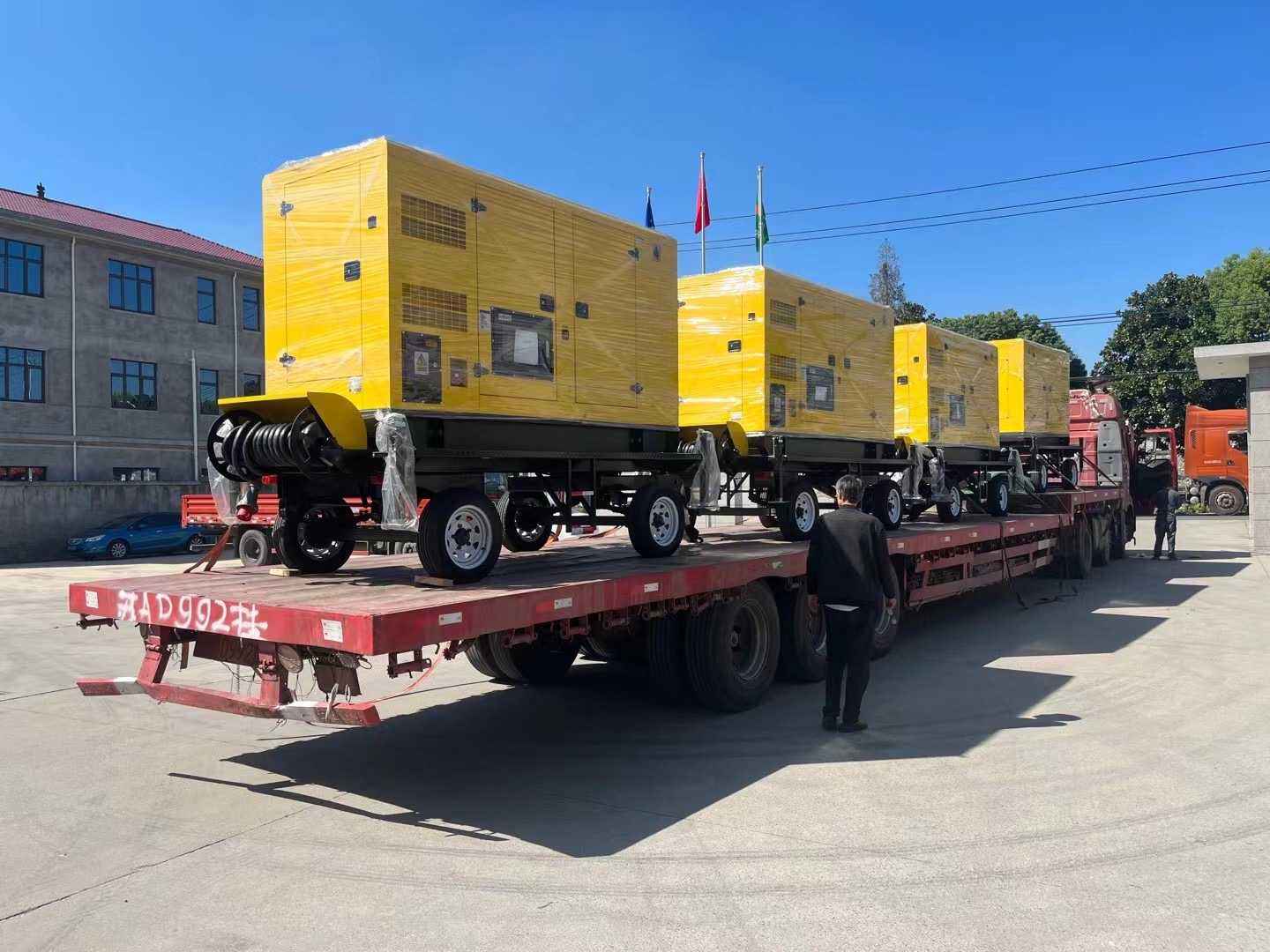
The scope is stationary assemblies: sets intended to be permanently installed and to carry standby or prime power, including those that feed life safety loads. Portable and vehicle-mounted sets fall outside it. Inside the scope the evaluation covers wiring insulation and routing, overcurrent protection, bonding and grounding, short-circuit withstand at a tested fault level, control panel logic, surface and exhaust temperatures, and rain-tight construction for outdoor sets.
Nothing in it decides how much power the machine makes. Ratings and duty come from ISO 8528-1:2018. Tesla Power sees the same confusion on export enquiries: a buyer reads the mark as a performance grade, then asks a safety certificate to prove a power number.
When did the third edition take effect, and what changed?
The third edition of ANSI/CAN/UL/ULC 2200 was published in 2020 and designated as an American and a Canadian National Standard on 29 September 2020; UL sets out the revision in its own summary of requirements for the third edition. Its effective date was 31 March 2026. Both editions could appear in submittals, so ask which edition a listing was issued against.
Six changes carry most of the practical weight. Each adds a document to the project file rather than a part to the machine, so the cost lands in engineering time. None of them alters the ratings published across our generator set range.
| Change in the third edition | What it adds to the project file | Where it bites |
|---|---|---|
| Bi-national status | One C-UL-US mark covering the United States and Canada | Cross-border projects and rental fleets |
| Safety risk assessment | A documented hazard analysis as part of certification | Sets with complex control logic or software |
| Control system and software | Validated firmware; controllers listed to UL 6200 / ULC 6200 | Digital controllers, remote monitoring, diagnostics |
| Medium voltage above 600 V | Clearance and creepage, factory testing, switchgear coordination | Data centres, hospitals, utility installations |
| Walk-in enclosures | Working-space rules applied to the enclosure itself | Large containerised and walk-in housings |
| SCR on Tier 4 sets | Inducement override; an SCR fault must not stop the engine | Emissions-controlled sets on life safety duty |
Listing versus recognised components: what the mark proves
Two words do most of the damage in a submittal: recognised and listed. A recognised component is a part evaluated for use inside a larger product. A listed assembly is a complete product evaluated for its end use. Mixing recognised relays, breakers and controllers into one machine does not produce a listed generator set.
Tesla Power’s export quotations separate the two claims instead of blending them, and no amount of component paperwork closes that gap. The phrase to avoid is “UL approved”, which is not a listing category. What a buyer can ask for is a listing mark issued by an OSHA-recognised testing laboratory, carrying a file number that can be checked in that body’s directory. A file number without a scope statement is only half an answer, because a listing always names the configuration it was evaluated in.
How does the 600 V threshold change medium-voltage packages?
Medium voltage is where the third edition moved furthest. Above 600 V the assembly is no longer treated as a scaled-up low-voltage machine: the evaluation adds clearance and creepage distances, factory testing of the complete assembly including its switchgear and protection equipment, and coordination with the standards governing that equipment, namely UL 1558 for switchgear and UL 347 for medium-voltage controllers.
The installation side moves with it. NEC Article 490 sets the rules for equipment operating above 600 V, and NFPA 70E governs the arc-flash assessment that follows. The practical consequence is that the package has to be listed as one assembly, switchgear included, rather than bolted together on site from separately certified pieces. A generator set shipped open-frame on one skid and a medium-voltage package with its own switchgear line-up are different engineering exercises, and the enquiry should say which one is being bought.
Control logic, software and the UL 6200 link
Generator controllers stopped being relay panels years ago, and the third edition caught up. Control equipment is now expected to be evaluated to ULC 6200, and the software and firmware inside the controller form part of the certification rather than sitting outside it. Functional safety logic, redundancy and fail-safe behaviour — over-speed shutdown, high-temperature shutdown, and what the controller does when a sensor disagrees with itself — are examined as one system.
For a buyer this turns a hardware question into a documentation question. Two sets with identical engines can carry very different controller histories, and a firmware revision that was never submitted is a revision the listing does not cover. Ask which controller is listed, to which standard, and whether the firmware on the machine is the version evaluated.
Fuel tanks, exhaust and SCR equipment pulled into the listing
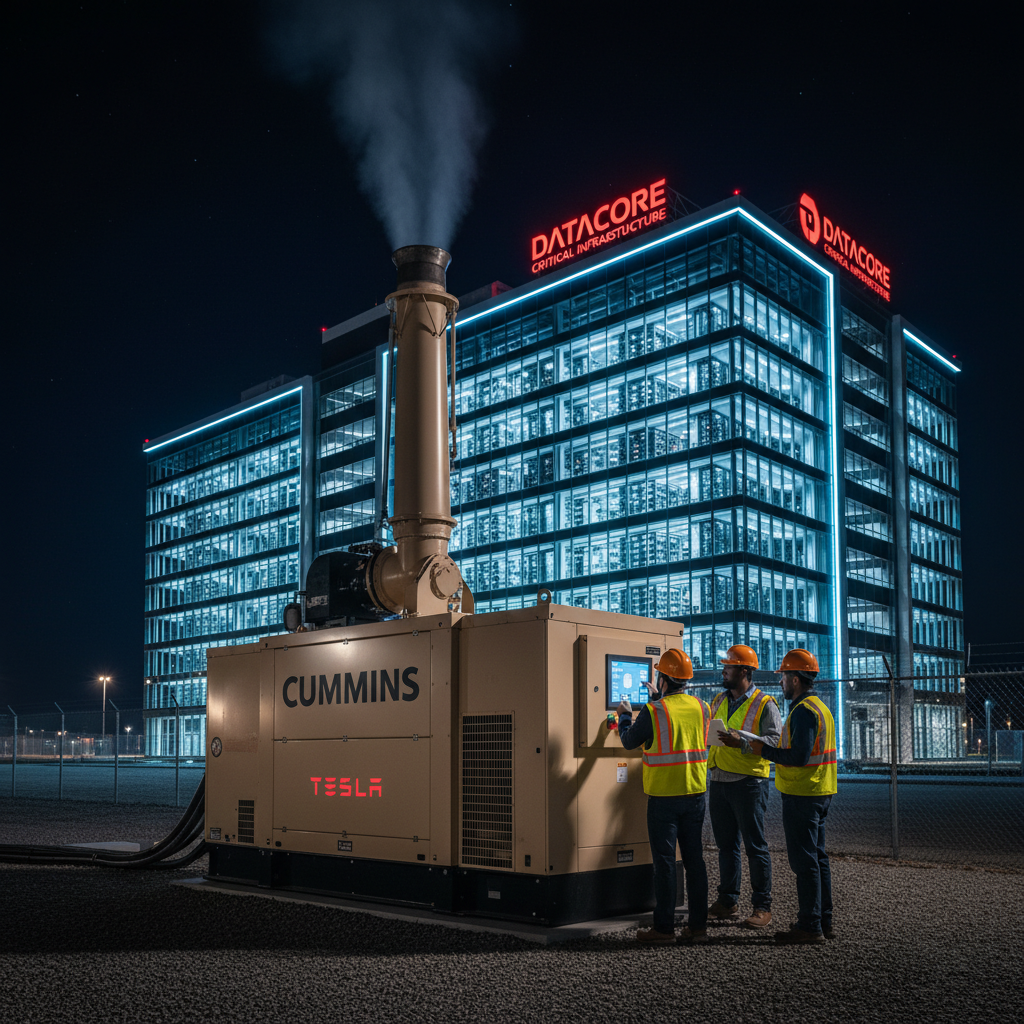
A generator assembly does not stop at the alternator terminals. Diesel installations are expected to use tanks listed to UL 142A or ULC-S601, and gaseous installations to comply with NFPA 54. Exhaust surface temperatures and the distance to combustible construction stay inside the evaluation, as does vibration testing of fuel hose assemblies, so a tidy hose routing on a drawing can still fail.
Emissions equipment adds another layer on Tier 4 sets. The third edition requires inducement override capability, so an SCR fault must not stop the engine when the set carries a life safety load. For Tesla Power the question starts with the declared duty, because an emissions strategy that is correct for a prime-power site can be wrong for a hospital.
Walk-in enclosures and working clearances
Walk-in enclosures are recognised as part of the assembly, not as a box delivered separately. Where a technician must enter the housing to wire, adjust or maintain equipment, the design has to meet the working-space rules for electrical equipment generally: Article 110.26 of NFPA 70 in the United States, and Rules 2-308 and 2-310 of the Canadian Electrical Code, Part I.
Clearance given up at design time stays a maintenance problem for the whole service life of the set. A maintenance interval written in running hours is only usable if a technician can reach every point on the list.
Worked example: reading a nameplate, a file number and a fault rating
Take a standby machine whose nameplate reads 200 kVA at 0.8 pf. At 0.8 pf the active power implied is 200 kVA × 0.8 = 160 kW, and the full-load current at 400 V, three phase, is 160 kW ÷ (√3 × 400 V × 0.8) = 288.7 A. Those three numbers have to agree with each other on the nameplate, because a kVA figure quoted without a power factor cannot be checked against a cable size.
The listing adds a fourth number: the short-circuit withstand rating of the assembly, expressed as a fault current at a tested level. If the coordination study for the site shows 25 kA available at the point of connection, an assembly rated below that figure is a mismatch no matter how large the engine is, and no amount of extra engine capacity buys back a panel that was never tested for the fault level it will actually see. Check the four numbers together before the submittal goes out.
Tesla Power Equipment publishes the same arithmetic. The 160 kW Cummins generator set is quoted at 160 kW / 200 kVA at 0.8 pf prime and 220 kVA standby, with frequency regulation within ±0.25 %, harmonic distortion below 2 % at no load and below 5 % on a balanced load, and transient response declared to ISO 8528 G3. The oil-change interval is 500 running hours and the overhaul window 20,000 to 30,000 running hours. Those are performance and service figures, not a safety listing.
How do ISO 8528-1 and NFPA 110 fit beside a UL listing?
Three standards get quoted together and answer three different questions. ISO 8528-1:2018 defines the ratings, the duty and the conditions a generating set is declared against, which is how a power number becomes checkable. NFPA 110 governs emergency and standby power systems at the installation level: what has to be tested, how often, and what the system must do when the utility supply fails. UL 2200 governs the product itself.
Tesla Power assembles to ISO 9001 quality management procedures and declares ratings against ISO 8528, treating the listing as a separate evaluation carried out by a certifying body in the destination market. Buyers importing into the United States settle duty and landed cost first, because the listing scope depends on the configuration actually ordered.
What to write into the enquiry so the listing is evidence
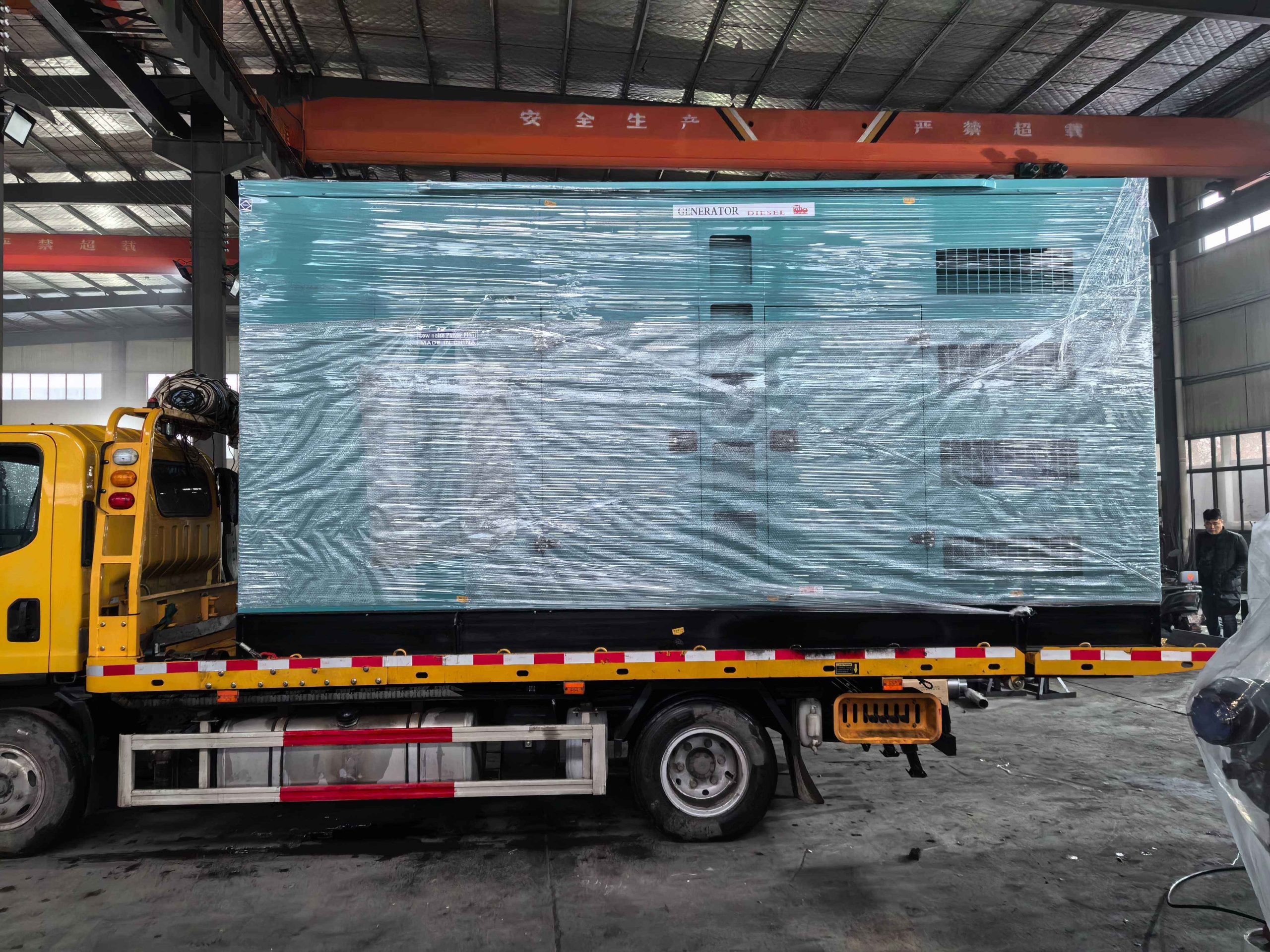
The cheapest time to settle a listing question is when the enquiry is written, not when the container is packed. Write the UL 2200 listing requirements into it as six items: the mark and its file number; the name of the certifying body; the edition the listing was issued against; a scope statement covering the controller, the enclosure and any switchgear; the fuel tank standard; and, above 600 V, the medium-voltage test record.
Tesla Power’s own submittals follow the same six items, and a supplier who can produce them has done this before. The ratings and engine options needed to complete the list are published on the product pages, and where the listing has to be issued in the destination market, send the target edition and the configuration with the enquiry and ask for a quotation against that scope rather than against a model number alone.
Frequently asked questions
Is a UL 2200 listing the same as a UL-approved generator?
No. UL publishes listing categories, and “approved” is not one of them. What a buyer can check is a listing mark with a file number issued by an OSHA-recognised testing laboratory, plus a scope statement naming the configuration. A component certificate or a mark printed without a number does not answer the question an inspector asks. Tesla Power treats the file number as the deliverable.
When did the third edition of UL 2200 take effect?
The third edition was published in 2020 and designated as a US and Canadian National Standard on 29 September 2020, with an effective date of 31 March 2026. Between those dates both editions could appear in submittals, so a listing issued before the effective date is not automatically wrong, but the edition should be named on the document.
Does a UL 2200 listing say anything about power output?
Very little. The standard is a safety evaluation of the assembly: wiring, grounding, short-circuit withstand, surface temperatures, control logic and enclosure construction. Output ratings and duty come from ISO 8528-1, and installed system performance is tested under NFPA 110. A listing says the machine is safe to install, not that it will hold voltage on a step load.
What changes for a generator set above 600 V?
Medium-voltage assemblies pick up clearance and creepage requirements, factory testing of the complete assembly, and coordination with UL 1558 switchgear and UL 347 controllers. On the installation side, NEC Article 490 and the arc-flash assessment under NFPA 70E apply. The practical rule is that the whole package must be listed as one assembly.
Are fuel tanks part of the generator listing?
Yes, when the tank is supplied with the set. Diesel installations are expected to use tanks listed to UL 142A or ULC-S601, and gaseous installations to comply with NFPA 54. Exhaust surface temperature and the distance to combustible material also sit inside the evaluation, along with vibration testing of the fuel hose assemblies.
Why does SCR matter on a standby generator?
On Tier 4 certified sets the third edition requires inducement override, meaning a fault in the selective catalytic reduction system must not shut the engine down while it carries a life safety load. Emissions logic that is correct for a prime-power site can therefore be unacceptable on a hospital set.
What should be copied off a listing before accepting delivery?
Six things: the mark and its file number, the certifying body, the edition, the scope statement covering controller and enclosure, the tank standard, and the medium-voltage test record above 600 V. The same discipline applies to the rest of the paperwork, as our notes on conformity documents for four import markets set out.
Can a walk-in enclosure be listed separately from the set?
Not usefully. The third edition recognises walk-in enclosures as part of the assembly and requires the working space inside them to meet Article 110.26 of NFPA 70, or Rules 2-308 and 2-310 of the Canadian Electrical Code, Part I. A housing bought separately and fitted later sits outside the listing.
Written by the engineering team at Yangzhou Tesla Power Equipment Co., Ltd. Generator sets are assembled to ISO 9001 quality management procedures, with engine options from Cummins, Perkins, Volvo, MTU, Weichai, Yuchai, Shangchai and Mitsubishi, and ratings declared against ISO 8528-1.