
A Cummins generator set data sheet names the engine model, the rated kW and kVA at 0.8 pf, and the ISO 8528-1 duty that sets the rating shown on the sheet.
Key takeaways
Every Cummins generator set data sheet answers five questions before a price matters: which engine drives the set, what output it delivers in kW and kVA at 0.8 pf, which ISO 8528-1 duty it carries, how fast it accepts load, and which emissions stage it meets. Yangzhou Tesla Power prints all five on one line per build.
- The engine model and the net set rating must sit on the same line so the two can be cross-checked.
- kW and kVA are both printed because apparent power, not just real power, sizes the breaker and cable.
- The ISO 8528-1 duty (COP, PRP, ESP, LTP, DCP, MAX) decides how the set may be loaded.
- The ISO 8528-5 transient class (G1–G4) decides how large a load step the set can take.
- The emissions stage tells you which markets the set may enter without retrofit.
Table of contents
- What a Cummins generator set data sheet must state first
- Which ISO 8528-1 rating defines the output?
- Why do kW and kVA appear together at 0.8 pf?
- How does the transient class set load acceptance?
- What does the emissions stage on the sheet tell you?
- Worked example: reading a 500 kW Cummins data sheet
- Which Cummins engine fits each rating band?
- What to check before you trust the sheet
- Frequently asked questions
What a Cummins generator set data sheet must state first
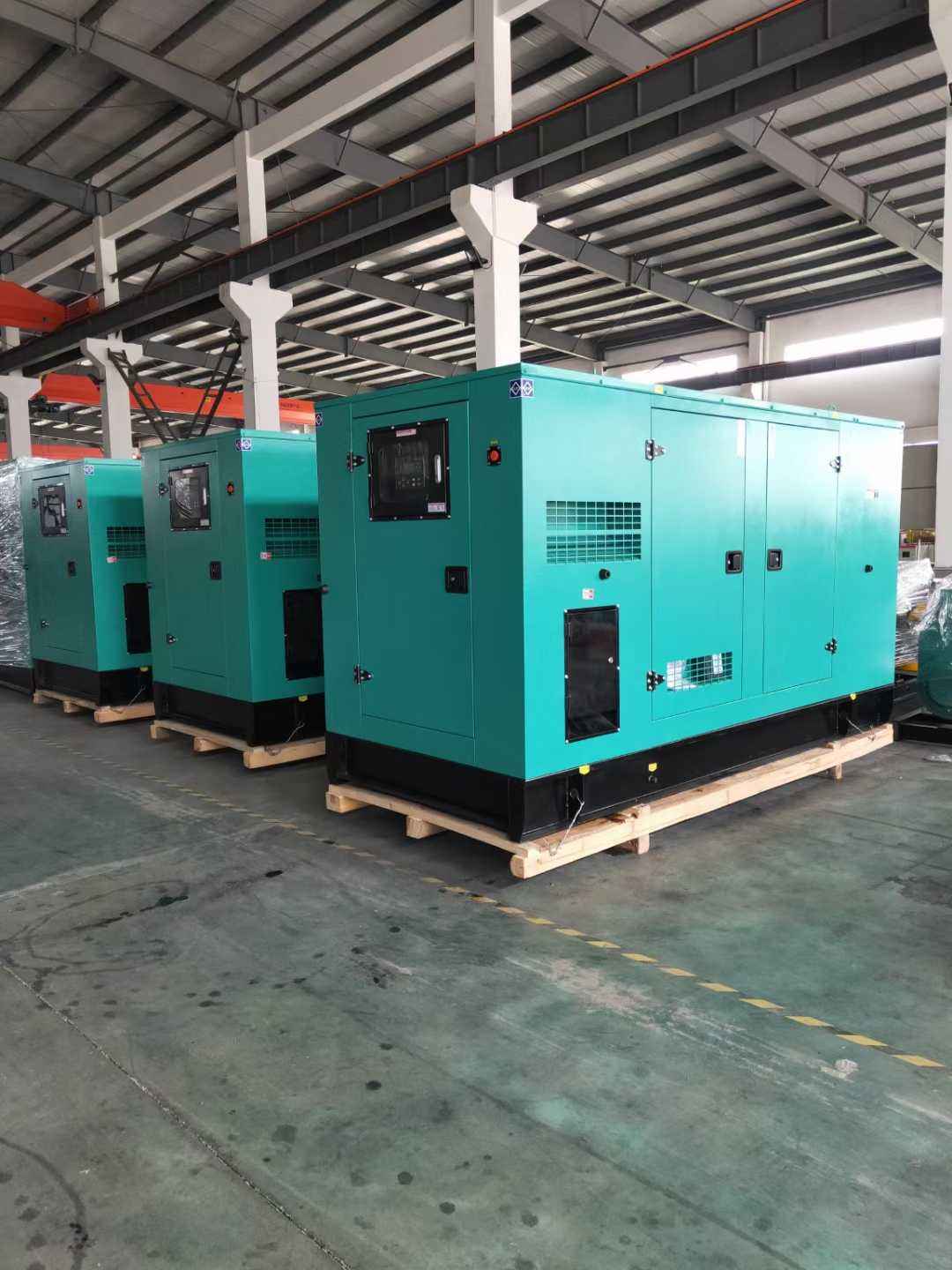
A Cummins generator set data sheet earns trust only when it prints the engine model and the net set rating on the same line, because those two facts decide whether every other number on the page can be verified against the engine maker’s own records. A buyer who cannot trace the engine has no way to contest a rating dispute, so this single line is the foundation of every comparison that follows. A genuine Cummins engine carries a serial that links the physical unit to its published rating, its published emission stage and its published warranty, and a sheet that separates the engine identity from the set rating is hiding the one check a buyer can actually perform. Tesla Power Equipment lists the Cummins engine model and the net set rating together for each build, so the two figures are checked against each other rather than read as competing claims from two suppliers.
The second line to read is the measurement condition, because a number without it is not a rating. Cummins quotes output below 1000 m and 25 °C, and a 500 kW set loses output on a hot or high site unless the sheet states the derating. Tesla Power documents the reference condition on the same page as the rating.
Which ISO 8528-1 rating defines the output?
ISO 8528-1 (the rating-definitions part of the generator-set standard, standard 68539) defines the output through six duty ratings — COP, PRP, LTP, ESP, DCP and MAX — and the printed rating decides how the set may be loaded. COP runs at constant load for unlimited hours; PRP carries a variable load with a 10% overload allowance; ESP covers up to 200 hours a year with no overload. The sheet must name the rating, because a set rated only for ESP cannot legally carry a PRP duty at the same figure.
COP, PRP, ESP and the rest
The four letters map to four different running lives, and a quotation that prints only “500 kW” without the duty is quoting a number that means four different things. A 500 kW PRP set is built to run every day; a 500 kW ESP set is built for the occasional outage, with its alternator and cooling sized to that lighter duty. Tesla Power states the ISO 8528-1 duty next to the rating on each product page.
The 10% overload allowance
The PRP rating carries a 10% overload allowance — 550 kW for one hour in every twelve at a 500 kW prime rating — and a sheet that quotes PRP should state this, because it is the headroom that covers motor starting and sudden load swings. ESP and LTP carry no such allowance, so a set sized to the exact running load on an ESP rating has no margin when a large motor kicks in.
Why do kW and kVA appear together at 0.8 pf?
kW and kVA appear together on a Cummins data sheet because they describe two different electrical quantities, and the power factor printed between them — normally 0.8 — links the two, so a quotation showing only one number hides half the specification. Real power in kW is the work the load does; apparent power in kVA is the current the alternator, breaker and cable must carry, and at 0.8 pf a 500 kW set is 625 kVA.
Apparent versus real power
The gap between kW and kVA is the reactive part of the load, and a sheet that prints 500 kW but omits the 625 kVA at 0.8 pf is asking the buyer to size the cable and breaker against the wrong number. A 400 kW set is 500 kVA at 0.8 pf; an 800 kW set is 1000 kVA at 0.8 pf. Tesla Power prints both figures on the same line for every Cummins build.
How does the transient class set load acceptance?
ISO 8528-5 (the transient and steady-state performance part of the generator-set standard, edition 2022) classifies sets into G1, G2, G3 and G4, and the class stated on the data sheet decides how large a load step the set can accept without the voltage or frequency leaving the permitted band, which is the real test of whether the set will start a motor or ride through a sudden load. G3, the class most data centres and hospitals require, holds a steady-state frequency band of ±0.5%, a steady-state voltage deviation of ±1%, a transient frequency deviation no worse than −15% / +10% for a diesel set, and recovers frequency within 3 seconds and voltage within 4 seconds after a step load per the ISO 8528-5:2022 limits. A sheet that names G3 promises a measurable recovery, not a vague claim of stability, and G2 covers general commercial loads while G1 suits simple loads with no strict limits.
| Class | Typical use | Steady-state frequency band | Transient frequency deviation (diesel) | Voltage recovery |
|---|---|---|---|---|
| G1 | Simple loads, no strict limits | ±2.0% | per ISO 8528-5:2022 | class limit |
| G2 | General commercial loads | ±1.0% | per ISO 8528-5:2022 | class limit |
| G3 | Data centres, hospitals | ±0.5% | −15% / +10% | ≤ 4 s |
| G4 | Critical, low-harmonic loads | tightest band | tightest band | fastest |
The class also decides the single-block load step: a 1000 kVA set at 0.8 pf accepts roughly a 47.2% load step in one block, while a 550 kVA set reaches 85.7% only when the load is split into three steps. A direct-on-line motor draws 450–850% of full-load current and 120–350% of full-load torque at start, so the transient class tells you whether the set will spin that motor up or stall. Tesla Power documents the class and the step result for each build.

What does the emissions stage on the sheet tell you?
The emissions stage on a Cummins data sheet tells you which markets the set may enter without a retrofit, because the same engine family ships in different configurations and the stage is a market gate, not a performance figure. In the EU the line is Regulation (EU) 2016/1628 with Stage V; in the United States it is EPA Tier 4 Final, and a set built to one stage cannot enter the other market without reconfiguration.
Stage V versus Tier 4
Stage V and Tier 4 Final are separate regulations with separate test cycles, and a sheet that claims “EPA certified” does not by itself satisfy a European Stage V requirement; the two must be stated as distinct facts. Tesla Power states the applicable emissions stage on the same page as the rating, so the buyer can confirm the set is legal for the intended country before ordering.
Worked example: reading a 500 kW Cummins data sheet
Take a data sheet that reads 500 kW PRP, 625 kVA at 0.8 pf, ISO 8528-5 G3, and run the figures so the comparison with another quotation is real rather than rhetorical. The set delivers 500 kW of real power, which is 625 kVA of apparent power at the stated 0.8 pf; the PRP duty allows a 10% overload of 550 kW for one hour in every twelve. At an average 60% load over 500 running hours the set delivers 300 kW, which is 150,000 kWh across the year, and at a measured 0.25 L/kWh that is 37,500 litres of diesel for the year. The arithmetic is 500 × 0.6 × 500 = 150,000 kWh, then 150,000 × 0.25 = 37,500 L, so the two offers can be compared on identical terms.
A second quotation that shows only “500 kW” and omits the kVA, the duty, the pf and the class cannot be compared with the first, because the missing numbers decide the breaker, the cable, the overload headroom and the motor-starting behaviour. The fuel figure of 37,500 litres and the 500 running hours are never the risk on a standby set; the missing specification is.
Which Cummins engine fits each rating band?
| Cummins engine | Rating at 0.8 pf | Typical duty |
|---|---|---|
| 4B3.9-G1 | 20 kW / 25 kVA at 0.8 pf | Small standby |
| 6BTA5.9-G2 | 100–400 kW / 125–500 kVA at 0.8 pf | Prime or standby |
| KTAA19-G6A | 500 kW / 625 kVA at 0.8 pf | Prime or standby |
| KTA38-G2B | 800 kW / 1000 kVA at 0.8 pf | Prime or standby |
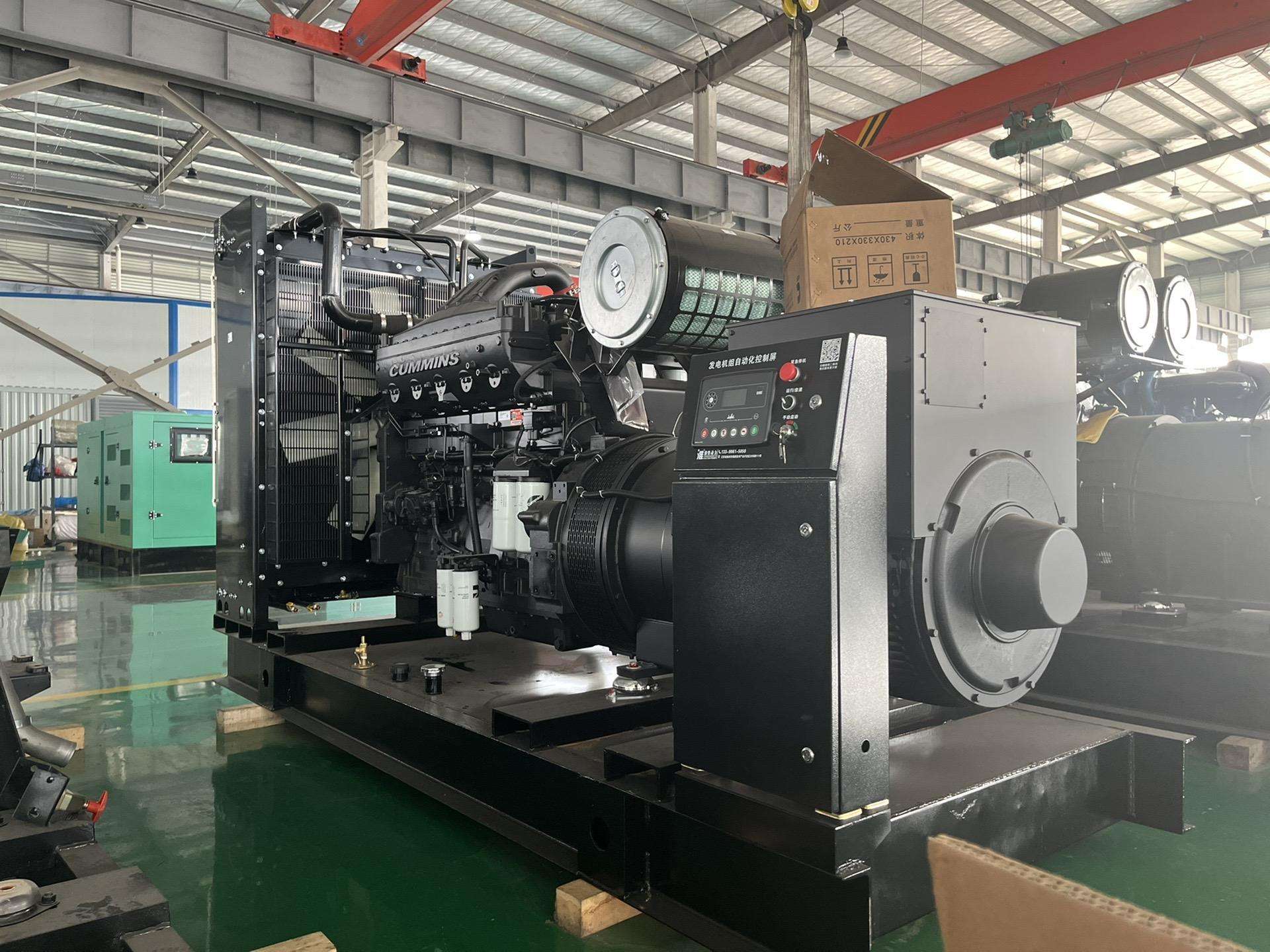
The engine ladder matters because a packager with only one or two Cummins families cannot cover a 20 kW to 800 kW span without misapplying a frame. Tesla Power packages Cummins engines across that span and lists the model against the rating on each product page in the Cummins product range. The full product archive shows the model and rating stated together for every build.
What to check before you trust the sheet
Before trusting any Cummins generator set data sheet, check five things in order: the engine model and serial trace to Cummins records, the rating carries a named ISO 8528-1 duty, the kW is paired with the kVA at a stated 0.8 pf, the ISO 8528-5 transient class is given with its recovery limits, and the emissions stage names the regulation for your market. A sheet missing any one of these is a brochure, not a specification. Read the wholesale guide for the checklist, and the components guide for which parts belong on the sheet.
Frequently asked questions
What is the difference between kW and kVA on a Cummins data sheet?
kW is the real power the load consumes, while kVA is the apparent power the alternator, breaker and cable must carry, and at 0.8 pf a 500 kW set is 625 kVA. The kVA figure sizes the upstream protection, so a sheet that shows only kW is hiding half the electrical specification.
Which ISO 8528-1 rating should a standby set carry?
A standby set normally carries ESP for up to 200 running hours a year, while a set that runs every day carries PRP with a 10% overload allowance. The data sheet must name the rating, because the same 500 kW means different duties under the two ratings. Match the rating to how often the set will actually run.
What does ISO 8528-5 G3 mean for load acceptance?
G3 holds a steady-state frequency band of ±0.5%, a steady-state voltage deviation of ±1%, and recovers frequency within 3 seconds and voltage within 4 seconds after a step load, with transient frequency no worse than −15% / +10% on a diesel set. Data centres and hospitals often require G3 because those limits let the set start large motors without tripping.
Why is the power factor 0.8 on most Cummins sheets?
0.8 is the reference power factor most generator sets are rated at, and it is the factor that converts real power to apparent power: kVA equals kW divided by 0.8. A 500 kW set at 0.8 pf is 625 kVA, and the sheet prints both so the cable and breaker are sized correctly.
Does the emissions stage limit where I can use the set?
Yes. The emissions stage is a market gate: Stage V applies under Regulation (EU) 2016/1628 in the EU, while EPA Tier 4 Final applies in the United States, and the two are separate regulations with separate test cycles. A set built to one stage may need reconfiguration to enter the other market’s regulated segment.
How do I confirm a Cummins engine on the sheet is genuine?
Confirm the engine serial against Cummins records, because every genuine Cummins engine carries a traceable number linking the unit to its rating, emission stage and warranty. A data sheet that separates the engine identity from the set rating, or cannot provide the serial, is asking you to accept a product no official channel will acknowledge. Request the serial on the quotation, not only on delivery.
What load step can a 1000 kVA set accept in one block?
Under ISO 8528-5 step-loading guidance a 1000 kVA set at 0.8 pf accepts roughly a 47.2% load step in a single block, while a 550 kVA set reaches about 85.7% only when the same load is split into three steps. The difference is why the transient class matters: a set that cannot take the step stalls when a large motor starts.
Next step: read the sheet against the load
The data sheet is the one document that turns a generator quotation into something an electrician and a compliance officer can both sign; the five lines — engine, kW and kVA at 0.8 pf, ISO 8528-1 duty, ISO 8528-5 class, emissions stage — decide every other number on the page. Send your duty, load list and site conditions to the Yangzhou Tesla Power export team through the contact page for a data-sheet review, and the reply states the Cummins engine model, the net set rating and the transient class for the build together, on one line.