
A 500 kVA Cummins diesel generator set is priced by engine tier, alternator, canopy and emissions kit, and Tesla Power itemises each driver before quoting.
Key Takeaways
Buyers should treat a 500 kVA Cummins quote as a bundle of separately priced subsystems rather than one figure, because the engine, alternator, enclosure and compliance move independently. The five drivers below shift any quote the most.
- The diesel engine and its rated power tier set the floor of the bill, not the final price.
- The brushless alternator, voltage class and efficiency band add a separate, measurable cost.
- Emissions compliance (EPA Tier 4 Final or EU Stage V) can change the exhaust line entirely.
- The enclosure, sound rating and installation scope decide most of the on-site cost.
- Controls, paralleling and an automatic transfer switch turn a machine into a working system.
What Determines a 500 kVA Cummins Generator Set Price?
Integrators quote the engine, the alternator, the canopy, the emissions kit and the control system for a 500 kVA Cummins generator set as separate line items, so two quotes at the same kVA can still differ by a wide margin. The rating itself is defined by ISO 8528-1, which separates Prime (PRP), Standby (ESP) and Continuous (COP) duties, and those definitions decide the engine margin; a full generator set data sheet makes the comparison concrete.
Engine Tier and Rating Define the Baseline
The diesel engine is the largest single cost block in any 500 kVA Cummins generator set, and its price is driven by the rated power, the duty cycle and the emissions stage. A 500 kVA set equals 400 kW at 0.8 pf, and a 400 kW / 500 kVA diesel generator set is the configuration most buyers in this class actually receive. At 50 Hz the engine runs at 1500 rpm and at 60 Hz it runs at 1800 rpm, and the speed class changes the block, the turbo and the governor. Yangzhou Tesla Power’s engineers price each duty rating against the same Cummins engine family, so the rating choice is the first lever a buyer controls. Cummins publishes the KTA38 and QSK38 engine families for this power class, and the exact model the buyer chooses sets both the capital cost and the service interval.
How Much Does the Alternator and Voltage Configuration Add?
The alternator is the second major cost block, and its price scales with the kVA, the voltage class and the efficiency band rather than with the engine. A typical brushless three-phase alternator for a 500 kVA set runs at 92-97% efficiency, and the gap between a standard and a premium winding adds a measurable line item. The standard voltage class at 50 Hz is 400 V / 230 V three-phase, while 60 Hz markets use 480 V / 277 V, and the switchgear and cabling change with that choice. A 500 kVA set at 400 kW therefore needs an alternator sized for the full 500 kVA nameplate at 0.8 pf, not just the 400 kW shaft power. Voltage regulation class also moves the alternator price: ISO 8528-1 defines governing and voltage bands, and a G3-class alternator for telecom or data-center loads costs more than a G2 unit for general loads.
Emissions Compliance: EPA Tier 4 and EU Stage V
Emissions compliance is the cost driver with the widest swing, because it can require a completely different exhaust after-treatment line. In the United States, EPA Tier 4 Final sets a nitrogen-oxide limit of 0.40 g/kWh and a particulate-matter limit of 0.025 g/kWh for the relevant power band, and meeting it usually means a diesel oxidation catalyst and a diesel particulate filter. In the European Union, Regulation (EU) 2016/1628 sets the Stage V limits that tighten particulate matter for the largest engines in this class, which pushes them toward selective catalytic reduction.
EU Stage V limits. EU Stage V, set out in Regulation (EU) 2016/1628, lowers particulate matter to about 0.015 g/kWh and applies across the European Economic Area. For a 500 kVA set below the largest-engine threshold the PM limit stays at 0.025 g/kWh, but many buyers still specify Stage V hardware for tender compliance. The selective catalytic reduction and diesel exhaust fluid system add both capital cost and a recurring fluid cost, and Tesla Power prices the urea tank and dosing module as a line item rather than burying it in the engine price.
Enclosure, Sound Level and Installation Scope
The enclosure is where on-site cost and neighbour complaints are decided, and it is priced separately from the bare machine. A well-designed silent canopy holds a diesel generator set within a 75-85 dB(A) range measured at 7 metres, and the acoustic package, the weather-proofing and the integral fuel tank all add to the price. An open skid is the cheapest option but is only legal and practical indoors with a separate plant room and an exhaust system. Tesla Power builds 500 kVA silent diesel generator set that ship as a single lift-and-connect package, which reduces installation labour even though the enclosure costs more than an open frame.
Installation scope is the cost item most often missed in a headline price, because it covers the concrete base, the exhaust silencer run, the fuel storage and the automatic transfer switch. NFPA 110 Type 10 requires an emergency standby set to reach rated load within 10 seconds, and meeting that rule means a tested ATS and a commissioning sequence, not just a wired connection. A 500 kVA installation in a data center or hospital therefore costs far more to commission than the same set dropped on a construction-site trailer, and buyers should compare total installed cost rather than the ex-works machine price.
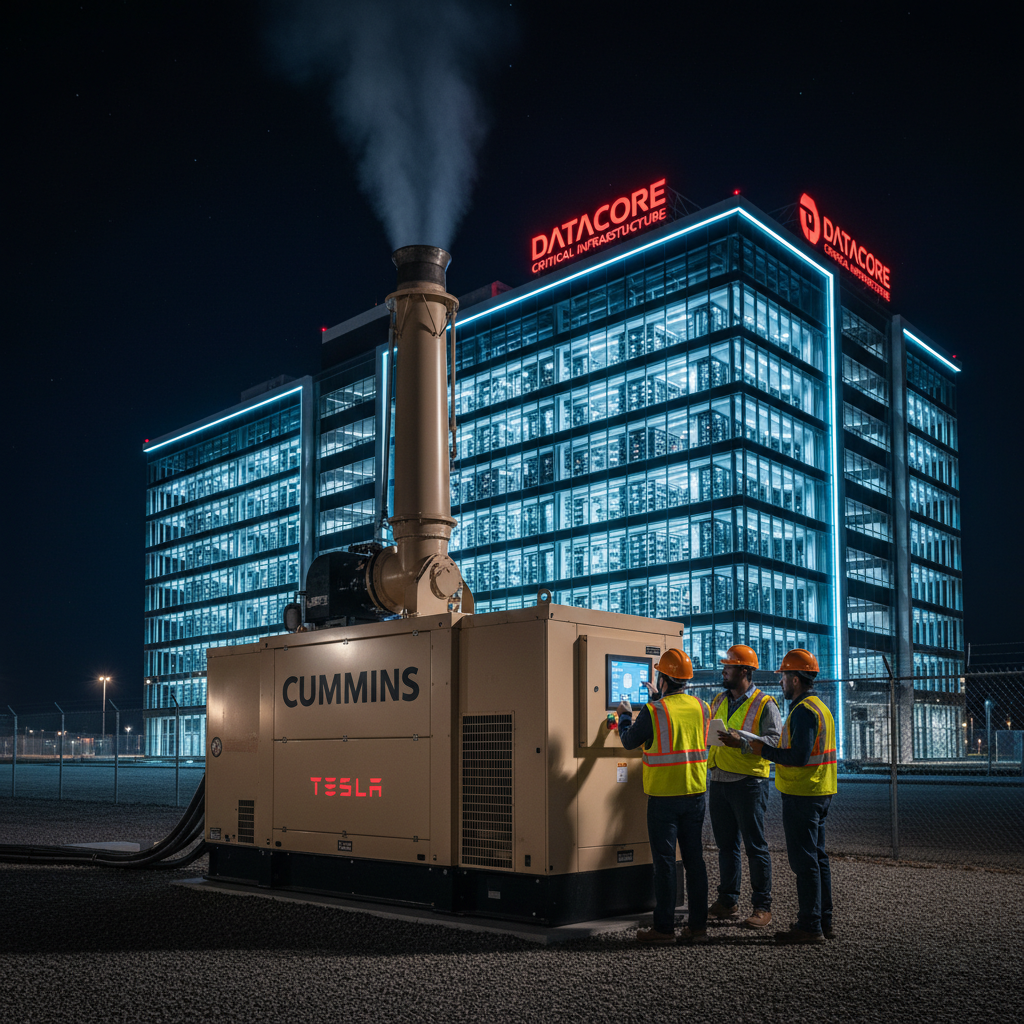
Fig 1. A standby diesel generator set in a data-center power room, where 10-second start capability is mandatory under NFPA 110.
Control Panel, Parallel Capability and ATS
The control system turns a running engine into a managed power source, and its price scales with how much autonomy the site needs. A basic set runs on a local controller with manual start and a single breaker, while a paralleling set needs a master controller, synchronising modules and protection relays that add a substantial line item. An automatic transfer switch is mandatory for any standby application governed by NFPA 110, and its amp rating at 400 V three-phase is sized from the 500 kVA / 400 kW nameplate at 0.8 pf rather than the shaft-power figure; the same sizing logic applies to a 250 kVA Cummins generator set for smaller sites. Tesla Power configures the controller, the ATS and the remote alarm contacts as one commissioned package so the set passes acceptance testing on the first visit.
Why synchronising controls cost more
Paralleling two or more 500 kVA sets for N+1 redundancy needs active load sharing and reverse-power protection, and that controller complexity is priced per node. A single-set installation avoids the synchronising modules entirely, so the control line drops to a local panel with alarm contacts. Buyers who only need emergency backup for one building rarely need paralleling, and specifying it anyway is a common way to inflate a quote without adding usable reliability. Matching the control scope to the duty is the cheapest optimisation available before any component is ordered, and a scheduled generator set B-check service keeps it that way.
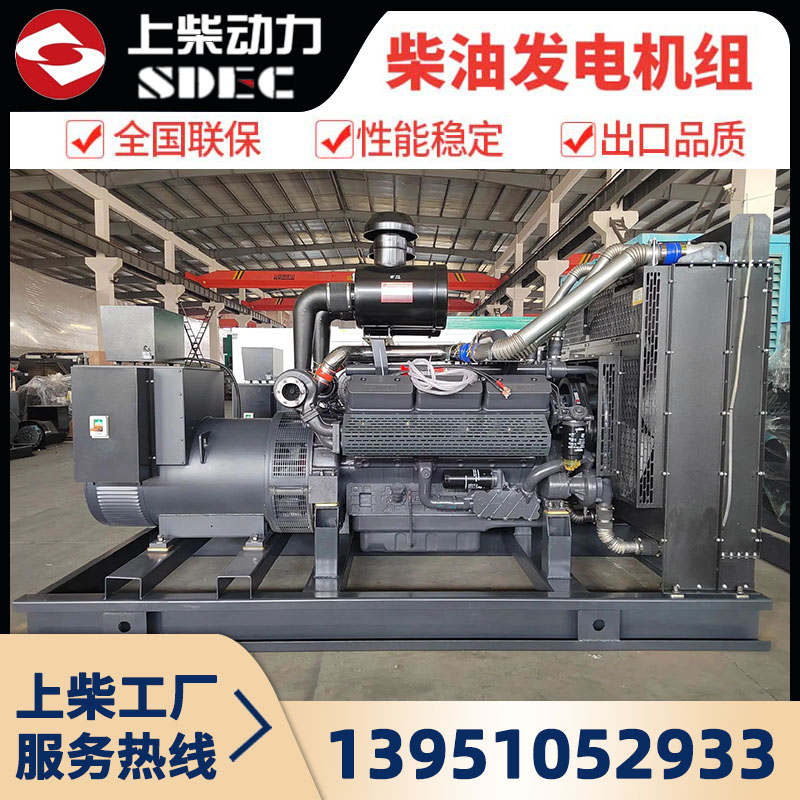
Fig 2. A sound-attenuated enclosure keeps a diesel generator set within a 75-85 dB(A) range measured at 7 metres.
Why Does the Same 500 kVA Rating Vary So Much?
Two quotes for a 500 kVA Cummins generator set can look identical on paper and differ by a wide margin because the rating, the emissions stage and the enclosure are quoted at different duty and compliance levels. One supplier may quote an ESP-rated open skid with a base alternator and no after-treatment, while another quotes a COP-rated silent container with EPA Tier 4 Final and paralleling controls. Both are legitimately 500 kVA, but only one meets a hospital or data-center specification, and the cheaper line is often the one that fails the site’s actual rule. Yangzhou Tesla Power’s quotes state the rating, the emissions stage and the enclosure up front so the comparison is honest.
A Worked Cost-Driver Example: 500 kVA / 400 kW at 0.8 pf
A 500 kVA set equals 400 kW at 0.8 pf, a relationship fixed by the convention used across the diesel generator industry for standby and prime ratings. Working the conversion the other way, a buyer who needs 400 kW of real power must specify a 500 kVA alternator, since dividing 400 kW by 0.8 pf gives 500 kVA and any smaller alternator would be overloaded. At full load that set burns roughly 0.21 L/kWh of diesel as a typical figure for this power class, so 400 kW for one hour consumes about 84 litres, a number the fuel tank and the runtime requirement are then sized against. Stating the power factor, the fuel rate and the runtime turns a vague price question into a buildable specification that any supplier can quote against.
| Cost driver | What changes the price | Standard or figure that applies |
|---|---|---|
| Engine tier | PRP / ESP / COP duty, block size, engine speed | 1500 rpm at 50 Hz; 1800 rpm at 60 Hz |
| Alternator | Efficiency band, voltage class, regulation class | 92-97% efficiency; ISO 8528-5 G2 or G3 |
| Emissions | DOC + DPF, SCR and DEF system | EPA Tier 4 Final; EU Stage V |
| Enclosure | Open skid versus silent canopy or container | 75-85 dB(A) at 7 m for silent type |
| Controls | Local panel versus paralleling with ATS | NFPA 110 Type 10, 10-second start |
Common Mistakes When Comparing Quotes
The first mistake is comparing only the kVA number and ignoring the duty rating, because an ESP set and a COP set at 500 kVA are built to different margins and different prices. The second is accepting a headline price that excludes the automatic transfer switch, the exhaust run and the concrete base, all of which NFPA 110 treats as part of a compliant standby installation. The third is assuming a cheaper emissions stage is acceptable, when the destination market may legally require EPA Tier 4 Final or EU Stage V regardless of the buyer’s preference. Tesla Power’s sales engineers flag these gaps during a sizing call rather than after a failed acceptance test.
Confusing kVA with kW
Confusing kVA with kW is the error that most often produces a wrongly sized and wrongly priced set, because a 500 kVA nameplate delivers only 400 kW at 0.8 pf. A buyer who needs 500 kW of real power has actually specified a 625 kVA alternator, because 500 kW divided by 0.8 pf equals 625 kVA, and quoting the smaller 500 kVA unit would overload it under load. Always confirm whether the quoted figure is apparent power or real power, and ask the supplier to state the power factor so the comparison is on the same basis. This single check prevents both under-sizing and a surprise price revision after the order is placed, and it is the first thing a sizing engineer asks for on a real enquiry.
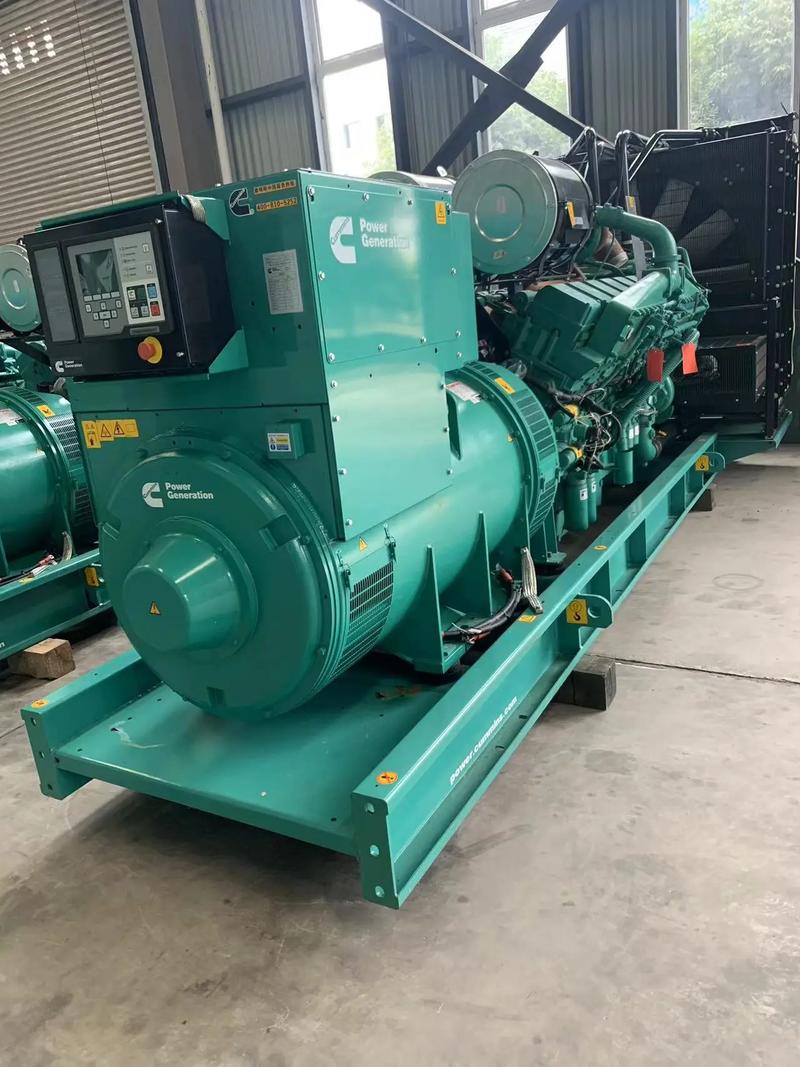
Fig 3. A permanently installed industrial generator set on a factory floor, wired through an automatic transfer switch.
Frequently Asked Questions
Why is a 500 kVA Cummins set priced as separate subsystems?
A 500 kVA set is built from an engine, an alternator, an enclosure, an emissions line and a control system that are sourced and priced independently. Two quotes at the same kVA differ because each supplier mixes those tiers differently, so a single total price hides what the buyer is actually getting. Comparing the subsystem line items is the only way to judge value fairly, and a generator set data sheet is the document that makes each line visible.
How are kVA and kW related at 500 kVA?
A 500 kVA diesel generator set delivers 400 kW of real power because the industry ratings use 0.8 pf. A 400 kW load therefore needs a 500 kVA alternator, which you reach by dividing the required kW by 0.8 pf. Always confirm whether a quote states apparent power or real power before comparing two suppliers, because the two numbers are not interchangeable.
Does EPA Tier 4 Final raise the price?
EPA Tier 4 Final raises the price because it sets a 0.40 g/kWh NOx limit and a 0.025 g/kWh PM limit that require a diesel oxidation catalyst and a diesel particulate filter. Those components, their sensors and the fuel-quality requirement are priced as a separate exhaust subsystem. Sets exported to North America must carry this compliance, so the cost is unavoidable there regardless of the buyer’s preference.
Is an automatic transfer switch included in the price?
An automatic transfer switch is not included in most ex-works machine prices, yet NFPA 110 requires one for any emergency standby application with a 10-second start target. The ATS is sized from the 500 kVA nameplate at 400 V three-phase and is priced as its own line item. Always ask whether the quote covers the switch, the exhaust run and the base before accepting a headline figure, because those are the items that fail acceptance testing.
How fast must a standby set reach full load?
NFPA 110 Type 10 requires an emergency standby diesel generator set to reach rated load within 10 seconds of a utility failure, which drives the starter, the governor and the commissioning test. A 500 kVA set that cannot demonstrate this on acceptance testing fails the standard, so the control system and the ATS must be commissioned together. Specify Type 10 explicitly when the application is life-safety, because the rule is part of the quoted compliance.
Which rating should a 500 kVA buyer choose?
A 500 kVA buyer should choose the ISO 8528-1 rating that matches the duty: PRP for variable prime loads, ESP for emergency standby with a 10% overload allowance, and COP for continuous base load. Choosing COP when only ESP is needed adds cost for margin that is never used, while choosing ESP for a continuous duty under-specs the set. State the duty hours before requesting a quote, and confirm the rating with your generator set manufacturer so the comparison stays on the same basis.
Conclusion
A 500 kVA Cummins generator set is priced by five independently moving subsystems, not by a single kVA number, so the fair comparison is the line item list rather than the headline. Confirm the ISO 8528-1 duty, the alternator efficiency band, the emissions stage and the enclosure before you weigh two bids, and always include the automatic transfer switch and commissioning in the total installed cost. The factory publishes a per-model data sheet for every 500 kVA configuration so the quote matches the specification you actually need.
Get a sized quote for your load list and duty hours from Yangzhou Tesla Power, and ask your generator set manufacturer to return a line-item breakdown rather than a single unexplained number.