
Cummins KTA19-G4 Generator Set: 500 kVA Rating
The Cummins KTA19-G4 generator set delivers 500 kVA prime and 550 kVA standby output from an 18.9 L six-cylinder engine at 50 Hz.
Key Takeaways
The Cummins KTA19-G4 is a 500 kVA prime and 550 kVA standby generator set built around an 18.9 L six-cylinder Cummins engine, supplied by Tesla Power. It serves prime and standby duty at 50 Hz, burns about 107 L/h at full load, and pairs with a 0.8 pf alternator. Confirm the rating, fuel envelope and cooling layout before you request a quotation.
- 500 kVA prime and 550 kVA standby output at 50 Hz, running at 1500 rpm.
- 18.9 L displacement, six cylinders, 159 mm bore and stroke, 13.9:1 compression ratio.
- Roughly 107 L/h at 100% load and 57 L/h at 50% load on diesel.
- Prime rating allows a 10% overload for one hour in twelve under ISO 8528-1.
Table of Contents
- What Is the Cummins KTA19-G4 Generator Set?
- How Much Power Does the KTA19-G4 Actually Deliver?
- Engine Architecture and Displacement
- How Are Prime and Standby Ratings Defined?
- What Does Fuel Consumption Look Like at Load?
- Worked Example: Sizing a KTA19-G4 for a Site
- Cooling, Airflow and Installation Requirements
- Common Mistakes When Specifying This Engine
- Frequently Asked Questions
What Is the Cummins KTA19-G4 Generator Set?
Tesla Power supplies the Cummins KTA19-G4 generator set as a 500 kVA prime, 550 kVA standby diesel genset built on the Cummins KTA19-G4 inline-six engine. The package couples that 18.9 L engine to a brushless alternator via an electronic governor, producing 400 kW prime and 440 kW standby at 0.8 pf. It ships open-frame or in a sound-attenuated enclosure with the radiator, base tank and control panel sized to the same continuous duty. Because the rating follows ISO 8528-1, the numbers mean the same thing to any engineer who reads the datasheet, removing the ambiguity around generic “500 kVA” claims from unknown builders.
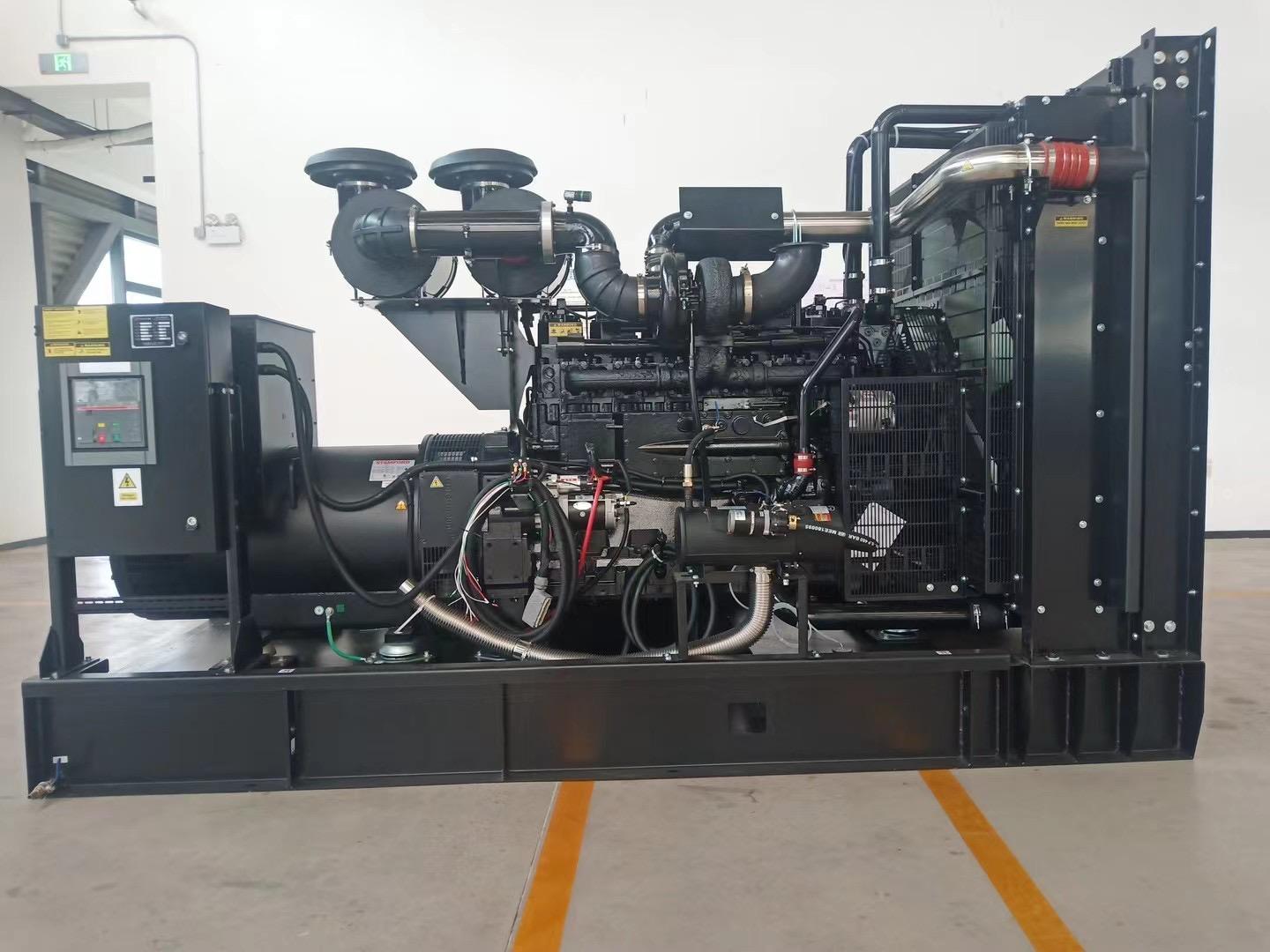
The KTA19-G4 sits in the mid-range of the Cummins generator-drive family, above the 6B/6C platforms and below the V-block QSK series. That position is deliberate: large enough for a serious standby role yet compact enough to ship in a standard container without special permits. The practical value is predictability — the engine, cooling package and ratings are all documented by Cummins, so the set can be specified and commissioned without custom engineering.
How Much Power Does the KTA19-G4 Actually Deliver?
The Cummins KTA19-G4 generator set is rated 500 kVA prime and 550 kVA standby at 50 Hz, which equals 400 kW and 440 kW at 0.8 pf. Those two numbers are not interchangeable: prime power (PRP) covers variable loads for unlimited annual hours with a 10% overload allowance for one hour in any twelve, while standby power (ESP) covers emergency use up to 200 hours per year with no overload. A site that runs the set as its only source on a normal working day must size to the 500 kVA prime figure, not the higher standby figure, because the 50 Hz and 60 Hz versions are different machines with different outputs even though they share the KTA19-G4 name.

Below the headline figures, the real question is how much load the set can hold hour after hour. A 500 kVA prime set is comfortable at 400 kW continuous at 0.8 pf, and the 10% overload band gives headroom for motor starting surges that briefly exceed the running load. That is why the KTA19-G4 suits sites with a few large motors rather than a perfectly smooth load.
Engine Architecture and Displacement
The Cummins KTA19-G4 is an 18.9 L, six-cylinder, inline four-stroke diesel with bore and stroke both at 159 mm and a compression ratio of 13.9:1, figures published in the Cummins KTA19-G4 Coolpac specification sheet. This is a turbocharged and aftercooled “G-drive” engine, tuned for generator duty rather than on-highway use. The 18.9 L displacement gives each cylinder close to 3.15 L, which supports strong low-speed torque at 1500 rpm. The architecture sets the servicing envelope: the engine carries a 50 L lube oil sump and a 93 L cooling system filled 50/50 with ethylene glycol and water, both of which must be budgeted into the maintenance plan.
The inline-six layout keeps the footprint narrow compared with a V-block alternative, which helps in a tight plant room. Cummins uses its PT fuel system with direct injection, and the starting circuit is 24V negative-ground, matching standard industrial battery banks. None of these details change the rating, but they decide whether the set fits your building and service routine.
How Are Prime and Standby Ratings Defined?
Prime and standby ratings for the Cummins KTA19-G4 generator set follow ISO 8528-1, the standard that defines how generator output is measured and what duty each rating permits. Under that standard, prime power (PRP) is the variable-load rating for unlimited annual operating hours, while standby power (ESP) is reserved for emergency supply with a strict annual hour cap. The distinction protects the engine: running a set at standby output every day shortens its life because the rating was never meant for continuous service. The table below fixes the two ratings this article uses, both quoted at 0.8 power factor and 50 Hz from the Cummins published Coolpac data.
| Rating (ISO 8528-1) | kVA | kW at 0.8 pf | Duty limit |
|---|---|---|---|
| Standby (ESP) | 550 kVA | 440 kW @ 0.8 pf | Up to 200 h/year, no overload |
| Prime (PRP) | 500 kVA | 400 kW @ 0.8 pf | Unlimited hours, 10% overload 1 h/12 h |
Because the two ratings sit side by side, the single most common error is quoting the higher standby number as if it were the daily working capacity. It is not. When Tesla Power or any supplier sizes a set for continuous site power, the 500 kVA prime figure is the one that governs, and the 550 kVA standby figure is the one that governs only for true backup duty.
What Does Fuel Consumption Look Like at Load?
The Cummins KTA19-G4 generator set burns diesel in proportion to the load it carries; the curve below shows typical consumption from published KTA19-G4 data at 50 Hz. At 100% load the set uses about 107 L/h, falling to roughly 82 L/h at 75%, 57 L/h at 50% and 30 L/h at 25%. That is approximately 197 g/kWh at full load, reflecting the engine’s aftercooled combustion. A set sized with margin runs leaner than one pinned near its maximum all day, so size the tank against the expected running load rather than the peak rating.
If your site cares about operating cost, the curve argues for a set that sits around 70-80% load in normal operation rather than one loafing at 30%. No diesel likes long periods at very light load, where wet-stacking and carbon build-up become a service issue.
Worked Example: Sizing a KTA19-G4 for a Site
Sizing the Cummins KTA19-G4 generator set starts from the real load list, not the catalogue rating — the approach Tesla Power uses for every quotation. Take a workshop whose loads sum to 320 kW at a 0.8 power factor. Convert to apparent power at 0.8 pf: 320 kW divided by 0.8 equals 400 kVA. Apply a 25% margin for growth and motor starting: 400 kVA multiplied by 1.25 equals 500 kVA. The result lands exactly on the 500 kVA prime rating of the KTA19-G4 at 0.8 pf, so the set covers the current 320 kW load without exceeding prime power. A 320 kW / 400 kVA base load at 0.8 pf is the natural fit for this engine class.
Note the discipline in the steps: convert kW to kVA at the stated power factor, add the margin, then select the rating — never the reverse. If you start from the 500 kVA nameplate and work backwards you can easily overstate what the site can actually carry, which is why Tesla Power’s application team always converts from the load list first.
Cooling, Airflow and Installation Requirements
The Cummins KTA19-G4 generator set rejects several kilowatts of heat through its radiator, and that heat must leave the plant room or the set will derate. At 50 Hz the radiator fan draws about 9.91 m3/s of air, so the intake louvre and discharge path must pass that volume without forcing hot air to recirculate. A common field failure is a short discharge duct that dumps warm air where the intake can pick it up, eroding output every cycle. The cooling system holds 93 L of 50/50 glycol-water, and the installer should confirm the radiator face area, louvre free area and duct length before commissioning, leaving the manufacturer’s specified clearances on all four sides.
For tropical or high-altitude sites, remember that the rating already assumes a limiting ambient near 50°C, but altitude still costs output. If the site sits above 1000 m, ask Tesla Power for the altitude-derated figure rather than assuming the sea-level 500 kVA holds, because a derated set will trip on hot afternoons.
Common Mistakes When Specifying This Engine
The first mistake with the Cummins KTA19-G4 generator set is quoting standby kVA as if it were prime, which overstates daily capacity by 10% and removes the reserve overload margin. The second is mixing 50 Hz and 60 Hz ratings, since the 1500 rpm and 1800 rpm versions are different configurations. The third is ignoring the cooling envelope: a perfect set on paper still derates if the plant room cannot move roughly 10 m3/s of air. The fourth is sizing to the nameplate instead of the load list, which wastes capital or strands the site at its limit. Read the Cummins RFQ checklist from Tesla Power Equipment before you issue the enquiry.
Frequently Asked Questions
What does KTA19-G4 stand for?
KTA19-G4 is Cummins’ model code for a 19-litre, turbocharged and aftercooled “G-drive” engine in the K-series, with G4 marking the generator-drive rating tier. The KTA denotes the K-series engine family, the 19 is the approximate displacement in litres, and G4 is the application suffix for generator sets. The suffix is what tells you the unit is tuned for stable generator duty rather than vehicular use.
Is the KTA19-G4 a prime or standby generator?
It is both, because the same engine carries two ISO 8528-1 ratings: 500 kVA prime and 550 kVA standby at 50 Hz. Prime power is for variable daily loads with unlimited hours, while standby is for emergency backup capped at about 200 hours per year. You choose the rating that matches your duty, but must not run the set at the higher standby figure every day, since that duty shortens engine life and is outside the standard’s intent.
How much fuel does a KTA19-G4 genset use per hour?
At 50 Hz the set burns about 107 L/h at 100% load, 82 L/h at 75%, 57 L/h at 50% and 30 L/h at 25%, figures taken from published KTA19-G4 data. In specific terms that is roughly 197 g/kWh at full load. The number you should budget against is the running load, not the peak, because partial-load operation is far cheaper per hour and avoids the wet-stacking that light-load running can cause over time.
What alternator power factor applies?
The KTA19-G4 is matched to a brushless alternator at 0.8 pf, which is why 500 kVA equals 400 kW and 550 kVA equals 440 kW in this article. If your load is unusually reactive, the alternator’s kVAR rating becomes the binding limit rather than its kVA, so confirm the power factor of the real load. Our power factor guide explains when compensation is worth adding.
Can the KTA19-G4 run at 60 Hz?
Yes, but the 60 Hz version runs at 1800 rpm and carries a different output than the 50 Hz version discussed here, so the two are not interchangeable sets. If your grid or export market is 60 Hz, specify the 1800 rpm configuration and quote its own Coolpac ratings rather than assuming the 500/550 kVA figures apply. Mixing the two is one of the most expensive errors at commissioning, because the wrong-frequency set cannot simply be “retuned” in the field.
How do I size a KTA19-G4 for my load?
Sum the real load list in kW, divide by the 0.8 power factor to reach kVA, then add a 20-25% margin for growth and motor starting before selecting the rating. A 320 kW load at 0.8 pf becomes 400 kVA, and with a 25% margin that lands on the 500 kVA prime set exactly. Avoid sizing backwards from the nameplate, and read the motor-load sizing guide if large motors are part of the load, since starting inrush can exceed the running total.
What cooling and airflow does it need?
The radiator fan moves about 9.91 m3/s of air at 50 Hz, so the intake louvre and discharge duct must pass that volume without recirculation. The cooling system holds 93 L of 50/50 glycol-water, and the plant room needs the manufacturer’s specified clearances on all sides for service access. If the discharge air can loop back to the intake, room temperature climbs on every cycle and the set derates quietly but steadily, so the duct layout matters as much as the engine rating.
Is the KTA19-G4 suitable for hot or high sites?
The Coolpac data assumes a limiting ambient near 50°C, so heat alone is rarely the binding constraint at sea level, but altitude still costs output above roughly 1000 m. For a high-altitude or consistently hot site, request the altitude-derated figure instead of trusting the sea-level 500 kVA, because a derated set sized to the nameplate will trip on the hottest afternoons. Your supplier can confirm the derated number for your elevation.
Conclusion
The Cummins KTA19-G4 generator set is a well-documented 500 kVA prime, 550 kVA standby platform whose ratings, displacement, fuel curve and cooling envelope are all fixed by Cummins data rather than guesswork. Size it from your load list at 0.8 pf, keep the duty inside the prime rating, and it will carry the role without surprises. Tesla Power Equipment can supply this engine open-frame or enclosed, with the alternator, tank and controller matched to your site, and our team will confirm the altitude-derated output before you commit. Contact us with your load list for a written specification, or browse the full product range to compare platforms.