
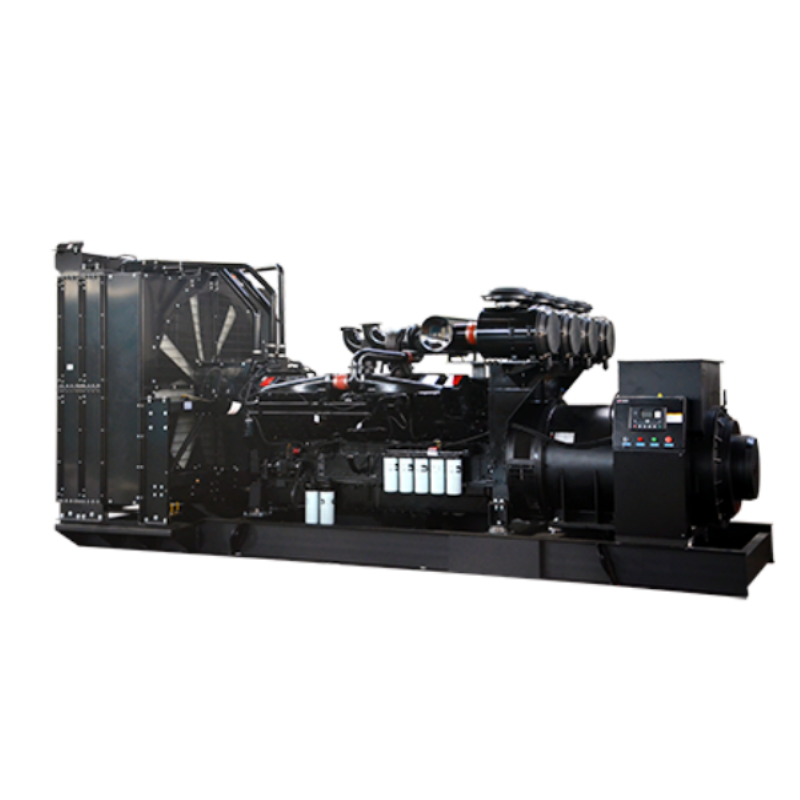
Factory motor loads need more attention than a simple running-kW total. Before asking for a quotation, the purchaser should separate running load, largest motor starting load, duty requirement, voltage, frequency, and the transfer method. This helps the supplier size a diesel generator set without guessing at the real starting demand.
What buyers should know first
Many workshops list every motor nameplate and then request one generator size. That can oversize or undersize the set. The engineer should identify which motors start together, which motors can be delayed, and whether soft starters or VFDs are already installed. For a related sizing reference, see how to size a diesel generator for industrial backup power.
Load information to send with the enquiry
| Item to confirm | Why it matters | Practical note |
|---|---|---|
| Running kW and kVA | Shows the base electrical demand | List continuous and intermittent equipment separately |
| Largest motor start | Controls voltage dip and alternator response | State DOL, star-delta, soft starter, or VFD |
| Duty mode | Affects engine rating selection | Compare with prime and standby rating notes |
| Voltage and frequency | Determines alternator and control setting | Confirm 50Hz or 60Hz before quotation |
| Transfer scope | Defines control and switchgear work | Review ATS requirements early |
Where this configuration usually fits
A mid-range diesel generator with ATS can suit workshops, packaging lines, pumps, air compressors, and emergency lighting when the start sequence is controlled. A live product example is this 100 kW to 400 kW Cummins diesel generator set with ATS. Treat the product page as a configuration reference, then confirm the final rating against your load list.
Mistakes to avoid
- Quoting only the sum of motor nameplates without stating the starting method.
- Mixing standby and prime duty without telling the supplier the expected running hours.
- Leaving out compressor, pump, crane, welding, or elevator starting loads.
- Requesting ATS without confirming mains voltage, poles, cable entry, and installation location.
- Assuming a 50Hz set can be used on a 60Hz project without alternator and control confirmation.
Before requesting a quotation
Send the single-line diagram if available, a load schedule, site altitude and ambient temperature, required enclosure type, fuel tank preference, and any switchgear boundary. If the generator will support production loads, ask the supplier to identify assumptions in the offer so the project engineer can verify them before ordering.
Questions purchasers often ask
Should every factory motor be included at full load?
No. Include all connected loads, but separate loads that run together from loads that can be staged. This gives the supplier a more useful basis for sizing.
Is kW or kVA more important for the enquiry?
Both are needed. kW reflects real power, while kVA and power factor affect alternator and current capacity.
Can ATS be quoted later?
It can, but early ATS information avoids control-panel mismatch and cable-entry surprises.
What if the largest motor starts only occasionally?
State the starting frequency and method. Occasional high inrush can still decide the alternator and engine response requirement.
Should the supplier choose prime or standby rating?
The supplier can recommend, but the purchaser must state expected running hours and whether the generator is backup or regular site power.