
A diesel genset generator price is built from line items, not one number. This guide shows how each line shifts the quote and what to verify before buying.
Two suppliers can quote the same rating for different builds. Gaps come from the engine, alternator, enclosure, controls, test level and freight terms; each line earns its place or loads the total. Yangzhou Tesla Power’s 20 kW Cummins set with ATS is rated 25 kVA at power factor 0.8.
- The engine and alternator set the floor. They carry the largest share of the ex-works price; everything else adjusts the total around them.
- The rating class changes the machine. Standby 220 kVA and prime 200 kVA at power factor 0.8 are different builds, not different stickers.
- Paperwork is a priced line. Test reports, ISO 8528-1 declarations and origin documents cost engineering hours; ask for them in writing.
- Freight terms decide the landed price. An ex-works price and a CIF quote compare only after the packing method is fixed.
What actually sets a diesel genset generator price apart?
A genset is four assemblies on one skid — engine, alternator, enclosure and control system — plus packing, paperwork and freight. Prices are built assembly by assembly, which is why two quotations for the same rating can land far apart without either side being dishonest. Find where the two numbers differ, then decide which difference is worth paying for.
On a standby set rated 160 kW / 200 kVA at power factor 0.8, the engine and alternator carry the largest share of the ex-works cost, and the enclosure, controls, works testing and packing adjust the total by a smaller but still visible margin. Yangzhou Tesla Power’s published specification for its 160 kW Cummins QSL9-G5 set shows how much of that content is fixed before negotiation starts: a turbocharged, charge-air-cooled in-line six with high-pressure common rail injection, a brushless self-excited alternator with a digital AVR, and a prime declaration of 200 kVA against a standby declaration of 220 kVA, both at power factor 0.8. None of that content is optional on a working site, and none of it shows up in a bare kW figure, so once you know what a complete set contains, an incomplete quote announces itself on the first reading.
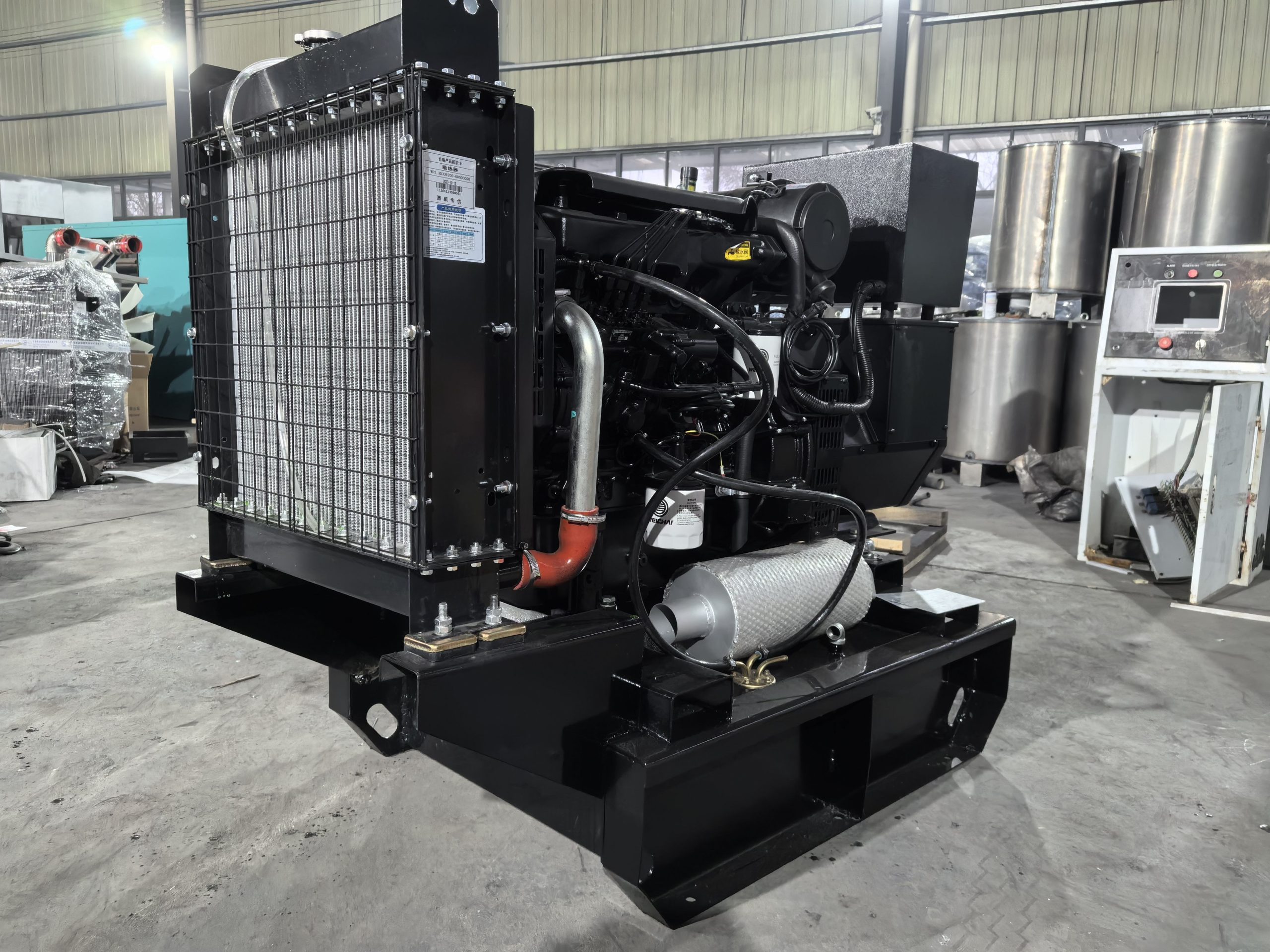
Open-frame sets skip the canopy, so they cost less to build and less to ship, while silent and containerised versions buy noise control and weather protection. Neither is cheaper in absolute terms; each is cheaper for a different site.
How much of the price sit in the engine and alternator?
The engine is normally the single largest line on the quote, and the alternator is next, so the diesel genset generator price usually opens with those two numbers. What moves the engine line is not a mystery: engine family and displacement, the declared rating class, whether the block is imported or built under licence, and the emissions hardware the destination market requires. Ask for the engine model in writing — a Cummins QSL9-G5 rather than a vague 160 kW class engine.
Emissions rules belong in the same conversation. Where the importing country enforces Stage V requirements under Regulation (EU) 2016/1628, or US EPA Tier 4 Final requirements, the aftertreatment hardware and its calibration appear on the quote as real cost. Where no such requirement applies, the same hardware is optional weight on the skid.
The alternator line is quieter but just as real. A brushless, self-excited machine with a permanent-magnet generator option and a digital AVR holds total harmonic distortion below 2% at no load on Tesla Power’s published data. A cheaper alternator with a basic AVR can quote lower and still be the worse buy once voltage stability is measured.
For a mid-range example, the 500 kW Cummins genset built around the KTAA19-G6A — 630 kVA at power factor 0.8 — shows the same logic scaling upward: bigger engine, bigger alternator, the same four assemblies.
Why do two quotes for the same rating differ so much?
When two quotations carry the same kW and kVA figures and still differ, the difference sits in what those figures leave out. Three lines explain most of the gap, and all three can be checked before an order is placed.
The engine line moves with engine model, declared rating class and origin of manufacture. A set declared on a standby class is a heavier-duty build than one declared for continuous duty at the same nameplate number, and a licensed-build block prices differently from an imported one.
The enclosure line moves with packaging. An open frame, a sound-attenuated canopy and a containerised package change cost, freight volume and site preparation together, so two quotes can differ by the whole enclosure while both honestly claim the same 200 kVA.
The documentation line moves with test evidence. A no-load check and a full load bank test with a witnessed record are not the same product. Ask for the test level the price includes, in writing, before anything is signed.
Standby, prime or continuous: which rating are you paying for?
ISO 8528-1:2018 splits generating-set ratings into classes, and the class is a promise about duty. The same machine can be sold under different classes, and the class changes what the buyer is entitled to expect. Read the class before the number.
| Rating class (ISO 8528-1:2018) | How it is loaded | Annual running hours | Effect on price |
|---|---|---|---|
| COP — continuous operating power | Constant 100% load | Unlimited | Heaviest build, highest price per kW |
| PRP — prime power | Variable load, about 70% average load factor | Unlimited | Mid-range price, the usual export class |
| LTP — limited-time power | Variable load | Up to 500 hours per year | Cheaper engine duty, narrow use case |
| ESP — emergency standby power | Outages only, no prolonged running | Capped by the maker, often 200 hours | Highest kW for the money, standby only |
A quote that says 200 kVA without a class is unpriced: until you know whether that figure is a standby or a prime declaration, you cannot tell what machine you are buying or how it may lawfully be run. The step between classes is measurable rather than theoretical. On Tesla Power’s published 160 kW Cummins QSL9-G5 specification, the prime class is declared at 200 kVA and the standby class at 220 kVA, both at power factor 0.8, which is roughly a 10% gap between the two numbers on the same machine. Paying a premium for a standby figure your site will never exploit is one of the easiest ways to overspend on a diesel genset generator price, and the reverse mistake — buying a prime set for standby duty — usually costs more than it saves.
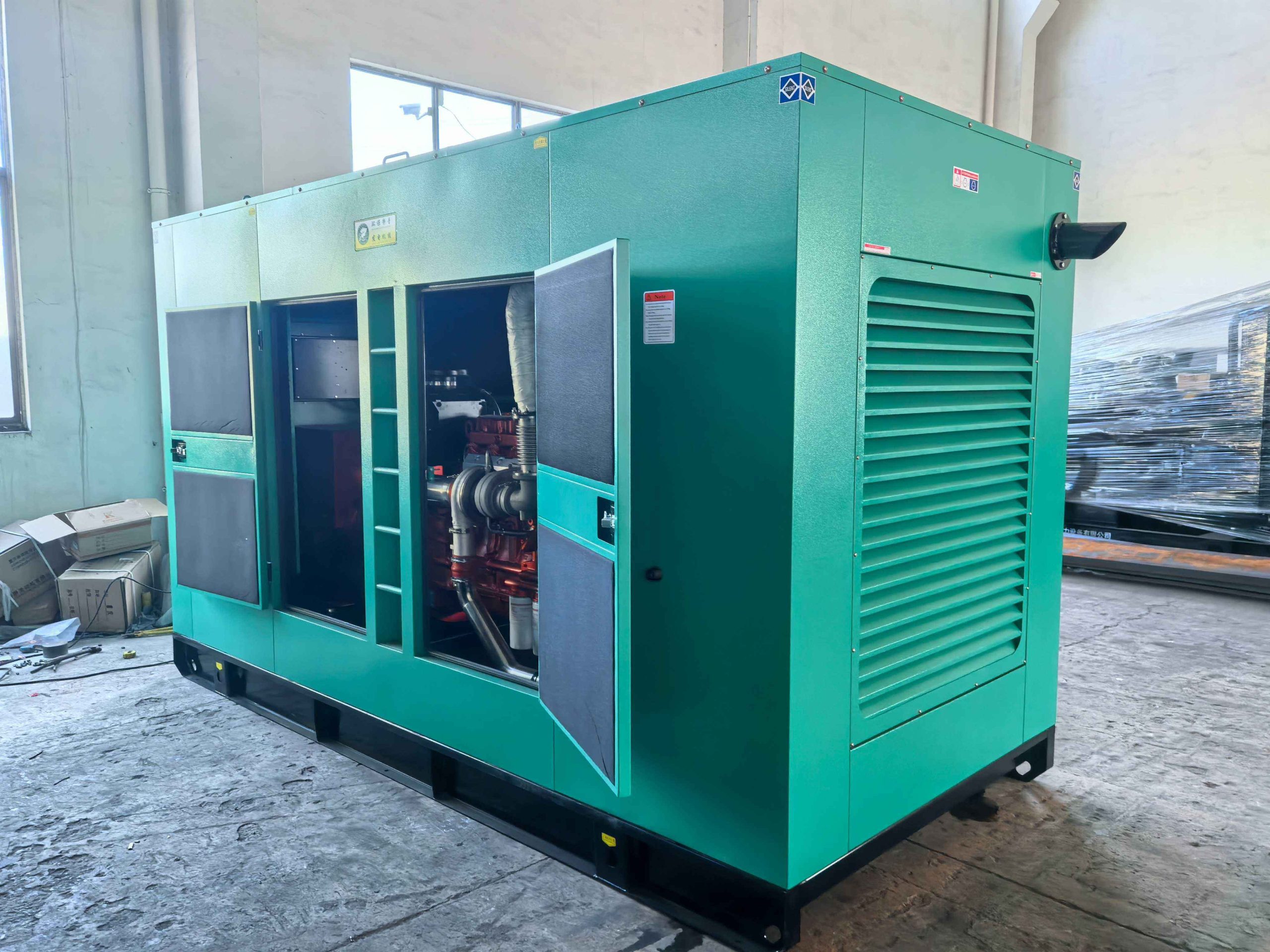
The enclosure is where the same rating acquires different packaging; both the class and the package appear on the quote as separate lines.
What documents change a price more than a spec sheet?
Documents are engineering hours, and engineering hours are a priced line. A quotation that includes a factory acceptance test report, per-set load records and ISO 8528-1 rating declarations is not the same offer as one with only a brochure and a packing list, even at identical hardware price. Tesla Power ships a test report with every set, covering the full-load run, the load-acceptance record and the protection checks.
The destination market decides which documents are mandatory. EU projects work to CE marking requirements under the machinery and EMC directives; US projects referencing NFPA 110 set their own expectations for emergency power supply systems, including test and record keeping. Neither is satisfied by verbal assurance.
Ask for the document list with the quote, not after it. If the seller cannot state what test evidence the price covers, the gap surfaces during commissioning, when it is most expensive to close.
How packing and freight reshape the landed price
Freight converts an ex-works price into a landed price, and the packing method is where that conversion happens in every diesel genset generator price. An open-frame set travels on its skid with minimal crating; a canopy set needs a frame matched to its footprint; a containerised set ships as a box with its own corner castings.
Compare quotations only after the packing description matches. A CIF quote for a crated canopy set and an ex-works price for a bare skid are different products, so the cheaper of the two is often the more expensive one once the goods arrive.
What a complete quotation should list
A complete diesel genset generator price can be compared line by line. Tesla Power builds its quotations from the list below; treat it as the minimum any seller should return.
| Quote line | What it should state | Why it moves the price |
|---|---|---|
| Engine | Model, rating class, emissions configuration | Largest single cost; sets the duty the set can serve |
| Alternator | Type, excitation, AVR, THD at no load | Voltage quality and overload behaviour |
| Enclosure | Open frame, canopy or container; louvre arrangement | Second-largest swing; also sets freight volume |
| Controls and ATS | Controller model, AMF panel, breaker, ATS included or not | Frequently the line that differs most between quotes |
| Testing | Factory test level and report format | No-load check versus full load bank record |
| Documents | Certificates, declarations, origin paperwork | Engineering hours; mandatory in regulated markets |
| Packing and freight | Method, terms, volume and weight | Decides the landed price from the ex-works price |
| Warranty and spares | Term, coverage, recommended first-two-year list | Operating cost across the life of the set |
Send the list with your enquiry. Those who answer in the same format are telling you how they will handle the order, and a line-item quotation request returns a comparable answer far faster than a plain price question.
Comparing quotes on life-cycle cost: a worked example
Purchase price is one line in a longer calculation. Fuel and maintenance run for the life of the set, and on a standby installation they dominate the arithmetic a quotation hides.
Fuel: the line that outruns the machine
Take a 160 kW prime-rated set — 200 kVA at power factor 0.8 — running at 75% load, which is 120 kW, for 300 hours a year. At a typical fuel consumption of 0.27 L/kWh, a typical value to confirm against the specific model, the annual burn is 120 kW multiplied by 300 hours multiplied by 0.27 L/kWh, which is 9,720 litres — the single line most quotations leave out. At a delivered diesel price of P per litre, the annual fuel line is 9,720 multiplied by P, and across a 15 to 25 year standby life the arithmetic reaches 145,800 to 243,000 litres multiplied by P. A 5% difference in consumption between two quotes outweighs a small discount on the machine itself, so run this arithmetic on every competing quote before comparing totals.
Maintenance intervals from real service data
Service intervals convert directly into operating cost. On Tesla Power’s published 160 kW Cummins QSL9-G5 data, oil changes run up to 500 hours apart under normal duty, so a 300-hour annual duty needs roughly one oil change a year, and a well-maintained set reaches 20,000 to 30,000 running hours before major overhaul. The same data rates the engine for up to B20 biodiesel. The fuel consumption data checks to run before you sign show how to test that number.
Litres per hour rises with load and says nothing on its own. Litres per kWh falls as the engine approaches its efficient band, and that is the figure which separates a well-matched set from an oversized one. A seller quoting efficiency is answering the second question.
Frequently asked questions
What is a fair price for a diesel genset generator?
Fairness is a structure, not a number: every line item stated, the rating class declared, the test level named and the freight terms written down. With those four fixed, a fair price sits in the same band as comparable quotes for identical content.
Why is the same kVA figure quoted at different prices?
Because a kVA figure alone does not describe the machine behind the diesel genset generator price. Engine model, rating class, alternator brand, enclosure, controller, breaker, test level and packing all sit behind that number. Ask for the line items before judging the gap.
Does a higher price always mean a better genset?
No, but an unexplained high price is a warning. A premium is justified when it buys a declared rating class, a named engine model, a load bank test record and a real warranty. Ask what the extra money purchases and pay only for content you can verify.
How much does freight add to a genset price?
Freight depends on packing method, volume, weight and the Incoterms chosen, so it cannot be quoted from the rating alone. An open-frame skid crates smaller than a canopy set of the same power. Fix the packing description first, then compare ex-works against CIF.
What paperwork should come with a quotation?
At minimum: the engine model and rating class, the alternator specification, the enclosure description, the factory test level and report format, the certificate list the destination market requires, the packing method and the warranty terms. A vague list hides a vague machine.
Should I compare standby or prime ratings when comparing prices?
Compare within one class, then check what the class permits. ISO 8528-1:2018 gives standby, limited-time, prime and continuous ratings different duties and running-hour expectations, so a standby figure and a prime figure are not interchangeable. Fix the class, then compare.
Do emissions rules change the price of a genset?
They can, and the change is hardware. Where the importing country enforces Stage V requirements under Regulation (EU) 2016/1628, or US EPA Tier 4 Final requirements, aftertreatment equipment and calibration appear as real cost. Ask which regime the seller assumed.
How can I check a quote without a datasheet?
Ask for photographs and a test record instead. Rating-plate, engine-bay and control-panel photos show what the machine is; a test report shows what it does. The photos to request before ordering cover the same ground, and a seller who produces both is answering the datasheet’s question.
Written by the engineering team at Yangzhou Tesla Power Equipment Co., Ltd., a diesel generator set manufacturer in Jiangdu, China. Ratings follow ISO 8528-1:2018 definitions and the company’s own published specification sheets.