
Diesel generator set images tell a buyer more than a brochure. This guide lists the eleven photos to request and how to check each one before you order.
Photographs let you verify a generator set before any money moves. Request eleven shots, starting with the rating plate, the engine-to-alternator coupling and the open control panel, then check that every value on the plate matches the datasheet. Tesla Power uses the same eleven on its own lines.
- Eleven shots cover the whole machine. Plate, engine bay, panel, canopy interior, base frame, exhaust, radiator discharge, test bay, packing and two scale shots.
- The plate sets the current. A kVA figure at a stated voltage fixes the rated current, and that number sizes the cable and the breaker.
- Assembly discipline is visible. Coupling guards, ferrules, hose routing and weld beads all appear in a frame staged for nobody.
- Photographs stop where documents start. No picture proves a load test or a rating class. Those arrive on paper.
What Diesel Generator Set Images Prove That a Spec Sheet Cannot
A diesel generator set nameplate is the only part of a quotation a buyer can check without the machine standing in front of them. A 160 kW / 200 kVA set built around a 160 kW Cummins generator set declares 400/230 V, three-phase, 50 Hz at power factor 0.8, and its standby rating reads 220 kVA. Those five numbers fix the rated current, the cable cross-section, the protection device and the fuel the site will burn for twenty years. A brochure can restate them; a photograph of the actual plate cannot. Tesla Power Equipment photographs the plate on every set before it leaves the test bay, because the plate is where a written specification and a real machine either agree or do not. Buyers who skip this step meet the mismatch at the first load bank test.
Diesel generator set images also settle what a rating never mentions: weld quality at the base frame, hoses clipped clear of hot surfaces, ferrules on control wiring, and whether a coupling guard was fitted.
The Eleven Photos to Request Before You Sign Anything
Ask for the same eleven frames from every bidder and the comparison becomes fair. Two of them are scale shots, taken with a person or a tape measure in view, because a canopy looks almost identical at 20 kW and at 120 kW. Tesla Power builds from 25 kVA to 1750 kVA, and the shell changes less than the machine inside it, so our soundproof canopy range is always shot with the doors open.
Rating Plate Close Enough to Read
The plate must be legible, not a smudge of stainless steel at the edge of the frame. It should state prime and standby power in kW and in kVA, rated voltage, frequency, phase count, power factor, rated current and a serial number. ISO 8528-1 defines the rating classes those figures belong to, continuous, prime, limited-time running and emergency standby power, and a plate giving one number without naming its class is not an answer. Read the definitions on the ISO 8528-1 standard page first.
Engine Bay, Coupling and Alternator Drive End
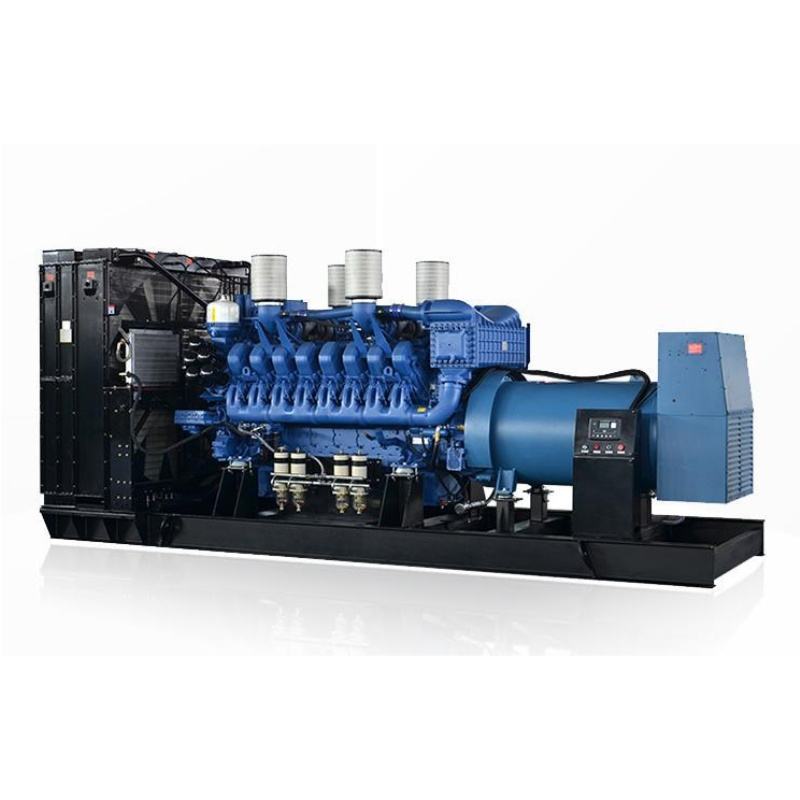
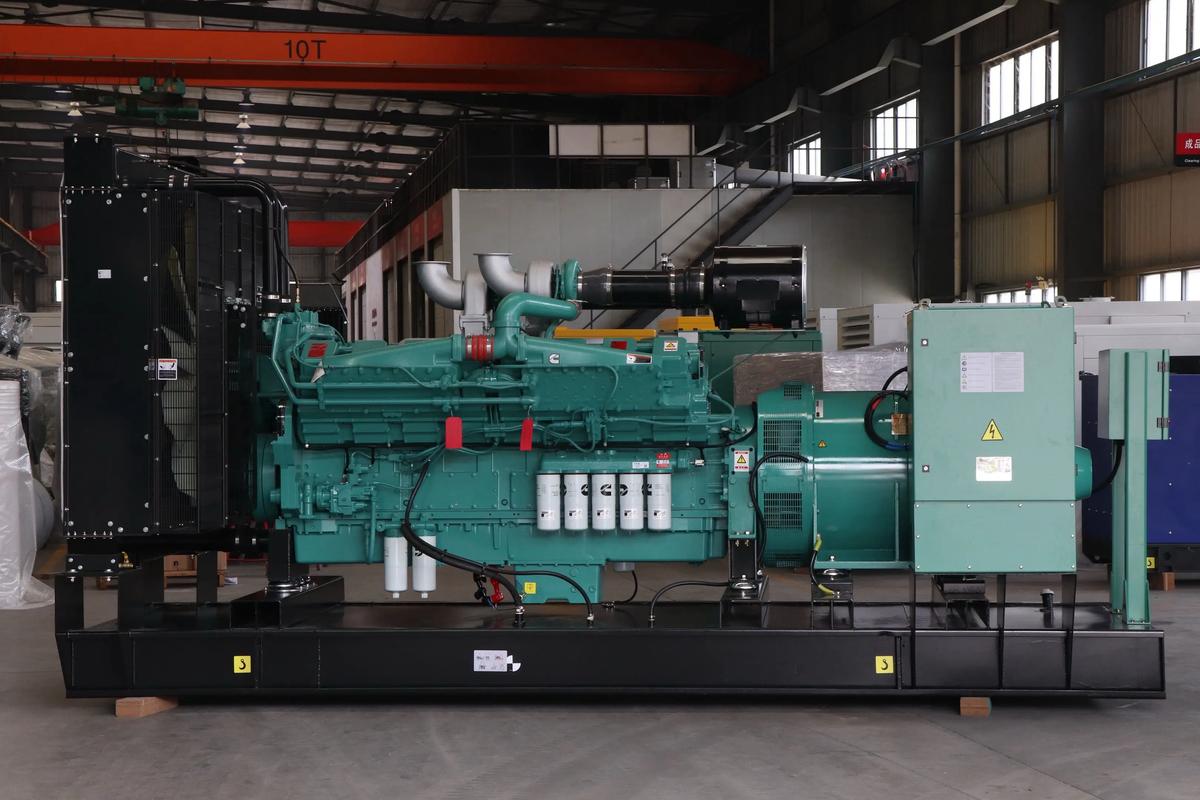
The engine bay shot should show the engine model plate, the turbocharger and charge-air cooler, the 24 V DC starting motor, the 28 V / 50 A belt-driven charging alternator, and the coupling between engine and alternator with its guard fitted. On a 120 kW / 150 kVA open-frame set at power factor 0.8, the same frame shows whether the radiator core is protected and whether the exhaust is lagged before the canopy wall. A guard left off for the photograph is a decision, not an oversight.
How Do You Read a Generator Nameplate Photo?
Every rating plate carries five values that must agree with each other: rating class, kW, kVA, voltage and frequency, followed by a serial number that ties the frame to one physical machine. The kW and kVA pair holds a hidden check, because dividing one by the other returns the power factor the manufacturer assumed, and on a three-phase industrial set that value is almost always 0.8. A plate showing 160 kW against 200 kVA divides to exactly 0.80, the 0.8 pf every three-phase industrial set should declare. A plate showing 160 kW against 250 kVA divides to 0.64, short of the 0.8 pf a three-phase set should declare, which means either an unusual machine or a plate printed from the wrong template. Both outcomes are worth one more email before the order goes in, and neither is visible in a quotation that quotes a bare kW figure. Tesla Power runs that division on every incoming enquiry for exactly the same reason.
Control Panel Interior and Cable Entry
Open the panel door and photograph the inside. Look for the controller model, the main breaker with its rating visible, wiring in duct or tray, a ferrule on every conductor and a gland plate rather than bare holes. Steady-state frequency regulation within ±0.25% and total harmonic distortion below 2% at no load and below 5% on a balanced three-phase load come from the brushless alternator and the digital voltage regulator behind that panel, so the shot also checks what the controller is wired to.
Worked Example: Does a 200 kVA Nameplate Match Its Rated Current?
Take a plate that reads 200 kVA, 400 V, three-phase, 50 Hz, power factor 0.8, with a prime rating of 160 kW. Three checks settle whether the machine is internally consistent.
Rated current: I = S ÷ (√3 × U) = 200,000 VA ÷ (1.732 × 400 V) = 288.7 A, so the set carries roughly 289 A at full load. Power factor: P ÷ S = 160 kW ÷ 200 kVA = 0.80, or 0.8 pf, which agrees with the printed value. Voltage variation: the same 200 kVA at 480 V gives 200,000 ÷ (1.732 × 480) = 241 A, which is why a 60 Hz order needs a different breaker even when the kVA is unchanged.
Now read the panel photograph. If the main breaker in the frame carries a 250 A rating while the plate asks for 289 A, the machine cannot reach its nameplate without tripping. Tesla Power has watched that contradiction survive three rounds of email and die in two photographs taken thirty seconds apart, which is why the plate and the panel are always shot together.
Photo, Proof and Falsifier: A Reading Table
| Photograph | What it proves | What falsifies it |
|---|---|---|
| Rating plate | 160 kW / 200 kVA, 400/230 V, 50 Hz, power factor 0.8 | No serial number, or kW ÷ kVA not equal to the printed power factor |
| Engine bay, drive end | Engine model, turbocharger, charge-air cooler, guard fitted | Guard removed, or a fuel hose clipped against a hot surface |
| Panel interior | Controller model, breaker rating, ducted wiring, ferrules | Loose harness with no ferrules |
| Canopy, doors open | Acoustic lining, air path, exhaust lagging, service access | Bare metal inside a canopy sold as soundproof |
| Base frame | Integrated tank, forklift pockets, lugs welded to the frame | Lifting lugs welded to sheet metal |
| Exhaust and discharge | Hot air path, rain cap, flexible section, ducting | Discharge pointing at the combustion air intake |
| Test bay | The set ran under load before dispatch | No load bank cables, no report number in frame |
| Export packing | Crate, lashing, desiccant, tilt indicator | A set photographed loose on an open truck bed |
Enclosure Photos: What a Canopy Hides
A canopy photograph is the only place where a buyer can see how the machine will be serviced for the next twenty years. Service access decides the cost of every future filter change, which is why our service intervals after commissioning assume door-open clearances, so ask for the canopy with its doors open, from both sides, plus one shot of the air discharge path. Acoustic lining depth, exhaust lagging and whether the radiator discharges through a duct or into the room decide whether the set holds its rating through summer. Noise figures in dB(A) mean nothing without the measurement distance and method behind them; ISO 8528-10 specifies the enveloping surface method for airborne noise from generating sets.
How Do You Spot Stock Photos and Recycled Catalogues?
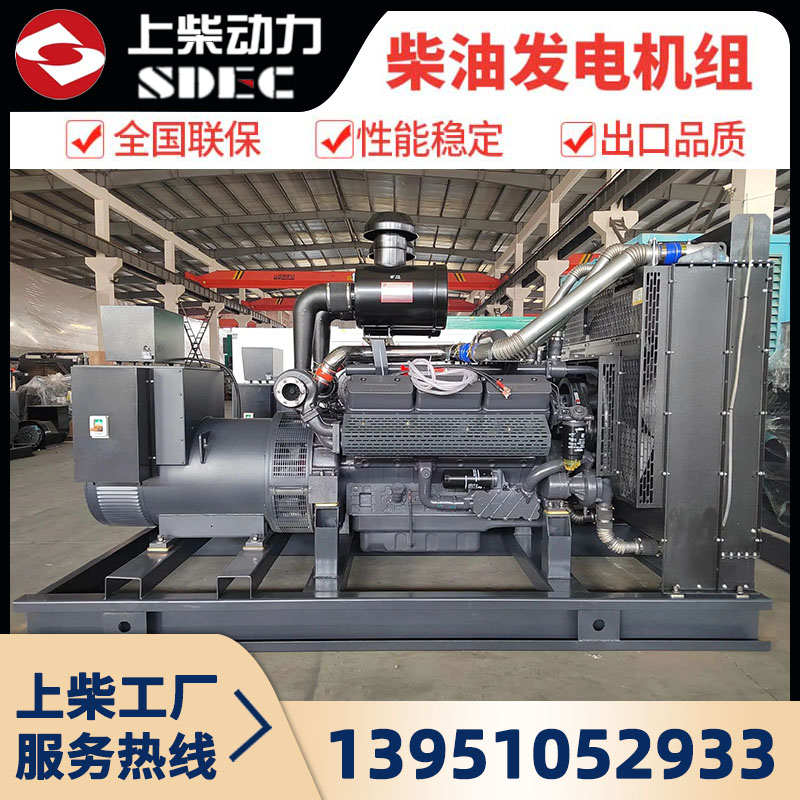
Four tells expose a recycled image. The same frame appears across listings for different ratings, often a 1400 kW / 1750 kVA machine at power factor 0.8 offered as a mid-range unit. The floor, wall colour or skyline does not match the stated factory location. Every shot is lit like a studio while the quotation claims a working assembly line. Nothing in any frame carries a date, a serial number or a test report number. Reverse image searches catch the first two; the last two need a live video walk-through with a dated card in shot. Useful diesel generator set images are boring, slightly cluttered and impossible to reuse, which is exactly why they are worth asking for by name.
Installation Photos: Clearance, Exhaust and Cable Routes
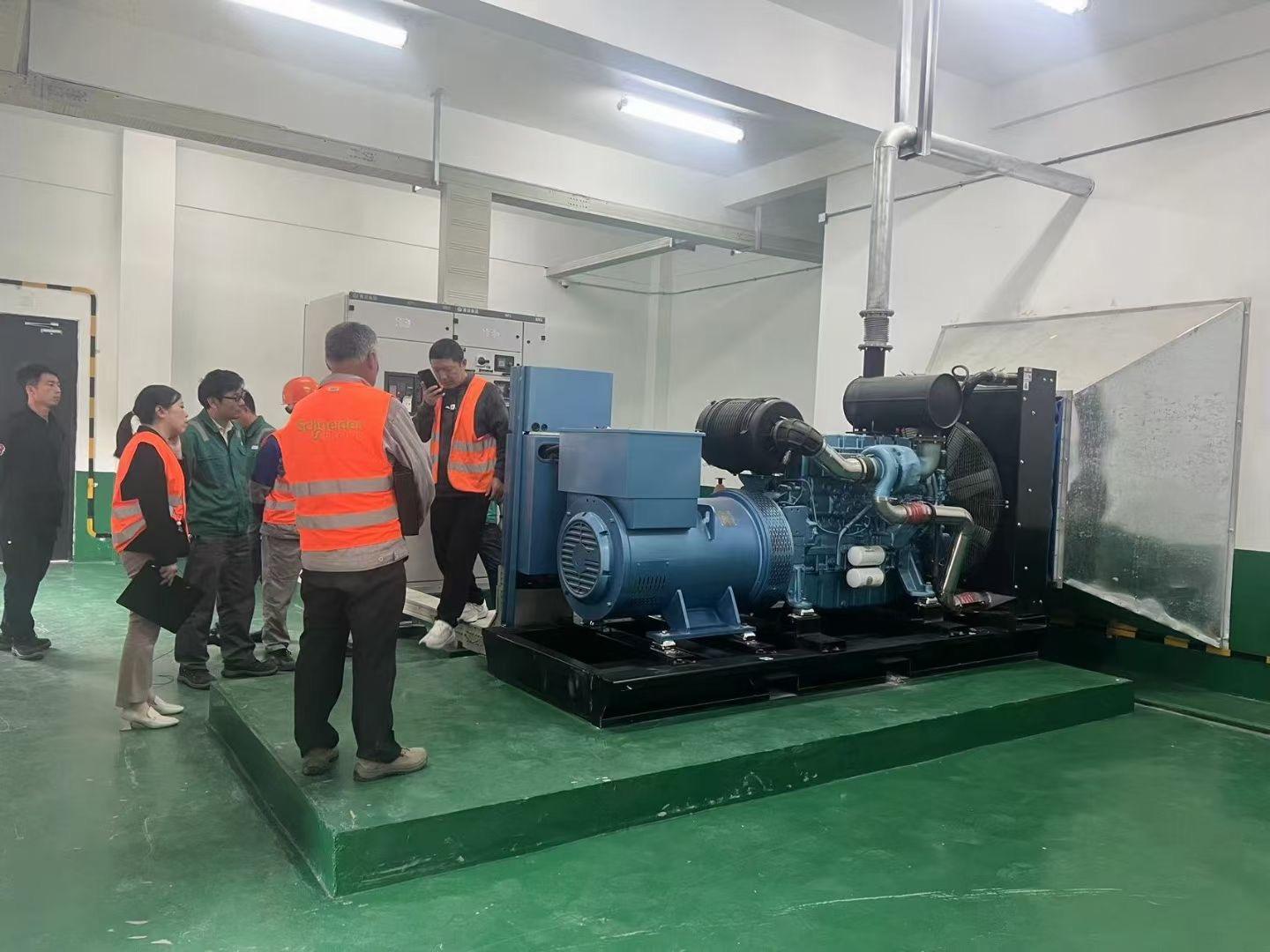
An installed generator set photographed in its final position shows whether maintenance clearances survived contact with the room, which no general arrangement drawing ever does. Look for the oil and fuel filters on the service side with room to swing a strap wrench, a clear path to pull the radiator core, and cable entry through a gland plate rather than a cut hole. A set that will run 20,000 to 30,000 hours before overhaul still needs its first oil change at 500 hours, and one installation photograph tells you whether that job takes twenty minutes or half a day of dismantling. Diesel generator set images taken after handover are the cheapest audit a buyer will ever commission, because they show the machine exactly as it will be serviced for the next two decades rather than as it looked on a stand.
What Can Photos Not Prove — and Which Documents Close the Gap?
No photograph proves a performance test or a rating class. Those arrive as documents: the factory acceptance test report with load steps recorded, and the rating declared against ISO 8528-1. For life-safety work, NFPA 110 groups emergency power systems by Type, Class and Level rather than by kW, so read the scope on the NFPA 110 page at nfpa.org. Tesla Power treats the photograph as the invitation to ask for the document. The same split runs through logistics: our guide to HS code 8502 duty treatment covers what arrives on paper.
Common Mistakes When Judging a Supplier by Photographs
Four mistakes repeat on almost every tender. The first is treating a clean photograph as evidence of capacity. The second is comparing one bidder’s studio shot against another’s phone picture and reading the difference as build quality. The third is ignoring the plate and trusting the listing title, which is how a standby rating gets sold as a prime rating. The fourth is assuming the fuel system matches the quotation: a set sold on B20 capability needs compatible filters and seals. Tesla Power’s listing pages carry the plate first for that reason.
Frequently Asked Questions
How many diesel generator set images should I ask a supplier for?
Eleven: rating plate, engine bay, alternator drive end, panel interior, canopy with doors open, base frame, exhaust run, radiator discharge, test bay with load bank, export packing, and two scale shots with a person in frame. Eleven frames cover what a quotation leaves out.
Can I trust the kW figure printed on a nameplate photo?
Trust it only when the plate also states the rating class, the kVA value and the power factor. ISO 8528-1 defines four rating classes, and a standby figure of 220 kVA is not the same machine as a prime figure of 200 kVA. Divide kW by kVA; if the result is not 0.8, ask why. Our notes on the pre-shipment inspection report show how an inspector verifies the plate on the machine itself.
Why does the nameplate show both kW and kVA?
kW is the real power the engine can deliver and kVA is the apparent power the alternator must carry. Dividing one by the other returns the assumed power factor, normally 0.8 on industrial three-phase sets. Both numbers are needed to size the engine, the alternator, the cable and the breaker.
Do canopy photographs prove the noise level?
No. A canopy photograph proves lining, lagging and air path, not a decibel figure. A dB(A) value is only meaningful with the measurement distance and method stated; ISO 8528-10 specifies the enveloping surface method for generating sets, so ask which method produced the number.
Is a factory test photograph enough to prove performance?
Not on its own. A load bank in frame shows the set was run, but the proof is the factory acceptance test report with voltage, frequency, load steps and protection checks recorded against a serial number. Ask for the report number to appear in diesel generator set images from the test bay.
Which photos matter most for a containerised set?
Door-open shots from both sides, the air intake and discharge paths, the exhaust penetration through the container wall, and the internal clearance between the canopy and the container skin. On containerised sets, cooling air path failures cause more derating complaints than any engine fault.
Next Steps
Send the eleven-shot request to every bidder you are comparing, then score the replies against the table above. Anything a vendor will not photograph is a question to answer before payment, not after the set lands. To have a plate checked against your load list, send us your load list and site voltage and we will run the current calculation with you.
Written by the engineering team at Yangzhou Tesla Power Equipment Co., Ltd. Generator sets are assembled to ISO 9001 quality management procedures, with engine options from Cummins, Perkins, Volvo, MTU, Weichai, Yuchai, Shangchai and Mitsubishi, and ratings declared against ISO 8528-1.