
The Cummins DG set range runs from 20 kW up to 1400 kW in seven fixed build steps, 25 kVA to 1750 kVA at 0.8 pf, each with one engine and one prime rating.
Key takeaways
The Cummins DG set range is a fixed ladder of seven steps from 20 kW to 1400 kW, and every step pairs one Cummins engine model with one prime rating. Tesla Power lists the whole ladder on one build sheet, so a buyer picks a step instead of assembling options.
- Seven steps run from 20 kW to 1400 kW, which is 25 kVA to 1750 kVA at 0.8 pf.
- Standby output sits about 10% above prime on the documented 160 kW step.
- Duty ratings follow ISO 8528-1: prime, standby, continuous and limited time.
- Voltages are 230 V, 240 V and 480 V, at 50 Hz or 60 Hz.
- The sizing method that starts from the load list settles which step applies.
Table of contents
- What does the Cummins DG set range cover?
- Where does the range start for small loads?
- Which steps carry the middle of the range?
- What sits at the top of the range?
- How do the ISO 8528-1 duties change the usable rating?
- Which step fits a measured peak load?
- How does the same rating change between open frame and canopy?
- How do you confirm a rating before an order?
- Frequently asked questions
What does the Cummins DG set range cover?
The range covers 20 kW to 1400 kW at 50 Hz as seven discrete steps rather than a dial, because each step is a fixed pairing of engine model, alternator frame and prime rating. The apparent-power span is 25 kVA to 1750 kVA at 0.8 pf. Tesla Power builds these seven as standard.
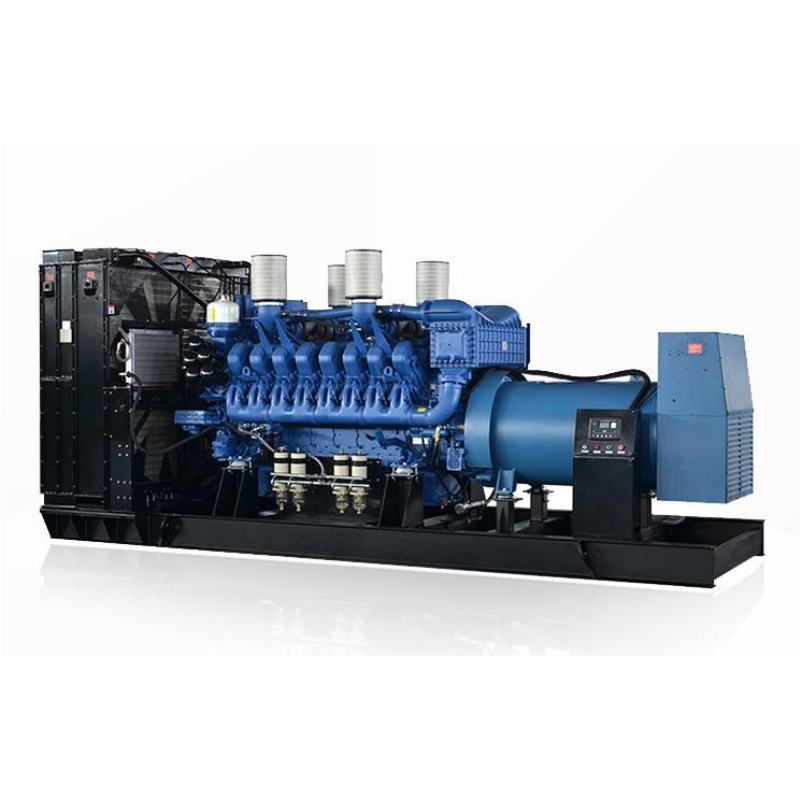
The table is the current build sheet ladder. Ratings are prime unless a standby figure is named, and every apparent-power value is quoted at 0.8 pf so the kW and kVA columns reconcile. Each row is one orderable object.
| Build step | Engine model | Prime rating | Apparent power | Typical fit |
|---|---|---|---|---|
| Smallest | Cummins 4B3.9-G1 | 20 kW | 25 kVA at 0.8 pf | House, workshop, event backup |
| Open frame | Cummins QSB5.9-G30 | 120 kW | 150 kVA at 0.8 pf | Site power, rental fleet |
| Mid step | Cummins QSL9-G5 | 160 kW | 200 kVA at 0.8 pf | Food plant, cement plant, port |
| Plant step | Cummins KTAA19-G6A | 500 kW | 630 kVA at 0.8 pf | Plant standby with ATS |
| Large step | Cummins KTA38-G2B | 800 kW | 1000 kVA at 0.8 pf | Industrial estate, hospital |
| Heavy step | Cummins QSK38-G12 | 1200 kW | 1500 kVA at 0.8 pf | Data hall, heavy process load |
| Largest | Cummins multi-voltage build | 1400 kW | 1750 kVA at 0.8 pf | Multi-voltage sites, handover |
Where does the range start for small loads?
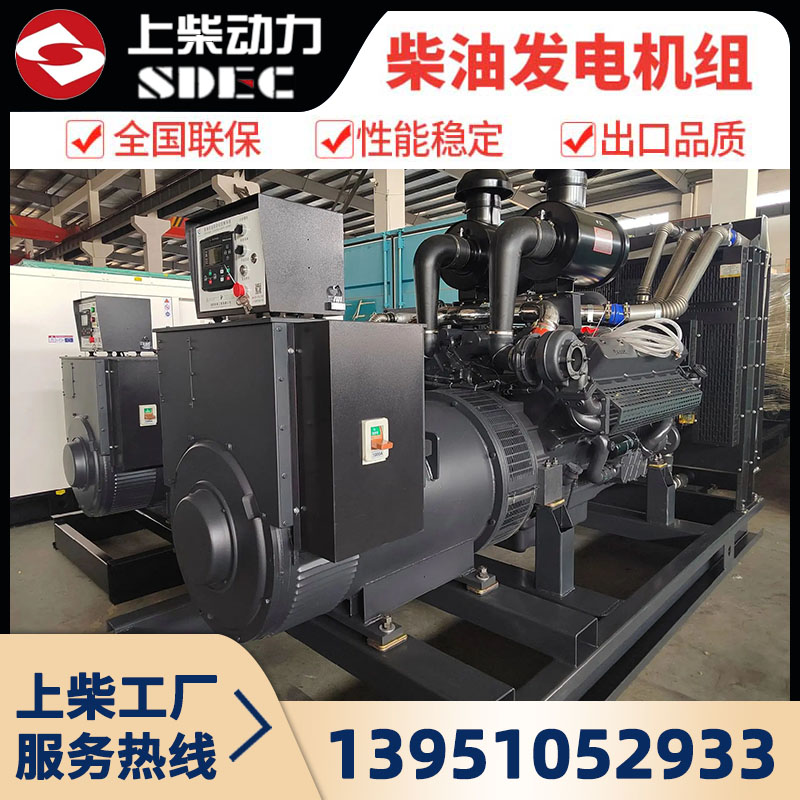
The bottom of the range starts at 20 kW, which is 25 kVA at 0.8 pf, on the Cummins 4B3.9-G1. That step carries a house, a workshop, a market stall or a small event through an outage, and it is the step most often overspecified, because buyers compare engine size instead of measured load. The 20 kW rating at 0.8 pf is built as a silent-type unit with automatic start, with the ATS supplied as an option.
The next cluster sits at 30 kW and 60 kW, where the documented apparent-power options include 50 kVA and 75 kVA at 0.8 pf, so one mechanical platform carries several labels. That is why the kVA figure decides the order: two buyers asking for a 60 kW set can receive different labels when their power factor differs. From there the ladder steps to an open-frame 120 kW build rated 150 kVA at 0.8 pf, where site power begins. Tesla Power offers that step with or without a canopy, at the same rating.
Which steps carry the middle of the range?
The middle of the range is carried by the 120 kW and 160 kW steps, and these two absorb most export enquiries. The 120 kW step uses the Cummins QSB5.9-G30 in open-frame trim and is 150 kVA at 0.8 pf, with the ATS as an option. The 160 kW step uses the Cummins QSL9-G5 and is 200 kVA at 0.8 pf, with a standby rating 10% above prime, which is 220 kVA at 0.8 pf. The ratio between those two numbers is 1.10, the spare capacity that a standby rating adds over prime, and it is the first thing to check on any quotation that names only one of the two figures. Both steps are also available with a canopy, which is where enclosure questions enter a mid-range enquiry and where a canopy is most often specified.
The 160 kW step is the one with a published data sheet for this rating, so it is the step to read line by line before ordering anything larger. Its engine is an inline six-cylinder with turbocharging and charge-air cooling, governed by an electronic control module in isochronous mode, and the fuel system is high-pressure common rail. Frequency regulation is quoted at plus or minus 0.25%, transient response reaches ISO 8528 performance class G3, and voltage distortion stays under 2% at no load and under 5% on a balanced three-phase load. Tesla Power Equipment prints those three figures on the model sheet.
What sits at the top of the range?
The top of the range runs through 500 kW, 800 kW and 1200 kW to a largest single step of 1400 kW, which is 1750 kVA at 0.8 pf. The 500 kW step carries the Cummins KTAA19-G6A with automatic start and an ATS. The 800 kW step carries the Cummins KTA38-G2B with the ATS as an option, the 1200 kW step carries the Cummins QSK38-G12 and is sold on fuel consumption as well as output, and the 1400 kW step is offered with multiple voltage settings, which matters when one machine serves a 400 V board and an export panel. That KTAA19-G6A build at 500 kW, 630 kVA at 0.8 pf, shows how a mid-height step is specified.
The 800 kW step is specified on its own KTA38-G2B build sheet, 1000 kVA at 0.8 pf. Above 1000 kW the buying logic changes. Freight, foundation and cooling become the binding constraints rather than the engine, and a set at this size is specified with the plant room instead of for it. A container build and a concrete-plinth build are different physical objects even when the nameplate matches. Tesla Power prices those two builds separately for that reason.
How do the ISO 8528-1 duties change the usable rating?
The duty rating changes what a set may do at the same nameplate number, and ISO 8528-1 power ratings define four of them. Prime power allows unlimited hours at variable load with a 10% overload for one hour in twelve. Emergency standby power covers the duration of a utility outage at variable load, with no overload allowance. Continuous power is a constant load for unlimited hours, and limited-time running power is capped at 500 hours a year. A 500 kW set is therefore four different products depending on the duty printed on the order, and the price gap between them is real rather than administrative. The four labels are not interchangeable, so a quotation that gives one kW figure without naming the duty has not yet quoted a product, and the duty also fixes the service interval that the same quotation should state.
A standby-rated set that runs eight hours a day as the only power source is being used outside its rating, and the wear shows in exhaust temperature and injector life long before it shows on an invoice. A continuous-rated set costs more per kW for the same block because the rating is declared conservatively. If the site has no utility supply, the enquiry should say continuous duty in its first line, because that word moves the answer up the ladder. The four ISO 8528-1 duties in detail are worth reading before a duty label reaches a purchase order.
Which step fits a measured peak load?
The step should be chosen from a measured peak plus a stated growth margin, then checked in apparent power at the site power factor. Take a two-shift factory with a recorded peak of 200 kW at 0.8 pf, where 200 kW is 250 kVA at 0.8 pf. Reserve 20% for growth: 200 kW multiplied by 1.2 gives 240 kW, which is 300 kVA at 0.8 pf. If the peak is firm and no growth is planned, the 240 kW step covers it. If a second line is coming, the next step up is 300 kW, which is 375 kVA at 0.8 pf and leaves 25% headroom over the recorded peak. The arithmetic is worth repeating with the buyer’s own meter data, because a peak taken from a utility bill is an average rather than a maximum.
Two checks finish the calculation. First, confirm that the largest single motor does not exceed roughly a quarter of the set rating without a soft starter, because starting current rather than running load sizes the alternator. Second, confirm the duty, because a 240 kW prime rating is not a licence for 240 kW continuous and a standby rating at the same number is not a licence for daily running. The measured peak and the duty label together decide the step, and either one alone under-sizes the order. Tesla Power asks for both before quoting.
How does the same rating change between open frame and canopy?
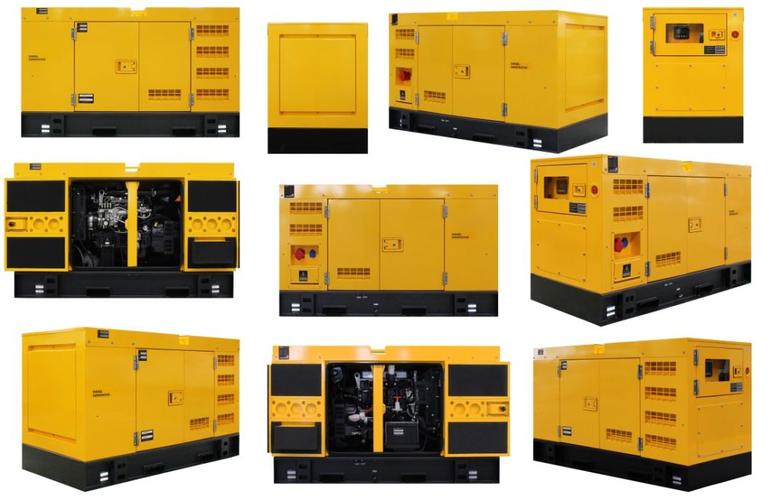
The same rating keeps its electrical figures in either enclosure and changes almost everything else. A canopy set adds attenuation, weather protection and lifting points, and it loses cooling headroom because the radiator now breathes through louvres. An open-frame set is easier to service and cheaper to move, but it needs a plant room with ventilation and does not belong on an outdoor residential boundary. Emission compliance is another enclosure question, and the Stage V and Tier 4 emission paths decide which of the two is even available in a given market.
Ambient temperature and altitude reduce available output, and a canopy at 45 degrees Celsius in direct sun is a harder duty than an open set in the same air. That is why Regulation (EU) 2016/1628 and EPA nonroad emission standards are read alongside the cooling data. Ask for the derated figure at the site ambient, not the catalogue figure at 25 degrees Celsius, in kW.
How do you confirm a rating before an order?
Confirm the rating from three documents: the data sheet for the exact model, the factory test report for the unit, and the nameplate on the set. The sheet gives prime and standby figures at a stated power factor, voltage and frequency; the test report records what the unit produced on the load bank; the nameplate states what the unit may be sold as. When the three agree, the rating is real. When only the quotation agrees, it is a number in a spreadsheet, and Tesla Power sends all three with every set. A fourth document, the packing list, decides what arrives on the day and which skid length the container plan was built around.
How the five masses add up decides the lifting plan, and the rating comes from the same sheet: prime 160 kW at 200 kVA at 0.8 pf, a standby rating 10% above it that reaches 220 kVA at 0.8 pf, 400/230 V three-phase at 50 Hz, a 24 V starting motor and a 28 V, 50 A charging alternator. It also quotes an oil change interval of up to 500 hours and an overhaul life of 20,000 to 30,000 running hours, which is 15 to 25 years in standby duty. A quotation without a packing list is incomplete.
Frequently asked questions
What is the Cummins DG set range in kW?
The Cummins DG set range runs from 20 kW to 1400 kW in seven build steps, which is 25 kVA to 1750 kVA at 0.8 pf. The documented steps are 20, 120, 160, 500, 800, 1200 and 1400 kW, with 30 kW and 60 kW options at the small end.
Is a 160 kW set the same as 200 kVA at 0.8 pf?
Yes at 0.8 pf, where 160 kW divided by 0.8 gives 200 kVA. The standby rating sits 10% above prime, which is 220 kVA at 0.8 pf. At a lower site power factor the kVA figure rises and the available kW falls, so state the pf with the load.
Which duty rating should a standby site order?
Order emergency standby power only when the set runs during outages rather than as a daily source. A site with no reliable grid, or one that runs the set every working day, needs prime power. The duty governs the warranty and the overload allowance.
How much headroom should be added to the peak load?
Twenty percent is defensible for a firm peak with modest growth, and 25 to 30% when a second line or a chiller is planned. Below 10% the next step is usually cheaper than the risk. Add the largest motor and its starting method to the calculation.
Can the same rating be supplied open frame and in a canopy?
Yes, and the range does that at 120 kW with the QSB5.9-G30 open-frame build. The rating does not change, but noise, footprint, cooling and service access do. Ask for the derated output at the site ambient for whichever enclosure is chosen.
Does the range cover 60 Hz as well as 50 Hz?
The build sheet lists 50 Hz and 60 Hz variants with rated voltages of 230 V, 240 V and 480 V, plus multiple-voltage builds at the top of the range. Frequency and voltage must be fixed before the order, because they change the alternator winding and the engine speed.
Next step: match the load list to the range
The range answers one question: which step clears the measured peak at the site power factor, on the duty the site needs. Send the load list, the site ambient, the voltage and the duty label through the quotation request page, and the reply names the step, the engine model and the derated output.
Prepared by the export engineering desk at Yangzhou Tesla Power Equipment Co., Ltd., a Yangzhou builder whose standard ladder covers 25 kVA to 1750 kVA at 0.8 pf and stops at the 1400 kW step.